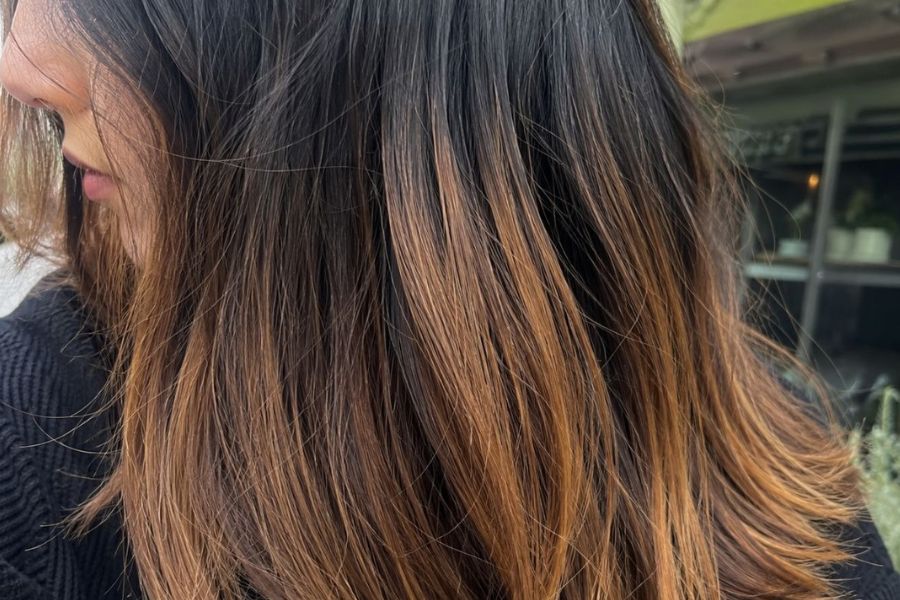
Blue shampoo deposits blue pigment onto your hair. This cancels out orange and copper brassiness. Blue and orange sit directly opposite each other on the color wheel. That is why the effect works. Brunettes and dark blondes reach for it most often. Highlights and lightening treatments tend to turn warm over time.
Have you noticed your brown or dark blonde hair looking a little too warm lately? Blue shampoo could be the fix you have been looking for. This guide covers how it actually works. It also covers who really needs it and exactly how to use it. You will learn how often to use it. You will learn what happens if your hair has no brassiness at all. You will also get a simple way to figure out the right choice for yourself.
✔ Key Takeaways
- Blue shampoo deposits blue pigment onto your hair. This cancels out orange and copper tones.
- Blue and orange sit directly opposite each other on the color wheel. That is why this works.
- Brunettes and dark blondes need it most. Even natural hair can turn brassy over time.
- Leave it on wet hair for a few minutes. Then rinse with cool water.
- Using it on hair with no brassiness can leave a dull, grey cast instead of a boost.
What Is Blue Shampoo?
Blue shampoo is a shampoo with blue pigment mixed into the formula. It looks like a normal shampoo in the bottle, but once it hits your hair, it works more like a toner than a cleanser.
A regular shampoo cleans. A toner shifts color. Blue shampoo does both at once. It removes light dirt and oil while depositing a small amount of blue pigment onto each strand. That pigment does not add a new color you can see directly. Instead, it sits underneath your natural tone and quietly corrects the warmth hiding in your color. Stylists sometimes call this a color depositing or toning shampoo, and both terms describe the same idea: a small dose of color correction built into your regular wash.
What Does Blue Shampoo Do?
Blue shampoo cancels out orange and copper brassiness. It does this by depositing blue pigment onto your strands during every wash. Brunette and dark blonde hair see the biggest improvement from it. That hair type develops warm undertones the fastest.
Brassiness comes from the natural pigment in your hair, called melanin. Melanin also protects hair from free radical damage caused by UV light. Dr. Farah Moustafa, a board certified dermatologist featured in the American Academy of Dermatology’s guidance on summer hair care, explains that UV exposure breaks down hair proteins and changes hair color, with lighter and color treated hair affected the most. The result is hair that looks orange, copper, or reddish instead of the cool, neutral tone you actually want.
Blue shampoo interrupts that process temporarily. The blue pigment sits on top of the warm tone and visually cancels it out, much like mixing blue and orange paint creates a muddier, more neutral color. This effect is not permanent. It fades gradually with every wash, which is exactly why blue shampoo needs regular use rather than a single application.
Does It Actually Turn Your Hair Blue?
No, it does not turn your hair blue when used as directed. The pigment concentration in most formulas stays deliberately low, strong enough to neutralize warmth but far too diluted to deposit a visible blue tint on its own.
Problems only show up with serious overuse. Leaving a strong formula on for far longer than instructed, or using an unusually high pigment formula every single day without any break, can leave a faint blue or grey cast, especially on lighter hair. Following the directions on your specific bottle avoids this almost entirely.
How Does Blue Shampoo Actually Work?
Blue shampoo works through basic color theory. Professional colorists use this same principle at the salon. Blue and orange sit directly across from each other on the color wheel. Colors positioned opposite each other cancel each other out visually when combined.
The Color Wheel Mechanism
The color wheel organizes colors by their relationship to one another. When two colors sit directly across from each other, that pairing is known as a complementary pair. Blue and orange form one complementary pair. Purple and yellow form another. Artists, designers, and printers have used this same color relationship for centuries.
Hair with warm brassy colors has an underlying orange and copper tone. This pigment becomes more visible after color processing. Repeated sun exposure and lightening have the same effect. The blue pigment gets deposited on the hair shaft. It does not remove the orange underneath. It simply sits on top and visually neutralizes it. Complementary colors do the same in painting and design work. The outcome is a more balanced shade to the eye. The underlying warm pigment technically still remains.
Where the Blue Pigment Comes From
Many blue shampoo formulas rely on synthetic blue dyes. These dyes are made specifically for cosmetic use. They are regulated for safety in hair care products.
Some newer, more natural leaning formulas use a different pigment source instead. This pigment comes from the jagua fruit. This fruit grows in tropical regions of Latin America. The unripe jagua fruit contains a colorless compound called genipin. Genipin reacts with amino acids in the presence of oxygen.
This reaction forms a stable, water soluble blue pigment. A physicochemical study of the pigment confirms this exact reaction. The National Institutes of Health hosts that study. Researchers have studied this chemical reaction for years. They have tested it for both cosmetic and food coloring applications. Its color holds up well across different storage conditions and formula types.
Who Needs Blue Shampoo?
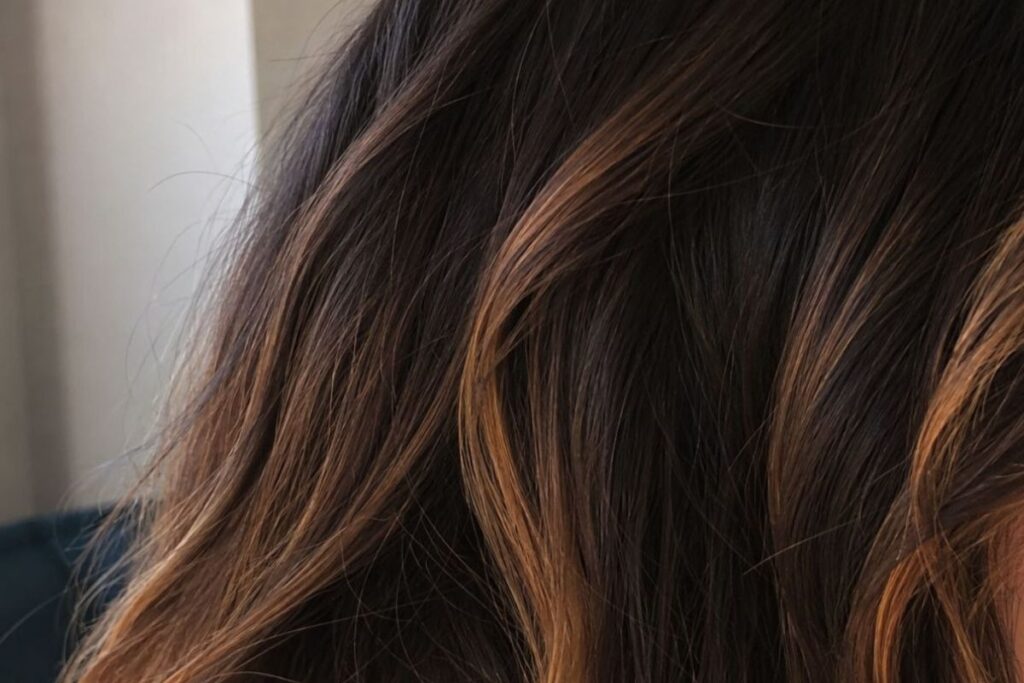
Brunette, brown, and dark blonde hair often has warm undertones. This hair type benefits most from blue shampoo. Blonde hair can need it too. This happens less often than most people assume.
Brunette and Dark Blonde Hair With Warm Undertones
Brunette hair rarely stays perfectly neutral for long. This is true once it has been colored or highlighted. Highlights, balayage, and any lightened sections all add lift to the hair. Lifted hair reveals warm undertones underneath the original color. Over several weeks, that warmth becomes more visible. It shows up as orange or copper creeping through the lengths.
Blue shampoo targets exactly that warmth. Using it regularly between salon visits helps. Color treated brunette hair holds its cool, polished tone for much longer this way. This is part of why colorists frequently recommend it. They see it as a maintenance step, not a one time fix.
Blonde Hair Can Need It Too
Purple shampoo tends to get all the attention in conversations about blonde hair. It is not automatically the right choice for every blonde, though. Purple cancels yellow tones specifically. Blue cancels orange tones instead. Dark blonde, dirty blonde, and bronde shades often develop stronger orange undertones. Lighter, more golden blonde shades usually do not develop these tones as strongly.
Does your blonde hair lean more orange than yellow once it starts fading? Then blue shampoo will actually do more for you than purple shampoo would. The right choice always comes down to which specific tone is showing up in your hair. It does not simply come down to whether your hair falls into the broad categories of blonde or brunette.
Signs Your Hair Has Gone Brassy Right Now
A few clear signs indicate brassiness is building up. Look for warm, orange, or copper tones. These appear in hair that used to look neutral or ash toned. This usually shows up first at the ends or through the mid lengths. Those sections get exposed to the most sun, heat, and styling over time.
Another reliable sign is a shift you can track over time. Some hair looks cool and balanced right after a fresh salon appointment. If that same hair has since drifted toward warmer tones, that is textbook brassiness. Compare a photo from right after your last color appointment to how your hair looks now. The difference is often obvious.
Even Natural, Never Colored Hair Can Go Brassy
Brassiness does not have to be on dyed or lightened hair. Over time, pigment breaks down when exposed to sunlight on the hair’s surface. With repeated use, heat styling tools have a similar effect. Pollution in everyday life and hard water can also change the natural pigment warmer. This occurs over time, even if the hair is never exposed to hair dye.
Does your natural brunette or dark blonde hair look warmer than it used to? This often happens after a summer with lots of sun exposure. Blue shampoo can genuinely help here too. You do not need a single salon visit first for this to apply to you.
Blue Shampoo vs Purple Shampoo: What’s the Real Difference
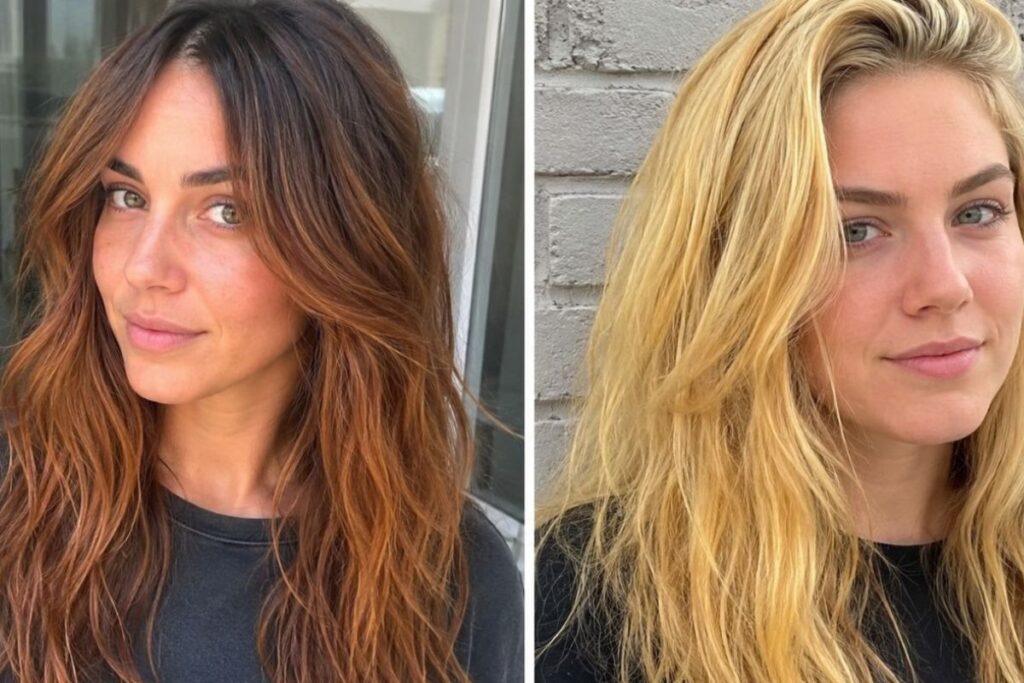
Blue shampoo and purple shampoo solve two different color problems. Blue cancels orange and copper tones. Purple cancels yellow tones. Knowing which tone is actually showing in your hair matters most. That single fact decides which product you should choose.
Why Blue Cancels Orange and Purple Cancels Yellow
This distinction comes directly from where each color sits on the color wheel. Blue sits across from orange. That is why it neutralizes orange and copper brassiness so effectively. Purple sits across from yellow. That is why it works so well on the yellow tones in lighter blonde and gray hair.
Brunette and dark blonde hair typically develops orange brassiness first. That hair naturally contains more warm, orange leaning pigment underneath. This is exactly why blue shampoo is the better match for that hair type. Lighter blonde, silver, and gray hair typically develops yellow brassiness instead. There is less underlying pigment there to begin with. This is why purple shampoo tends to work better on that hair.
Can You Use Both If You Have More Than One Undertone
Yes, and many people with more complex color actually need both at different points. Multi tonal hair often shows more than one undertone at once. A common example is hair with warmer, orange leaning roots. The ends on that same head might be lighter and more yellow toned. This happens frequently with balayage and grown out highlights.
In this situation, alternate blue and purple shampoo. This works better than picking just one. Use them on different wash days instead of combining them. Using blue shampoo on one wash day addresses the orange tones at the roots. Using purple shampoo on a different wash day addresses the yellow tones at the ends. This keeps both undertones controlled. You avoid overloading your hair with too much pigment from a single product used every time.
| Feature | Blue Shampoo | Purple Shampoo |
| Cancels which tone | Orange and copper | Yellow |
| Best hair color | Brunette, brown, dark blonde | Light blonde, silver, gray |
| Leave-on time | 2 to 4 minutes | 2 to 5 minutes |
| Use frequency | 1 to 2 times weekly | 1 to 2 times weekly |
| Can they be combined | Yes, on alternating wash days | Yes, on alternating wash days |
How to Use Blue Shampoo the Right Way
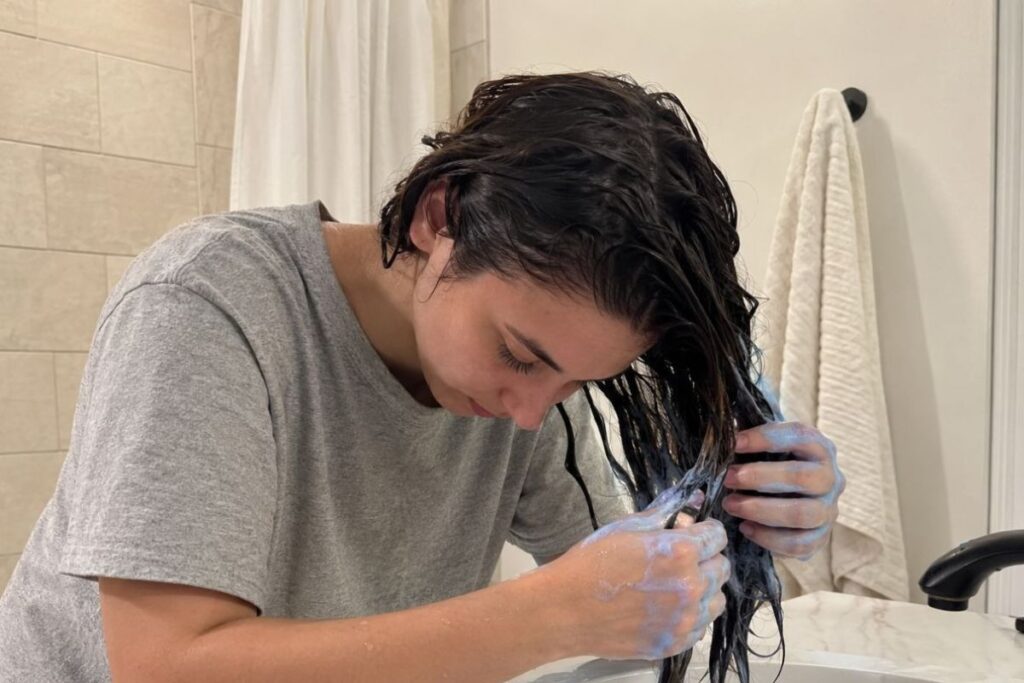
Blue shampoo delivers noticeably better results when applied correctly. A handful of small mistakes cause most bad outcomes. These common errors lead to uneven or overly ashy results.
Step by Step Application
Step 1: Wet your hair fully before applying blue shampoo. Never apply it to dry hair. Dry strands absorb pigment differently than wet ones.
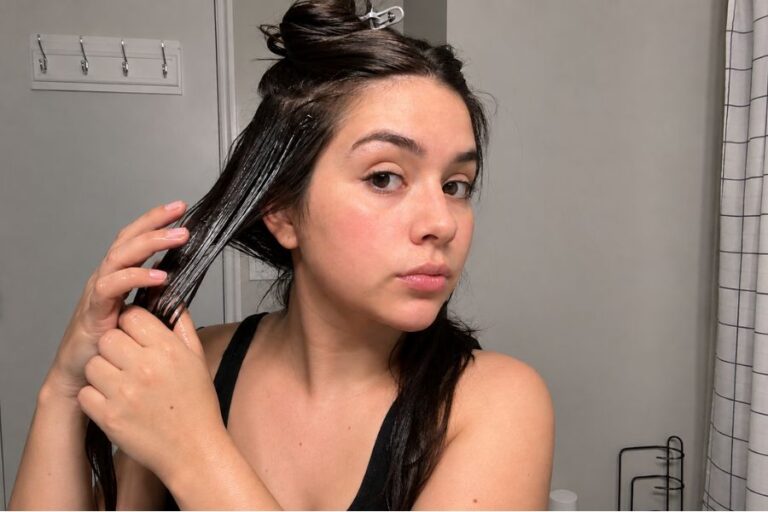
Step 2: Work the shampoo through evenly from roots to ends. Focus a little extra product on the areas showing the most visible warmth.
Step 3: Leave it on for 2 to 4 minutes. Check your specific product’s instructions. Leave on time can vary depending on how concentrated the pigment is.
Step 4: Rinse thoroughly with cool water rather than hot water.
Step 5: Follow with a regular conditioner. This restores moisture and smooths the hair cuticle.
Always Apply to Wet Hair, Never Dry
Dry hair and wet hair behave differently when you apply blue shampoo. Wet strands are already saturated, which helps the pigment spread evenly across each strand rather than concentrating in one spot. Dry strands have nothing to dilute the formula, so the same amount of product lands more intensely in the areas you spray first. That uneven concentration is what leads to patchy or overly ashy results, not a difference in how open the cuticle is.
This matters because uneven concentration creates real problems. A patchy or overly ashy result often comes from this exact mistake. An unexpectedly dark result can too. Applying blue shampoo to fully wet hair keeps the pigment spreading evenly across every strand. This gives you a far more even and controllable outcome.
Exact Leave On Time and Rinse Temperature
Most blue shampoo formulas need somewhere between 2 and 4 minutes. This time lets the formula fully deposit its pigment. Leaving it on for much longer than that does not reliably improve the result. In many cases, it actually overcorrects the tone instead. Your hair ends up looking cooler and flatter than intended.
Rinsing with cool water afterward serves a real purpose beyond comfort. Cool water helps the hair cuticle close back down. Shampooing opens that cuticle up in the first place. Closing it again helps lock the toning effect in place. Your hair also looks shinier immediately afterward.
How Often Should You Use Blue Shampoo?
There is no single universal answer to this question. How often you should use blue shampoo depends on two specific factors. One is how quickly your hair develops brassiness. The other is how concentrated the pigment in your particular formula actually is.
Why the “Once a Week” and “Every Wash” Advice Both Exist
You will find genuinely conflicting advice from different hair care brands here. Some recommend using blue shampoo only once weekly. Others state their specific formula works fine every single wash.
Both pieces of advice can be completely accurate at the same time. Here is why. A shampoo with a higher pigment concentration works differently. It delivers a stronger toning effect per use. That strength means it needs less frequent application to avoid overcorrecting. A shampoo with a lower, gentler pigment concentration works differently. It delivers a milder effect per use. That is exactly why it can be used more often. It carries a lower risk of an ashy or grey outcome.
How to Find Your Own Right Frequency
The safest starting point for anyone new to blue shampoo is to use it once or twice weekly. Follow this regardless of what a specific product label claims. From there, pay close attention to how your hair actually responds. Watch this over roughly two weeks of consistent use.
Does brassiness keep returning quickly between washes? That is a sign you can safely increase your frequency slightly. Does your hair instead start looking flat, dull, or slightly grey? That is a clear sign to cut back rather than push forward. Your own hair’s actual response is a better guide than any fixed rule.
What Happens If You Use Blue Shampoo on Hair With No Brassiness?
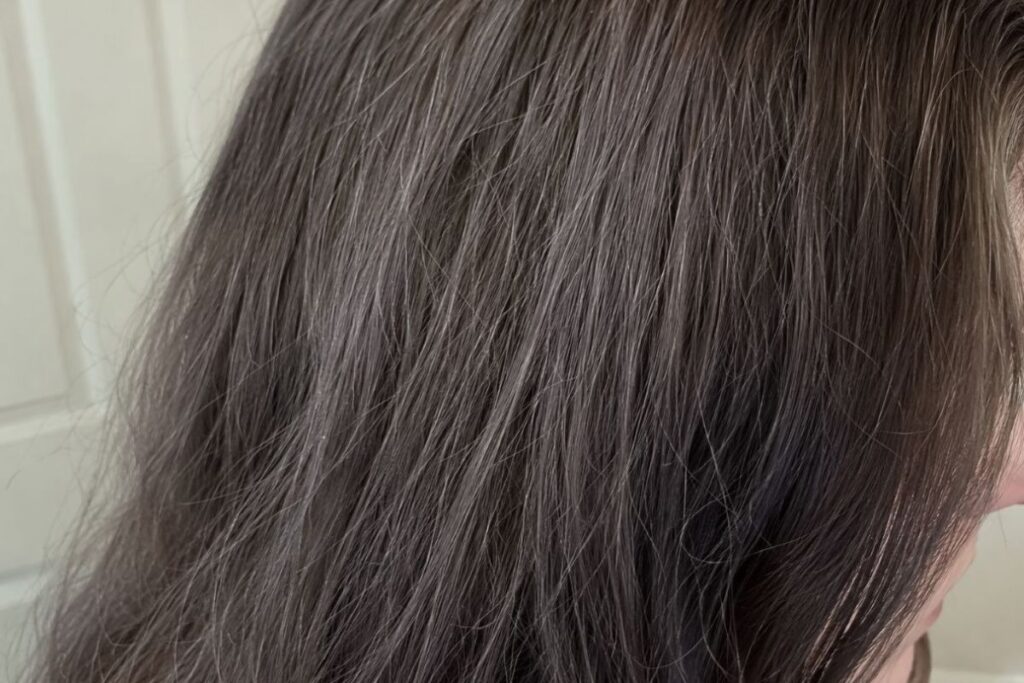
Blue shampoo will not actively damage hair that has no orange or brassy tones present. It simply will not do anything particularly useful for that hair either.
Why It Does Not Actively Harm Hair With No Warm Tones
Blue pigment works by specifically canceling out orange pigment. The orange color may not be visible in the hair. If that is the case, then there is no neutralizer for the blue pigment. That is not the case when it is occasionally applied to non brassy hair. The pigment washes away to a large extent. There is not much that will be visible either way.
Occasional accidental use is unlikely to cause any real problems. Trying a friend’s blue shampoo once, out of curiosity, falls into the same low risk category. The bigger concern only shows up with sustained, repeated use over time.
Why Overuse Can Leave a Dull, Grey Cast Instead
Repeated, frequent use on hair that is already light or cool toned tells a different story. A single occasional use does not carry the same risk. There is no warm pigment to neutralize. The blue pigment can instead gradually build up on the hair shaft. It does not simply rinse away completely each time.
Over enough washes, this buildup becomes visible. It shows up as a dull, faintly grey or ashy cast across the hair. That is not the vibrant, neutralized result blue shampoo is actually meant to deliver. This is exactly why the decision framework below matters so much. Match the product to hair that genuinely needs it. This protects you from that outcome.
Which One Do You Actually Need? A Simple Decision Guide
Matching the right toning product to your hair comes down to two things. Your natural base color is one. The specific coloring technique you use is the other.
Match Your Base Color to Blue, Purple, or Both
Brunette and dark blonde hair often shows orange or copper brassiness. This hair needs blue shampoo specifically. Light blonde, silver, or gray hair showing yellow brassiness needs purple shampoo instead. Some hair shows both warm roots and lighter, more yellow toned ends at once. That hair genuinely benefits from using both products. Alternate them across separate wash days. Do not combine them into a single wash.
Match Your Technique to How Often You’ll Need It
Full color services show brassiness the fastest of any technique. Heavily lightened hair does too. The hair’s natural pigment structure has been altered the most in these cases. This hair type often needs blue or purple shampoo more frequently to stay looking fresh.
Highlighted or balayage hair usually needs toning shampoo less often. A full color needs it more. A smaller percentage of the total hair gets processed in these techniques. Less of it gets lightened too. Natural, never colored hair needs it the least of all. It typically only needs help after a season of heavy sun exposure. Frequent heat styling can also visibly shift the natural tone toward a warmer shade than it started.
Conclusion
What blue shampoo does comes down to one simple mechanism. It deposits blue pigment onto your hair to cancel out orange and copper brassiness. This uses basic color theory. That theory has been part of professional color correction for years.
Remember three things. First, blue shampoo works best on brunette and dark blonde hair with real warm tones. It does little for hair with no brassiness at all. Second, always apply it to wet hair. Follow the leave on time for your specific formula. Third, how often you use it depends on your hair’s warmth level. There is no single universal rule.
Explore more hair color guides on HairStyleFreek. Build a routine that keeps your exact shade looking fresh.