
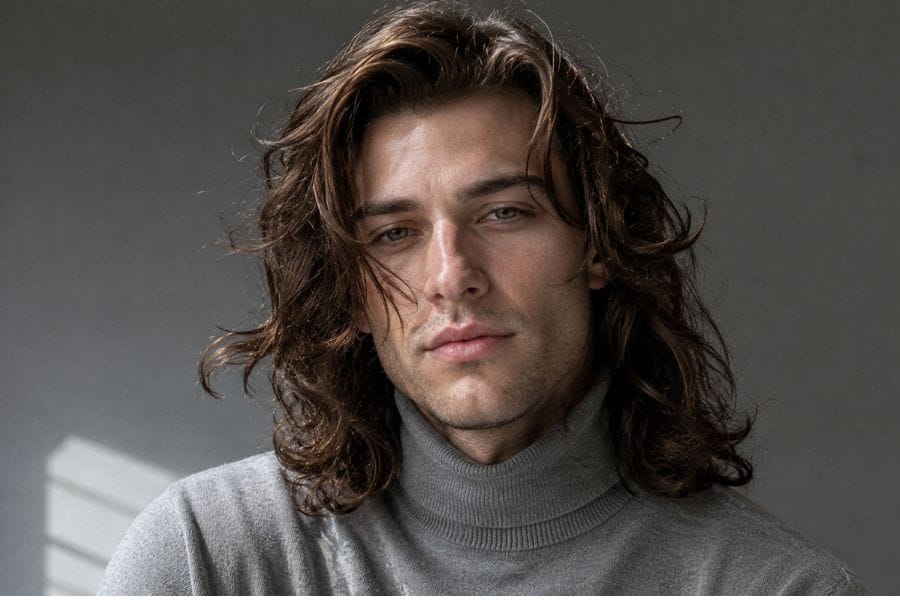
Scalp hair grows about half an inch a month, which means a man starting from a short cut usually needs close to a year before his hair reaches his shoulders. That one number shapes every choice among long hairstyles for men. It decides which looks you can wear now, which ones have to wait, and why the in-between stage feels so long. Maybe you are growing your own hair, or helping a son, partner or friend choose a style. Either way, the real question is not which style looks best in photos. It is which one fits the length, texture and daily routine you actually have.
✔ Key Takeaways
- Long hair for men usually starts at shoulder length.
- Hair grows about half an inch a month, so most men need close to a year to grow from short hair to shoulder length.
- Popular long hairstyles for men include the man bun, the long layered cut, the shag and several braid styles.
- Your face shape and hair texture both affect which long style looks best on you.
- A trim every eight to ten weeks keeps split ends in check without costing much length.
What Counts as Long Hair for Men?
Long hair for men means hair that reaches the shoulders or beyond. Shoulder length is the usual starting point. That is roughly when hair gets long enough to tie back or braid. Anything shorter usually counts as medium length, even if it covers the ears.
The exact cutoff can shift. It depends on hair type. A stylist may call straight hair at collarbone length “medium.” But the same length on curly hair often looks longer, since curls shrink up as they dry.
Short, Medium, and Long: Where the Lines Are Drawn
Short hair sits above the ears and off the collar. Medium hair falls between the ears and the shoulders. Many men call this the awkward stage. Long hair starts at the shoulders. It can grow well past the middle of the back over several years.
Most tie up styles need real length to work. That includes the man bun and braids covered later in this guide. You usually need eight to nine inches of hair. Starting from a short cut, that takes a year or a little longer at the average growth rate, as long as you skip big cuts along the way.
Is Long Hair In Style for Men Right Now?
Long hair is firmly back in mainstream men’s grooming, even though no reliable figure shows exactly how many men wear it. Tight fades and short crops dominated for years, and more men now choose length as a way to stand out or show some personality.
Several shifts made that choice easier. Workplace dress codes have relaxed in many industries, so shoulder-length hair or a neat bun rarely draws the attention at the office it once might have. Actors, athletes and musicians often wear long hair. Instagram and TikTok are also full of men sharing their hair growth month by month, which makes the awkward middle stage look normal instead of like a mistake.
Why The Trend Resurged
The pandemic years gave many men an unplanned trial run. With barbershops closed for long stretches during lockdowns, many men let their hair grow longer than usual. Some found they liked the longer look once it settled into shape. That habit stayed after shops reopened, and shampoos, conditioners and styling products made for men with long hair are now easy to find.
Long Hair Versus Short Hair: A Quick Comparison
Long hair needs fewer trips to the barber. You don’t have to chase a precise shape every few weeks. It also gives you more choices. You can wear it down, tied back, or braided. The tradeoff is a longer daily routine. You also have an awkward growing phase to get through.
Short hair needs more frequent trims to hold its shape. But it takes far less daily effort to style. It also has fewer surprises, since there is no long growth phase to manage.
The Science Behind Growing Long Hair
Knowing how hair actually grows will save you a lot of frustration.
Hair growth is a repeating cycle. Hair follicles move through three stages. Each hair on your scalp sits at a different point in this cycle at any time. That is why hair grows and sheds all the time, not all at once.
The Hair Growth Cycle Explained
Each hair on your scalp moves through three phases on its own schedule, which is why you shed a little every day instead of all at once. The first phase, anagen, is the active growth stage. Research published in Cold Spring Harbor Perspectives in Medicine reports that anagen lasts about three years on average. It can range from one to six years, depending on where the hair grows on the body. At any given time, about 90 to 95 percent of hairs are in this phase.
Next comes catagen, a short transition of about two to three weeks in which the follicle shrinks and pulls away from its blood supply. Telogen, the resting phase, follows and usually lasts around three months. At the end of it the old hair falls out and a new strand starts growing from the same follicle.
For anyone growing their hair long, anagen is the phase that matters, because uncut hair can only get as long as its growth phase allows. A 2023 review in the Journal of Clinical Medicine notes that uncut hair length depends directly on how long anagen lasts. It also notes that hormones, stress, poor nutrition, poor sleep and some medicines can push hair out of anagen and into rest too early.
What Is Terminal Hair Length?
Terminal hair length is the longest a single strand of hair can grow before it falls out at the end of its cycle. Genetics set the upper limit, while stress, illness or poor nutrition can only cut a growth phase short. It comes down to how long your anagen phase lasts. A man with a six year anagen phase can likely grow much longer hair than a man with a two year phase. This holds true no matter what products either man uses.
This is why some men hit a growth wall no matter what they try. Meanwhile, others grow hair down their back with little effort. No shampoo, vitamin or styling product has been shown to extend that genetic limit.
How Fast Does Hair Actually Grow?
Scalp hair grows at roughly 0.35 millimeters a day, which adds up to a little over a centimeter a month and around 15 centimeters, or six inches, a year. Some men sit slightly above or below that average, and age, illness, stress and a poor diet can all slow growth down.
Knowing the rate makes planning straightforward. If your hair currently reaches your ears and you want it at your shoulders, expect roughly eight to twelve months of growth, assuming you only take small trims along the way.
Long Hairstyles for Men, Grouped by How They Are Worn
The seventeen looks below fall into five groups: tied up, braided, worn down, natural texture and distinct cuts. Sorting them this way makes the choice easier. Your hair texture and how much time you have each morning usually decide the group. Your face shape and personal taste then decide the style within it.
Tie Up Styles
The Man Bun and Top Knot
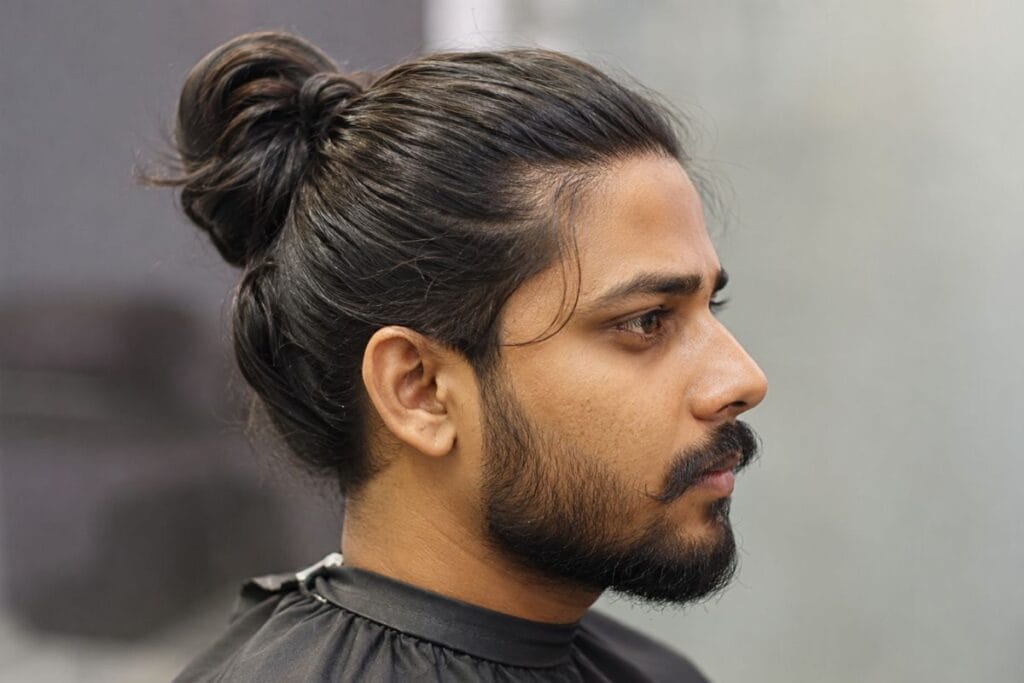
The man bun gathers all your hair at the crown or back of your head. Then it twists into a coiled knot. The top knot is a close cousin. It sits higher on the head and looks a bit more polished. Both need at least shoulder length hair. Both keep hair out of your face at work or during exercise.
The Low Bun and Messy Bun
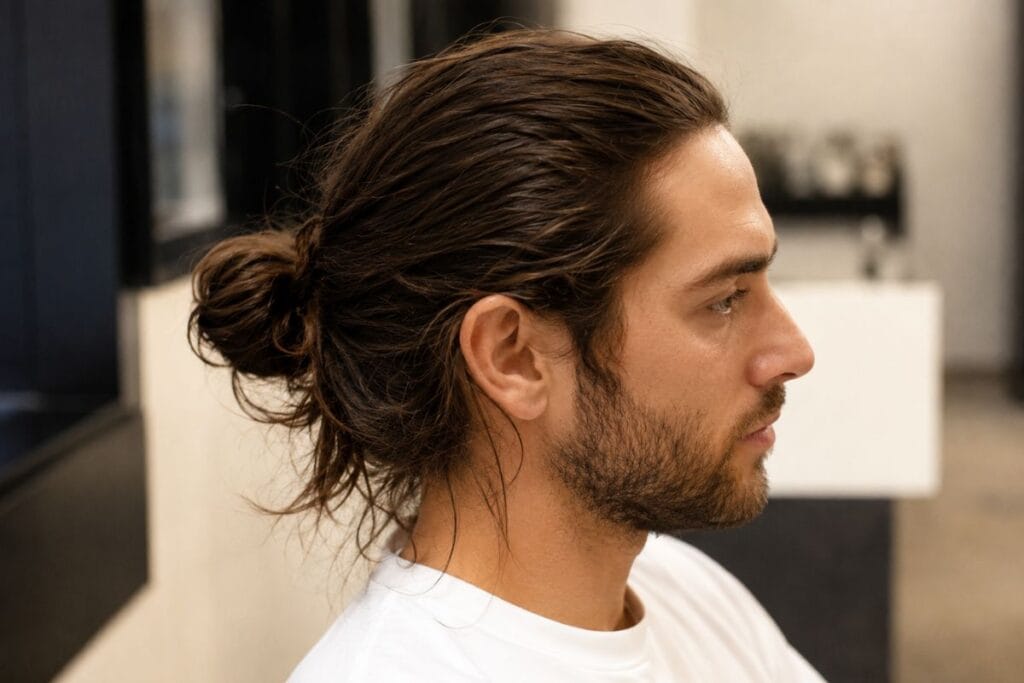
A low bun sits at the back of your neck. It looks more formal, making it a good pick for weddings or dinners out. The messy version loosens things up. A few pieces come free for a relaxed, easy look. This version works better for everyday wear.
The Long Ponytail
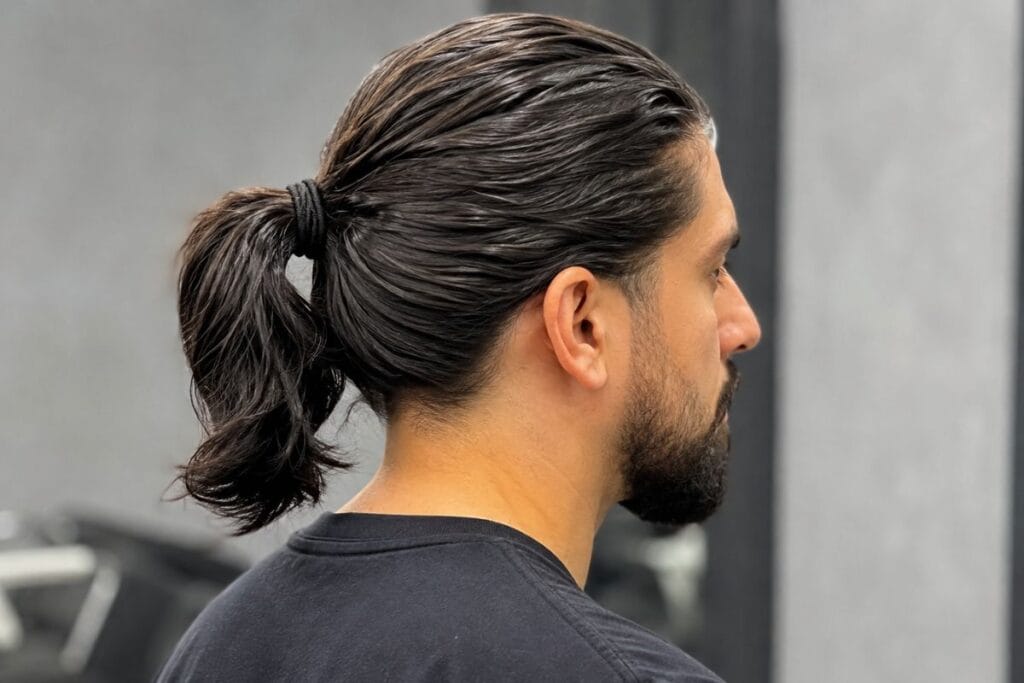
A ponytail is the fastest way to get long hair off your face. A high ponytail feels more sporty. A low one at the nape feels more classic.
Braid Styles
French Braid and Dutch Braid
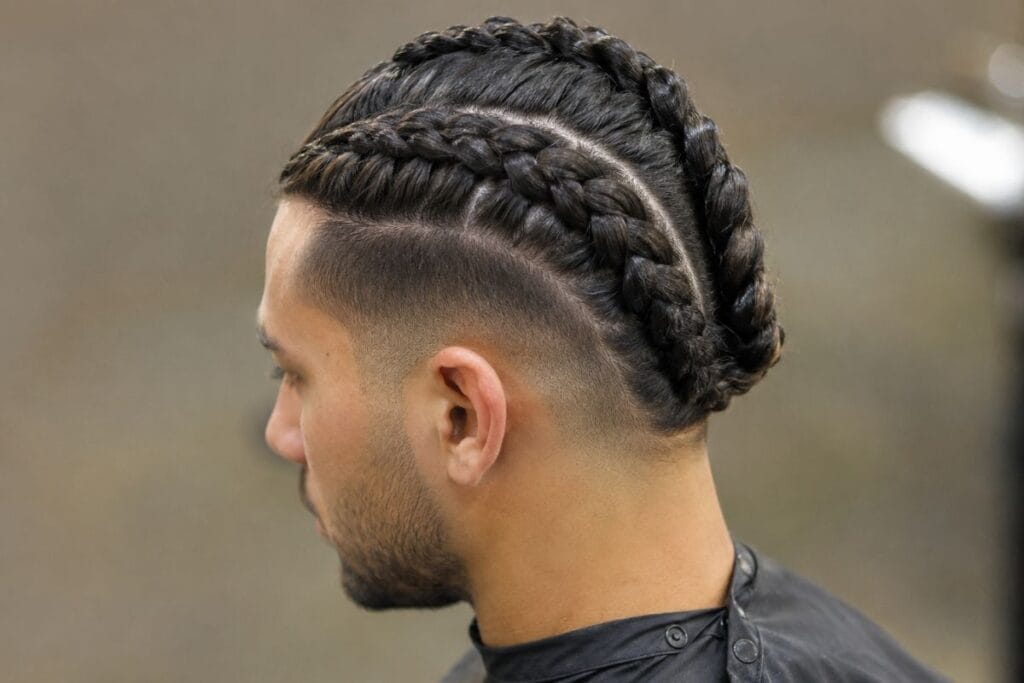
The French braid weaves hair over itself as it moves down your head. This gives a braid that lies fairly flat against the head. The Dutch braid does the opposite. It weaves strands under each other. This makes the braid stand out more from the scalp. Both take practice. Both look great once you master them.
Fishtail Braid
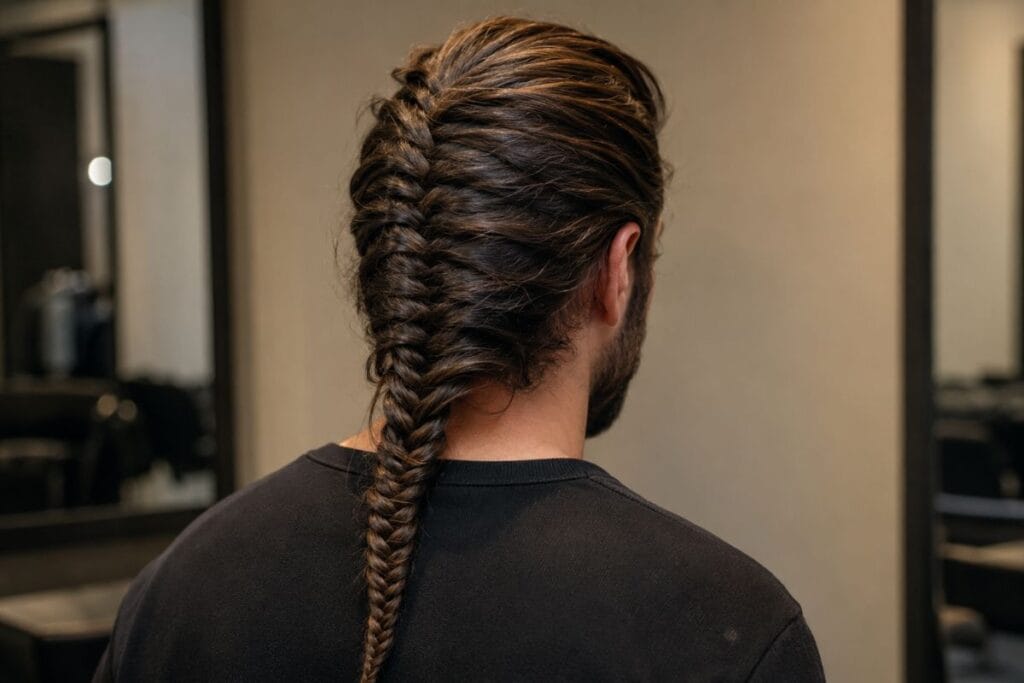
The fishtail braid splits hair into two sections instead of three. Then it weaves small pieces from each side into the other. This makes a finer, more detailed pattern than a standard braid. It works especially well on long hair.
Viking Braids
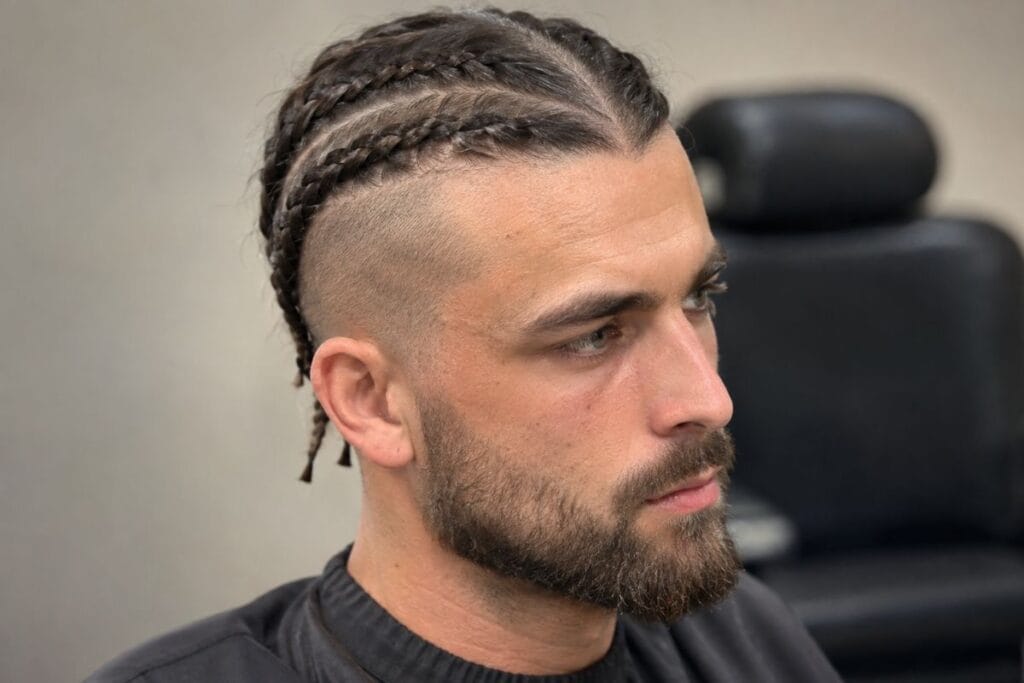
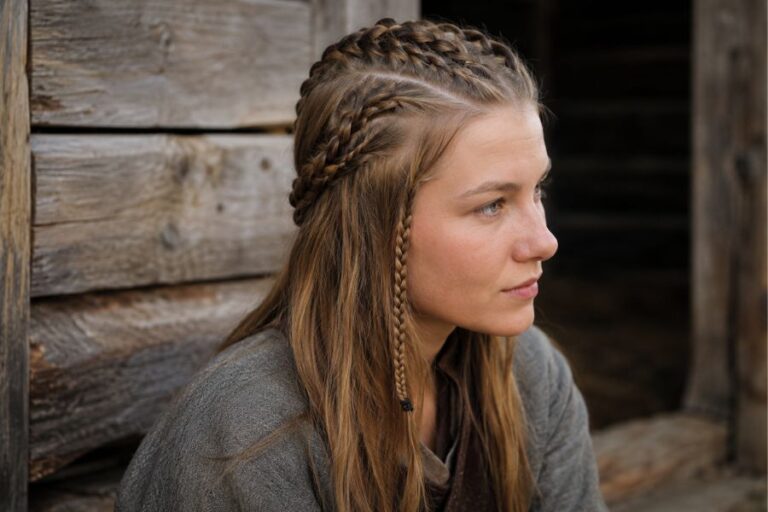
Viking braids usually use two braids, one on each side of the head. Some men pair this with shaved or tapered sides for contrast. This style has grown popular along with interest in historical and fantasy shows and films.
If you like the Norse look, there are more variations in this collection of Viking haircuts for men.
Cornrows
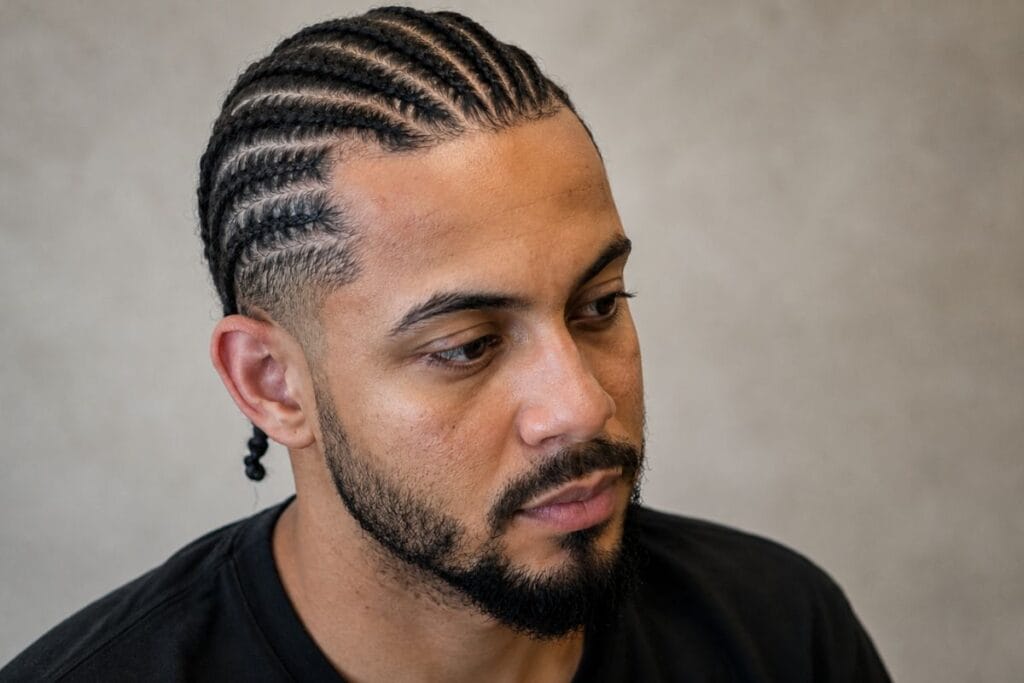
Cornrows are tight braids sewn close to the scalp. They can run in straight or curved rows. They work especially well on coily and curly hair. They can last one to two weeks between restyles.
Wear It Down Styles
Shoulder Length Wavy or Straight
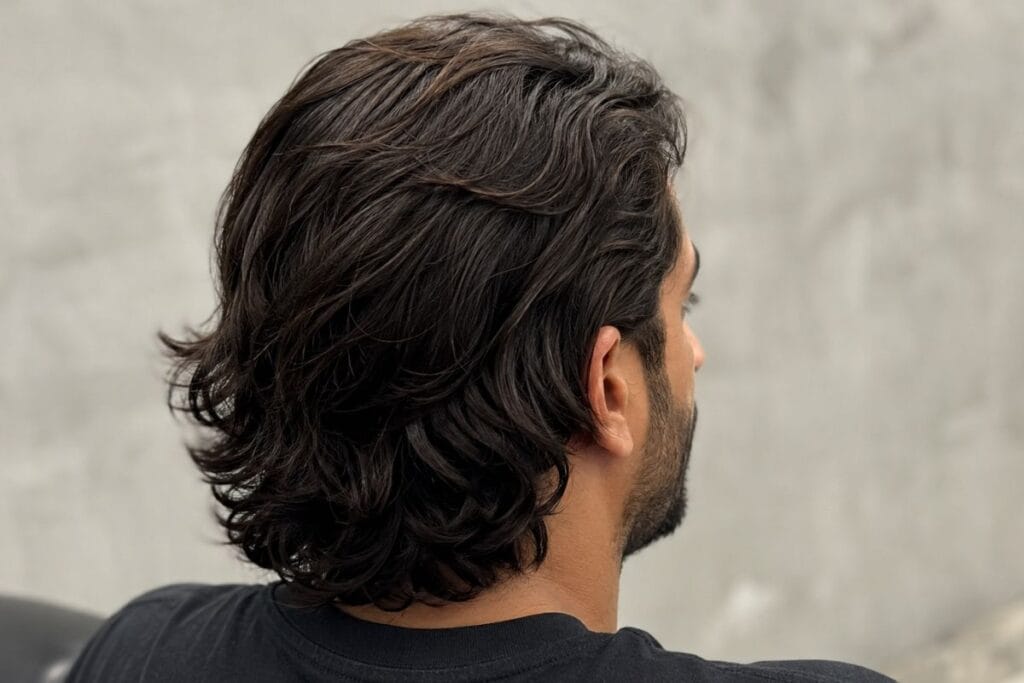
This is the easiest way to go long. It takes the least commitment. Wavy versions move naturally. Straight versions look sleeker and more polished.
One Length Tucked Behind the Ear
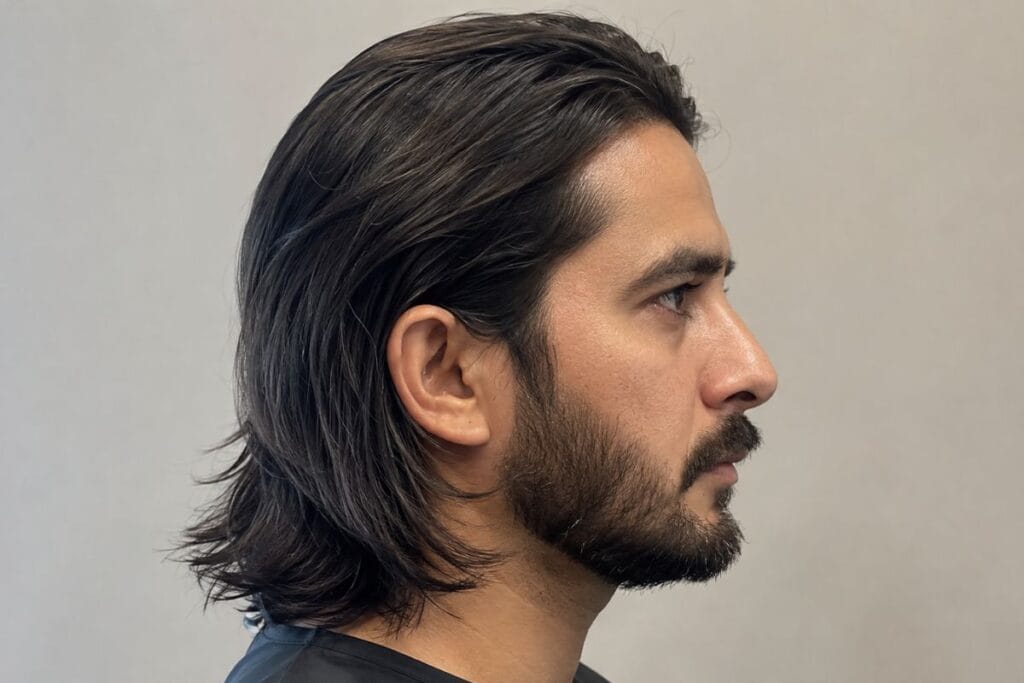
This style keeps hair at one length throughout. It often falls just past the jaw or collarbone. Then it tucks neatly behind the ears. This look has a relaxed, artistic feel. You often see it on actors in period dramas.
Long Layered Cut
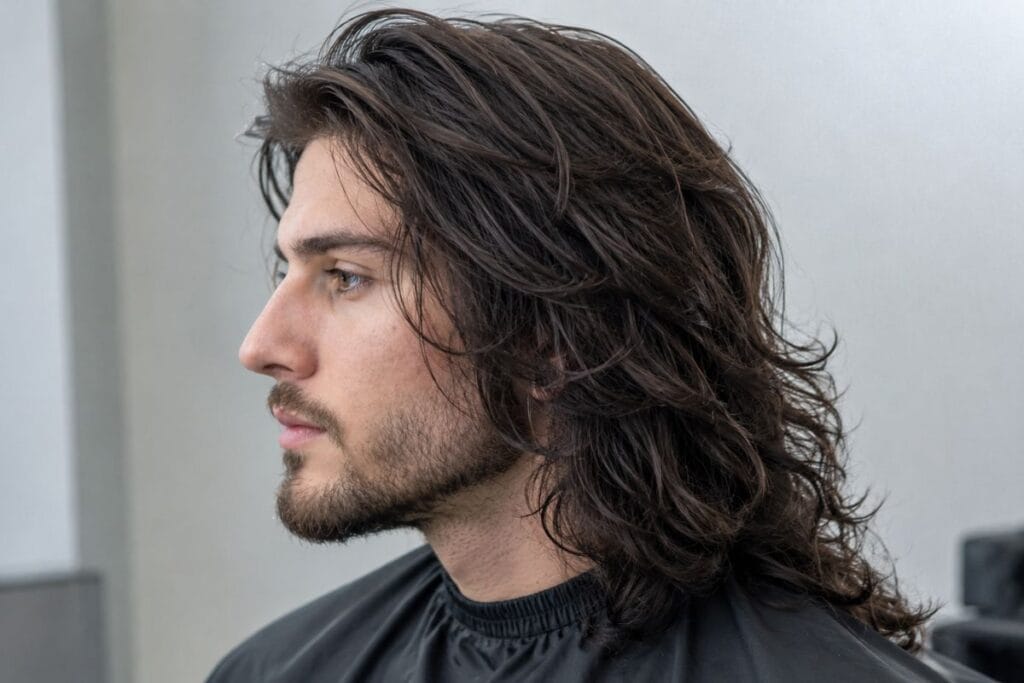
A layered cut removes weight from thick or wavy long hair. This lets it move naturally instead of hanging in one heavy mass. Layers get cut through the full length, not just at the ends. This spreads the weight evenly.
Curtain Bangs with Long Length
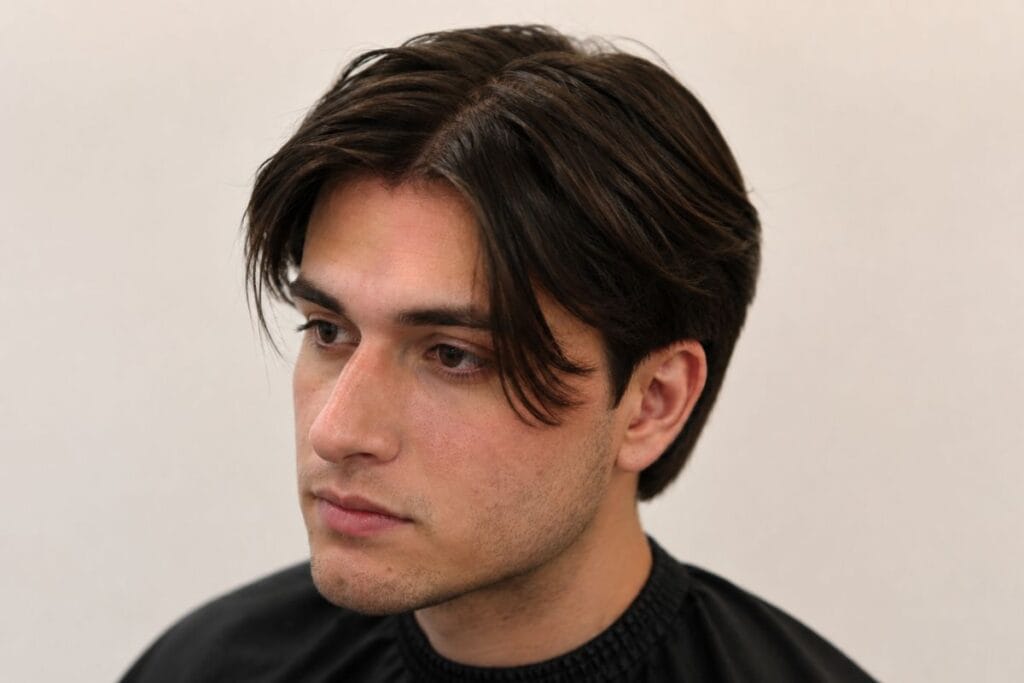
Curtain bangs part down the middle of the forehead. They sweep to either side, framing your face. The rest of your hair stays long. This style pairs especially well with oval and heart shaped faces.
Textured and Natural Styles
Natural Curly or Afro
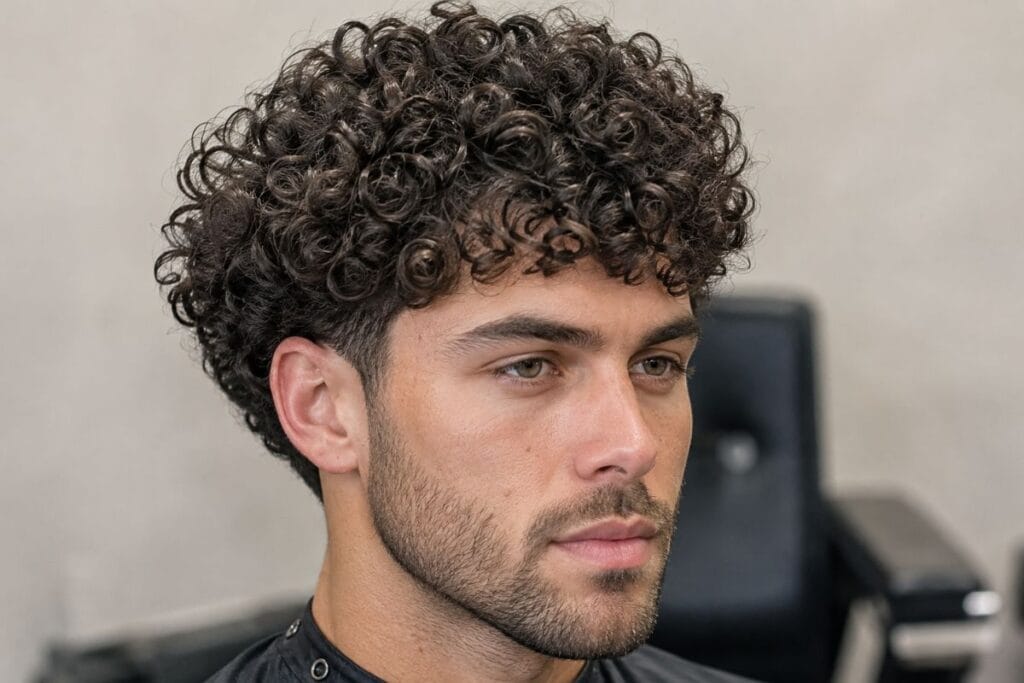
Growing curly or coily hair into its natural shape adds real volume. It needs almost no daily styling beyond moisture and some shaping. This remains one of the most striking long hairstyles for men with this hair type.
Surfer Shag
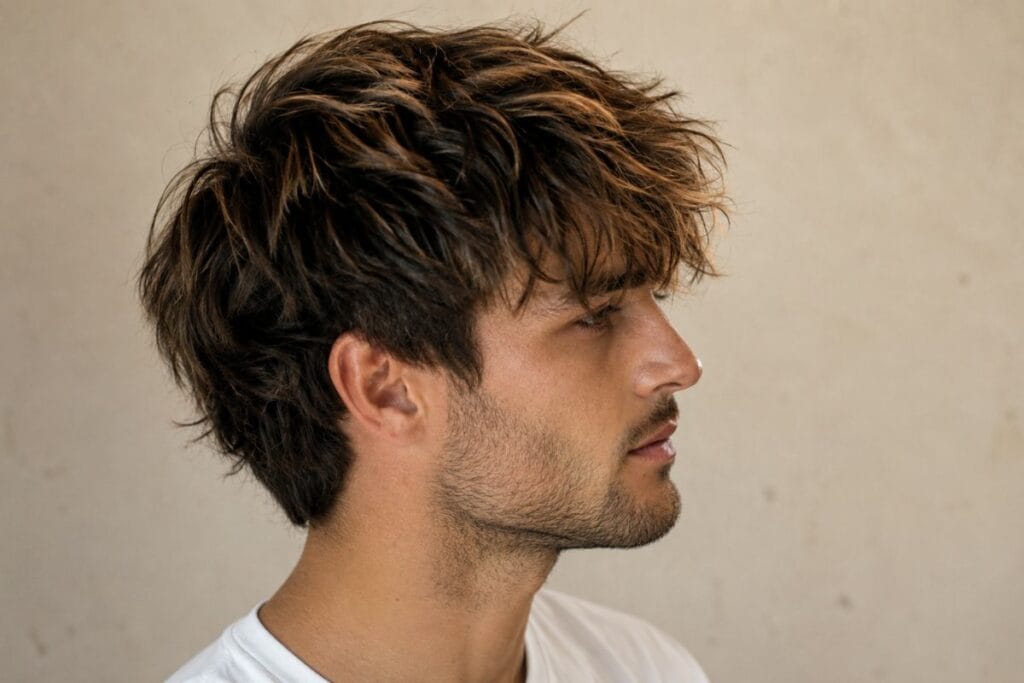
The surfer shag looks sun bleached and salty. Choppy layers give it an effortless feel. It suits men with natural waves and an active, outdoor life.
Long Shag or Wolf Cut
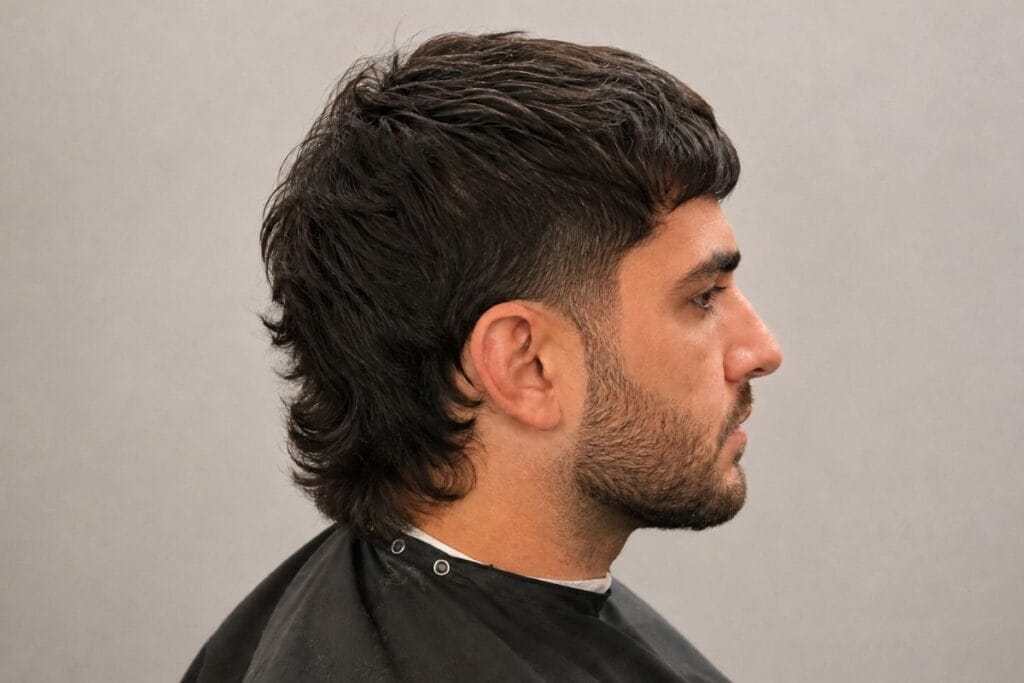
The wolf cut mixes a shorter, textured top with longer layers underneath. It creates a mullet-like shape, but with much smoother blending between lengths. It suits men who want length without a heavy, one-length shape.
Distinct Long Hair Cuts
The Modern Mullet
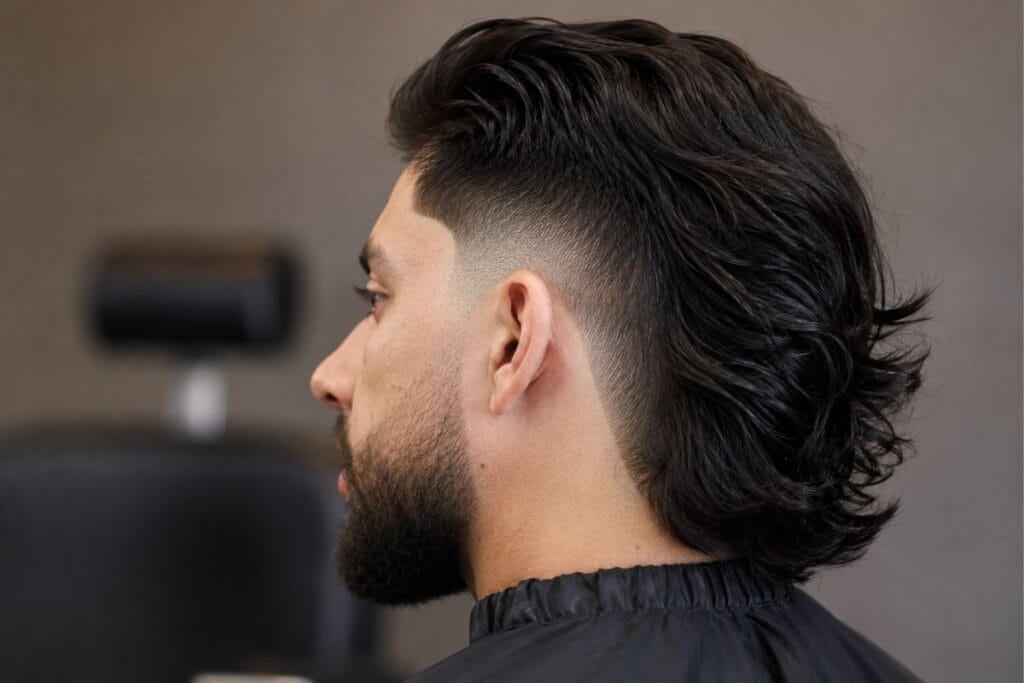
The modern mullet keeps the front and sides shorter. It leaves real length in the back. Today’s version blends the transition much more smoothly than older mullets did. It avoids the harsh line that made past versions divisive.
Locs or Dreadlocks
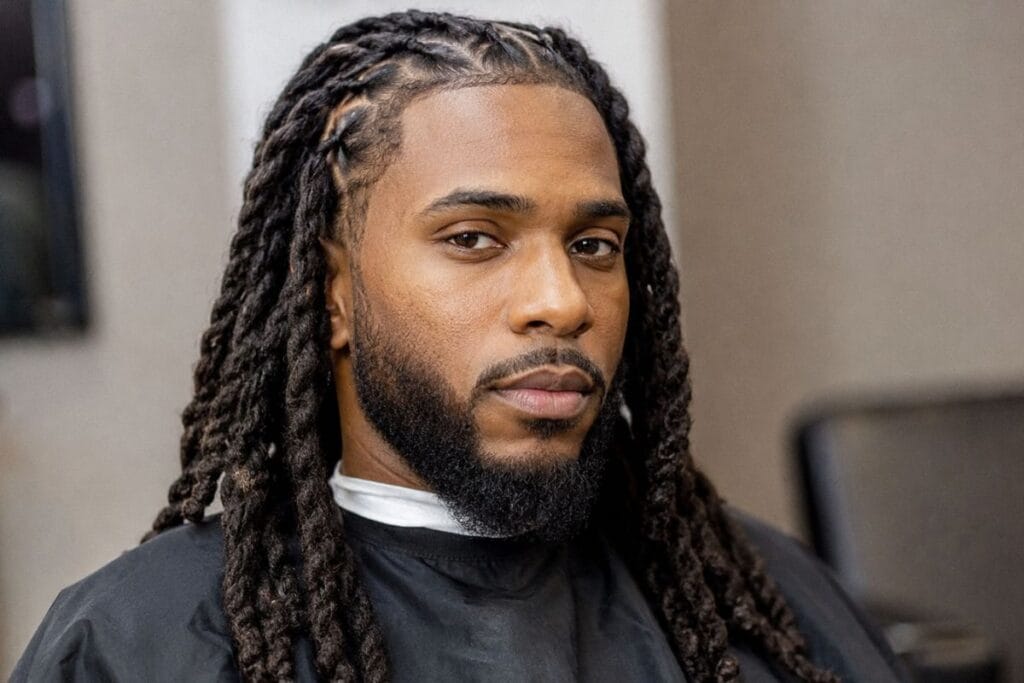
Locs form when hair is intentionally matted or twisted into rope like sections over time. They carry deep cultural and historical meaning across many communities. They also need different care than loose long hair. This usually means palm rolling or interlocking instead of regular brushing.
Half Up, Half Down Style
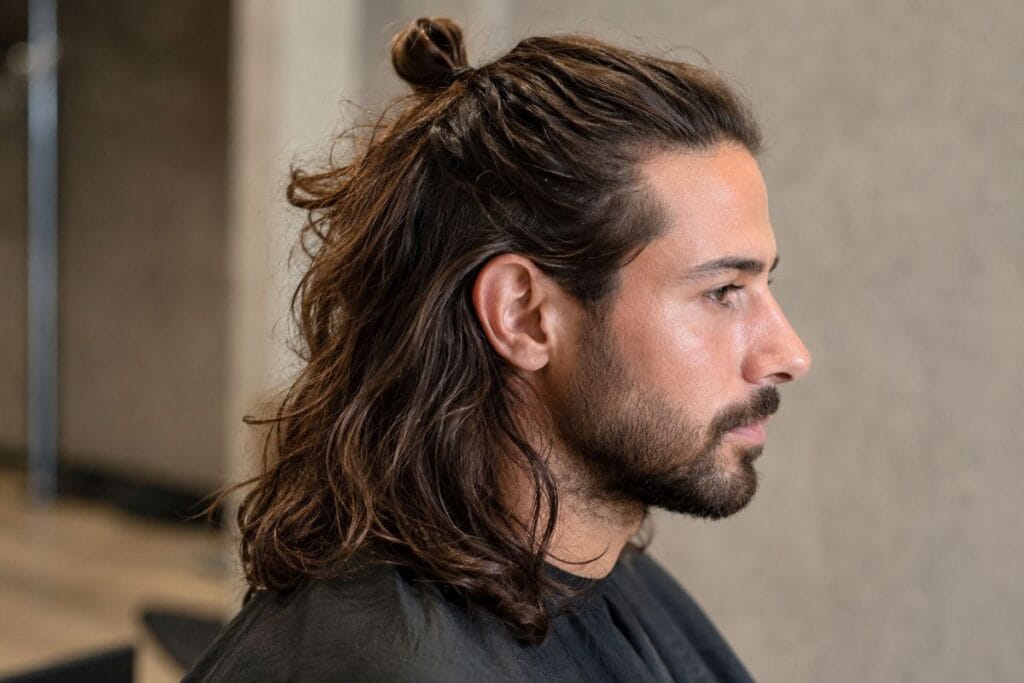
This style pulls the top section of hair back into a small knot or clip. The rest stays down. It works with almost any hair texture. It offers a middle ground between fully tied up and fully loose.
Long Hairstyles for Men Compared
| Style | Best Hair Texture | Best Face Shape | Maintenance Level | Trim Frequency | Minimum Length Needed |
| Man Bun or Top Knot | Straight, wavy | Oval, square | Low | Every 10 to 12 weeks | Shoulder length |
| Low or Messy Bun | Any texture | Oval | Low | Every 10 to 12 weeks | Shoulder length |
| Long Ponytail | Straight, wavy | Any shape | Low | Every 10 to 12 weeks | Shoulder length |
| French or Dutch Braid | Straight, wavy | Any shape | Medium | Every 8 to 10 weeks | Shoulder length |
| Fishtail Braid | Straight, fine | Any shape | Medium | Every 8 to 10 weeks | Mid back |
| Viking Braids | Straight, thick | Square, oval | Medium | Every 8 weeks | Shoulder length |
| Cornrows | Coily, curly | Any shape | Medium to high | Restyle every 1 to 2 weeks | Ear length or longer |
| Shoulder Length Wavy or Straight | Any texture | Any shape | Low | Every 8 to 10 weeks | Shoulder length |
| One Length Tucked Cut | Straight, wavy | Oval, heart | Low | Every 8 to 10 weeks | Chin to shoulder |
| Long Layered Cut | Thick, wavy | Any shape | Medium | Every 8 weeks | Shoulder length |
| Curtain Bangs, Long | Straight, wavy | Oval, heart | Medium | Every 6 to 8 weeks | Shoulder length |
| Natural Curly or Afro | Curly, coily | Round, oval | Low | Every 10 to 12 weeks | Ear length or longer |
| Surfer Shag | Wavy | Oval, square | Medium | Every 8 weeks | Shoulder length |
| Long Shag or Wolf Cut | Wavy, thick | Any shape | Medium | Every 6 to 8 weeks | Shoulder length |
| Modern Mullet | Straight, wavy | Oval, heart | Medium | Every 6 to 8 weeks | Chin length back |
| Locs or Dreadlocks | Coily, curly | Any shape | High | Retwist every 4 to 6 weeks | Ear length or longer |
| Half Up, Half Down | Any texture | Any shape | Low | Every 8 to 10 weeks | Shoulder length |
How to Choose a Long Hairstyle That Fits You
Picking the right long hairstyle for men comes down to three things. Your face shape, hair texture, and daily life matter most.
Which Long Hairstyle Works Best for Your Face Shape?
Square faces have a strong jaw that holds up well to pulled-back looks such as a top knot or Viking braids, while a surfer shag adds loose texture that softens the corners of the jaw.
Oval faces have the most freedom and can wear nearly any style on this list, from a low bun to full curtain bangs.
Round faces tend to look best with some height on top, such as natural curls or an afro with lift at the crown, combined with an off-center part instead of a flat middle part. Both add visual length to the face.
Heart-shaped faces, with a wider forehead and a narrower chin, pair well with curtain bangs or face-framing layers that balance the top half of the face. You can find more ideas for this shape in our guide to hairstyles for a heart-shaped face.
Which Long Hairstyle Fits Your Hair Texture?
Straight hair looks sleek in a one-length cut or with a center part. But it can look flat without added layers. Wavy hair suits almost every style here. This is especially true for the shag and the surfer look. Natural movement does most of the styling work. Curly hair does best in its natural shape. A layered curly cut also works well, since it lets the texture show. Coily hair suits locs and cornrows especially well. Both styles work with the hair’s natural pattern, not against it.
Which Long Hairstyle Fits Your Lifestyle?
Men in professional settings often do best with shoulder length hair or a low, neat bun. Both look put together without much daily effort. Active or athletic men usually prefer a ponytail or braids. Both stay secure through movement and sweat. Men with a casual daily routine have the most freedom. They can try shags, wolf cuts, or natural texture without worrying about a strict dress code.
Long Hair Growth Timeline: What to Expect at Each Stage
Growing out long hair for men happens in clear stages. Knowing what to expect makes the journey much less frustrating.
Step 1: Months 1 to 6, the awkward stage. Hair grows just enough to lose its old shape. But it is not long enough to style easily yet. Most men get through this stage with a slightly grown out crop. Some use a hat or headband to manage the in between length.
Step 2: Month 6 to 12, shoulder length milestones. By now, hair usually reaches the shoulders. It becomes long enough for the first tie up styles. This includes a short ponytail or a basic bun. Many men decide here whether to keep growing or stop at this length.
Step 3: Year 2 and beyond, mid back length and advanced styling. Hair past the shoulders opens up braided styles, longer buns, and more advanced looks like Viking braids. Growth feels slower at this stage. The length you gain each month is now a smaller share of your total length.
How Long Does It Take to Grow Men’s Hair Long?
Growing men’s hair from short to shoulder length usually takes eight to twelve months. This is based on the average growth rate of half an inch per month. Going from shoulder length to mid back adds another twelve to eighteen months on top of that. These numbers assume only small trims to remove split ends, not full shape cuts that remove real length.
How to Style and Maintain Long Hair
Long hair rewards a steady routine more than any expensive product. The basics matter more than any single item you buy.
Daily Styling Routine
The best ways to style long hair for men day to day are:
- Apply a light product to damp hair, like a texture spray or light styling cream. Keep it away from the roots.
- Let your hair air-dry when you can. Or blow dry with a round brush for more shape and lift.
- Finger comb or lightly brush your hair into place. Do not force a strict part.
- Add a small amount of light oil to dry or frizzy ends.
- Skip heavy pomades or waxes on fine hair. They weigh it down and make it look flat.
Trim Frequency and Common Mistakes
Skipping trims is the most common mistake men make while growing out long hair. Split ends travel up the hair shaft if left alone. Over time, this forces a bigger cut than you wanted. A trim every eight to ten weeks keeps the shape intact. It still allows steady length gain.
Using heat tools too much causes problems too. A straightener or curling iron without heat protectant spray will dry out hair. This causes frizz and breakage over time. Wrong products cause issues as well. Heavy creams and oils can flatten fine hair. Light sprays and mousses work much better for that texture.
Washing and Conditioning Basics
Washing two to three times a week is a common starting point for long hair, and you can adjust from there based on how quickly your scalp gets oily. Daily washing can leave long lengths dry and frizzy, especially with a shampoo that is too harsh, although men with a very oily scalp may still need to wash more often. Use conditioner every time you wash. Pick a separate conditioner, not a combined two in one. Long hair needs more moisture than a two in one product usually gives.
Long Hair with Thinning or Fine Hair
Long hair and thinning hair can go together. But the honest truth is that your options shrink as hair loss progresses.
Can You Grow Long Hair If You Are Thinning or Balding?
Yes. Men with early stage thinning can often still grow their hair to a moderate length. A common rule of thumb is to stop around jaw length rather than push for shoulder length or longer. Past that point, thinning areas get harder to hide. The weight of longer hair can actually make thin patches more visible, not less.
Styling only changes how thinning looks. To slow the thinning itself, a dermatologist can walk you through the treatment options that fit your situation.
Styling Tricks That Add the Appearance of Density
Layered cuts are one of the simplest ways to make thinning hair look fuller. Removing weight at the ends lets the rest of the hair sit with more volume. It stops the hair from lying flat under its own weight. Volumizing mousse at the roots also helps. Apply it before you blow dry to create lift. This makes hair look thicker than it is. Hair building fibers can help too. These are cosmetic powders that cling to your existing strands. Use them around the hairline and part to hide visible scalp.
When a Shorter Length Is the Better Choice
If thinning has progressed a lot, a shorter cut usually looks fuller and neater. Short hair does not draw attention to areas of visible scalp the way long hair can. It also takes far less daily effort to style around problem spots. A good barber can tell you honestly if your hair type and thinning pattern will support length. Bring this up directly at your next appointment.
Before Your Next Trim
The most useful thing to take from all of this is a starting point, not a favorite photo. Measure where your hair sits today, check the minimum length in the comparison table for the style you want, and divide the gap by half an inch to get a rough number of months. That figure tells you whether your goal is a season away or a two-year project.
At your next barber visit, say clearly that you are growing your hair out and ask for a trim that removes split ends and keeps the shape tidy, not a
ver is trending, and the months in between will feel like steady progress instead of waiting.


5 Comments