
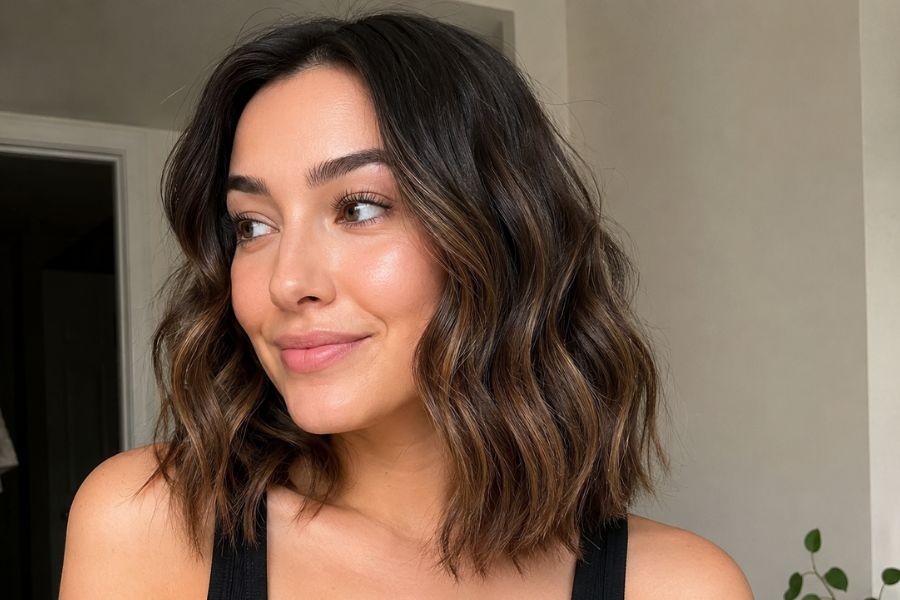
Wrap ten inches of hair around a 2-inch curling iron, and it goes around only about one and a half times. That is because the barrel is roughly 6.3 inches around. Around a 1-inch barrel, the same section circles about three times. This is why learning how to style shoulder length wavy hair can feel so confusing. Long-hair routines expect enough length to wrap a big barrel many times, while short-hair routines expect almost no length at all.
Styling wavy hair at this in-between length works best when you build the routine around it. Use leave in conditioner before any styler on wash day, and pick a barrel between 1 and 1.5 inches if you use heat. If you air dry, scrunch while your hair is soaking wet. On day two, a light mist can bring the waves back before you need to wash again.
✔ Key Takeaways
- Product order matters. Apply leave in conditioner before any styling product, not after.
- Choose a curling iron barrel between 1 and 1.5 inches for this length.
- Air drying and heat styling both work well. Pick based on your time and your hair that day.
- A wide tooth comb brushes out curls more evenly than fingers alone.
- Humidity and season change how your hair behaves. Your routine should shift with them.
How to Style Shoulder Length Wavy Hair
Here is how to style shoulder length wavy hair, step by step. Start on wash day with a leave in conditioner on wet hair, then layer your curl cream, mousse or gel on top. From there, pick one of two routes. With a curling iron, use a 1 to 1.5 inch barrel and curl each side away from your face. Let the curls cool fully, then comb them out with a wide tooth comb.
If you air dry, scrunch the product in while your hair is still soaking wet. Skip the comb, because combing air-dried waves breaks up the clumps that give them shape. On day two, a light mist of water and a gentle scrunch usually brings the shape back.
Why Generic Wavy Hair Advice Often Falls Short at This Specific Length
Long hair holds a wave in a different way. Its own weight slowly pulls the pattern looser, and there is enough length to wrap a large barrel several times. Short hair has the opposite problem, with so little length per section that most tools have very little to grip. Shoulder length hair sits between the two, so a routine made for long or short hair usually needs changes here. The main ones are barrel size and how you section and curl.
Does Shoulder Length Wavy Hair Need a Different Curling Iron Than Long Hair?
In most cases a smaller barrel works better. A 2-inch barrel gives long hair soft, loose curls, but it is too wide for shoulder length hair. Each section wraps around it only once or twice, so you often get a bend or a flipped end instead of a wave. A barrel of about 1 to 1.5 inches lets the same section wrap enough times to form a real wave, which still looks relaxed once it is combed out.
What Counts as Shoulder Length Wavy Hair
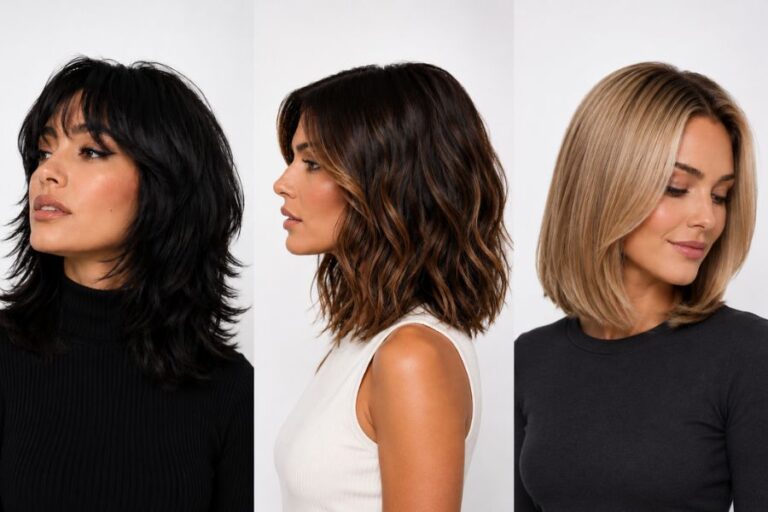
Shoulder length wavy hair falls between the chin and the collarbone. At this length, the wave pattern typically looks looser and less tightly defined than the same texture worn shorter.
The Length Range: Chin to Collarbone
This range gives real flexibility in how the hair falls and moves. Hair that grazes the jaw looks bold and structured. Hair that brushes the collarbone feels softer and more relaxed. Both count as shoulder length. But hair near the jaw wraps fewer times around a curling iron, so it usually suits a smaller barrel. If you are still deciding on your overall cut, our guide to shoulder length hairstyles for women shows the cuts and layers that work at this length.
Loose, Medium, and Tighter Wave Categories, and Why This Changes Technique
Wavy hair generally falls into three broad categories. Loose waves have a gentle S shape. Medium waves show more defined bends. Tighter waves lean closer to a true curl pattern. A smaller curling iron barrel and more product tend to suit tighter wave patterns. Looser waves often need less product and a barrel toward the 1.5-inch end of the range, so the finish does not look overly done.
Wash Day: Getting Product Order Right From the Start
The right product order starts in the shower, well before any styling tool comes out. Getting this sequence wrong can leave wavy hair looking flat or frizzy by the end of the day.
Shampoo and Conditioner Application, Avoiding the Roots
Apply shampoo directly to your scalp and roots, since that is where oil and product buildup actually collect. Conditioner goes on your mid lengths and ends instead and stays off the roots completely. That way your scalp does not feel weighed down, and the driest parts of your hair still get conditioned. If your waves feel rough or frizzy right after a shower, even with conditioner, check whether your shampoo is too harsh for your hair type.
Leave In Conditioner and Why Skipping It Shows Up Later in the Day
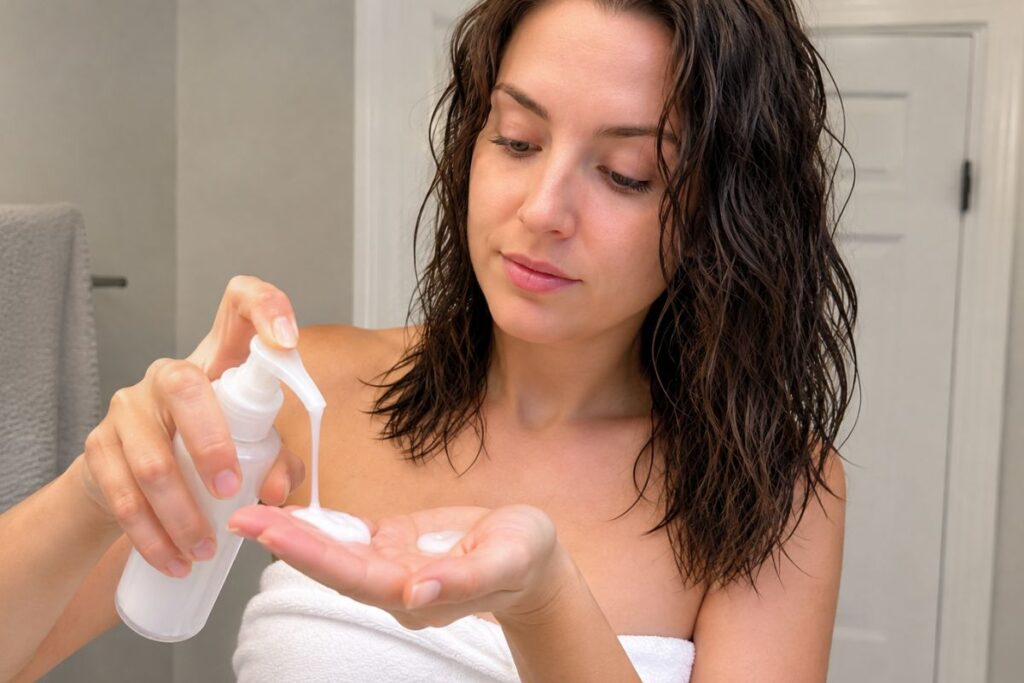
Apply a leave in conditioner to wet or towel-blotted hair before any other styling product. This step adds a layer of moisture that later products build on instead of fighting against. Skipping it often shows up hours later, when your ends look dry and straw-like even though the styling product itself went on correctly.
Step 1: Shampoo your scalp and roots only, then rinse thoroughly.
Step 2: Apply conditioner to mid lengths and ends, avoiding the roots.
Step 3: Rinse out the conditioner, then gently squeeze excess water from your hair.
Step 4: Apply leave in conditioner to damp hair, working it through mid lengths and ends.
Step 5: Follow with your chosen styling product, curl cream, mousse, or gel, based on your hair’s needs that day.
Curling Iron Technique for Shoulder Length Waves
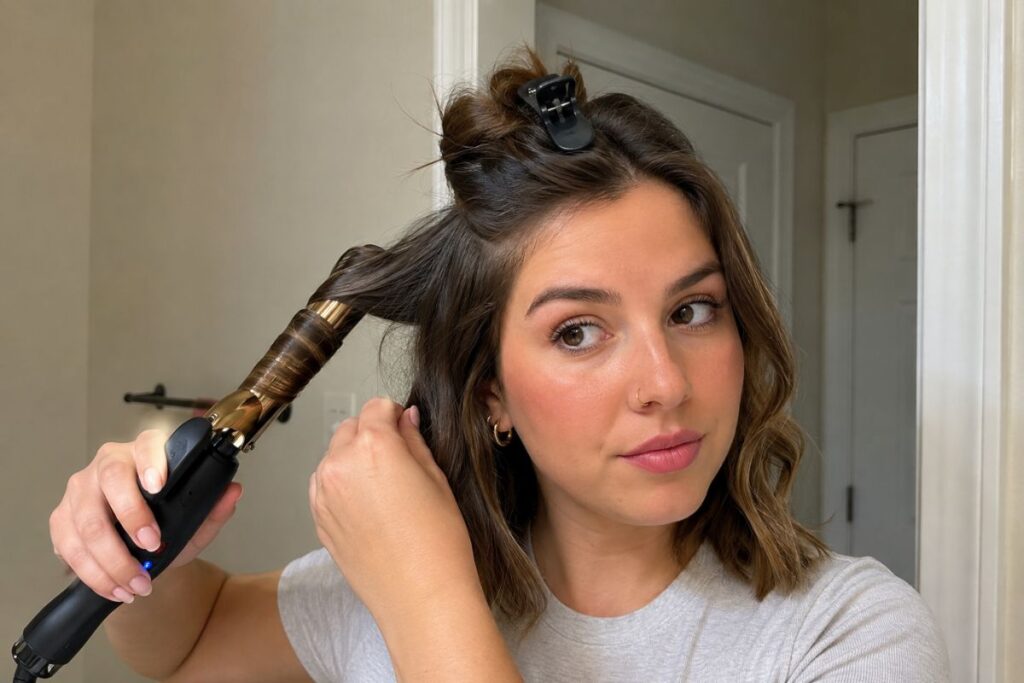
Curling iron technique for this length centers on barrel size and consistent sectioning. Getting both right matters more than any single product you use afterward.
Barrel Size: Why 1 to 1.5 Inches Suits This Length
A barrel in this range gives shoulder length hair enough turns to set a wave. It is still big enough that the wave looks natural, not tight like ringlets. Go much larger and each section wraps only about once. That usually produces a bend at the ends that relaxes quickly instead of a defined wave. Within the range, tighter natural waves tend to suit the 1-inch end and looser waves the 1.5-inch end.
Sectioning Around the Crown and Curling in One Direction
Begin sectioning at the crown and work outward in even pieces, curling each section away from your face. That means you turn the iron one way on one side of your head and the other way on the other side. This way, the front pieces on both sides open away from your face. Keeping the direction consistent on each side gives a connected, intentional wave pattern. Switching direction at random tends to look scattered.
Air Drying as an Alternative to Heat Styling
Air drying works just as well as heat styling for many wave patterns. It also carries zero risk of heat damage. The technique differs meaningfully depending on how wet your hair is when you start.
Product Application on Soaking Wet Versus Damp Hair
Applying styling product to fully soaking wet hair generally gives the most defined result. The product has maximum time to set the wave pattern as your hair dries. Applying it to damp hair that you have blotted with a towel still works, but it tends to produce a slightly looser, less defined finish. With the soaking-wet method, put your leave in conditioner on first and your styling product straight after, both before you touch a towel.
Scrunching Technique and Realistic Drying Time at This Length
Scrunch your styling product upward into your hair from the ends toward the roots. Do not smooth it downward. This encourages your natural wave pattern to clump together rather than separate into frizz. Shoulder length hair typically air dries within one to two hours. This depends on hair thickness and how much product you have applied.
How to Brush Out Curls Without Losing the Wave
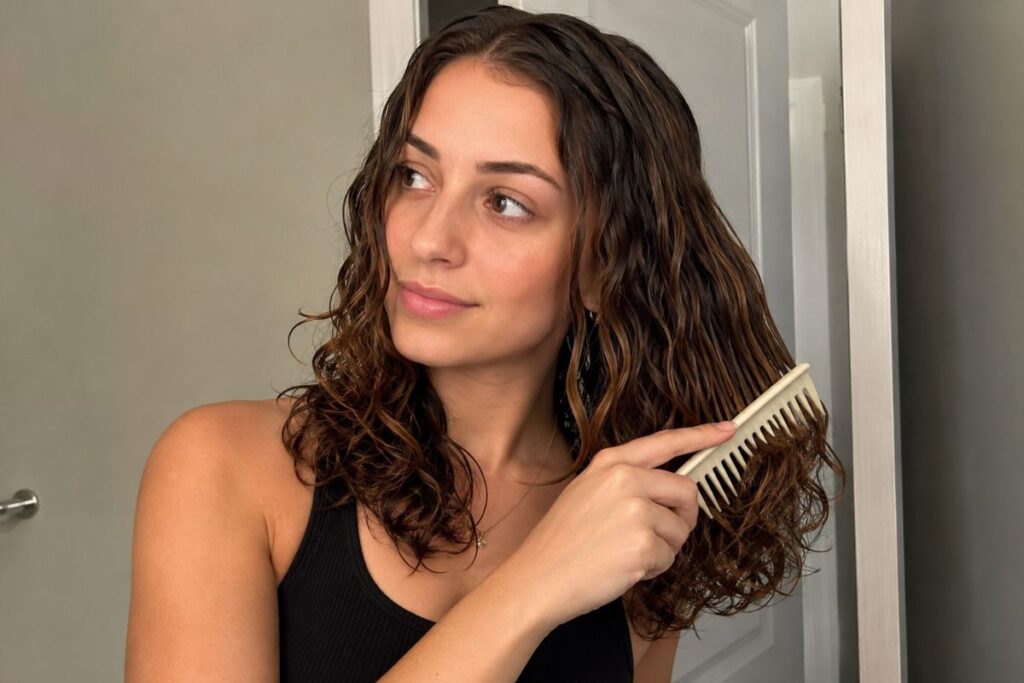
A wide tooth comb, not your fingers, is the right tool for brushing out curls after heat styling. This single tool choice makes a real difference in how uniform your finished wave pattern looks.
Why a Wide Tooth Comb Works Better Than Fingers Alone
Fingers tend to separate curls unevenly. This can leave some sections tighter than others. A wide tooth comb pulls consistently through every section instead. It blends individual curls into one connected wave pattern. This avoids leaving visible separate ringlets.
Timing the Brush Out, Warm Versus Fully Cooled Curls
Let your curls cool completely before brushing them out. Brushing warm curls, right after curling, tends to relax the pattern too much. Your waves can fall flat within an hour because of this. Waiting even five to ten minutes after your last curl makes a real difference here.
Finishing Products: Serum, Spray, or Both
The right finishing product depends on what your wave pattern needs most that day, definition or volume. These two goals call for genuinely different products.
Shine Serum for Defining the Pattern
A shine serum defines your existing wave pattern without adding lift or volume. This works well when your waves already have good shape. They just need smoothing and a bit of gloss.
Texturizing Spray for Added Body and Volume
A texturizing spray adds volume and grip, not shine. This works well when your waves look good but feel flat or lack movement. It roughs up the hair’s texture slightly to create more visible body.
| Product | What It Does | Best Applied When | Best For |
| Shine Serum | Defines existing wave pattern, adds gloss | On dry, styled hair | Waves that already have good shape |
| Texturizing Spray | Adds volume and grip | On dry hair, focused at the roots | Waves that look flat or lack movement |
| Using Both Together | Combines definition with added body | Serum first, spray second | Fine or thin wavy hair needing both |
How Season and Humidity Change Your Routine
Water in the air reaches the same bonds that hold a heat-set style in place. That is why a curl that lasts all day in dry weather can loosen or frizz by noon on a humid day. Knowing which bonds are involved makes it easier to adjust your routine to the weather instead of fighting the same frizz every morning.
What Actually Happens to Hair in Humid Air
Hair is made largely of a protein called keratin. Hydrogen bonds partly hold this protein in shape. These bonds are weaker than the disulfide bonds that give hair its basic structure, and water breaks them easily. As humidity rises, water molecules in the air reach these hydrogen bonds in your hair.
The bonds break, then reform in a new, outward position. The University of Virginia’s Department of Chemistry explains that this exact process causes frizz. The same thing happens any time water or heat resets the bonds that hold a hairstyle. That’s why styled hair tends to frizz or curl up more on humid days. It happens regardless of how carefully you styled it that morning.
Humid Months: Working With Frizz and Tighter Natural Curl
In humid weather, your natural wave pattern often comes out tighter and frizzier than it does on dry days. Don’t fight it with a curling iron style, because the moisture will undo it anyway. Instead, use a little more curl-defining product and let the tighter pattern show. Hair with a more raised, open cuticle, often described as high porosity hair, tends to take up moisture from the air faster. If your waves frizz within minutes of stepping outside, porosity may be part of the reason.
Cooler, Drier Months: Hair Becomes More Receptive to Heat Tools
In cooler, drier months, hair generally holds a heat styled curl longer. With less moisture in the air, less water reaches the hydrogen bonds that hold your style. So the shape set by heat lasts longer. This is often the easiest time of year to keep a curling iron style for a full day or longer.
Reviving Your Waves on Day Two and Day Three
Overnight, pressure and friction from your pillow tend to flatten the back of your waves and rough up the ends. A few small steps can bring your waves back without a full restyle.
A Light Water or Rehydrating Spray to Reset the Pattern
Lightly mist your hair with water or a rehydrating spray. Focus on the areas that have fallen flat. Scrunch gently as you go, the same way you would on wash day. The moisture reactivates styling product still left in your hair, which can bring back a surprising amount of shape.
When It Is Time to Just Rewash Instead of Refreshing Again
Does your hair still look flat after you try to refresh it? Does it feel heavy with product? It is usually time to wash again rather than layer more product on top. Trying to refresh hair that already has too much product buildup can make it look greasy rather than styled.
Frequently Asked Questions
How do you style shoulder length wavy hair?
Apply leave in conditioner and styling product in the right order on wash day. Choose a curling iron or air drying based on your time. If you used a curling iron, brush the cooled curls out with a wide tooth comb. If you air dried, scrunch instead and skip the comb.
What curling iron barrel size is best for medium length wavy hair?
A barrel between one and one and a half inches generally works best at this length. With a larger barrel, each section of shoulder length hair wraps around only about once. That tends to leave a bend that drops fast instead of a wave that holds.
Should you air dry or heat style shoulder length wavy hair?
Both work well. The choice mostly comes down to time and your hair’s needs that day. Air drying involves less risk of heat damage. Heat styling often gives more control over the final wave pattern.
How do you brush out curls without losing the wave pattern?
Use a wide tooth comb instead of your fingers. Wait until your curls have fully cooled before brushing. Brushing warm curls tends to relax the pattern too much. This can cause your waves to fall flat within an hour.
What order should you apply products to wavy hair?
Apply leave in conditioner first, to wet or towel-blotted hair, before any other styling product. Follow with your chosen styling product, curl cream, mousse, or gel. Skipping the leave in step often shows up later as dry, straw like ends.
How do you refresh wavy hair on day two without washing it?
Lightly mist your hair with water or a rehydrating spray. Scrunch gently to reactivate leftover styling product. Does your hair still look flat or feel heavy afterward? It is usually time to wash again instead.
I have shoulder length wavy hair and every tutorial I find is either for long hair or short hair, and neither routine seems to translate well to my length. What should I actually be doing differently?
Use a smaller curling iron barrel, about 1 to 1.5 inches. A large barrel built for long hair gives this length too few wraps to form a proper wave. Section around the crown and curl each side away from your face. Do not follow a routine built for a different length entirely.
My wavy hair looks great the day I curl it, but by the next morning it has completely fallen flat. How do I make my waves actually last a second day at this length?
Overnight, pressure and friction from the pillow tend to flatten the back and roughen the ends. Mist your hair lightly with water or a rehydrating spray the next morning. Scrunch gently to bring back a surprising amount of shape without a full restyle.
When Your Waves Still Fall Flat
If your waves look good at first but drop by midday, check two things before changing products: a barrel much larger than 1.5 inches, and combing the curls out while they are still warm. Both leave a shoulder length wave with too little time or too few wraps to set.
Do your ends feel dry and straw-like by the afternoon, even though the styling product went on well? Then the leave in conditioner was probably skipped, or it went on after the styler instead of before it.
If the back looks flat and the ends look frizzy the morning after, a light mist and a gentle scrunch is the first fix to try. Once your hair feels heavy or greasy, a fresh wash will do more than another layer of product.
If your style tightens or frizzes the moment you step outside on a humid day, moisture in the air is resetting the bonds that hold it. Switch to more curl-defining product and let your natural pattern lead until the weather dries out.


2 Comments