
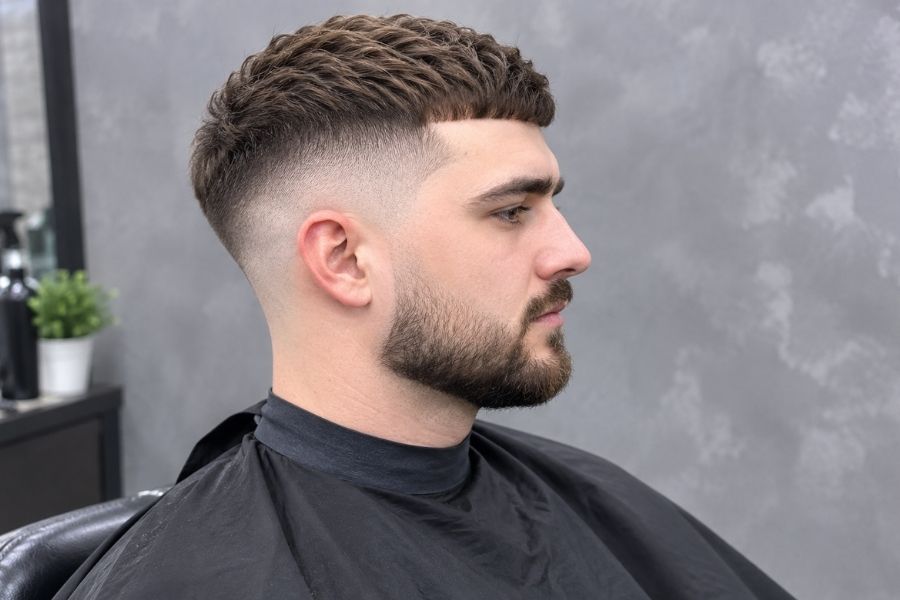
To get a good skin fade haircut, ask for the sides and back taken down to bare skin. Then name the height where that bare section should stop, and give a length for the top. Leave out the first detail, and you may walk out with a taper. It looks similar from across the room, but it keeps a thin layer of hair at the bottom. Leave out the height, and your barber has to guess how bold you want the cut to be.
Those same choices shape everything after the first visit. A skin fade starts at zero length, so regrowth shows within a couple of weeks. That means the touch-up schedule and its cost matter as much as the haircut itself.
Key Takeaways
- A skin fade is a haircut where the sides and back are cut down to bare skin, then blended into longer hair on top.
- There are four main versions: low, mid, high, and drop. Each one changes how far up the head the fade climbs.
- A skin fade grows out faster than most other cuts, since it starts at zero length. Plan on a touch up every two to three weeks.
- It tends to cost more than a basic trim, since the blending is harder to get right.
- For teen boys, a plain skin fade with no shaved design is usually fine for school.
- Shaved lines and very high fades are the ones more likely to get questioned.
What Is a Skin Fade Haircut?
A skin fade haircut takes the hair on the sides and back all the way down to bare scalp. From there, it blends smoothly into longer hair on top. That bare skin is what gives the cut its sharp, high-contrast look.
You will also hear this style called a bald fade. The two names are usually used interchangeably. Some shops use bald fade only when the edge is razor finished. They use skin fade when clippers and a foil shaver do the work. Either way, the finished cut looks much the same, with scalp showing at the bottom and hair building up gradually toward the crown.
Is a Skin Fade the Same as a Taper Fade?
No, and mixing up the two is an easy way to leave the chair with a cut you did not picture. A taper fade shortens hair gradually but stops before bare scalp, while a skin fade goes all the way down to skin. If there is still a hint of hair at the very bottom, that is a taper, not a skin fade.
Picture a taper as a smooth slope that stops partway down, and a skin fade as the same slope running all the way to the floor.
How Do Barbers Create the Bare Skin Look?
Barbers use a clipper with no guard to get close to the scalp. This is sometimes called a zero or skin setting. They then finish the very bottom with a foil shaver or a straight razor for a clean edge.
This finishing step is where skill shows most, because any uneven line between bare skin and hair is easy to spot.
Low, Mid, High, and Drop Skin Fade Explained
Low, mid, and high do not describe how short the bottom is. Every true skin fade goes down to bare skin at its shortest point.
What changes is how far up the head that fade travels before it meets your longer hair.
| Fade Height | Where It Starts | Contrast Level | Best For |
| Low skin fade | Just above the ear | Moderate | First timers, school, conservative settings |
| Mid skin fade | Around the temple | High | Most face shapes, the safest all around pick |
| High skin fade | Above the temple, near the crown | Maximum | Bold looks, more upkeep, faster grow out |
| Drop skin fade | Curves down behind the ear | High, but softer looking | Curly and coily hair, rounder head shapes |
Low Skin Fade
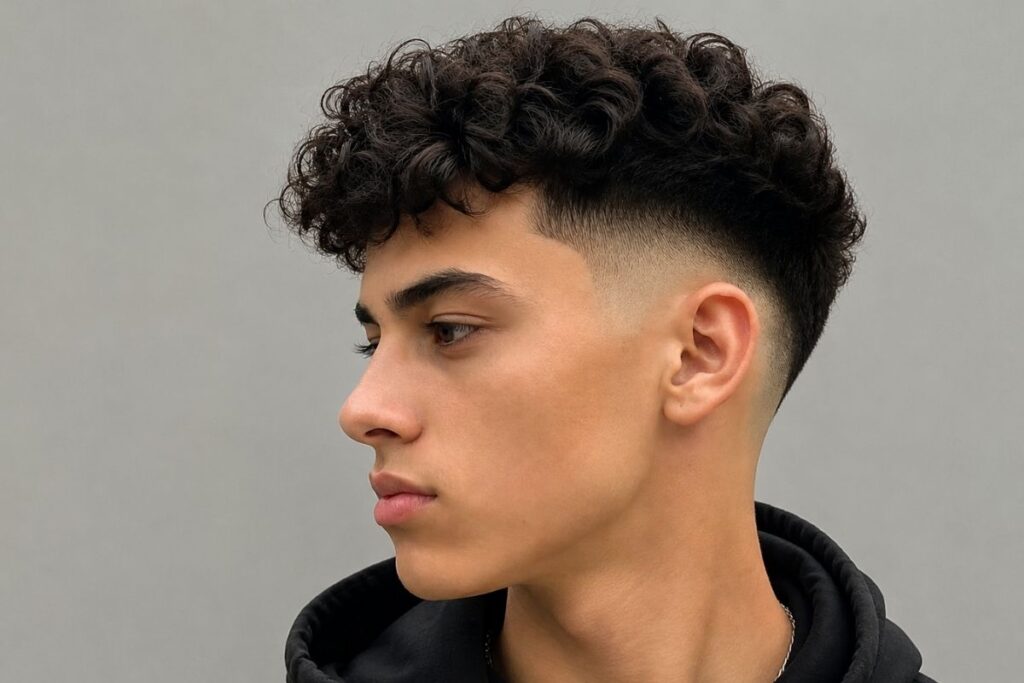
A low skin fade keeps the bare skin section close to the ear, so the fade line stays subtle from a distance. It is the easiest version to grow out, which makes it a sensible choice for a first skin fade. It’s also the safest choice for school settings, since it draws the least attention.
Mid Skin Fade
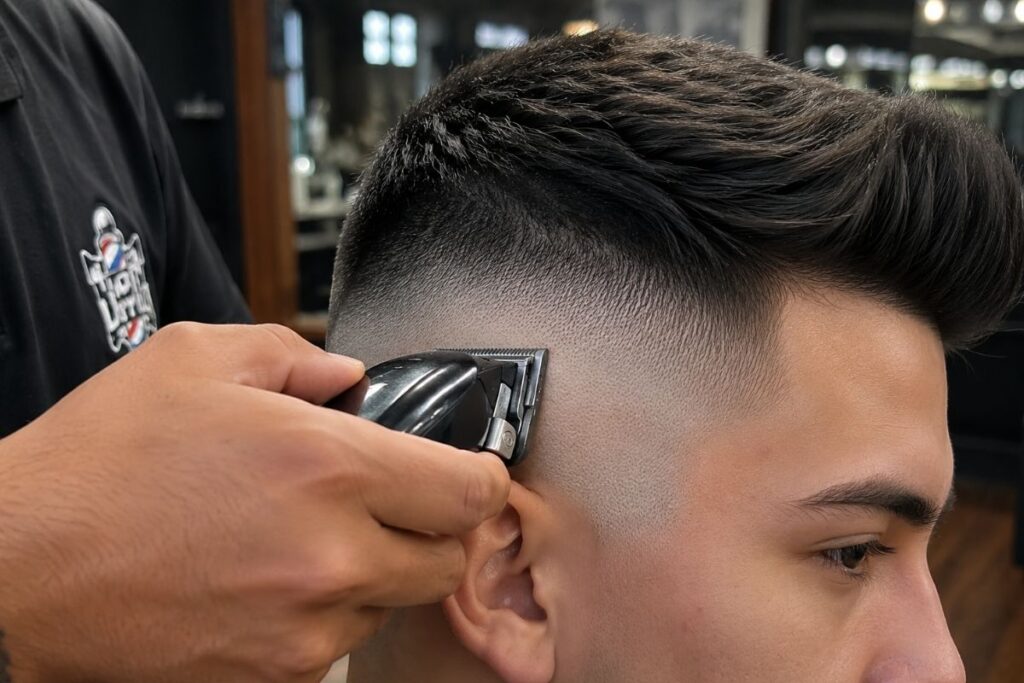
A mid skin fade climbs to around temple level, giving noticeably more contrast than a low fade without going as bold as a high fade. It suits a wide range of face shapes and hair types, which makes it a safe middle ground if you are not sure which height to choose.
High Skin Fade
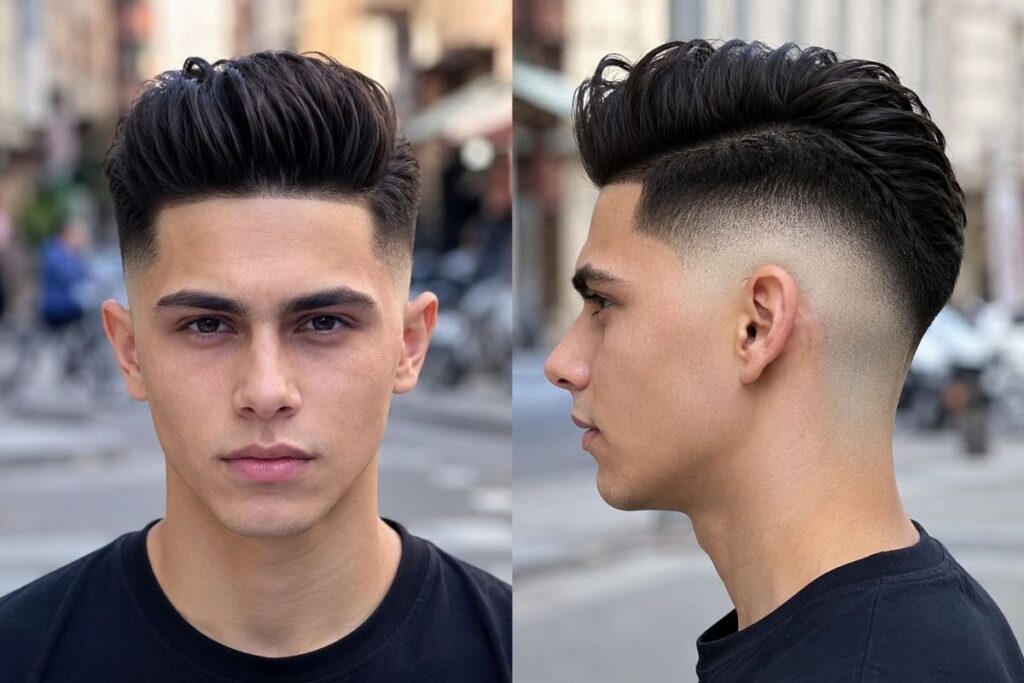
A high skin fade climbs above the temple, close to the crown, for the sharpest contrast of the three. It photographs well and makes a strong style statement, but it also shows regrowth the fastest and needs the most frequent touch ups. It is usually not the best choice for a first skin fade.
Drop Skin Fade
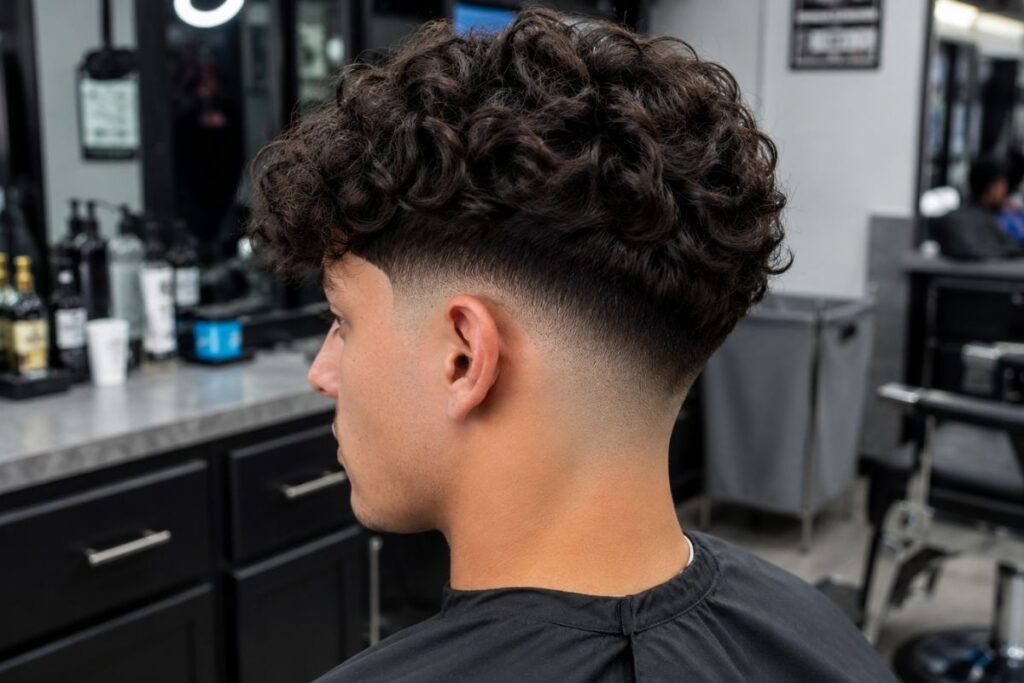
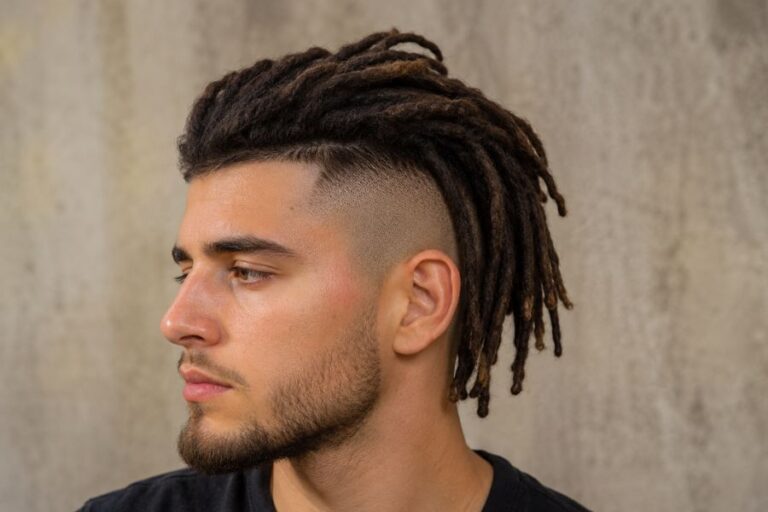
Instead of running level around the head, the fade line on a drop skin fade dips down behind the ear. Barbers often suggest this shape for a more rounded back of the head. It helps balance that area instead of drawing attention to it. It also tends to suit curly and coily hair, since it follows the natural curve of the head instead of cutting a straight line across it.
Burst Fade Versus Skin Fade
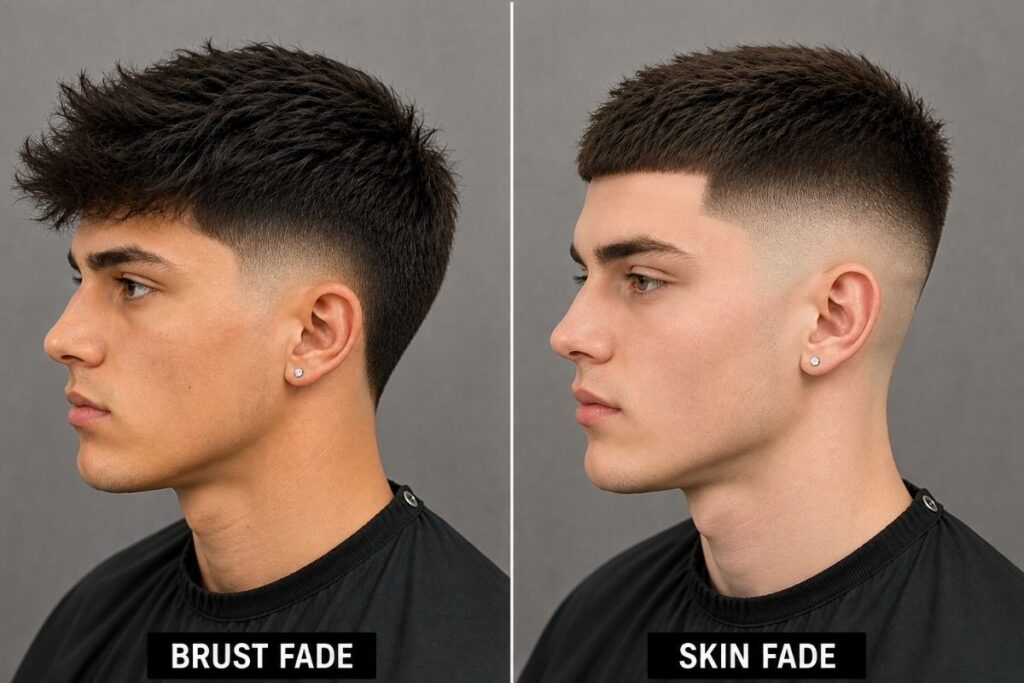
A burst fade is not the same thing as a skin fade. People often use the words together, but they mean different things. A burst fade curves in a rounded shape around the ear. It does not have to reach bare skin. A skin fade is defined by that bare scalp finish, no matter what shape the line follows.
You can combine both. A burst skin fade uses the rounded burst shape but still takes the shortest point down to skin. A burst curves around the ear and leaves the neckline at the back longer. So it keeps more hair behind the head than a fade that wraps all the way around. If your main goal is the highest contrast possible, ask for a skin fade. If you specifically want that rounded shape near the ear, mention burst too.
Skin Fade Styles to Wear on Top
The sides are only half of this haircut, and what sits on top decides whether the whole look feels finished. The six pairings below differ mainly in how much length they need on top and how much styling time they take each morning.
1. Skin fade with a textured crop
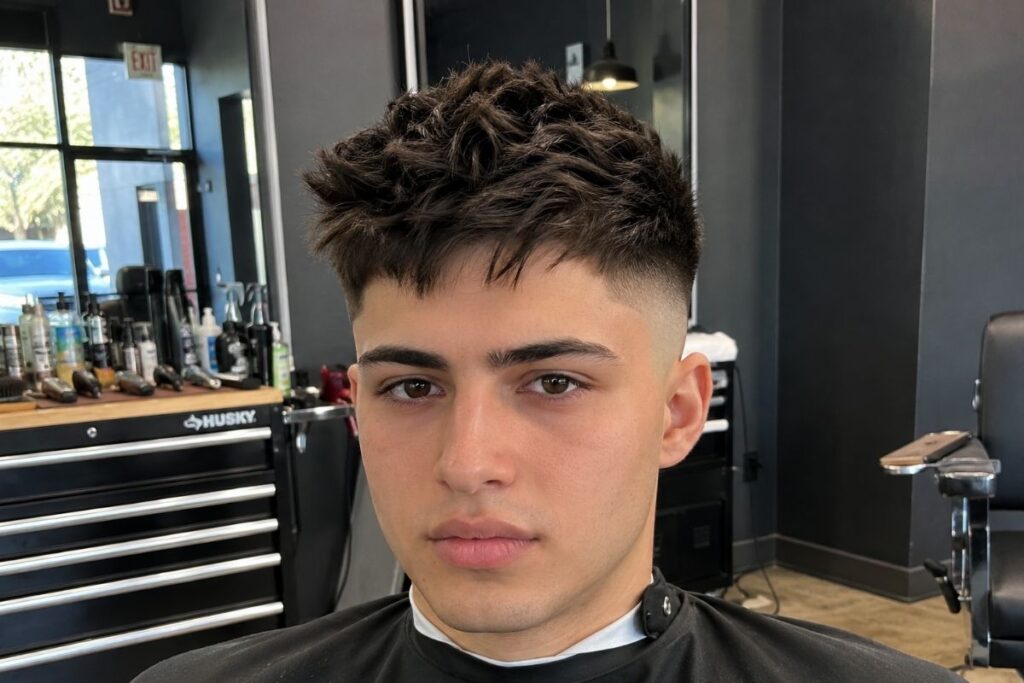
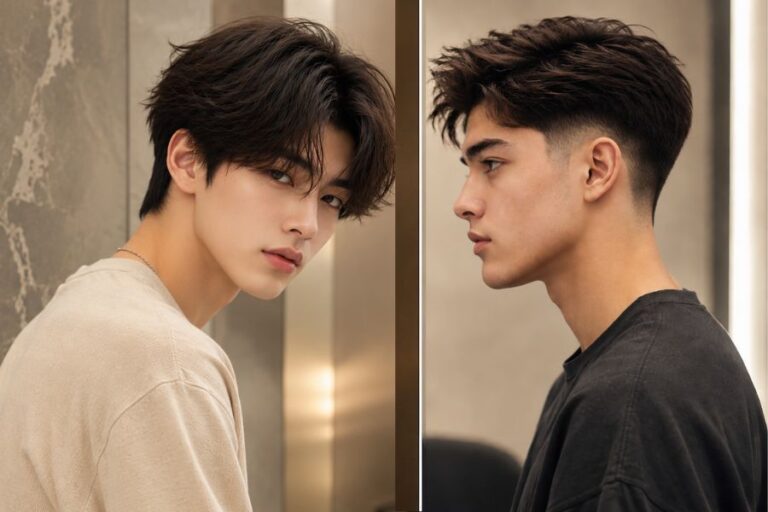
Short, choppy layers sit on top while the sides fade down to skin near the ears and neckline, and the layers give the hair natural grip on their own. Styling usually means finger shaping damp hair forward and working in a small amount of matte clay. Because the layers do most of the work, this pairing suits most hair types and is one of the lower-effort skin fade styles to manage each day.
2. Skin fade with curly or coily hair on top
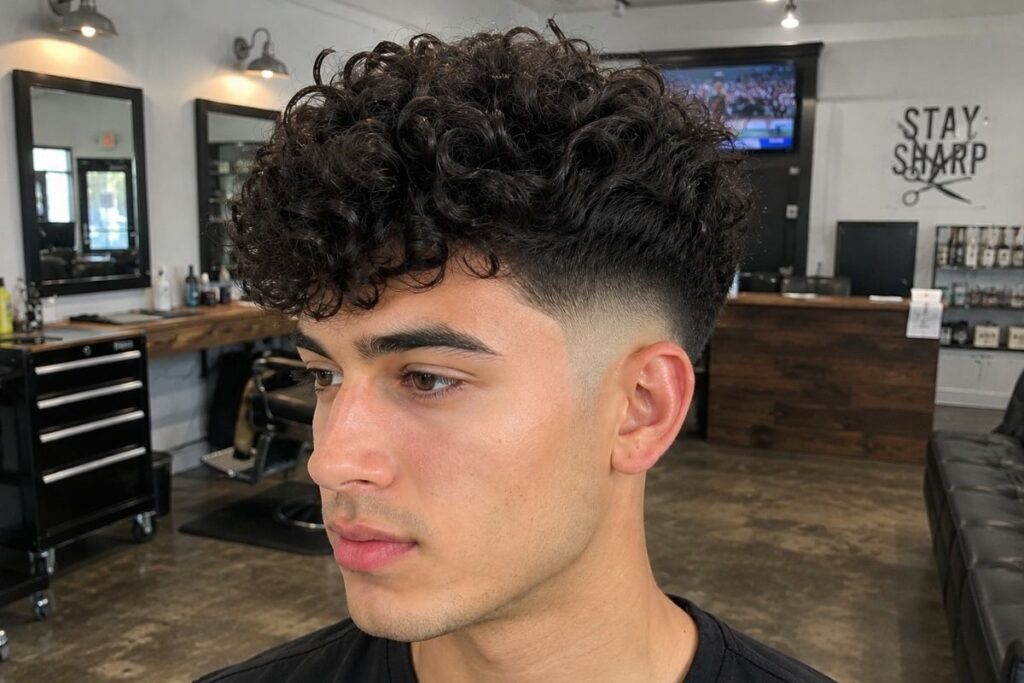
The bare sides make natural curls stand out more. They remove everything that would otherwise compete with the curls for attention. A drop shape usually looks most balanced here. It follows the head’s natural curve instead of cutting a hard line across it. Diffusing the top while it is damp, rather than blow drying it flat, keeps the curl pattern intact.
3. Skin fade with a quiff
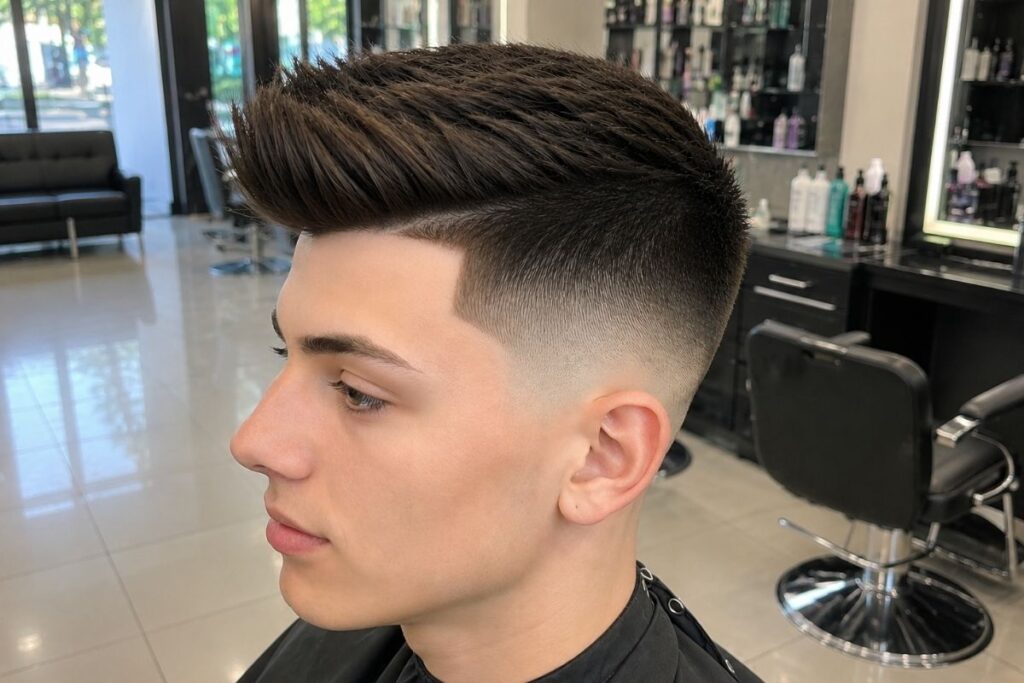
Extra height and lift up front contrast against the tight sides below. Getting the lift right usually means blow drying the front section upward and slightly back while it is still damp. Once it is dry, a small amount of molding paste locks the shape in.
4. Skin fade with a side part
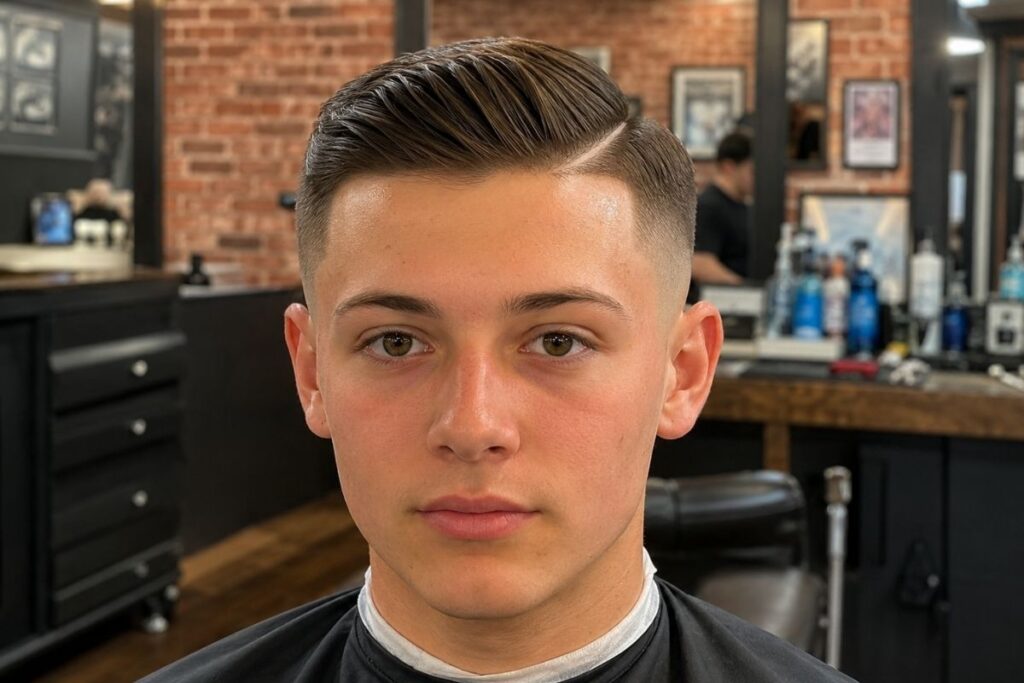
A clean, classic option where the top is left long enough to comb across a defined parting line. It photographs well for school pictures or interviews. It is one of the few skin fade combinations that reads as equally appropriate in a classroom and a formal setting.
5. Skin fade with a pompadour
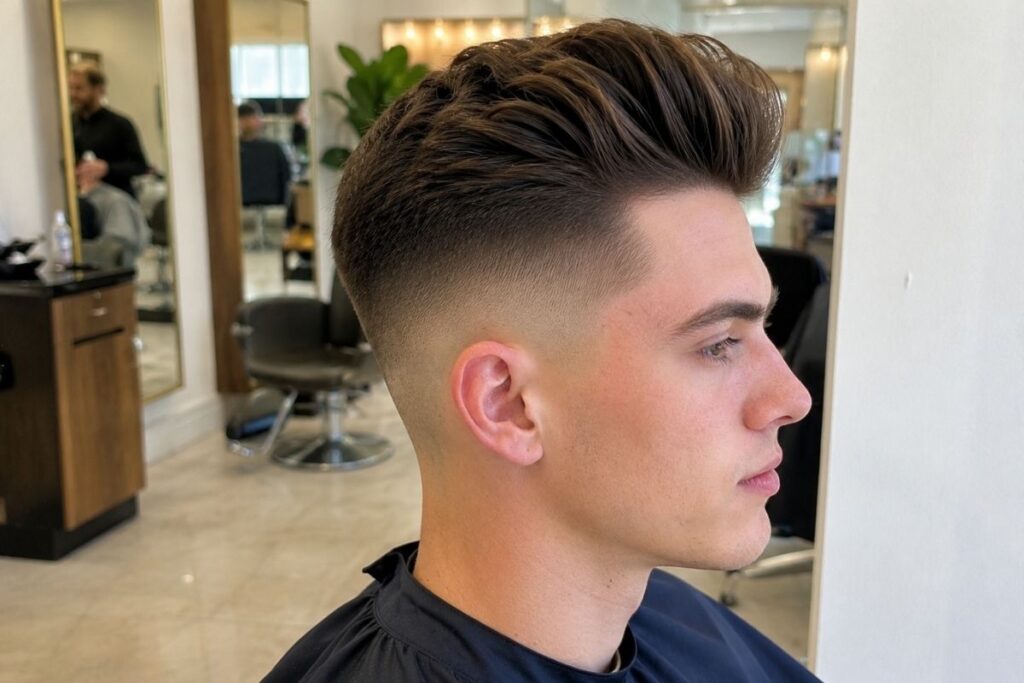
This is the boldest of the six looks, needing more height, more product and real length on top, at least two inches. Thicker hair holds the shape longer through the day than fine hair does. It also takes more daily styling time than the other pairings here, which is worth weighing before you ask for it.
6. Skin fade with a slick back
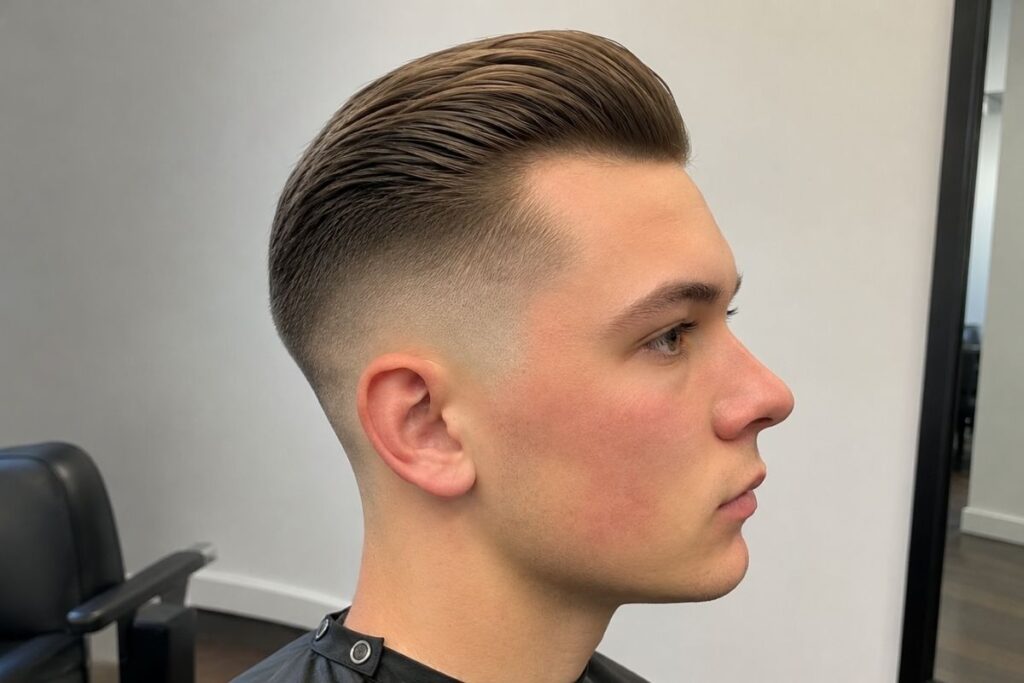
Works best on straight or wavy hair with enough length to direct backward. The top gets blow dried back while damp. A light pomade then adds shine and hold, without the heavier, glossier look older slick backs used to have.
Best Skin Fade for Your Hair Type
Straight hair works with any fade height and shows a crisp line, since there is no extra texture to blur it. Wavy hair usually looks balanced with a mid skin fade. It clears bulk from the sides but leaves enough length above the fade for the waves to move.
Curly hair tends to pair best with a low or mid skin fade in the drop shape. This lets curls stay full while keeping the sides clean. Coily and thicker hair often benefits from that same drop shape. It reduces bulk on the sides without stripping the fullness that gives the top its form.
Which Skin Fade Suits Your Face and Head Shape?
Fade height changes how your face and head look, as well as how short your sides are. A higher fade with volume on top draws the eye up and makes a face look longer. A lower fade with a moderate top adds less height, which helps if you have a long or oblong face. Head shape counts too. If the back of your head is more rounded, a drop fade follows that curve instead of cutting a straight line across it.
Here is a simple reference table if you want a faster answer.
| Face Shape | Recommended Fade | Reasoning |
| Round | Mid or high, with height on top | Adds vertical length, balances width |
| Oval | Any height | Naturally balanced proportions |
| Square | Mid fade, slightly textured top | Softens a strong jawline |
| Long or oblong | Low fade, moderate top length worn forward or to the side | Avoids stretching the face further |
| Heart shaped | Mid fade, medium top length | Balances a wider forehead against a narrower jaw |
Is a Skin Fade School Appropriate for Teen Boys?
Most plain skin fades with no shaved lines are fine at school. The issue is rarely the skin fade itself. It is usually anything cut into it. For more school-friendly options beyond the fade, our guide to hairstyles for teen boys covers all of them by age, hair type, and face shape.
Most school dress codes do not name skin fades directly. Instead, they use broad language like extreme hairstyles or carvings. Enforcement can vary a lot from school to school. The Texas Tribune has reported on Texas districts changing their hair rules after lawsuits. Those cases were about long hair and locs, not fades. In one case reported by CBS News, school officials told a Texas seventh grader that the design cut into his fade broke a rule against carvings. The district later removed its ban on “extreme” hairstyles.
The practical advice here is simple. A clean, undesigned low or mid skin fade is the safest choice for school. A high skin fade, or one with a shaved part, is the version most likely to get a second look. Check your school’s handbook wording before committing to that version.
How Long Does a Skin Fade Last?
A skin fade holds its sharp look for about two to three weeks before it needs a touch up. That is shorter than most short haircuts. The reason is the starting length, not how fast your hair grows.
Why Does a Skin Fade Grow Out So Fast?
Healthy scalp hair grows about half an inch a month, according to the National Library of Medicine’s consumer health resource, MedlinePlus. That growth rate stays the same no matter what haircut you get. What changes is how visible the growth looks. A regular short fade starting at a number one or two guard has a small buffer before regrowth is noticeable. A skin fade starts at true zero with no buffer at all, so even a little new growth softens how sharp the line looks.
What Do Clipper Guard Numbers Mean?
If your barber mentions guard numbers, here is roughly what they mean.
| Guard | Approximate Length | What It Looks Like |
| Skin or zero, no guard | Very close to the scalp; a foil shaver or razor finishes it to bare skin | Full skin fade base |
| Number one | About 3 millimeters | Tight buzz |
| Number two | About 6 millimeters | Standard short length |
| Number three to four | 10 to 13 millimeters | Common top lengths for crops |
| Number five and up | 16 millimeters or more | Longer top, needs real styling |
What Is the Ideal Touch Up Schedule?
Step 1: Book your first touch-up in about two weeks. That is usually when the bottom of the fade starts showing regrowth.
Step 2: Ask for a lineup only visit if you want to stretch between full cuts. This refreshes the edges without redoing the whole blend.
Step 3: Plan a full refresh by week three. After that, most skin fades start looking like a regular short haircut instead of a true skin fade.
What a Skin Fade Costs
A skin fade usually costs more than a basic trim or a standard taper at the same shop. The blending work between bare skin and longer hair takes more time and more skill, and shops price for that.
As a rough guide to US prices, a skin fade generally falls into three bands. A chain or budget salon, like the ones in malls, tends to charge around fifteen to twenty five dollars for a basic short cut. Not all chains offer a true skin fade with a razor or foil finish. A regular neighborhood barbershop usually charges about thirty to fifty dollars for a proper clipper and razor skin fade. A high end barbershop that focuses on detailed fade work often charges fifty to eighty five dollars. It can cost more if you add a beard trim or a hot towel finish.
These numbers vary widely by city and barber, so treat them as a general range, not a quote. The bigger expense is the repeat appointment every two to three weeks that keeps the fade sharp, so budget for the full schedule rather than the first cut alone.
Is a DIY Skin Fade Worth Trying at Home?
Generally, no. A skin fade is one of the least forgiving cuts to attempt yourself. Any unevenness between the bare skin and the longer hair above it shows up right away. The blend is hard to see and control on the back of your own head. Unless you already have real clipper skills, this cut is best left to a barber. If cost is your main concern, a lower maintenance cut like a taper fade is a more realistic option to try at home.
Growing Out a Skin Fade
Growing out a skin fade is more noticeable than growing out most cuts, because the sides start at bare skin and every bit of new growth shows. The usual approach is to stop taking the bottom down to skin. At each visit, ask for a short guard at the bottom instead of a zero. This moves the cut from a skin fade toward a taper. Ask your barber to keep the blend soft while the sides catch up with the top.
Hair grows about half an inch a month, so the sides need roughly two months to reach an even inch. It takes longer if you want a style that covers the ears. If that is the plan, the length each style needs is set out in our guide to long hairstyles for men.
What to Tell Your Barber for the Best Result
Step 1: Say you want it taken down to skin, then name the height (low, mid, high or drop) and point roughly to where the fade should start climbing.
Step 2: Give a specific top length or guard number, along with the style you want. A textured crop, a side part, or something else.
Step 3: Bring a reference photo if you have one, since it removes most of the guesswork and helps your barber match your hair type to the look you want.
Common Skin Fade Mistakes to Avoid
The most common mistake is walking in with a photo but no clear fade height in mind. The same photo can need a different height depending on your own head shape. Another common mistake is choosing a high fade for a first attempt. It is the least forgiving and shows regrowth the fastest. Waiting a full month between cuts is the third mistake. By then the cut has usually lost the contrast that made it a skin fade in the first place.
Basic At Home Upkeep Between Visits
A small amount of light hold product on top keeps the style controlled without weighing it down. Gently brushing the edges of the fade helps the line look intentional between full appointments. Wash regularly, but don’t overdo it, to keep the scalp comfortable. This matters most right after a fresh cut, when the skin at the bottom is more sensitive.
Frequently Asked Questions
Is a skin fade the same as a bald fade?
In most cases, yes. The two terms usually describe the same haircut, one that ends in visible bare scalp at its shortest point, though some shops reserve bald fade for a razor-finished edge.
How long does a skin fade last before it needs a touch up?
About two to three weeks. Hair grows roughly half an inch per month, and a skin fade starts at zero length with no buffer before regrowth becomes visible.
Will a skin fade get flagged by a school dress code?
A plain skin fade with no shaved design is rarely an issue. Shaved lines, parts, and very high fades are the versions most often questioned under dress codes that ban extreme hairstyles.
What is the difference between a skin fade and a taper fade?
A taper shortens hair gradually but never shows bare scalp. A skin fade goes all the way down to skin at its shortest point.
Which skin fade height is best for a first timer?
A low or mid skin fade is the safer starting point. It grows out more gracefully and suits most face shapes.
Does a skin fade work with curly hair?
Yes. A low or mid skin fade, especially in the drop shape, keeps the sides clean while letting curls stay full on top.


4 Comments