
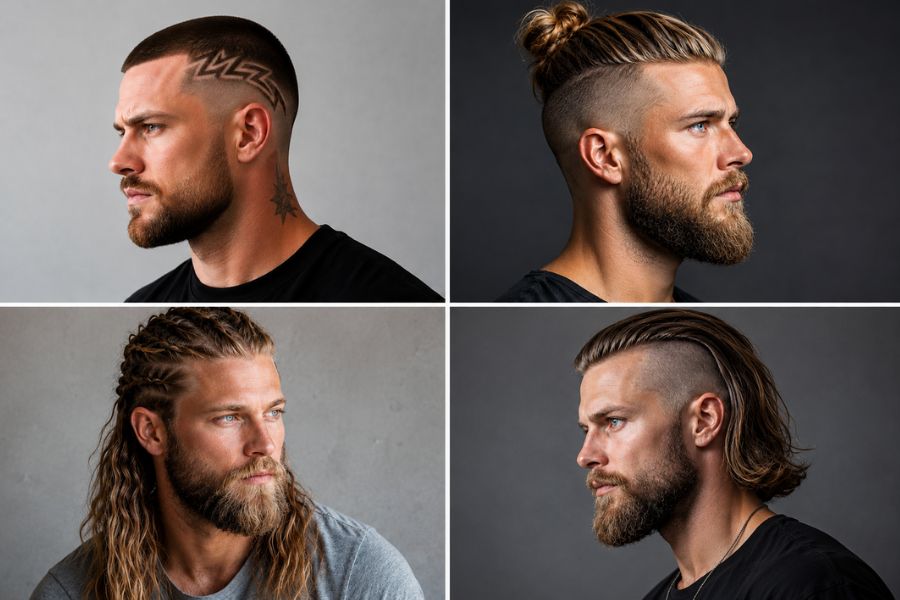
What is a Viking haircut? A Viking haircut combines shaved or faded sides with longer hair on top worn loose, braided, or tied back. It draws on the Norse warrior culture of the Viking Age, roughly 793 to 1066 AD, and remains one of the most searched men’s styles in the United States in 2026.
Most people picture unwashed warriors. The reality is different. Arab traveler Ibn Fadlan documented in 922 AD that Norse men washed and combed their hair every single morning, Grooming was central to Norse identity.
In this guide you will learn 30 specific styles, how to match a cut to your face shape and hair type, which beard pairs with which cut, and exactly what to say at your barber.
What Is a Viking Haircut
A viking haircut is a category of men’s styles inspired by Norse warriors from the Viking Age. These styles share one common trait. Shaved or faded sides, longer hair on top worn loose or braided, and a bold masculine silhouette rooted in Norse warrior identity.
What Makes a Haircut Count as a Viking Style
A cut earns the viking label when it combines a disconnected or shaved undercut with a longer top section worn with natural texture or braids. Modern versions range from short and clean to long and dramatic. The common thread across all 30 styles in this guide is deliberate boldness rather than a polished or conservative finish.
Why Viking Haircuts Are Popular Across the USA in 2026
The popularity of viking haircuts traces directly to the History Channel series Vikings and the BBC series The Last Kingdom. Both shows put these styles in front of tens of millions of American viewers every week. Barbershops across the USA from New York to Los Angeles report that braids, undercuts, and shaved side styles are among the most requested looks for men in 2026.
Viking Cut vs Norse Inspired Cut: What Is the Difference
A true viking cut includes a shaved or faded undercut with longer hair on top, sometimes with braiding. A norse inspired cut softens those elements for everyday wear. It is the office-friendly version of the full viking look.
The Real History of Viking Hairstyles
Most of what people believe about viking hairstyles comes from TV costume designers rather than archaeological evidence. The real picture is more interesting.
What Archaeology Actually Shows Us
Archaeologists have found combs made from bone, antler, and wood in large quantities at Viking Age burial sites throughout Scandinavia, Britain, and Ireland.
According to research led by Dr. Steve Ashby of the University of York’s Department of Archaeology, Viking era combs were often elaborately decorated and over engineered for everyday objects suggesting hair and grooming formed an important part of Norse identity and were carried alongside weapons on seafaring voyages.
The Oseberg ship burial, dated to around 800 CE, contains carvings showing male figures with shaved or very short sides combined with fuller hair on top. This is the most direct visual evidence of a real viking haircut on record. Real evidence also shows how Viking women wore their hair, including combs and the Revninge figurine, a small silver artifact showing hair gathered into a bun, covered in our companion guide on female Viking hairstyles.
Did Real Vikings Have Undercuts
Possibly, but not in the way TV shows depict. A surviving Anglo Saxon letter written during the Viking Age describes the Norse style as “bald neck and blinded eyes,” which strongly suggests a shaved back with longer hair falling forward. This is the closest written description of a real viking haircut ever recorded.
Did Vikings Braid Their Hair
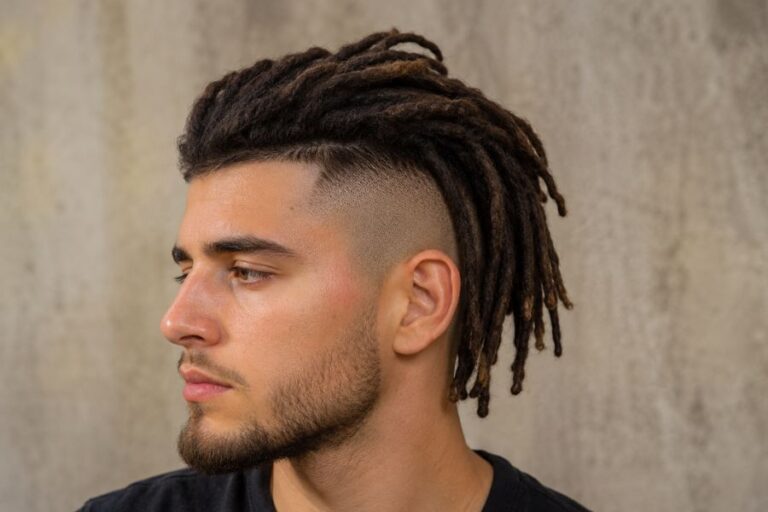
Braiding almost certainly existed as a practical way to manage long hair during work and combat. We have documented proof that Vikings combed their hair every morning, which would prevent dreadlocks from forming naturally. The dreadlocked viking image has no historical or archaeological basis. It remains a popular myth. Read our complete guide on Viking dreads to see what the real evidence actually shows.
Viking Haircuts on TV vs Real History
Director Robert Eggers’s 2022 film The Northman is widely considered one of the most historically accurate depictions of Norse hairstyles in modern media. According to a Smithsonian Magazine feature on the film, Eggers team worked directly with archaeologists to reconstruct period accurate hair, clothing and material culture. The result was shoulder length loose hair, simple braided knots and center parted styles that match the actual archaeological record far more closely than any TV series.
Screen vs Archaeological Evidence: Comparison Table
Style Seen on Screen | Historically Documented | Modern Barbershop Version |
| Ragnar Lothbrok cut Shaved panels with side braids | No direct evidence | Disconnected undercut with braided top |
| Norman Cut Seen in Vikings | Yes, Bayeux Tapestry confirmed | Short back fade with longer front |
| Shoulder length loose hair The Northman | Yes, most documented style | Bro flow or medium layered cut |
| Braided back knot the Northman | Yes, practical hair management | Half bun or tied back top |
| Full shaved sides, long top Most TV shows | Partially, Oseberg carvings | Modern high fade undercut |
30 Best Viking Haircuts for Men in 2026
These 30 cuts cover the full modern spectrum from short and clean to long and dramatic, organized into five groups for easy navigation.
Short Viking Haircuts
1. Short Viking Undercut
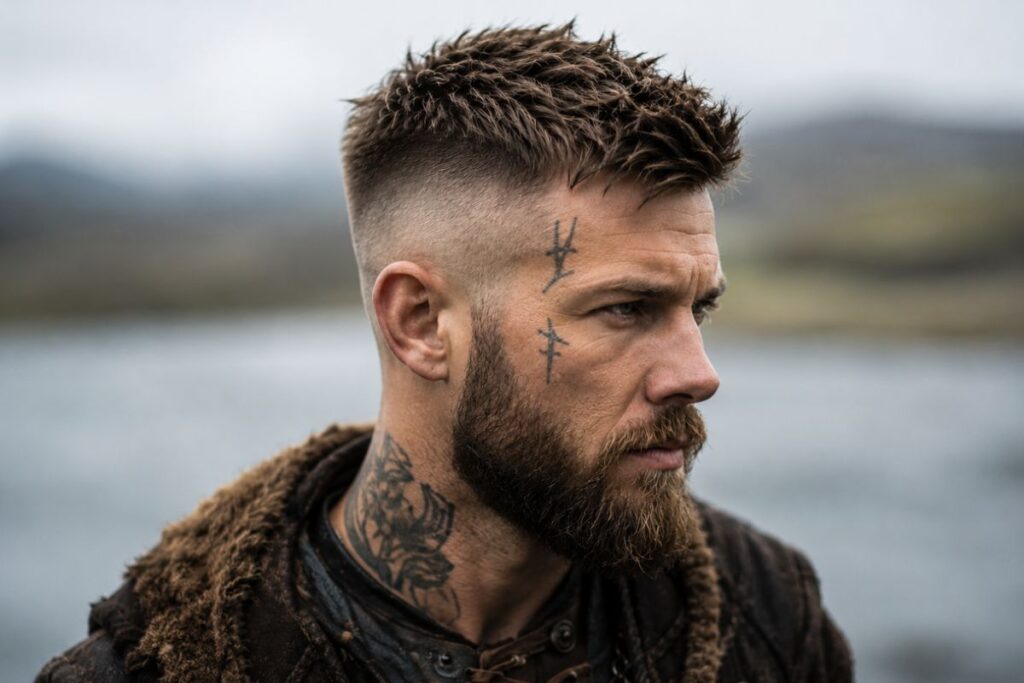
Shaved or faded sides with two to three inches of length on top worn forward or swept back. The most accessible entry point into the viking category. Works in most professional settings across the USA.
2. Disconnected Undercut
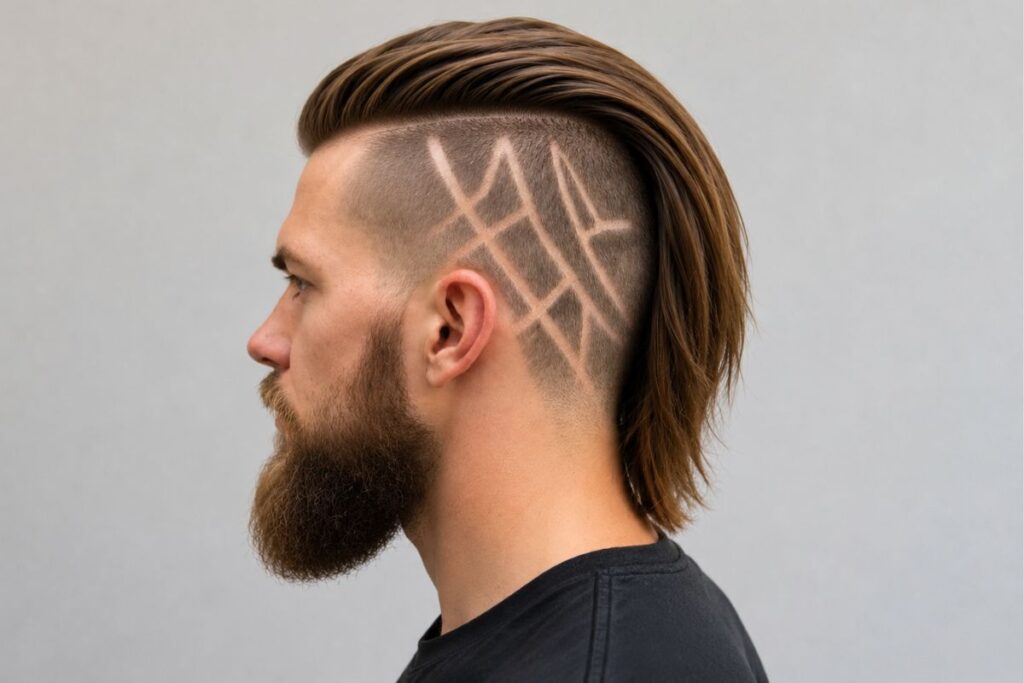
A hard visible line separates shaved sides from a noticeably longer top. The closest modern barbershop version of what most people see in Viking TV shows. Needs maintenance every two to three weeks.
3. Viking Buzz Cut
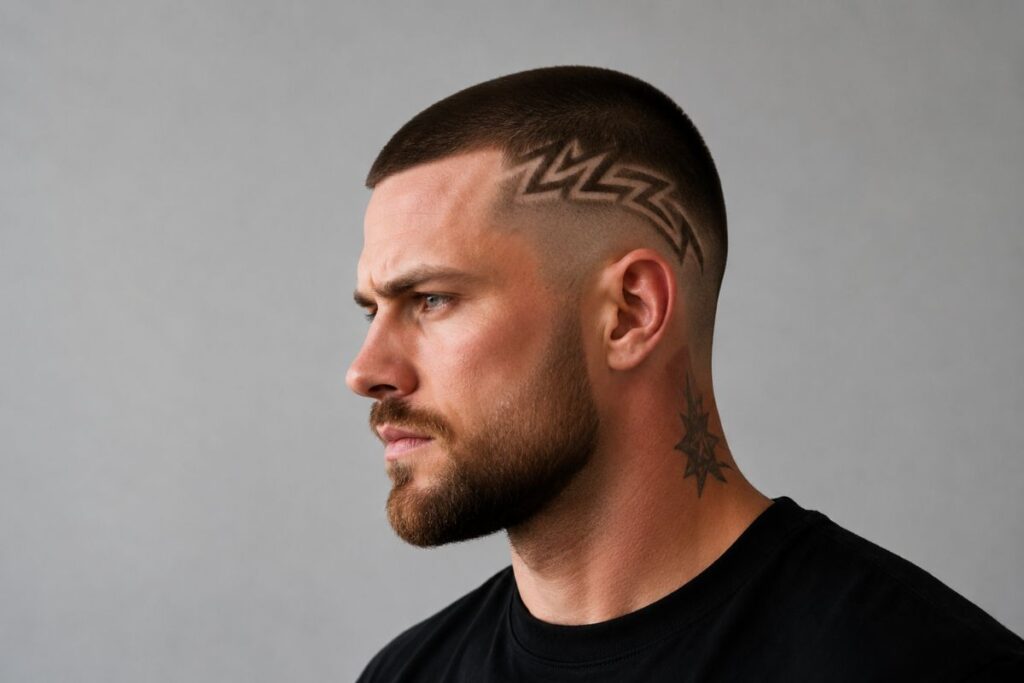
Short all over with the sides slightly tighter than the top. Ask the barber for a sharp line up along the hairline. Or you can also add a line design on the side. Suits every face shape. Touch ups every two to three weeks are all it needs.
4. Viking Crew Cut
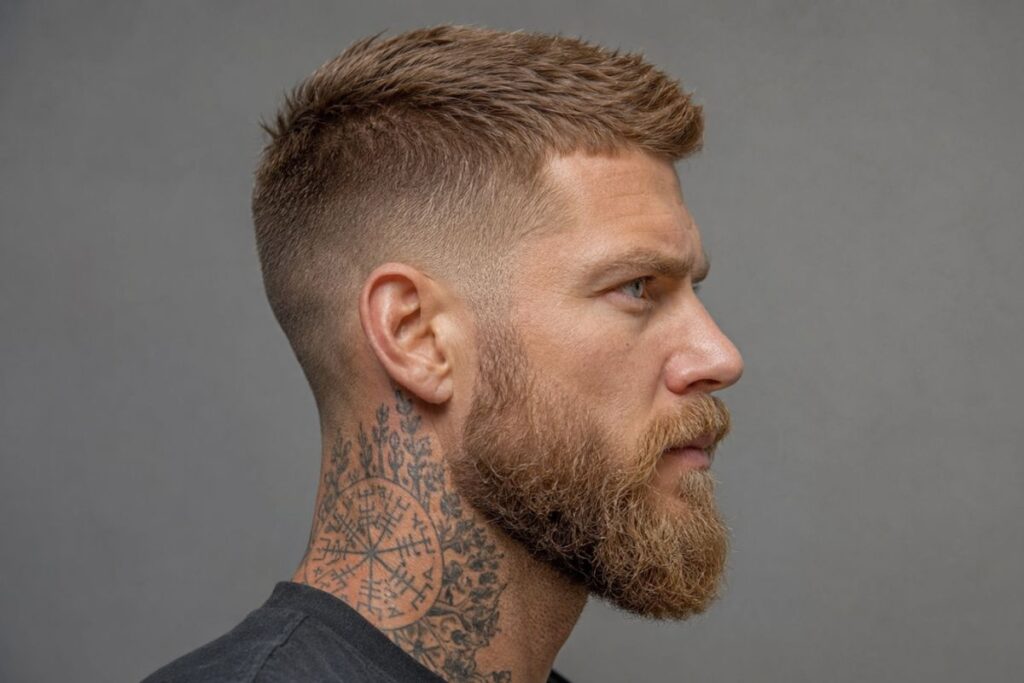
Enough length on top to push forward or add light texture while the sides stay closely faded. Stands apart through a harder temple line and slightly textured finish. Suits fine to medium hair well.
5. Short Viking Fade
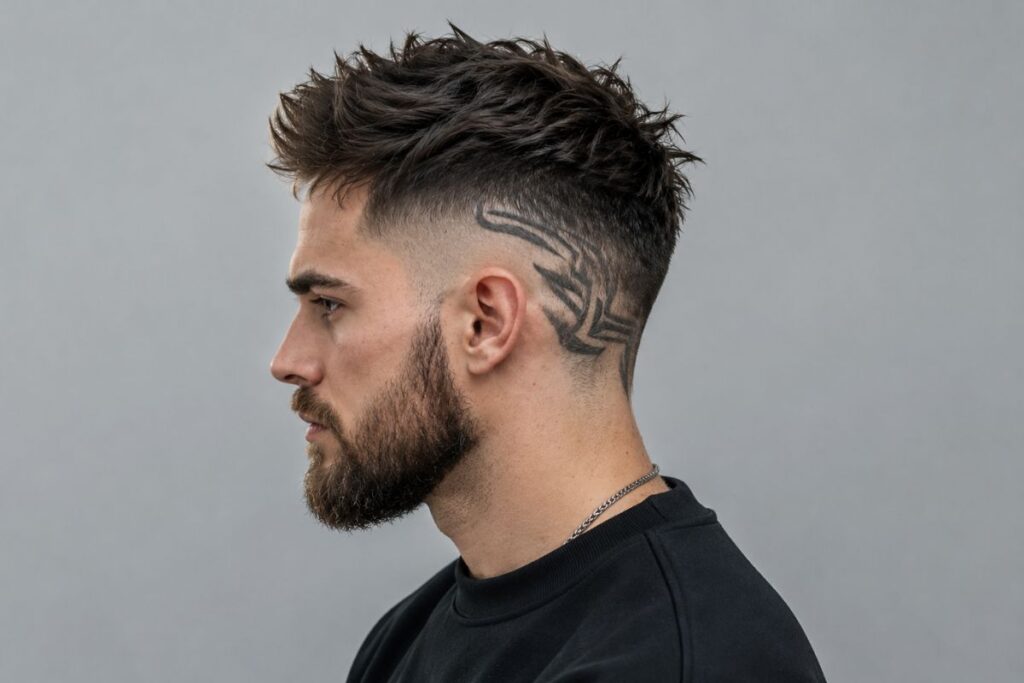
A mid or high fade on the sides with a short textured top worn with natural movement. The most universally flattering option in the short viking range. Suits all face shapes and hair types.
6. Viking Shaved Sides
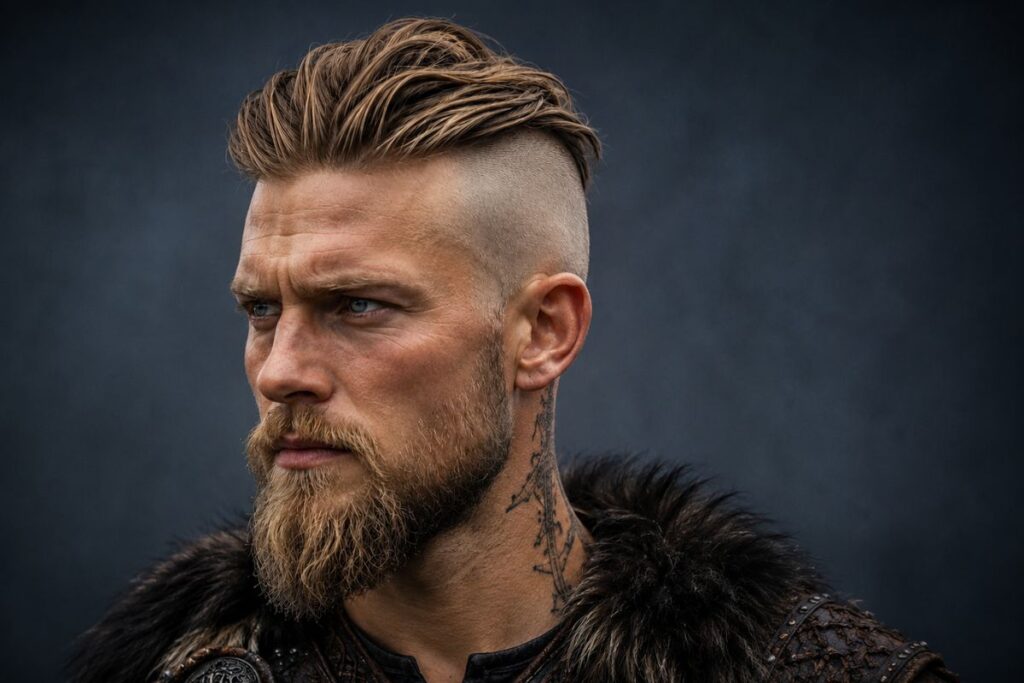
Sides and back taken to bare skin, leaving the top at a moderate length. Bold and high maintenance. The top needs at least two inches to visually balance the severity of the shaved sections below.
Viking Undercut and Fade Styles
7. High Fade Viking Cut
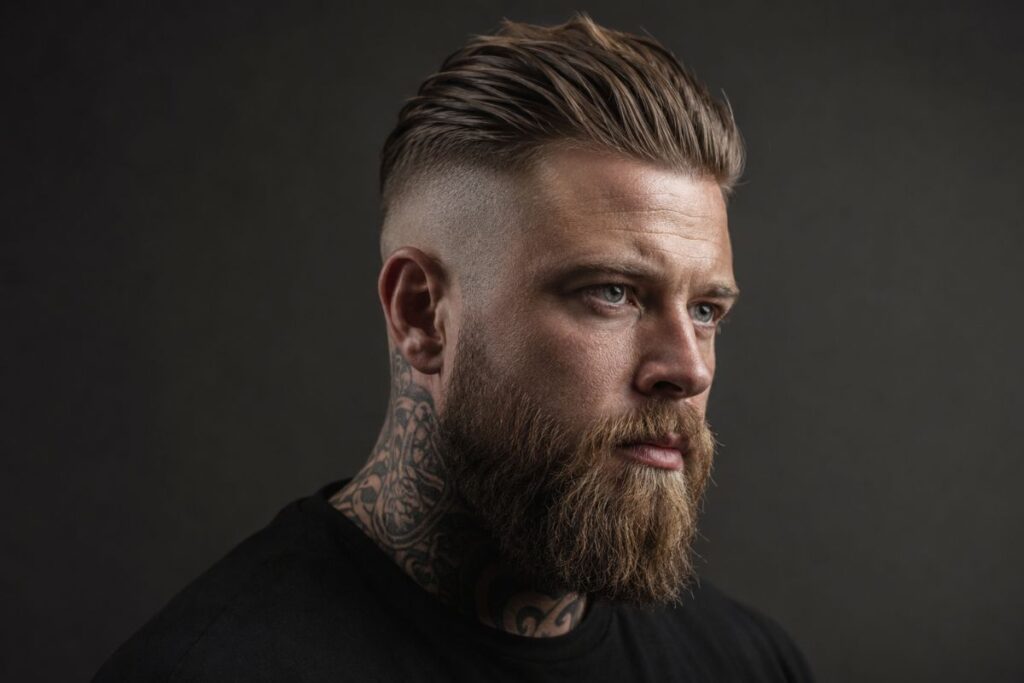
The fade starts high near the temples creating strong contrast with the longer top. Popular in New York, Chicago and Los Angeles as the go to modern Norse warrior look that still reads professional.
8. Viking Undercut
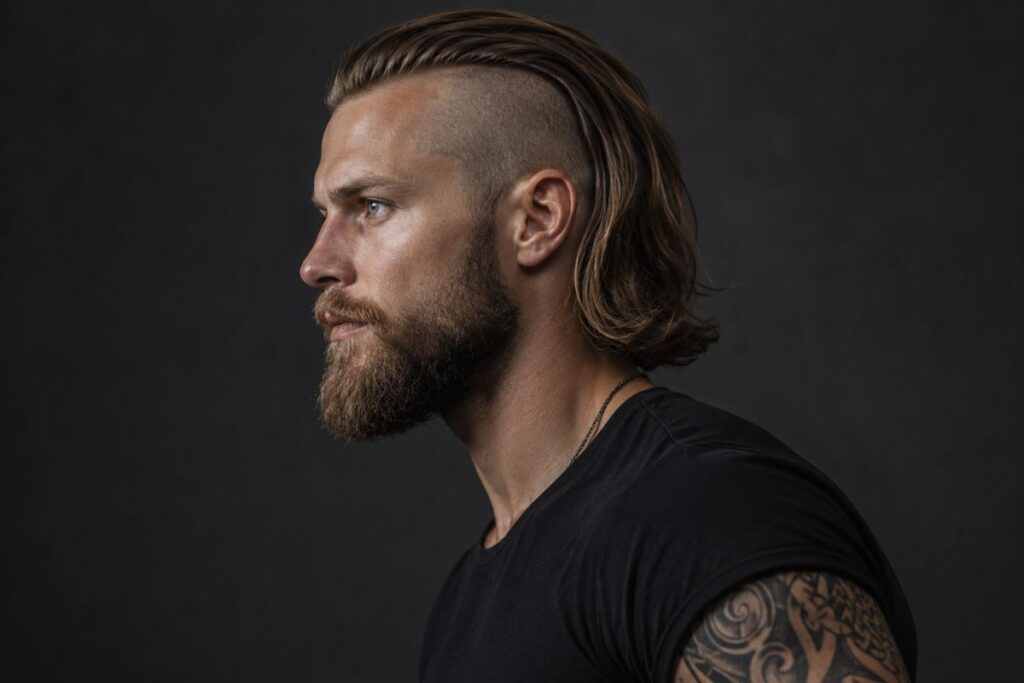
Viking undercut With Long Top Short or shaved sides with a top long enough to wear loose, brushed back or partially braided. Gives maximum styling flexibility from casual weekends to polished weekdays with a different product.
9. Drop Fade Viking Cut
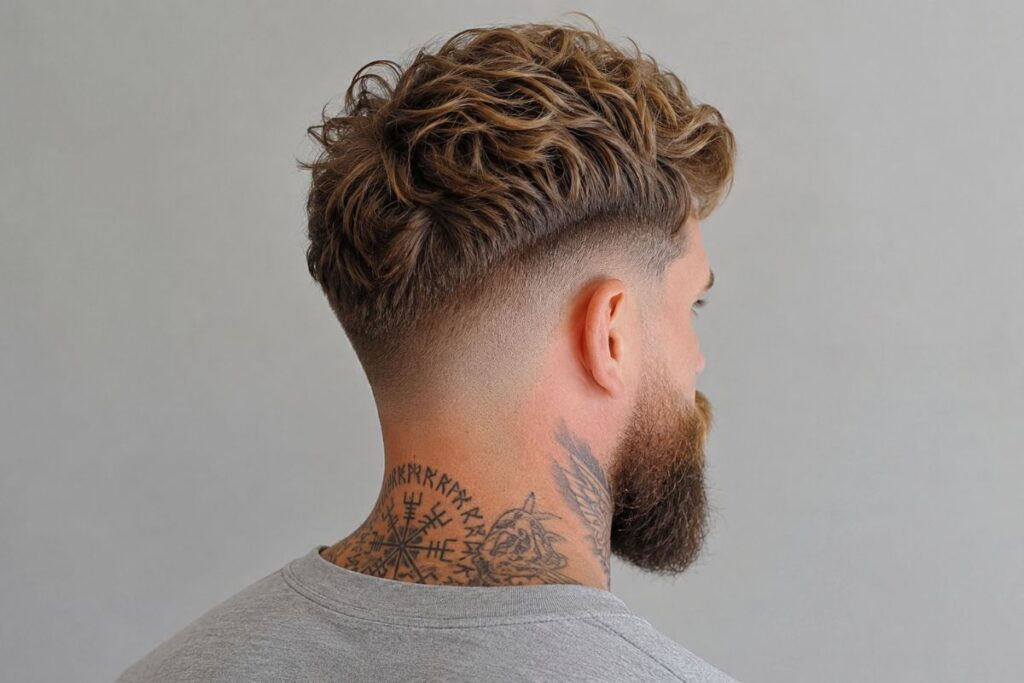
The fade line curves down behind the ear before sweeping back up toward the nape. Flows more naturally with the shape of the head than a straight line. Works particularly well with wavy or curly hair.
10. Skin Fade With Viking Top
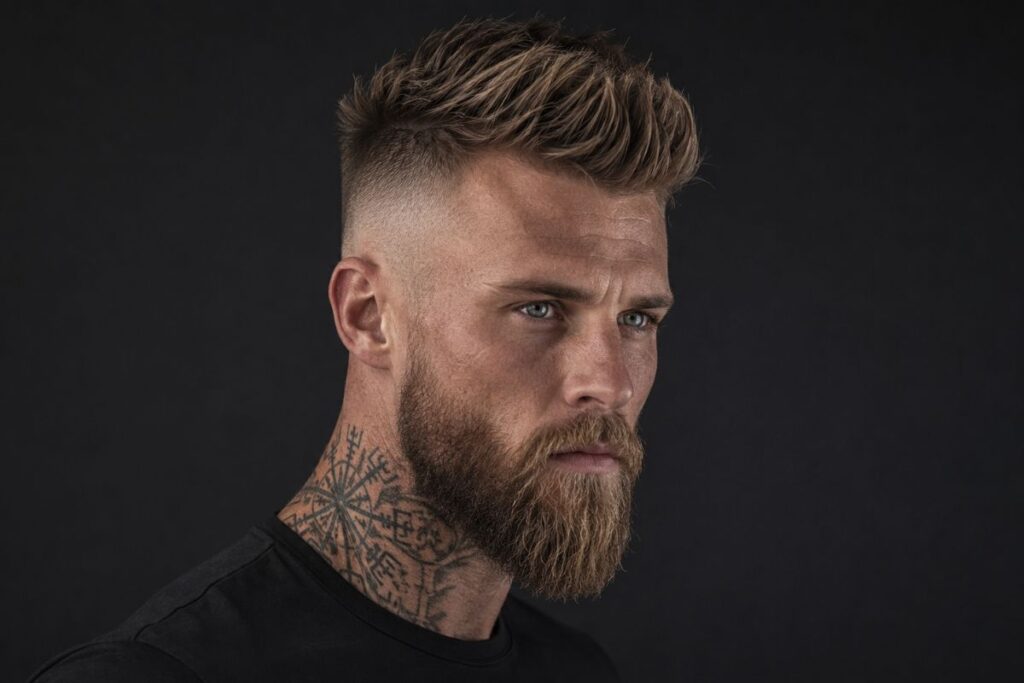
Skin Fade With Viking Top Sides fade all the way to bare skin for maximum contrast with the top. Grows out visibly within a week and needs a touch up every ten to fourteen days to maintain its impact.
11. Low Fade Viking Undercut
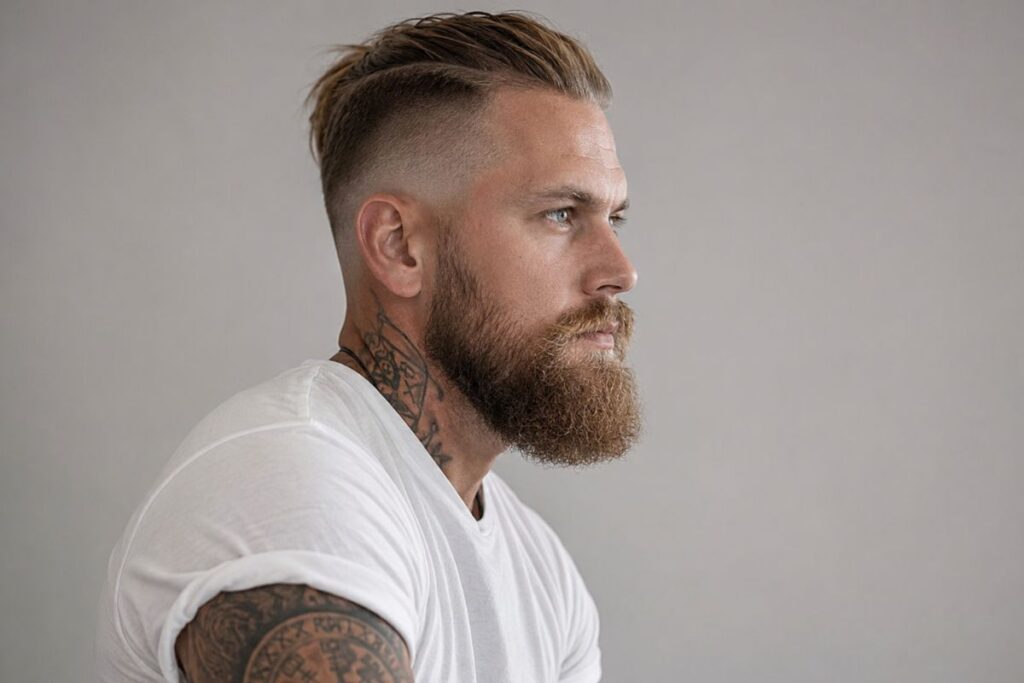
A low fade sits just above the ear line and blends gradually into the longer top. The most office friendly option in the undercut range. Trims every three to four weeks maintain a clean result.
12. Viking Mohawk Fade
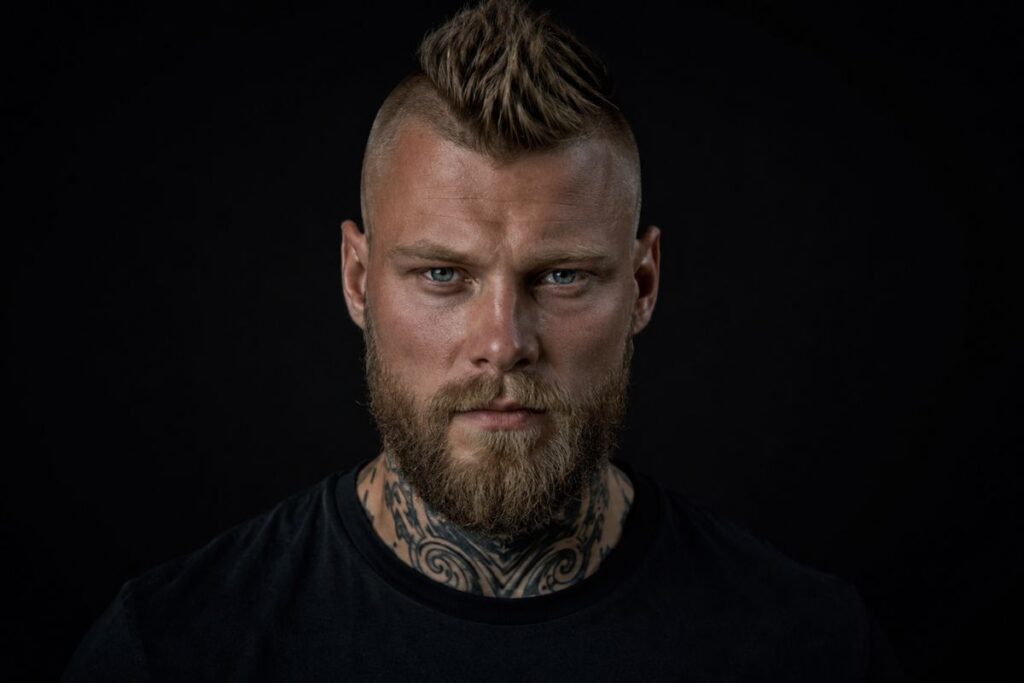
A strip of longer hair runs down the center while the sides fade very short. In 2026 the viking mohawk is more blended with the center strip worn with natural texture rather than gelled spikes.
Viking Braid Hairstyles for Men
13. Simple Viking Braid
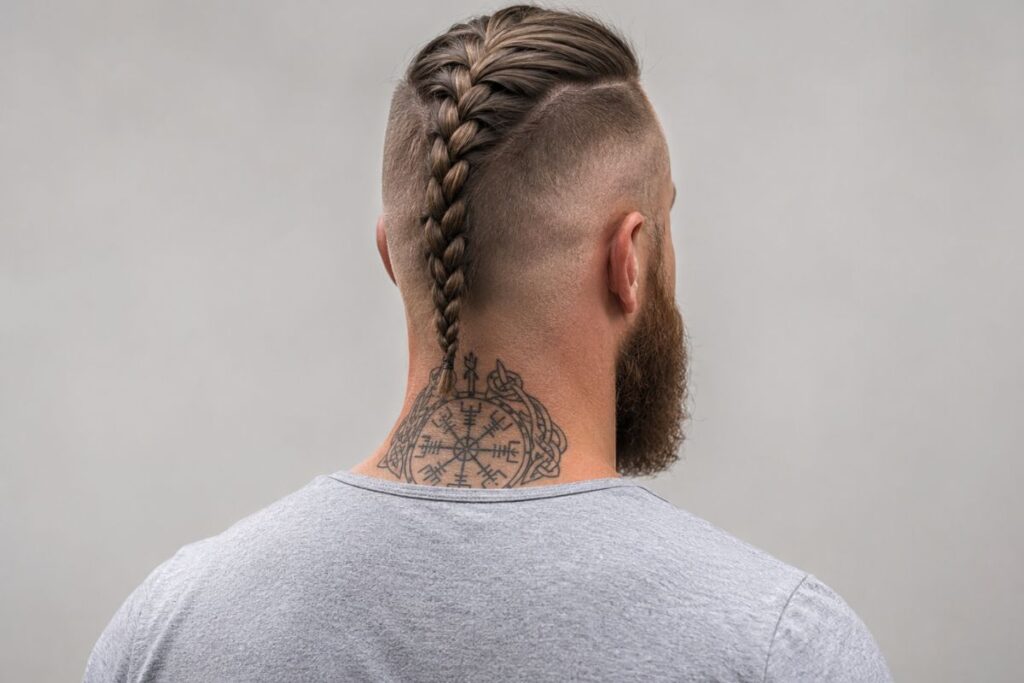
A single three strand braid runs from the front of the top section backward. The most practical and historically plausible braid style for men. Requires at least six to eight inches of top length.
14. Viking Warrior Braid
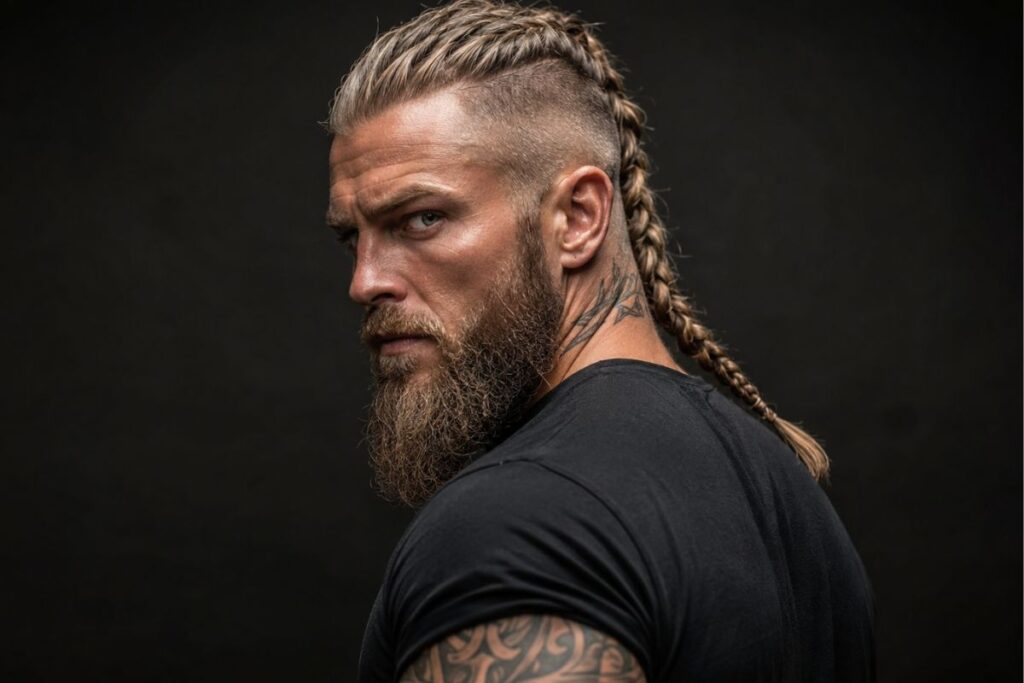
Everything pulled tightly back from the temples before plaiting. Elongates the face and exposes the jaw. Needs a minimum of 5 to 7 inches on straight to slightly wavy hair.
15. Viking Braid With Undercut
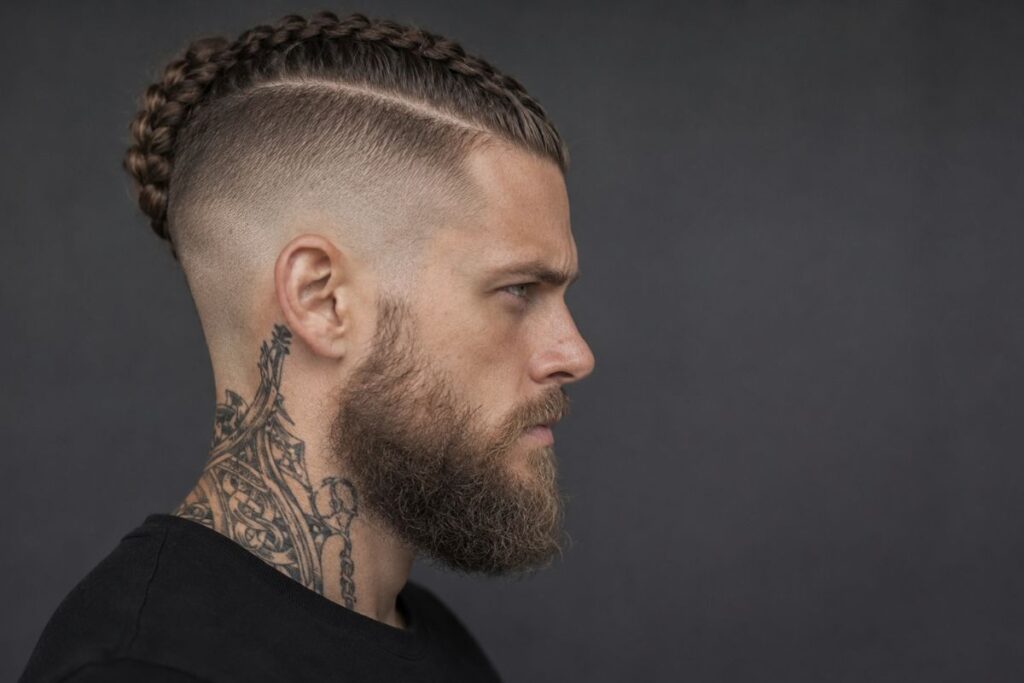
Shaved or faded sides with the top section braided back. The style most closely associated with the Ragnar Lothbrok look. Ask for a skin fade with four to five inches left on top for braiding.
16. Two Braid Viking
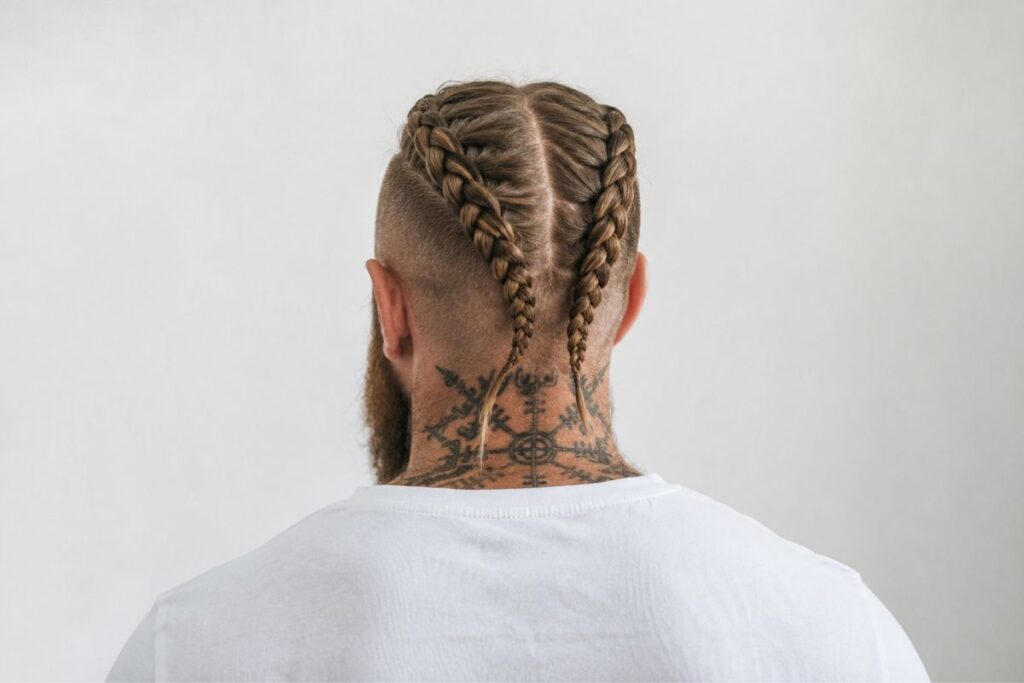
Style Two braids running parallel from either side of the front hairline toward the back. Works best on straight to wavy hair with at least seven to eight inches on top.
17. Half Braid Viking Cut
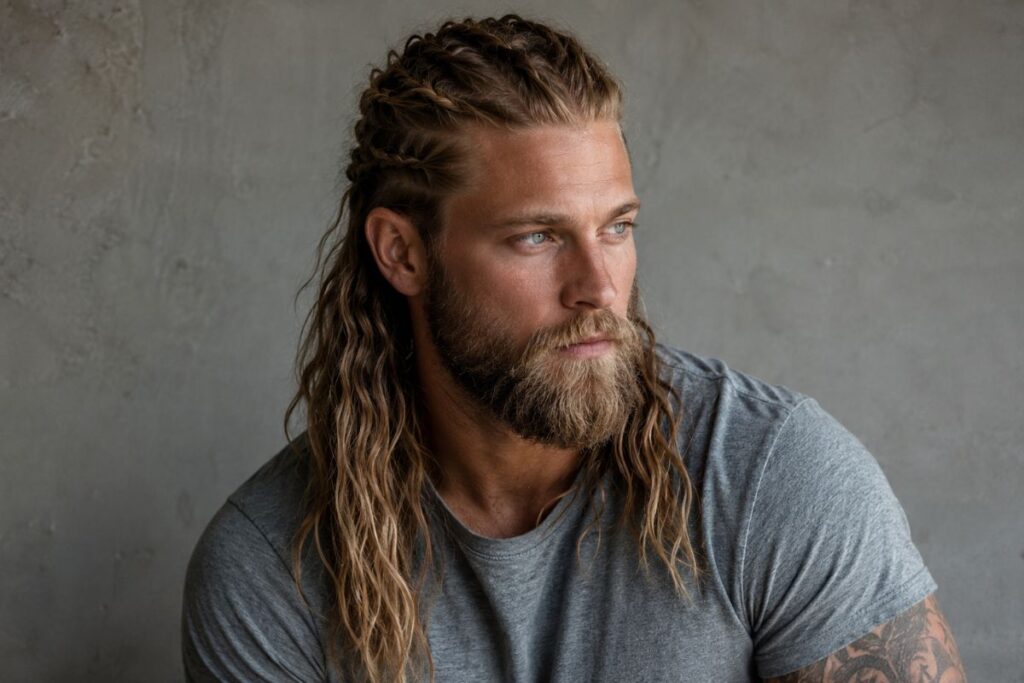
Front and side sections braided back while the crown falls loose. Works well for men transitioning from shorter to longer hair. Suits all face shapes and most hair types.
18. Viking Side Braid
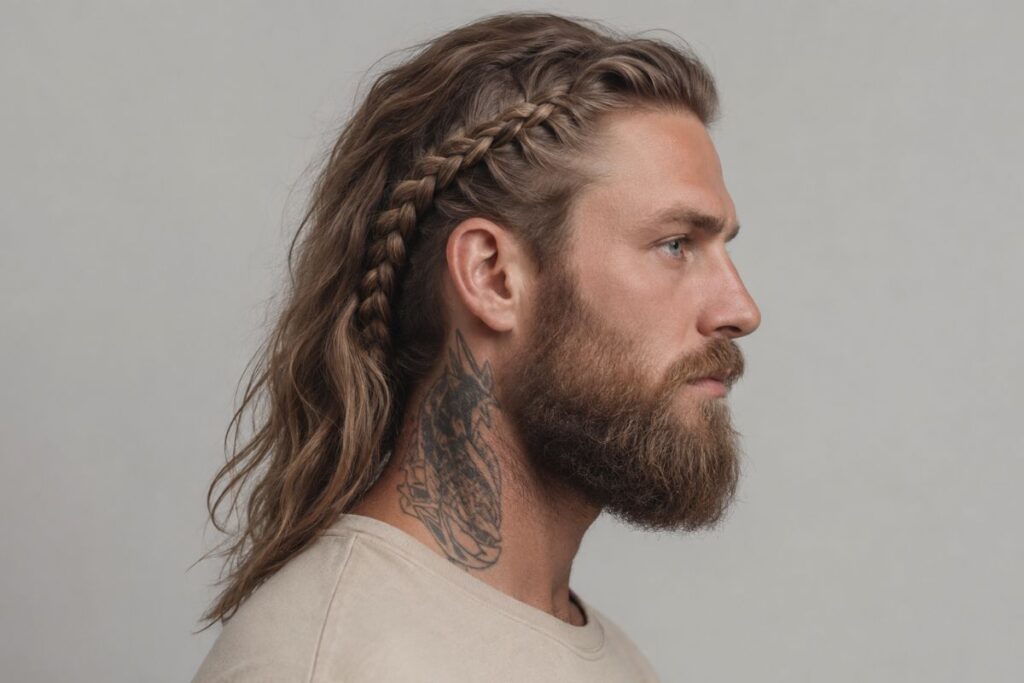
A single braid or series of small braids along one side of the head from the temple backward. A subtle wearable version of the viking braid look. Works in professional settings across Houston, Miami and Dallas.
Long Viking Hairstyles for Men
19. Viking Warrior Long Hair
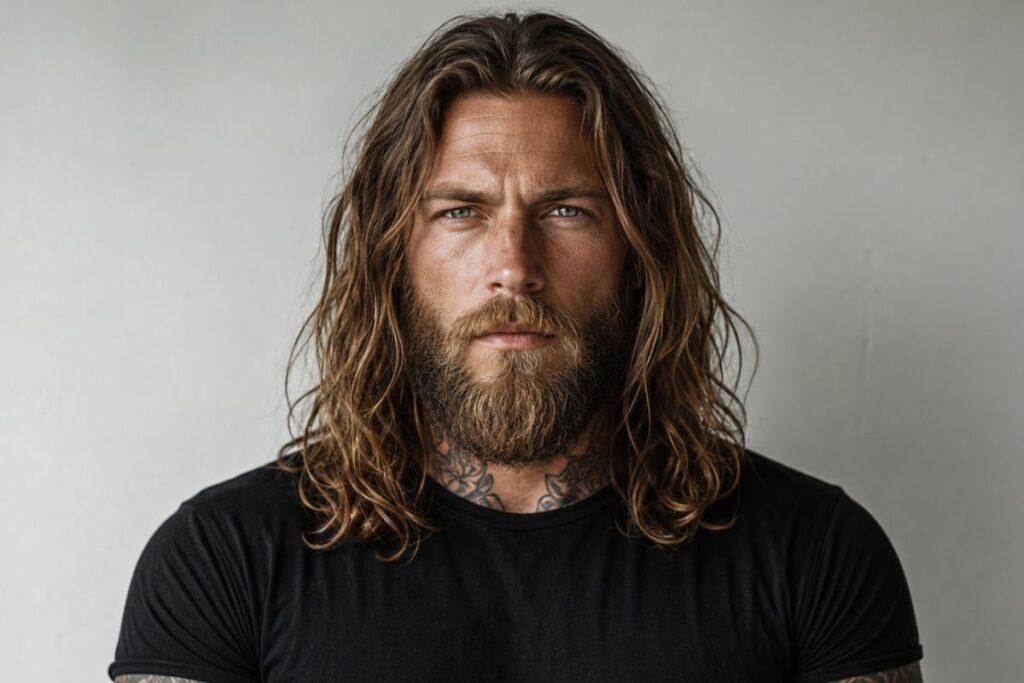
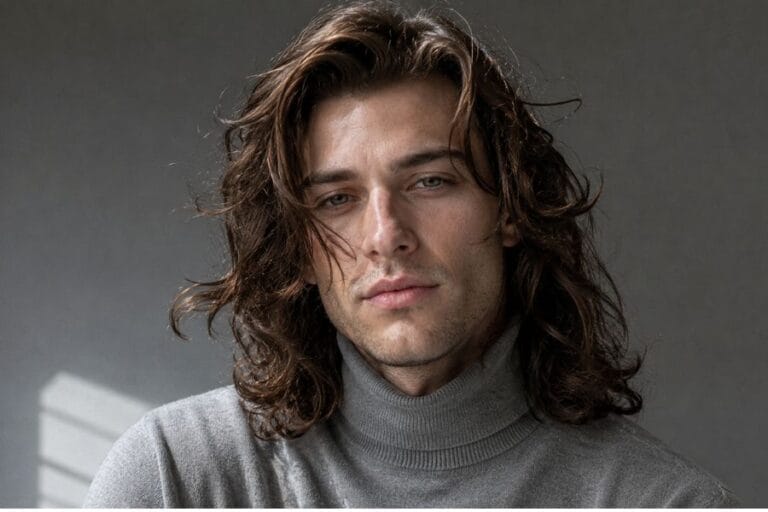
Shoulder length or longer hair worn loose, parted naturally in the middle or swept back. The most historically plausible viking hairstyle based on actual archaeological evidence. Sea salt spray is the only product most men need.
20. Viking Long Hair With Undercut
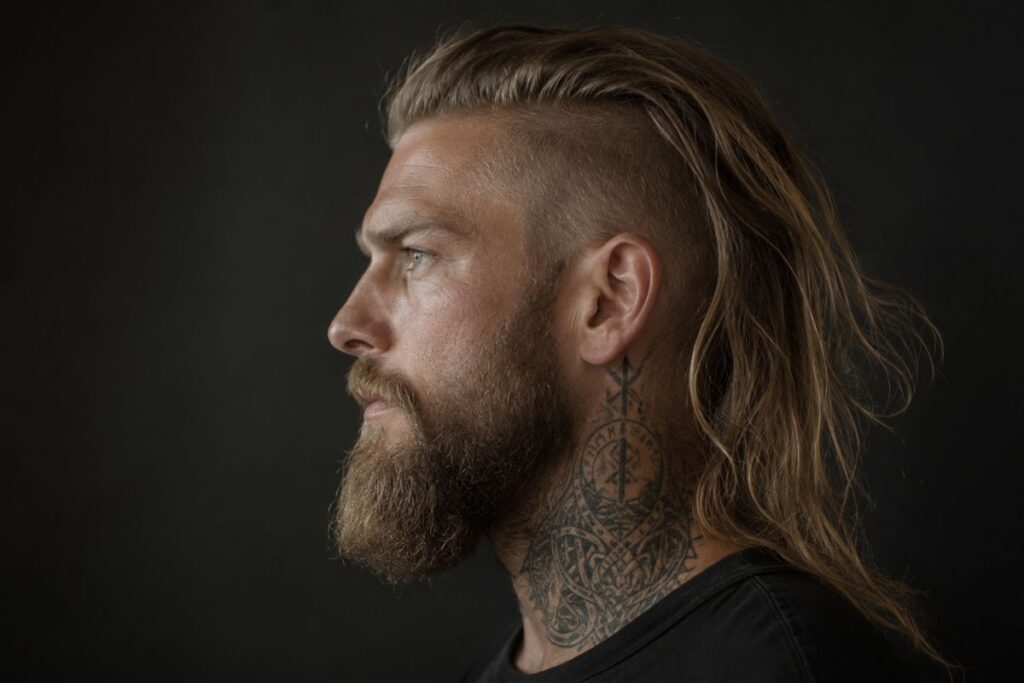
Shaved or faded sides with a long top that falls well below the ear. Can be worn loose, braided or tied back depending on the occasion. Needs at least four to five inches of top length.
21. Viking Bro Flow
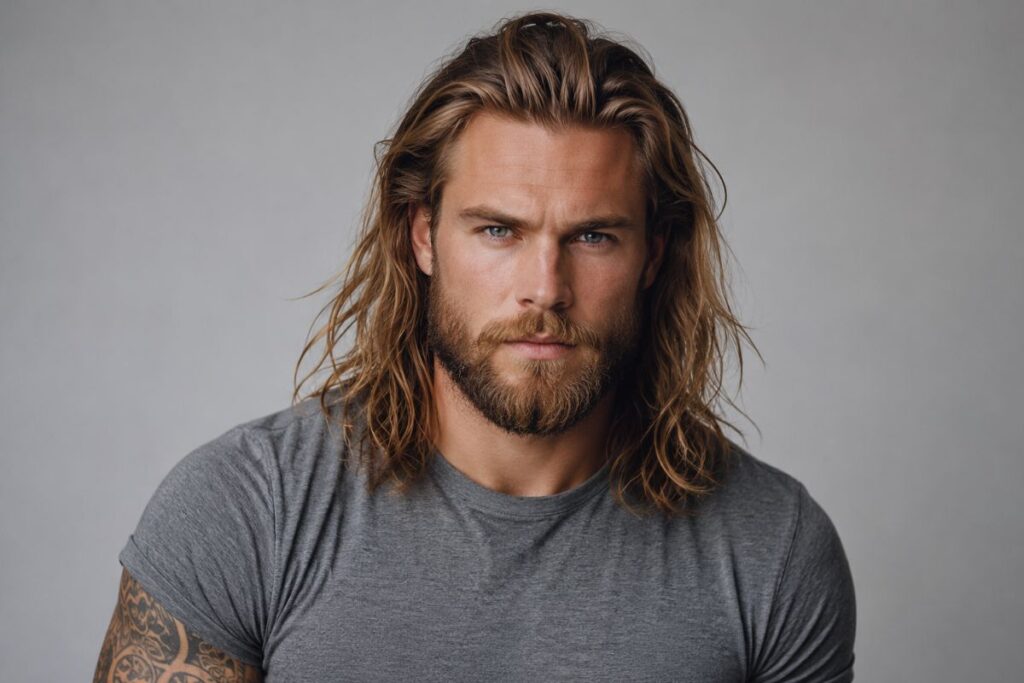
Medium to long hair grown out and worn loosely flowing without any hard fade below. Draws from the historically documented style of shoulder length hair worn by Norse men of status.
22. Viking Ponytail
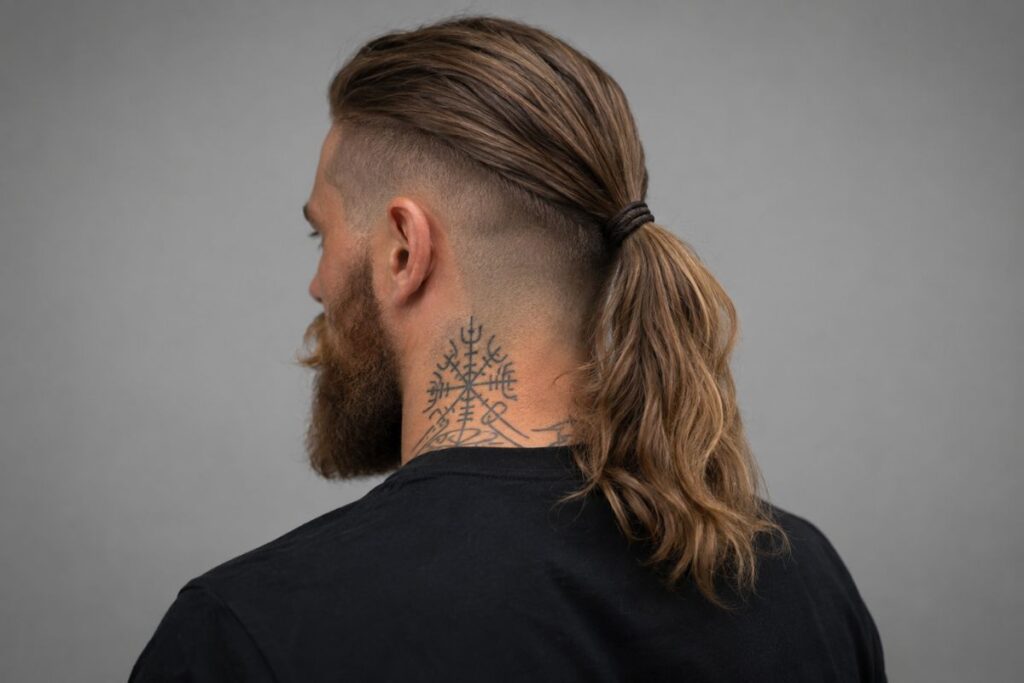
Long hair gathered and tied back into a low or mid ponytail with an undercut or fade on the sides. A simple leather cord or dark elastic keeps the styling authentic. Works best with at least six to eight inches on top.
23. Viking Man Bun With Undercut
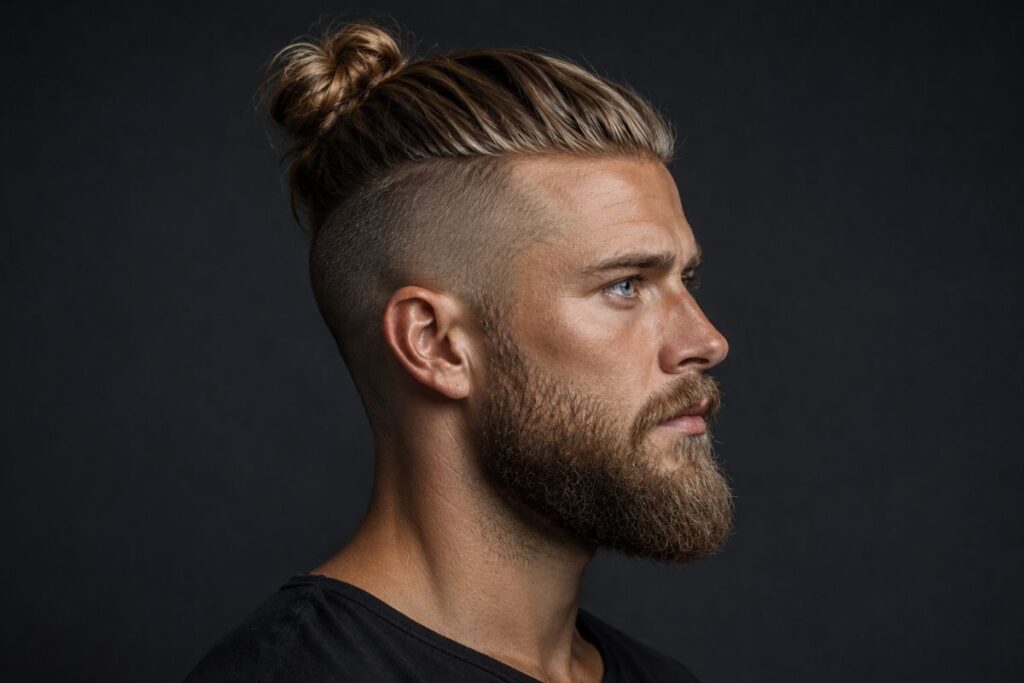
Long hair tied into a bun on top while the sides remain shaved or faded close. The shaved sides draw attention to the tied back top and add genuine visual impact. Top needs at least five to six inches.
24. Shoulder Length Viking Cut
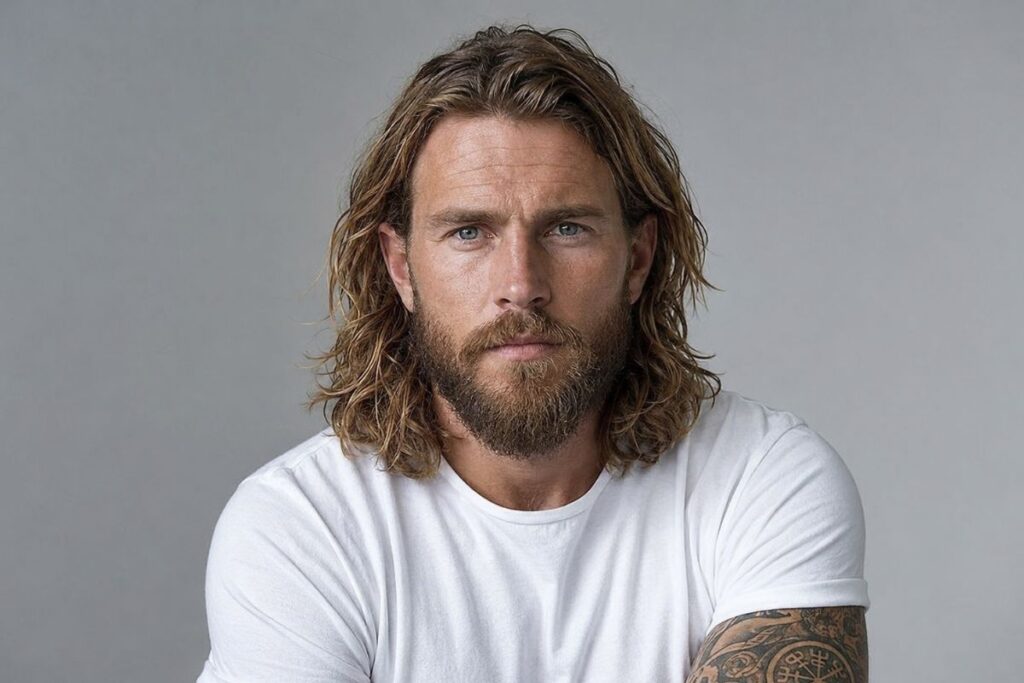
Hair sits at or just below the shoulder all around with no hard undercut. Suits wavy and curly hair especially well. Trims every eight to ten weeks maintain the length without cutting it shorter.
Modern Norse Inspired Haircuts for 2026
25. Modern Viking Fade
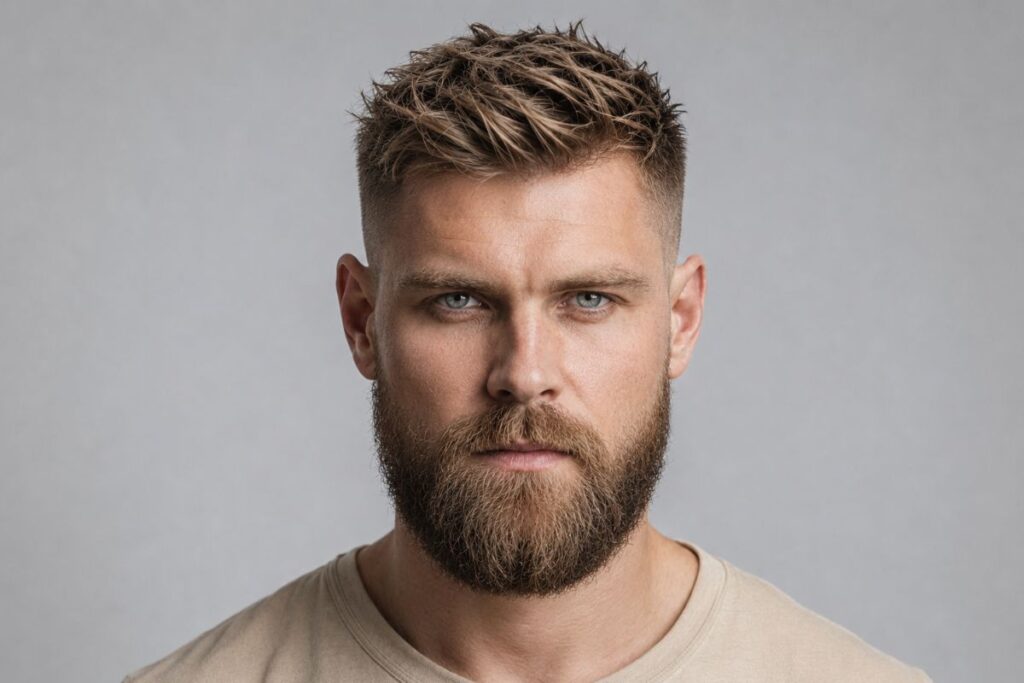
A clean mid or high fade transitioning into a medium length textured top worn with natural movement. The most wearable and universally flattering modern interpretation of the viking haircut in 2026.
26. Norse Textured Crop
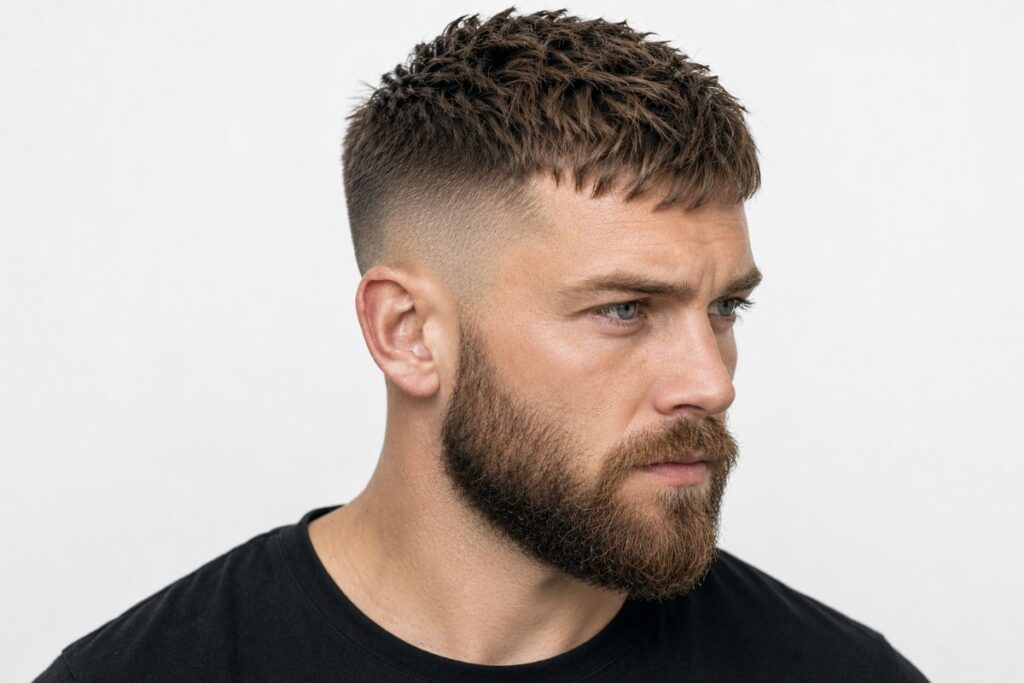
Short choppy layers on top with closely faded sides and a slightly pushed forward fringe. Strong option for men who want the Norse look in a professional setting. A small amount of clay takes under two minutes.
27. Viking Style Quiff
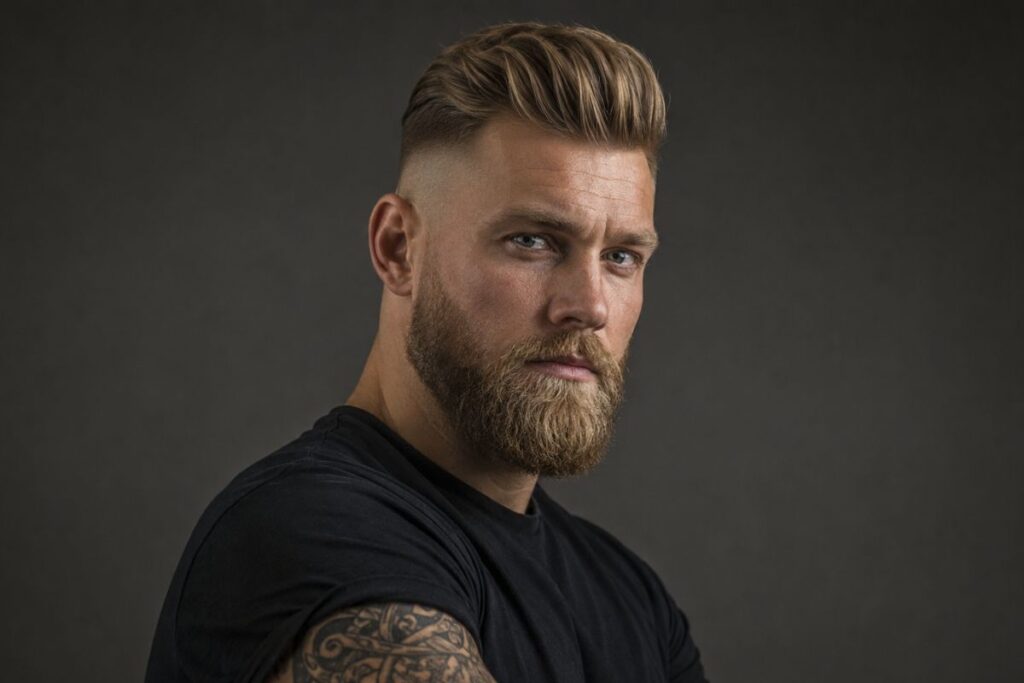
Top section lifted and pushed back for height while the sides stay tightly faded. Particularly flattering for men with rounder face shapes. Needs a blow dryer and medium hold paste to maintain the lift.
28. Scandinavian Undercut
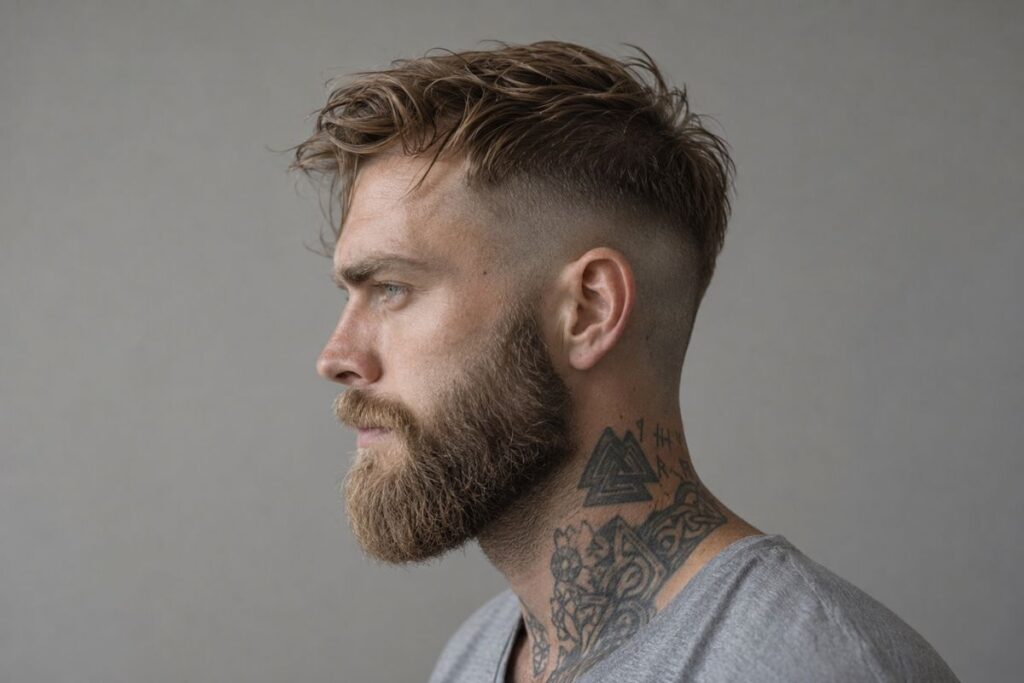
Low to mid fade on the sides with a longer loosely worn top kept with natural movement. Softer and less dramatic than the disconnected version. The most everyday appropriate modern viking undercut.
29. Viking Inspired Side Part
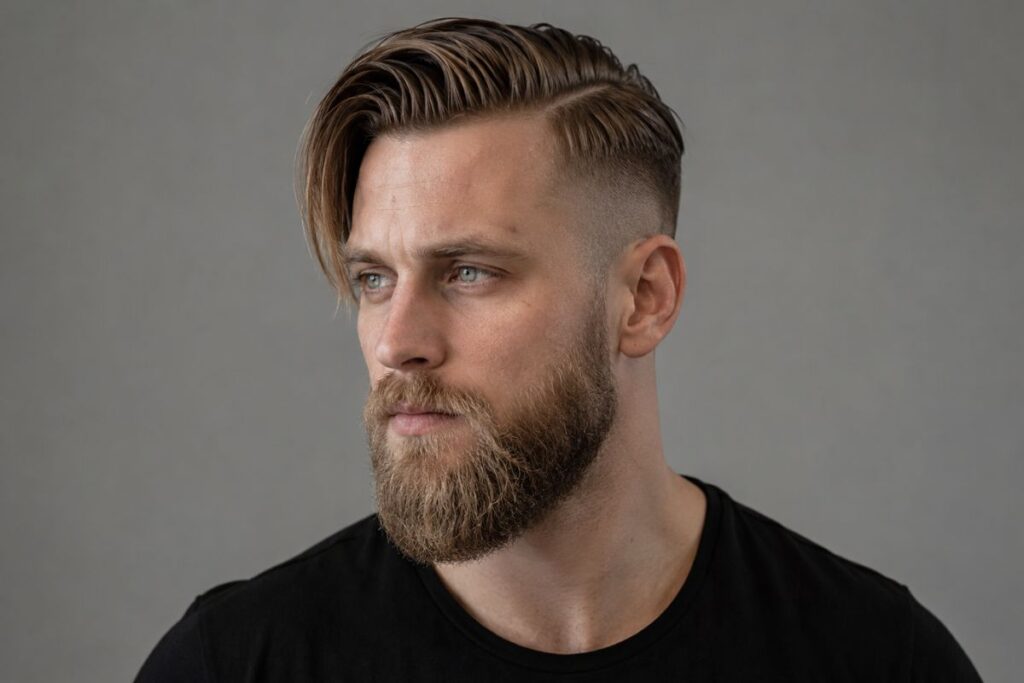
A deep side part with the top swept dramatically to one side over a tightly faded side. Bridges formal and fierce. One of the most versatile options for men whose lifestyle demands flexibility.
30. Modern Norse Shag
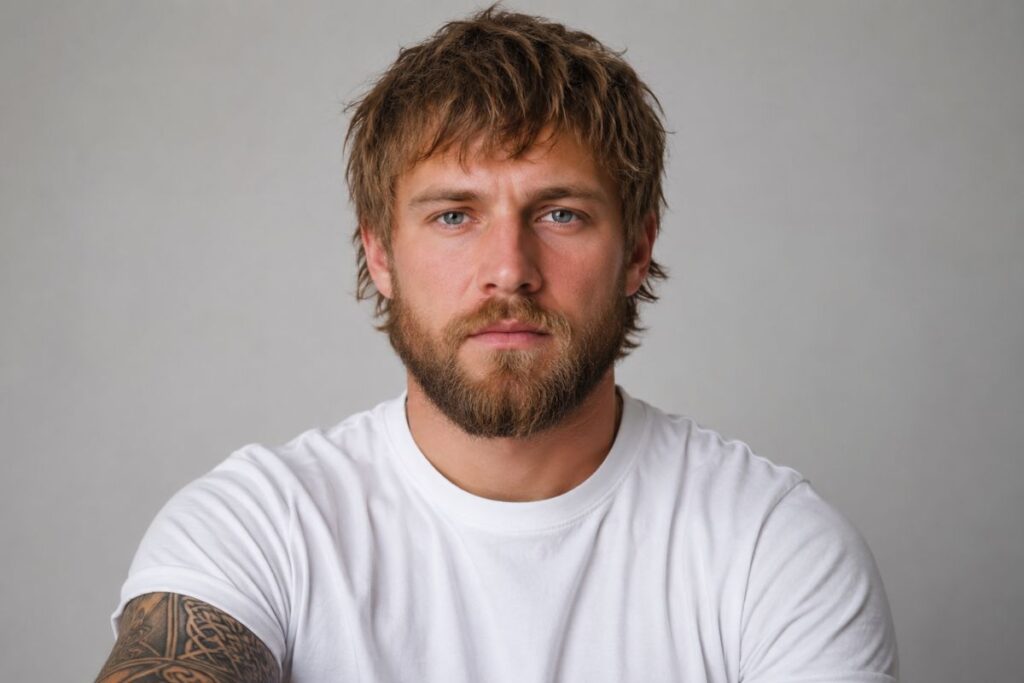
Longer choppy layers throughout the head giving a relaxed texture. The sides stay slightly shorter than the top for some structure without a hard fade line. Lowest maintenance option among all 30 styles in this guide.
Best Viking Haircut for Your Face Shape and Hair Type
The right viking haircut depends on matching two things. The shape of your face and the texture of your hair.
Which Face Shape Suits Viking Cuts Best
Square and oval face shapes suit the widest range of viking cuts. Round faces do best with cuts that add height such as the quiff, high fade or brushed back long styles. Heart shaped faces are flattered by cuts with more length at the bottom such as shoulder length styles or the bro flow. Matching your face shape to your viking cut is one of the most important factors in making the style look intentional rather than accidental.
Viking Haircut by Face Shape and Hair Type: Full Comparison Table
| Face Shape | Hair Type | Top Viking Cuts | Avoid |
| Square | Thick straight | Disconnected undercut, warrior braid | Very long loose styles hiding jawline |
| Square | Wavy | Drop fade, modern norse shag | Heavy blunt fringes |
| Round | Straight fine | Viking quiff, high fade | Bowl style cuts, heavy fringes |
| Round | Thick curly | High fade with curly top | Shoulder length all-around loose styles |
| Oval | Any type | Almost any of the 30 cuts | None major |
| Heart | Wavy straight | Shoulder length, bro flow, side braid | Shaved sides with very short top |
Viking Beard Styles: Which Beard Pairs With Which Haircut
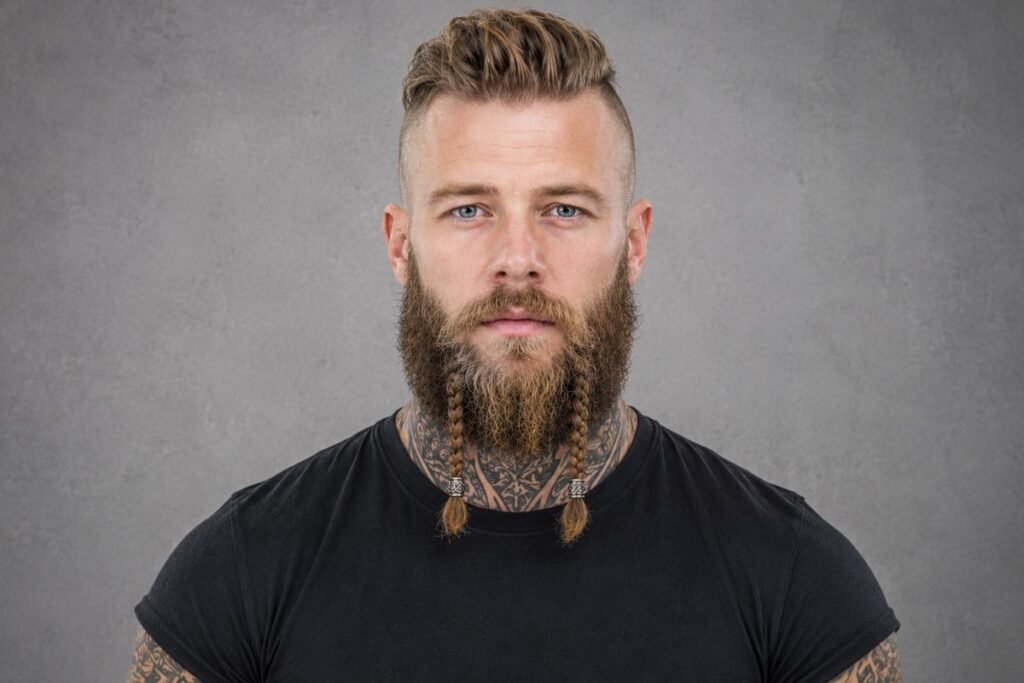
The beard is inseparable from the full viking look. Norse men took genuine pride in their full beards. According to the National Museum of Denmark, hair and beards were of major importance to Viking men, pointing to royal bynames like Sweyn Forkbeard and Harald Fairhair as evidence, along with the frequent discovery of combs showing that regular grooming was widespread.
A full beard pairs best with the disconnected undercut, skin fade, and high fade styles since the shaved sides draw attention directly to the beard. A short beard or goatee works better with shorter cuts like the buzz cut or crew cut where a full beard can feel visually heavy and unbalanced. Small metal beard beads threaded onto a braided beard add an authentic Norse detail that has become popular among men in the USA viking style community in 2026.
How to Style a Viking Haircut at Home
Styling a viking cut at home comes down to three things. Washing properly, using the right product for your specific cut type and not overloading the hair with too much product at once.
Step by Step Morning Routine
Start with freshly washed hair since product builds up quickly on shorter cuts and creates a flat lifeless result within a day. The American Academy of Dermatology recommends massaging shampoo into the scalp and letting it rinse through naturally rather than scrubbing the full length of the hair which causes significantly less long term damage. Towel dry until just damp. Apply a pea sized amount of product warmed between the palms. Blow dry in the direction of the style while lifting at the roots.
Best Products for Every Viking Cut Type
| Viking Cut Type | Best Product | USA Price |
| Short undercut or fade | American Crew Fiber | Around $18 |
| Disconnected undercut | Got2b Phenomenal Paste | Around $8 |
| Long loose styles | Bumble and bumble Surf Spray | Around $32 |
| Budget sea salt option | OGX Coconut Water Texture Spray | Around $9 |
| Braided styles | Suavecito Pomade Original Hold | Around $14 |
| Quiff or brushed up styles | Dove Men Plus Care Fortifying Paste | Around $8 |
How to Ask Your Barber for a Viking Haircut
Bringing a reference photo is the single most important step. Saying “I want a viking cut” without a photo produces a different result in every barbershop in the country since the term covers 30 different styles.
Barber Scripts: Copy or Screenshot These
For a short viking undercut: High fade on the sides down to skin. Leave three to four inches on top, textured and worn forward. Add a line up on the hairline.
For a disconnected undercut with long top: Disconnected undercut. Sides number one or skin. Top left at five to six inches. No blending between sides and top.
For a modern norse inspired cut: Mid fade on the sides. Three to four inches on top, textured layering, natural finish not slicked.
For a warrior braid style: Low fade on the sides. Leave at least five inches on top for braiding. I want to wear it braided back. Here is a photo of the style I mean.
Viking Haircut Maintenance: Trim Schedule and USA Costs
| Viking Cut Style | Trim Frequency | USA Average Cost | Daily Styling Time |
| Short undercut or fade | Every 2 to 3 weeks | $25 to $40 | 3 to 5 minutes |
| Disconnected undercut | Every 2 to 3 weeks | $30 to $45 | 5 minutes |
| Skin fade viking cut | Every 10 to 14 days | $30 to $50 | 3 to 5 minutes |
| Long top with undercut | Every 4 to 6 weeks | $25 to $40 | 5 to 10 minutes |
| Long loose styles | Every 8 to 10 weeks | $20 to $35 | 5 minutes or less |
| Modern norse shag | Every 6 to 8 weeks | $25 to $40 | 2 to 3 minutes |
Prices in major US cities like New York, Los Angeles, and Chicago typically run $10 to $20 higher than the averages above. In smaller cities and suburban areas across the South and Midwest, most viking cuts fall at the lower end of these ranges.
Conclusion
The viking haircut isn’t a single style. It is a family of 30 looks ranging from a subtle modern fade to a fully braided warrior look. There is a version that fits every face shape, every hair type, and every lifestyle across the USA in 2026.
Three things determine the right viking cut for you. Match the boldness of the cut to your real daily life, not a TV character. Look for your face shape and hair type specific style in the table in this guide. Be honest about maintenance since shaved side styles need a touch up every two weeks to stay looking intentional.
Bring a reference photo, use the barber scripts in this guide, and start with a modern version before committing to the full theatrical look.


One Comment