
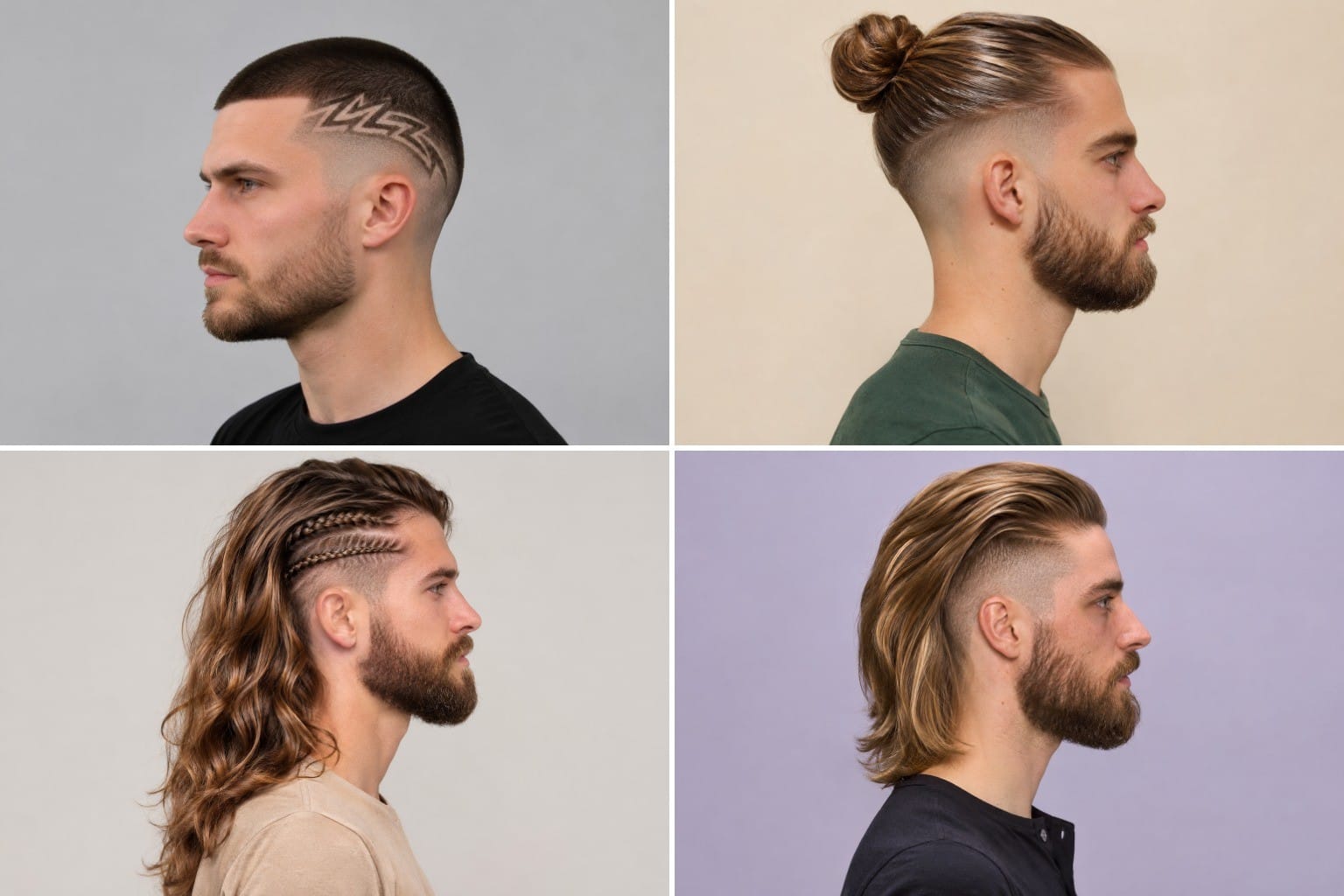
Ask your barber for short or faded sides with longer hair on top. That is what most people in the US mean by a Viking haircut today, whether the top is worn loose, braided or tied back.
The real Viking Age, roughly the late 700s to the mid-1000s, looked a little different. Some surviving evidence suggests that certain Viking men wore longer hair at the front, shorter hair at the back of the neck, and carefully groomed beards. Styles likely varied by region, period and status. The shaved sides you see today were made popular mostly by TV.
What Real Vikings Did With Their Hair
Viking Age art rarely shows faces, so the record is thin. What survives is a few carvings, some letters written by outsiders, and a lot of combs. Together they point to people who cared about grooming, not the wild, matted look from movies.
Two Angry Letters About “Danish Fashion”
In 793, right after Vikings raided the monastery at Lindisfarne, the scholar Alcuin wrote to the king of Northumbria. One of his complaints was that English nobles had started copying the hair and beards of the pagan raiders.
About two hundred years later, an Old English letter to a man named Edward, usually attributed to the abbot Ælfric of Eynsham, scolded him for dressing “in Danish fashion, with bared neck and blinded eyes.” The National Museum of Denmark reads this as long hair on top and short hair at the back. “Blinded eyes” most likely means a fringe long enough to fall over the eyes.
That is the closest thing we have to a written description of a Viking haircut. Notice what it leaves out. Nobody mentions shaved sides.
Norse Men’s Grooming: Combs, Carvings and a Tiny Ivory Head
Norse men’s grooming was more careful than most people think. Combs made of bone, antler and wood are among the most common Viking finds. The National Museum of Denmark points to them as proof that people combed their hair regularly. Royal nicknames tell the same story. Sweyn Forkbeard probably had a beard split in two, and Harald Fairhair was known for his hair.
The Oseberg ship burial in Norway, from the 800s, includes a carved male head with a long, neat moustache and beard. Another carving from the same find shows a man’s hair tied back at the neck.
The clearest picture so far came out of a museum archive. A walrus-ivory gaming piece only 3 cm tall, dated to the late 10th century, was most likely dug out of a burial mound at Fløgstad, in eastern Norway, in 1796. It then sat in the Danish National Museum’s archive for over 200 years. When a curator finally looked at it closely, he saw a middle part, wavy hair, a back cropped short, a small curl above the ear, and a long braided beard. Science Norway’s report on the Fløgstad figure says the curator sees it as about as close to a real Viking portrait as anyone has found. It probably served as the king piece in hnefatafl, a Viking board game, and walrus ivory was a luxury material, so it most likely shows an elite style, not how every Viking wore his hair.
Written accounts are mixed. The Arab traveler Ibn Fadlan met Norse traders on the Volga River around 922. He wrote that they washed their faces and hair and combed it every morning. He still called them filthy, because the whole group shared one basin of water, one man after another.
Women’s hair has its own evidence, including knots and buns on small metal figures. Our guide to female Viking hairstyles covers it.
What TV Added
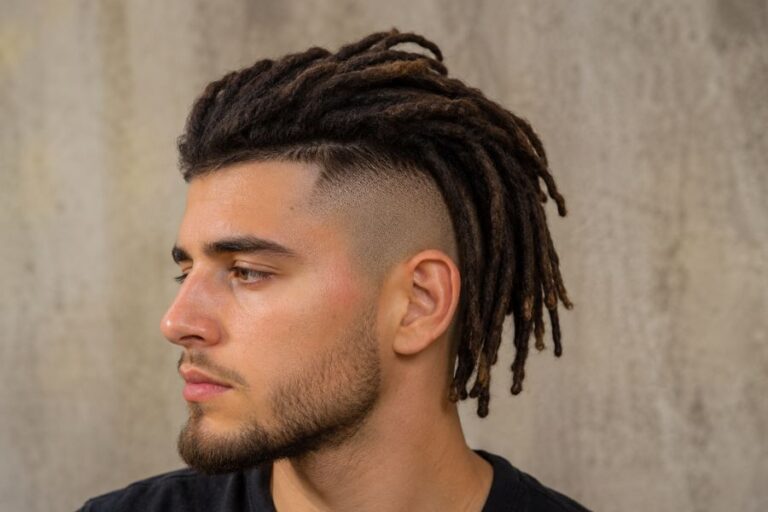
Most of the shaved-sides look comes from shows like Vikings and The Last Kingdom, where many characters wear braided tops over shaved panels. No find from the period shows that style, though missing evidence does not prove that nobody wore it. There is also no reliable evidence that dreadlocks were a typical Viking Age hairstyle. Our Viking dreads guide goes through that myth.
The Bayeux Tapestry, made in the 1070s, often gets used as proof. It shows Normans, not Vikings, though the Normans did descend partly from Viking settlers in France. Many of its Norman men have closely cropped or shaved backs of the head. That resembles the “bared neck” in the letter, though the tapestry was made decades later.
| Look | What the evidence says | Barbershop version today |
|---|---|---|
| Braided top over shaved sides (the TV Ragnar look) | Nothing from the period shows it | Top braid over an undercut (#9) |
| Long fringe, short or shaved back | Old English letters; Normans on the Bayeux Tapestry | Norman cut (#6) |
| Middle part, cropped back, braided beard | The Fløgstad figure | Middle part with a cropped back (#17) |
| Hair tied back at the neck | An Oseberg carving | Low ponytail at the nape (#15) |
| Dreadlocks | No evidence | None |
18 Viking Haircuts for Men
Most of these are modern cuts with a Norse feel. Where a style matches real evidence, the entry says so. Guard numbers and lengths for each one are in the barber section below.
Short Viking Haircuts
1. Viking Buzz Cut
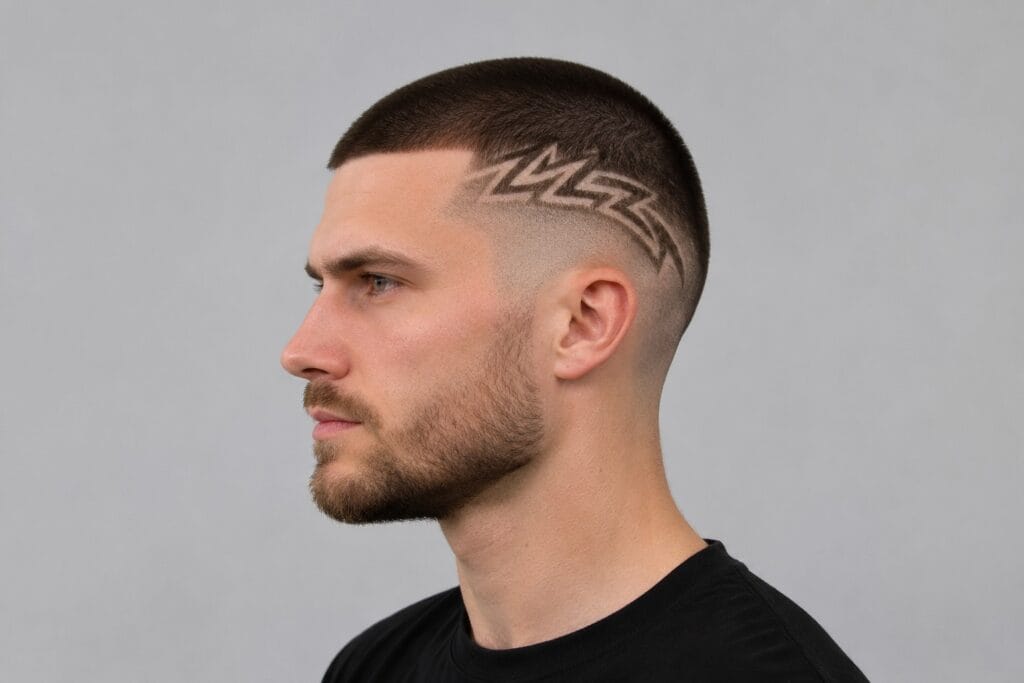
Pair a buzz cut with a real beard and it reads as Viking right away. Keep the top a guard or two longer than the sides so your head doesn’t look flat, and ask for a sharp line-up. It is the easiest cut here to keep up, and it works on almost any hair type, including thinning hair.
2. Shaved Head With a Full Beard
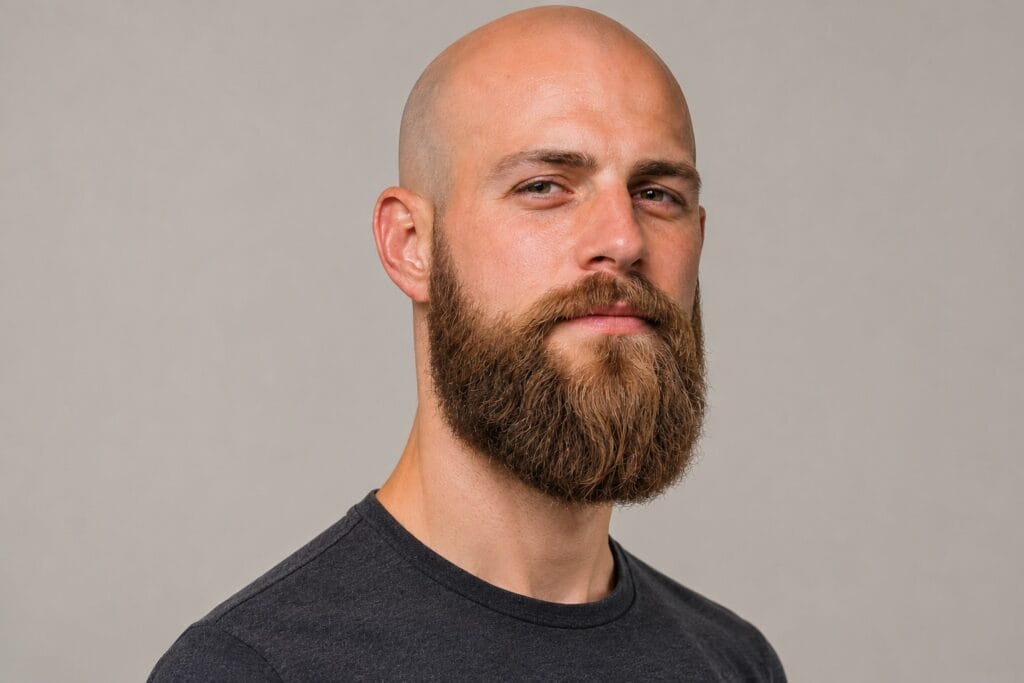
All the attention goes to the beard. This suits men with a receding hairline who would rather go all in than fight it. There is even an old written source for a nearly shaved head. The Byzantine historian Leo the Deacon described the 10th-century Rus prince Sviatoslav with a shaved head and a lock of hair on one side, which Leo said marked his noble birth. Sviatoslav ruled Kyiv, though, so this does not show that the style was common among Scandinavian Vikings.
3. Short Viking Undercut
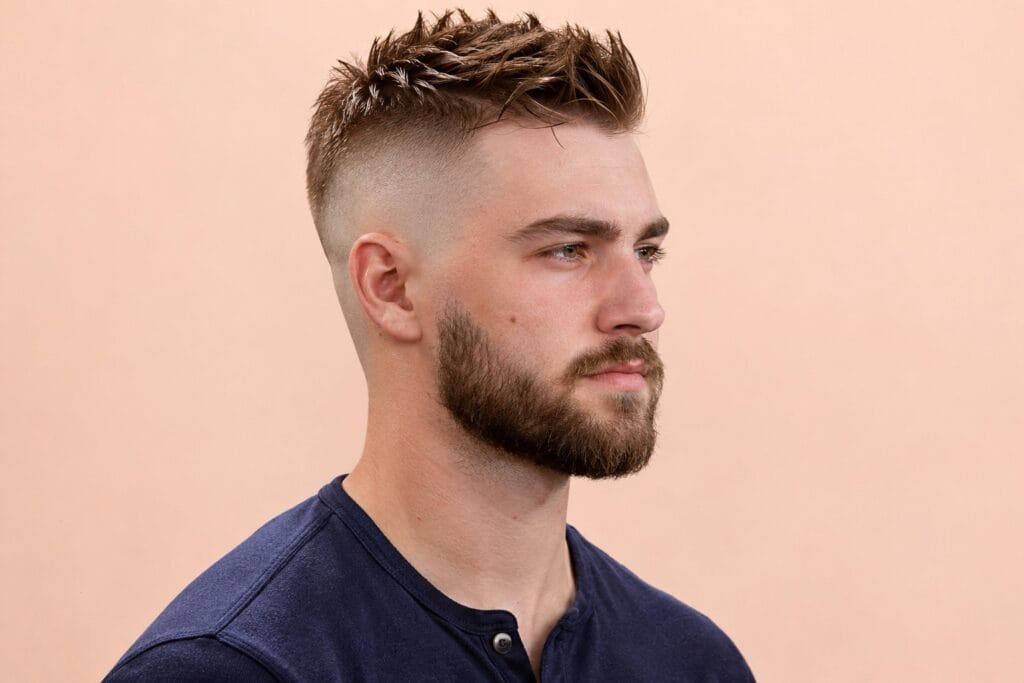
Short sides, two to three inches on top, worn forward or pushed back. If you want to test the look without growing anything out, start here. It is also a safe pick for younger guys.
4. Disconnected Undercut
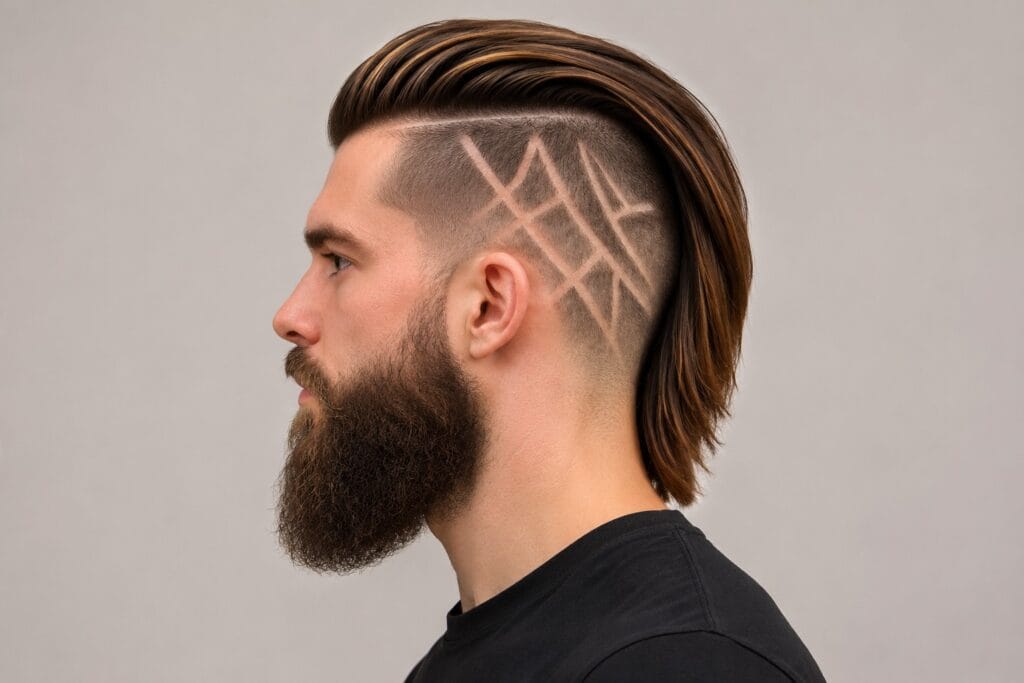
Here there is no blending at all. The sides stop at a hard line, and the top is clearly longer. This is the shape behind most TV Viking looks. It grows out fast and starts to look messy within a few weeks, so plan on frequent visits.
5. Skin Fade or Drop Fade With a Longer Top
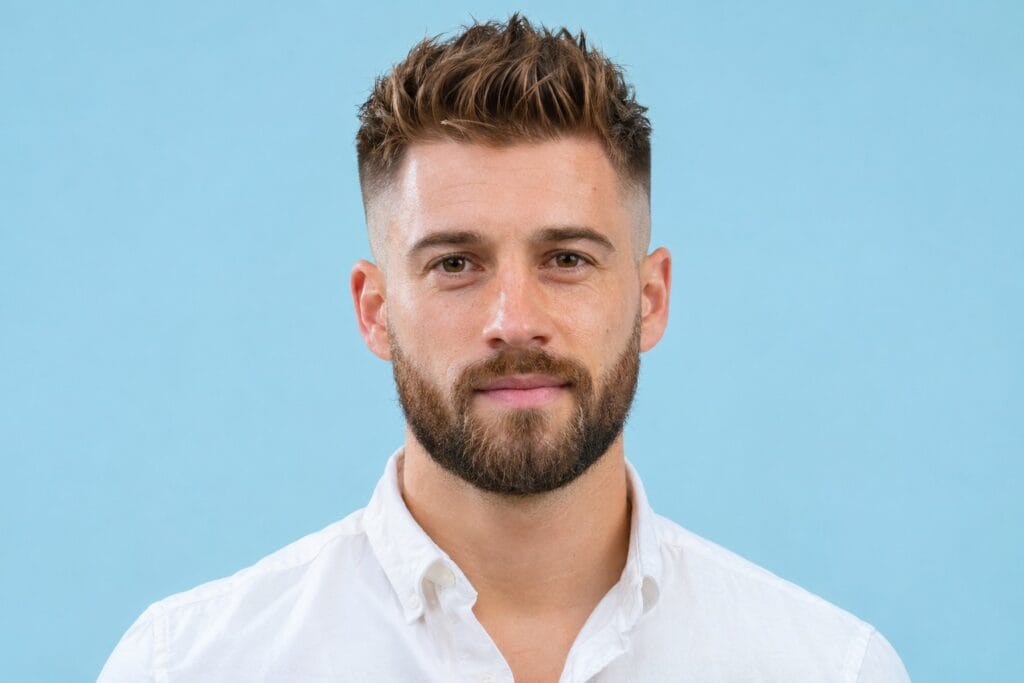
Fades blend from bare skin up into the top, so the transition is softer than a disconnected undercut, although a skin fade needs frequent touch-ups to stay sharp. A drop fade curves down behind the ear toward the neck. It follows the shape of the head and suits wavy or curly hair. Our skin fade haircut guide explains low, mid and high fades.
6. Norman Cut
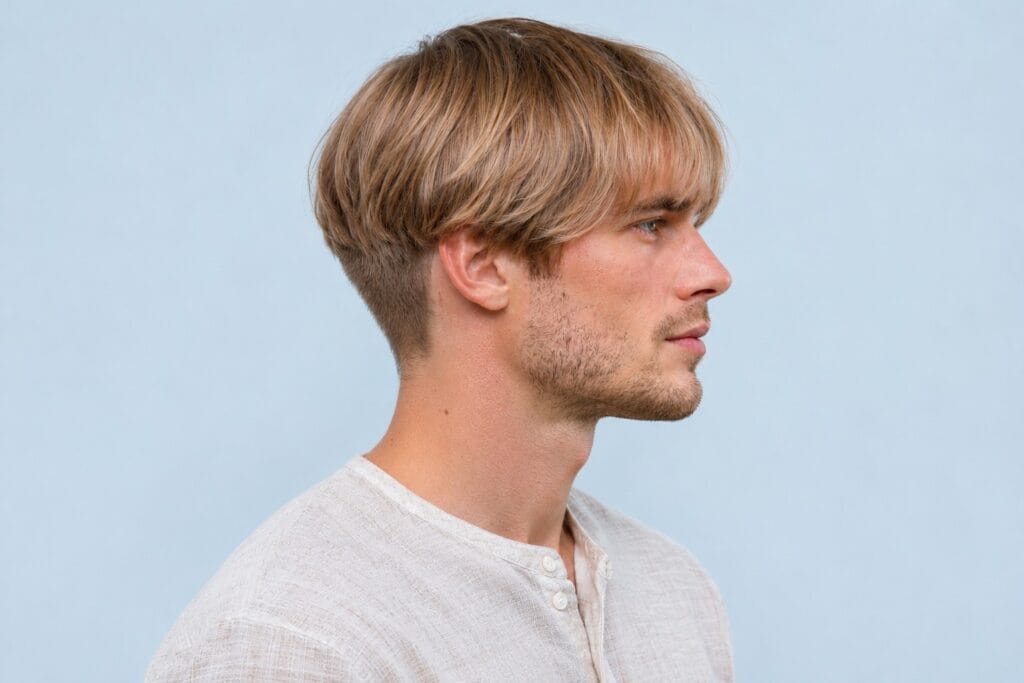
This one comes closest to the “Danish fashion” in the old letters: a long fringe in front, with the back of the head and neck clipped short. Today it looks a bit like a reverse mullet. The trick is to keep the sides over the ears fuller and take the back short instead.
7. Textured Crop
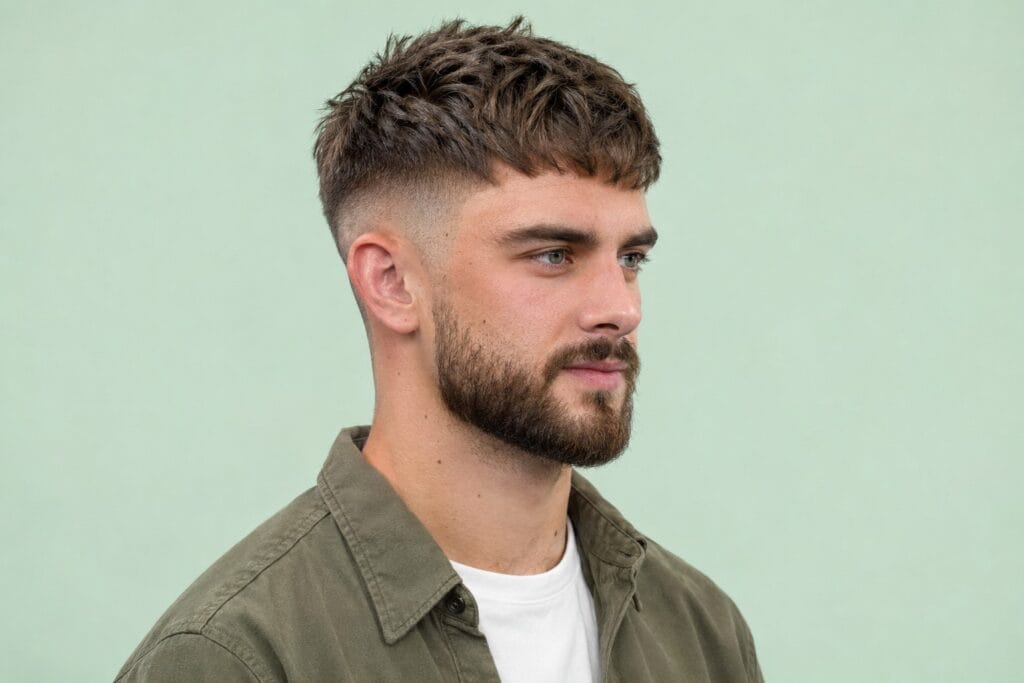
Choppy layers on top, a slightly forward fringe and tight sides. You get rugged texture without much length. A little matte clay is all the styling it needs, and it suits fine or medium hair.
8. Soft Viking Mohawk
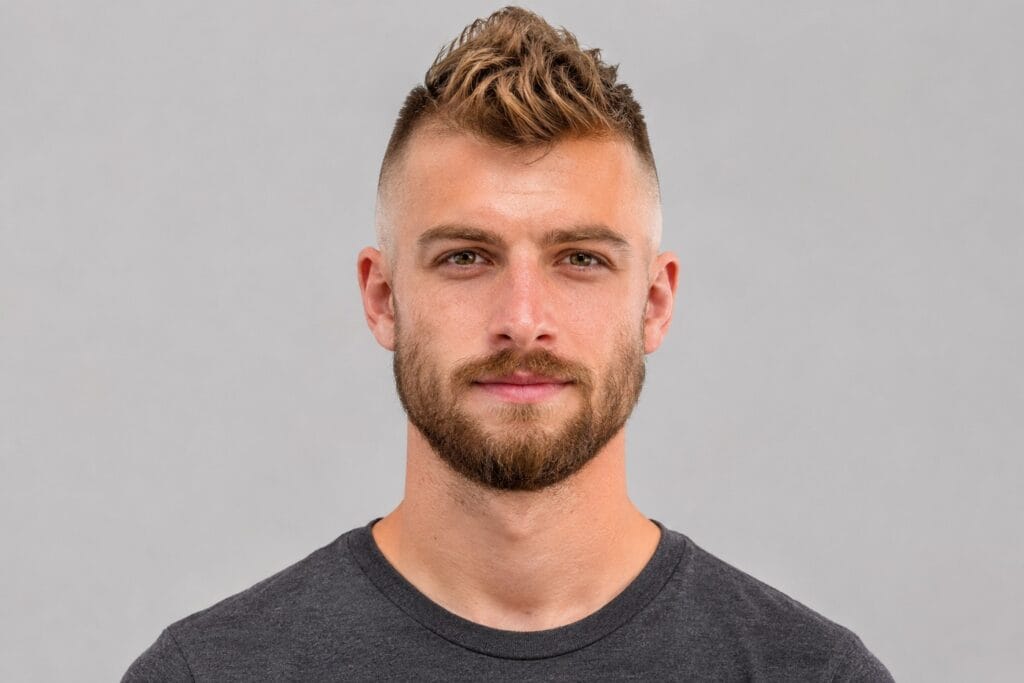
A strip of longer hair runs from front to back while the sides are cut very short. The modern version is left loose and textured, not spiked with gel. There is no evidence Vikings ever wore a mohawk, so treat this one as pure modern style.
Viking Braid Hairstyles for Men
Braids need length. If your top is under about 5 inches, start with a short cut above and grow into these.
9. Top Braid Over an Undercut
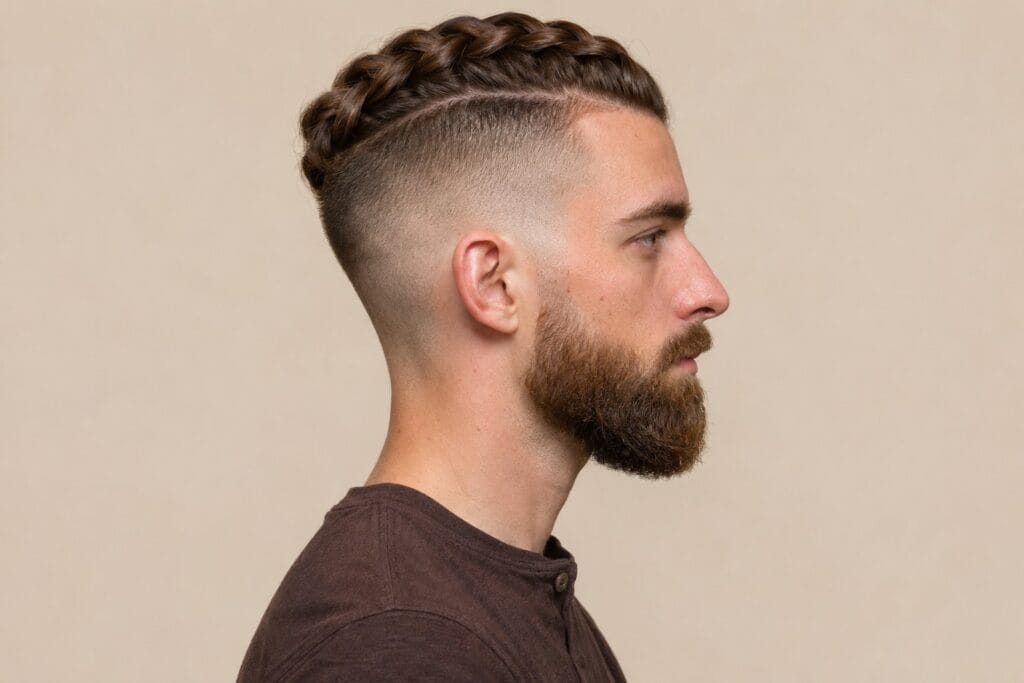
Think of Ragnar from the TV show: short or shaved sides, with the top pulled back into one braid. To do it at home:
- Comb the top straight back while it is a little damp.
- Work a small amount of light pomade through it so the strands grip.
- Start a three-strand braid at the front hairline and keep adding hair as you move back (a French braid).
- Tie the end with a small elastic close to your hair color.
A Dutch braid, where you cross the strands under instead of over, sits higher and stands out more.
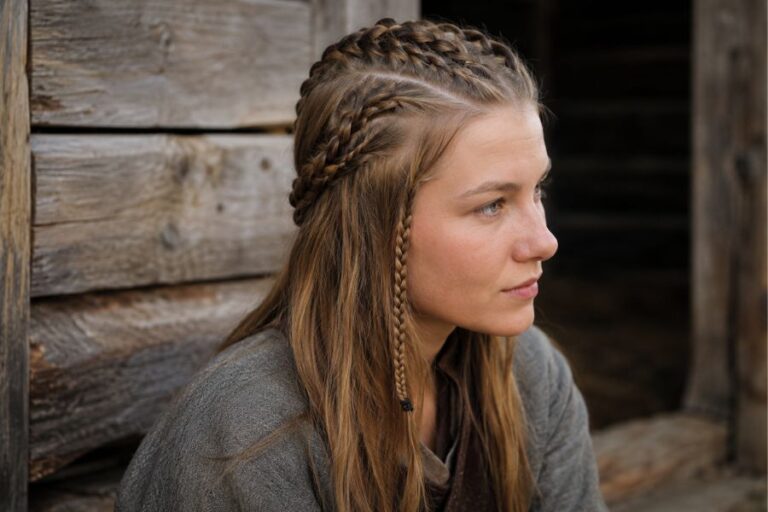
10. Two Parallel Braids
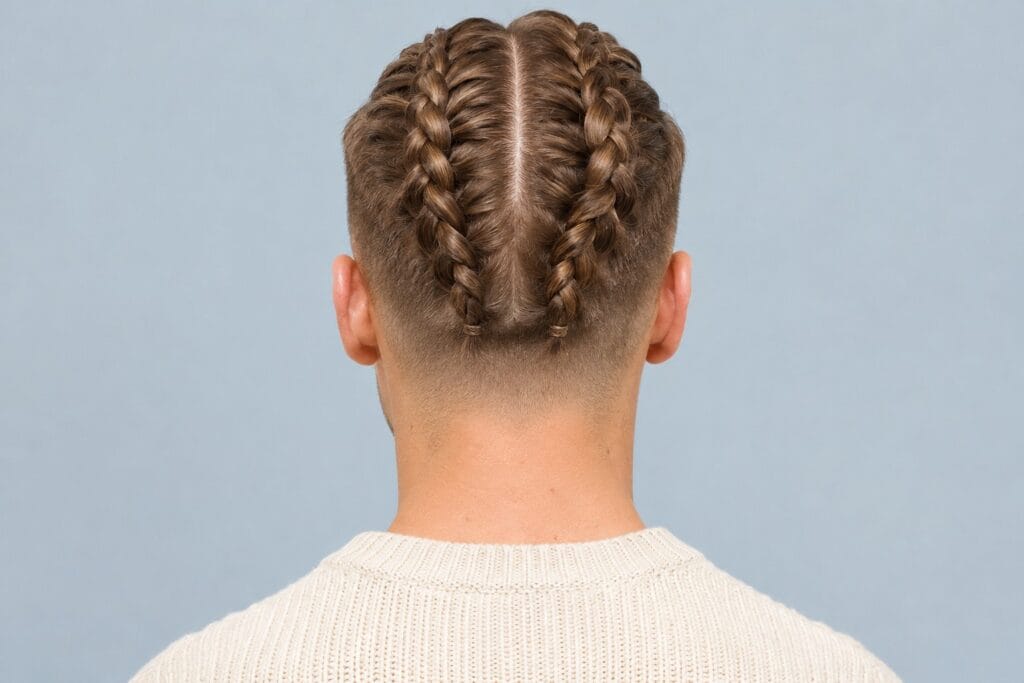
Two braids run from the front hairline to the back, one on each side of a center part. Straight or wavy hair holds them best. They take longer to make than one braid, so many guys leave them in for a few days.
11. Side Braid on a Shaved Temple
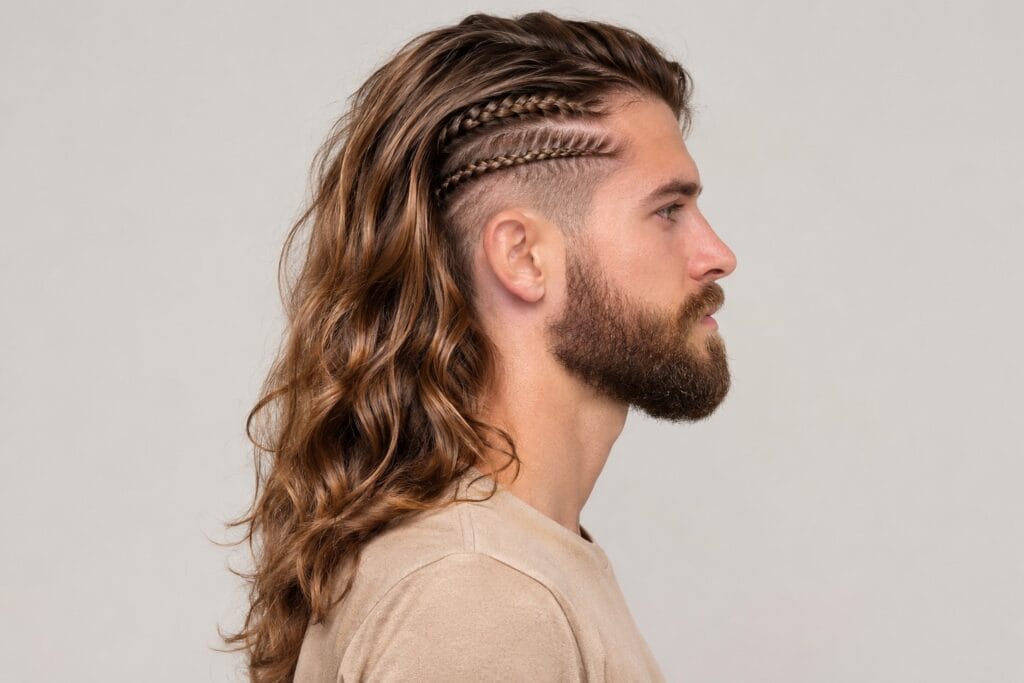
Shave or fade one side, then braid one or two thin sections just above it, running back past the ear. The rest of the hair stays loose. It is the most low-key braid on this list and the easiest to wear to work.
12. Braided Ponytail
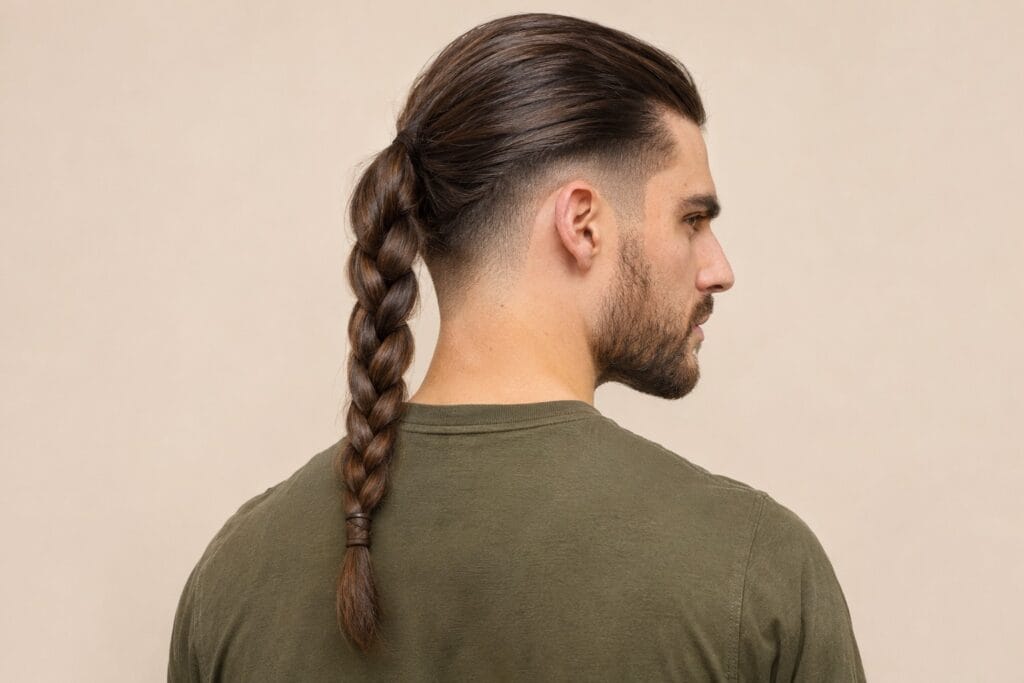
Gather long hair into a ponytail, then braid the tail. With faded sides it looks sharp. With full sides it looks more rugged. A plain dark elastic or a leather tie keeps it simple.
Long Viking Hairstyles for Men
Long styles take patience. Hair grows about half an inch a month, so going from short to shoulder length can take more than a year. Once you get there, our guide to long hairstyles for men has more ideas.
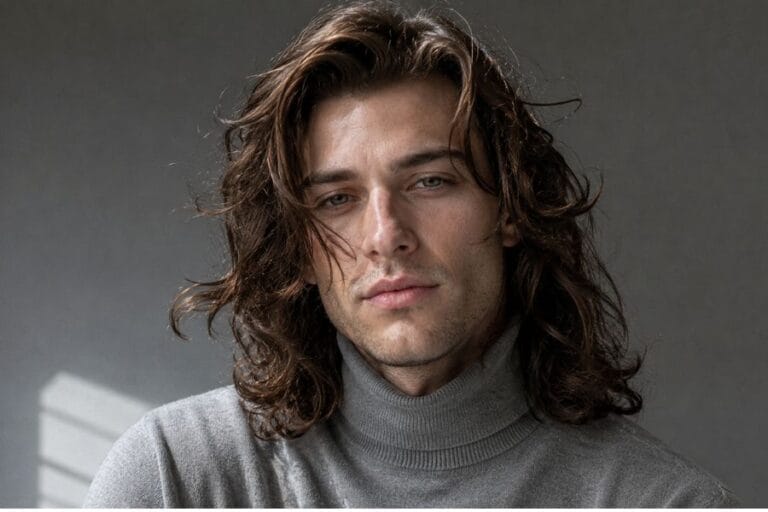
13. Shoulder-Length Loose Hair
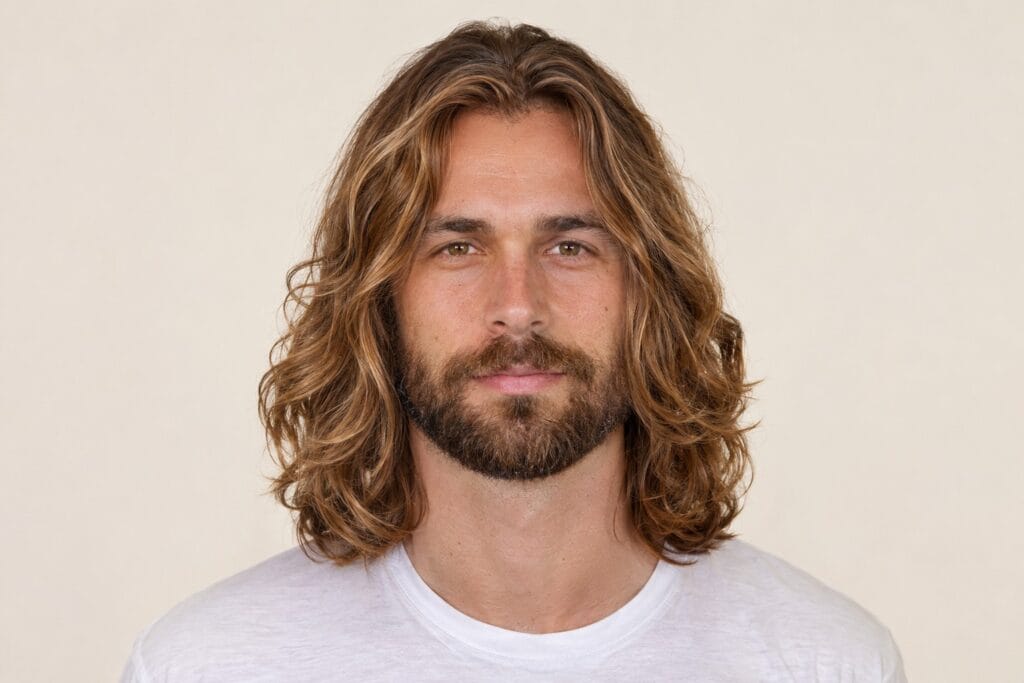
Hair at or just past the shoulders, parted in the middle or pushed back, with no undercut. Occasional trims keep the shape and remove damaged ends. On very straight hair, a little sea salt spray adds some grip.
14. Long Top With an Undercut
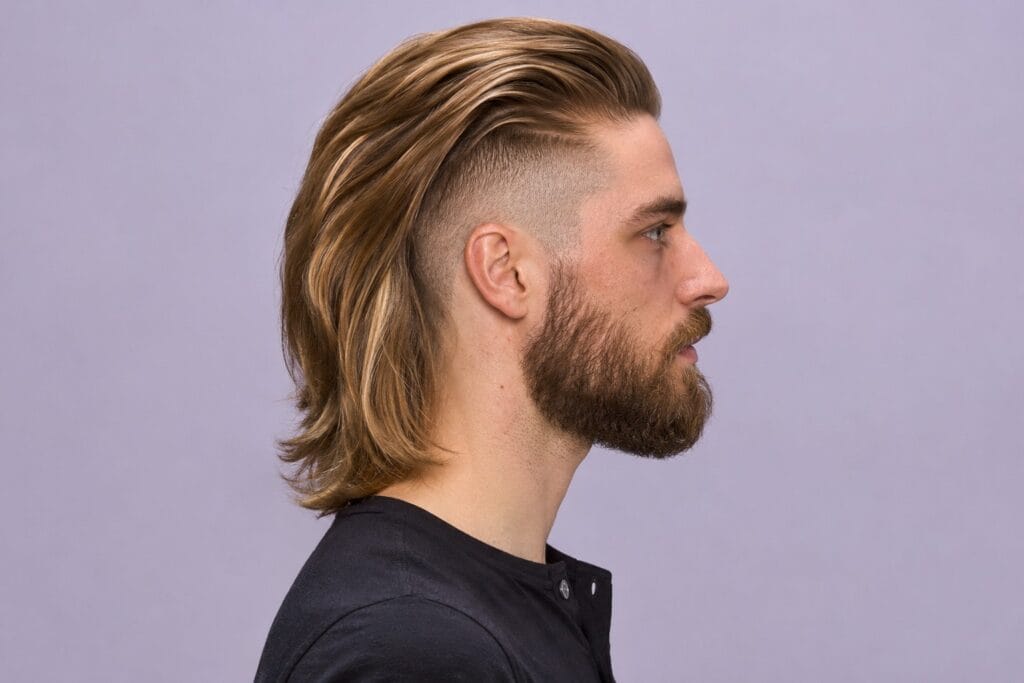
Long hair on top, short or shaved underneath. Wear it loose, braided or tied back depending on the day. Depending on the length, the undercut can be partly hidden when the hair is down. No other style here gives you as many options.
15. Low Ponytail at the Nape
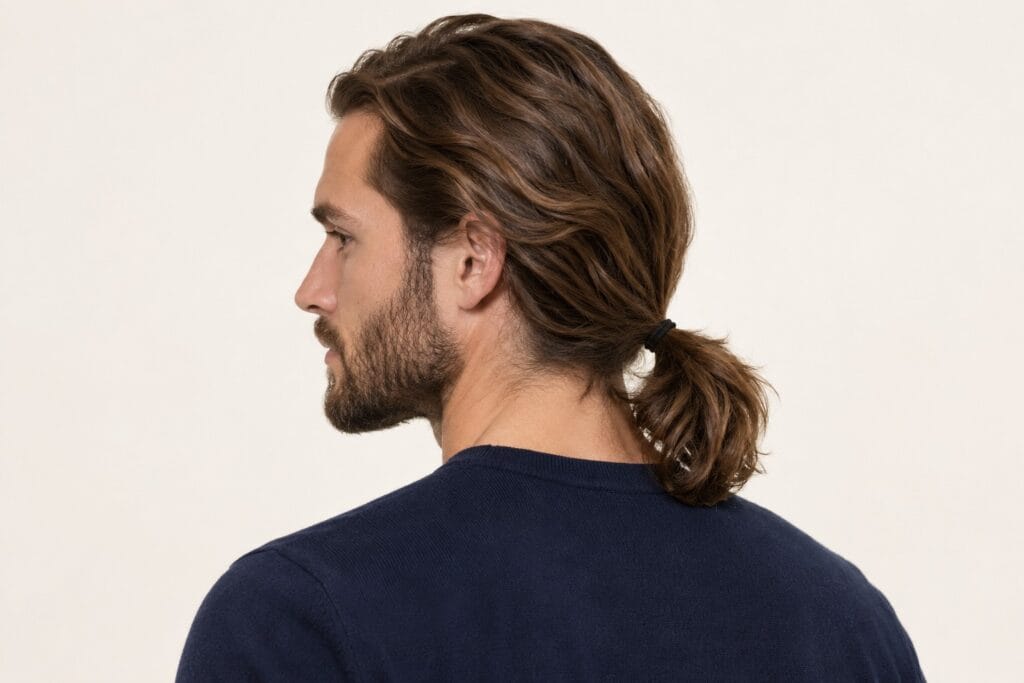
The hair is pulled back and tied low, right at the neck. An Oseberg carving shows a man’s hair tied this way, so this is one of the few long looks with real support. It works on wavy and curly hair too.
16. Man Bun With Shaved Sides
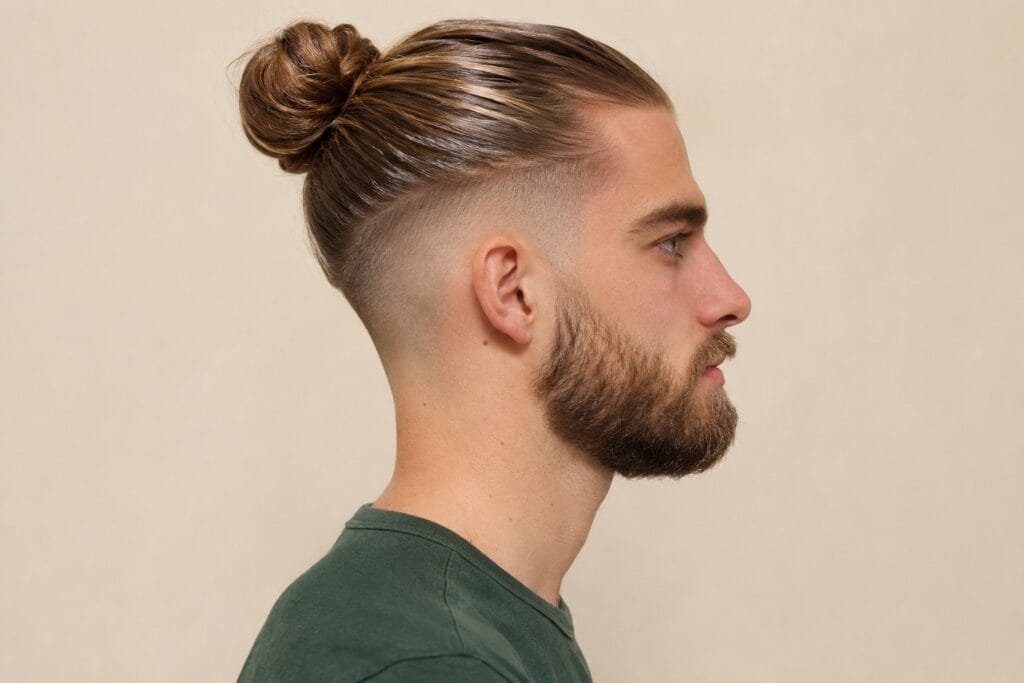
With the sides cut short, a bun at the crown stands out even more. Thick or curly hair holds a bun more easily than fine hair. If the bun keeps slipping, mist in a little texture spray before you tie it.
17. Middle Part With a Cropped Back
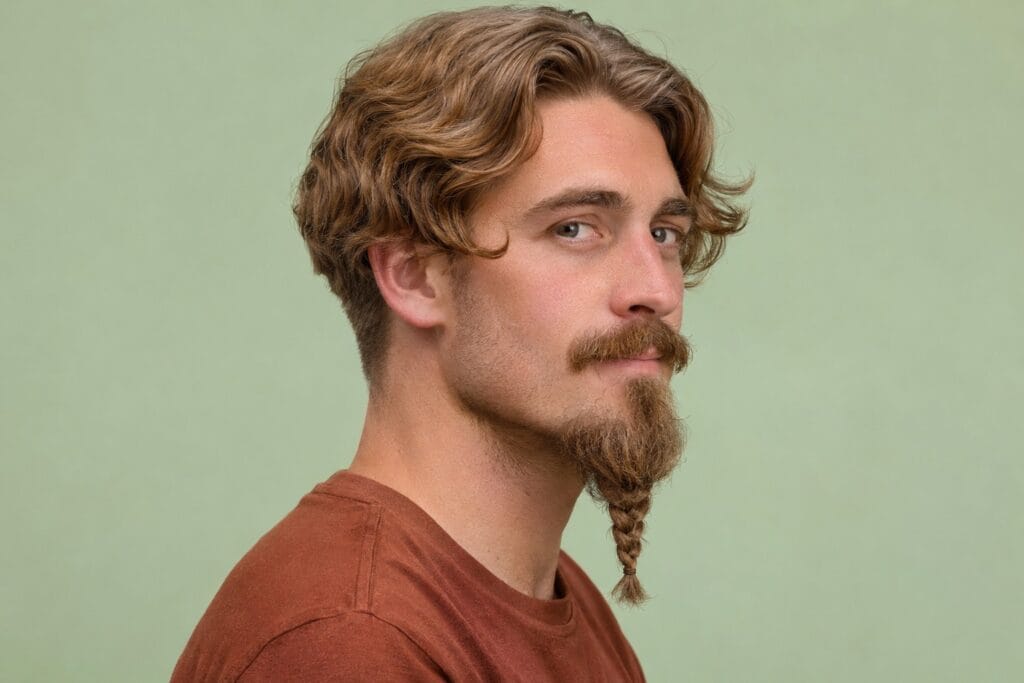
Based on the Fløgstad figure: a center part, wavy hair at medium length on top and over the ears, and the back of the head cut short so the neck shows. Add a moustache and a braided goatee if you want to copy the figure fully. It is based on one of the most detailed Viking Age finds, though it likely shows an elite style, and it still looks current.
18. Norse Shag
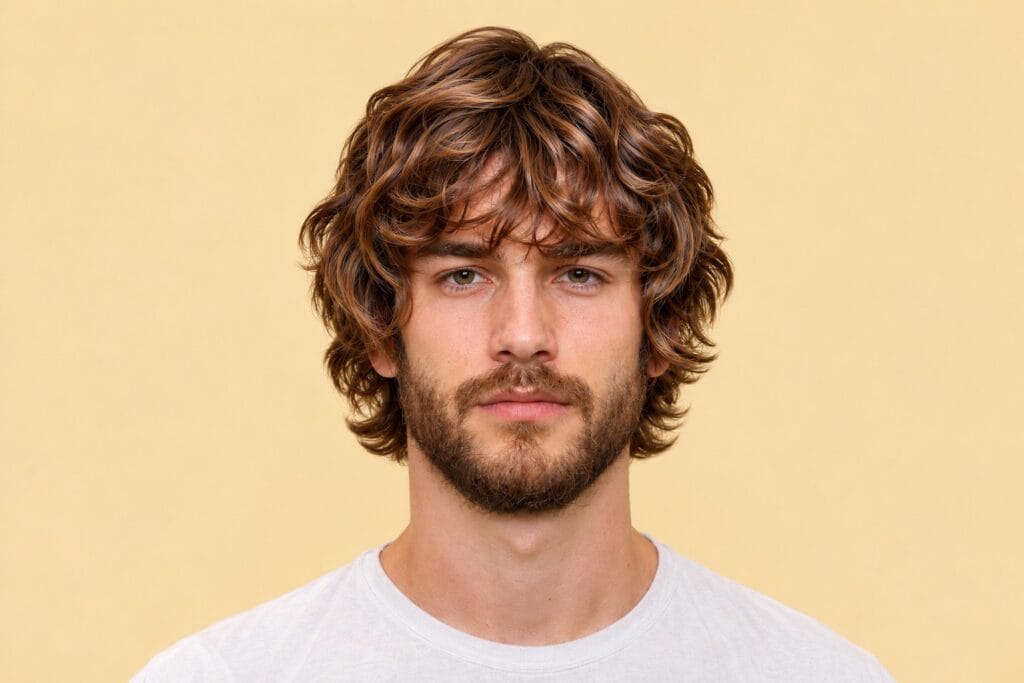
Layers do the work here. They are long and choppy all over, with the sides a bit shorter than the top but no fade line. It looks best a few days after a cut, once the layers loosen up. It grows out naturally, though occasional trims help keep the shape.
How to Ask Your Barber for a Viking Haircut
Don’t just say “Viking haircut.” The term covers everything on this page, so two barbers can hear it two different ways. Bring photos, ideally one from the side and one from the back. Then name three things: how short the sides go, how long the top stays, and whether you want a fade or a hard undercut line.
Guard Numbers in Plain English
Clipper guards are numbered, and each number adds about an eighth of an inch. A #1 leaves about 1/8 inch, a #2 about 1/4 inch, a #4 about 1/2 inch, and a #8 about 1 inch. No guard leaves short stubble. “Skin” means the barber finishes with a shaver or razor.
How Long Your Hair Needs to Be
| Style | Top | Sides and back |
|---|---|---|
| Buzz cut | #3 to #4 | #1 to #2 |
| Short undercut | 2 to 3 in | #1 to #2 |
| Disconnected undercut | 4 to 6 in | Skin to #1, hard line |
| Skin or drop fade with longer top | 3 to 5 in | Skin, blended up |
| Norman cut | About 4 in at the front | Back of head #1 to #2, sides fuller |
| Textured crop | 1 to 2 in | #1 to #2 fade |
| Soft mohawk | 3 to 4 in strip | Skin to #1 |
| Top braid | 5 in or more | Skin to #2 |
| Two braids | 6 in or more | Skin to #2, or left longer |
| Man bun | 6 to 8 in | Skin to #2 |
| Ponytails | Long enough to reach the neck all around | None |
| Middle part with cropped back | 4 to 6 in on top and over the ears | Back of head about #3 |
| Norse shag | 4 to 7 in, layered | Slightly shorter than the top |
What to Say in the Chair
Short undercut: “Number 1 on the sides and back, with a clear line where it meets the top. Leave about three inches on top, textured, so I can push it forward or back.”
Disconnected undercut: “Skin on the sides and back with a hard line, no blending. Leave five to six inches on top.”
Norman cut: “Keep the length on the front and top. Take the back of the head short with a number 2 and clean up the neck. Leave the sides over my ears a bit longer.”
Growing out for a braid or bun: “Low fade on the sides. Nothing off the top except dry ends. I’m growing it out to braid.”
Middle part with cropped back: “Middle part. Keep about five inches on top and over the ears, and cut the back of the head short, around a number 3, so my neck shows.”
If you are growing your hair out, say so at every visit. Otherwise the top can get trimmed back a little each time.
Viking Haircut With a Beard
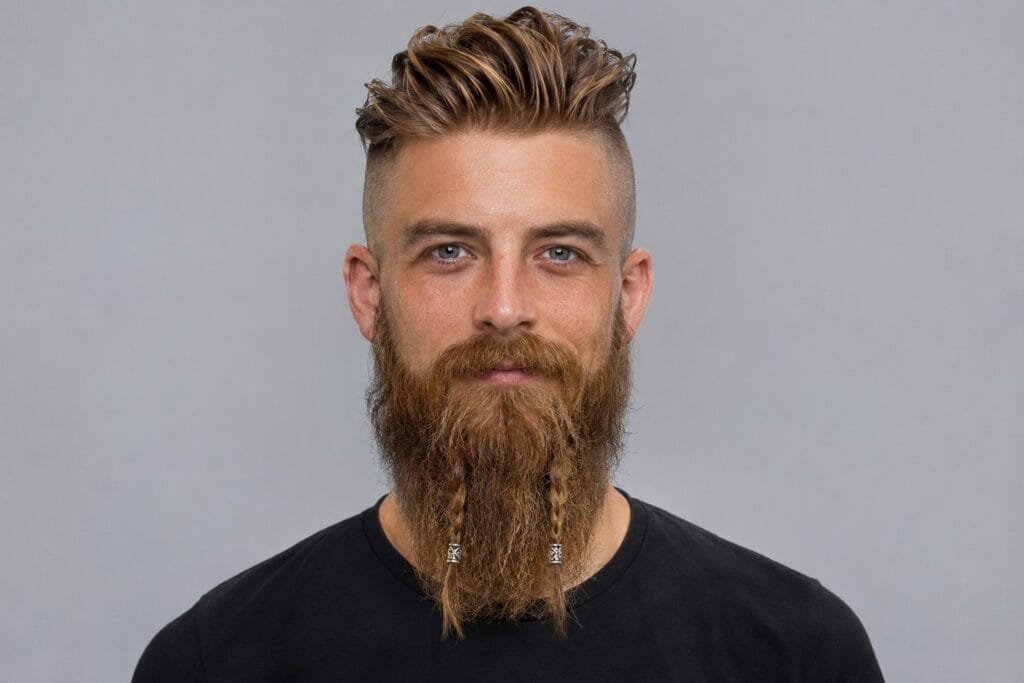
A beard does a lot of the work in any Viking look. Not every Viking man had one, though. The men on the Oseberg tapestry show no clear beards, even though a carved head from the same grave has a full one. The Fløgstad figure, likely from a later period, has a long braided goatee and a strong moustache. Fashions seem to have changed over time.
Short cuts like the buzz, the crop and skin fades let a full beard stand out. Long loose hair with a long full beard can look heavy, so many men keep the beard shorter or braid it. A braided goatee like the Fløgstad figure’s is a good middle ground.
Matching the Cut to Your Face and Hair
Hair type matters more than face shape for these cuts, but a few face rules still help. Round faces look longer with height on top, like the mohawk, a high fade or a man bun. Long or narrow faces do better with fuller sides, like the shoulder-length or shag styles. Square and oval faces can wear almost anything here.
| Hair type | Good starting points |
|---|---|
| Fine or thinning | Buzz cut, shaved head with beard, textured crop |
| Thick and straight | Disconnected undercut, top braid, braided ponytail |
| Wavy | Drop fade, shoulder-length loose hair, Norse shag |
| Curly or coily | Fade with a longer top, man bun, low ponytail |
Trims, Upkeep and Cost
| Style | How often |
|---|---|
| Buzz cut and skin fades | Barber every 2 to 3 weeks |
| Shaved head | Shave at home every few days |
| Undercuts, crop, mohawk, Norman cut | Barber every 3 to 5 weeks |
| Braids and buns with short sides | Sides every 3 to 4 weeks, top only when the ends look dry |
| Shoulder-length, shag, ponytails | Barber every 8 to 12 weeks |
Prices vary a lot by city. Skin fades and detailed line work usually cost more than a basic cut, and braiding is often a separate service, so ask before you book.
FAQ
What is the Viking haircut called?
There is no single name. Barbers usually call the modern version a Viking undercut. The style described in old English letters, long in front and short at the back, is closer to what is now called a Norman cut.
What is a Viking cut?
It is a modern label, not a historical one. It usually means short or faded sides and back, with enough length on top to braid, tie or push back.
How do you ask a barber for a Viking haircut?
Bring side and back photos and name three things: the guard number for the sides, the top length in inches, and whether you want a fade or a hard line.
How long does hair need to be for a Viking haircut?
Short versions need only 1 to 3 inches on top. A braid needs about 5 inches or more, and a man bun about 6 to 8. The exact length depends on your hair texture, head size and the type of braid or bun you want.

One Comment