
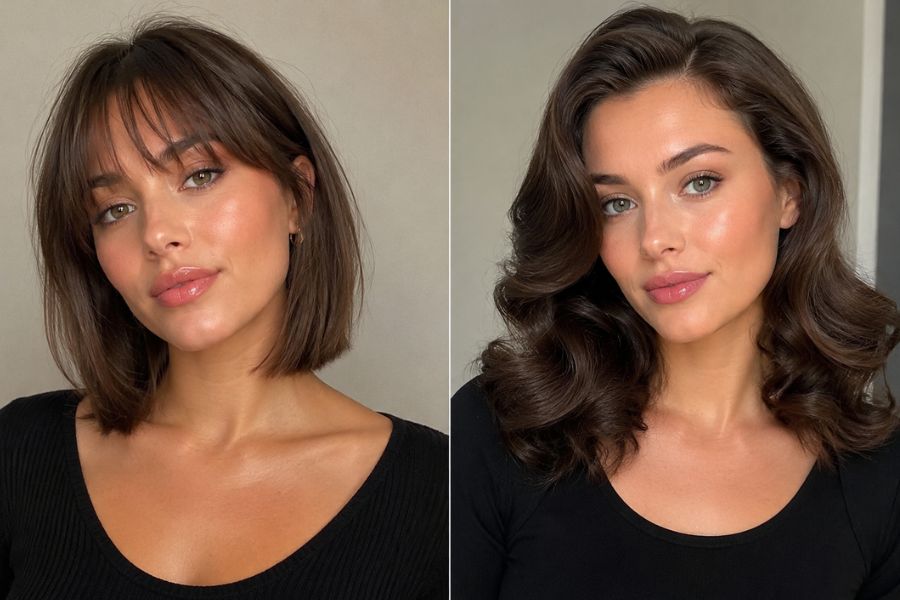
A blunt, one-length cut that stops right at cheekbone level is one of the quickest ways to make a diamond face look wider through the middle than it actually is. The hemline draws a horizontal line exactly where the face is already broadest, while the narrower forehead and chin get no help at all. Move that same fullness down to the jaw, let a few soft pieces fall near the temples, and the face reads as balanced instead of pinched at both ends.
That shift is the thread running through every style recommended here: where the fullness sits matters more than which trend a cut belongs to. Before you bookmark any of them, spend two minutes with a soft tape measure. Diamond faces are regularly mistaken for oval or heart shapes, and the advice for those shapes is different.
✔ Key Takeaways
- The best diamond face shape hairstyles add softness and width at the forehead and jaw.
- A diamond face has cheekbones as its widest point. The forehead and chin both narrow.
- Very short pixies and slicked-back styles tend to work against this face shape.
- A middle part can work fine. It just needs soft waves or texture, not flat hair.
- Hair color placement and occasion both change which style suits you best.
Diamond Face Shape Hairstyles
Before you look at a single photo, decide where the widest part of the haircut will sit. On a diamond face there are two good answers. The first is above the brow, where bangs or crown lift fill out a narrow forehead. The second is at the jawline, where layers, waves, or a bob hemline add the width the lower face lacks. The one zone to keep calm is the cheekbones themselves. Every style in the catalog below puts its fullness in at least one of the two good zones.
Why Diamond and Oval Faces Get Confused So Often
Both shapes are longer than they are wide, and in a front-facing selfie they can look almost identical. The difference shows up at the temples and the corners of the jaw. On an oval face, the sides run in one smooth, gentle curve from forehead to chin. On a diamond face, the outline steps in noticeably above the cheekbones and again below them, so pulling your hair straight back often reveals a slight inward curve at the temples. That distinction matters in practice. An oval face can usually carry a sleek, center-parted style as is, while a diamond face tends to need some softness added first.
How to Know You Have a Diamond Face Shape
A diamond face shape has one defining trait. Your cheekbones measure wider than both your forehead and your jaw. Many readers assume this is their shape without ever measuring it first.
The Four Point Measurement Method: Forehead, Cheekbone, Jaw, Chin
You’ll need a soft tape measure, a mirror, and your hair pulled fully off your face. Start with your forehead, measured across its widest point a little above the eyebrows. Next, measure across your cheekbones from the outermost point on one side to the outermost point on the other, roughly level with the bottom of your eyes and just in front of the ears. Anthropologists call this bizygomatic breadth, the maximum width across the two zygomatic arches.
It is one of the core face measurements in Farkas and colleagues’ 2005 international anthropometric study of 1,470 adults across multiple ethnic groups. Then measure your jaw from one jaw angle, the corner below each ear, to the other. Finish by looking at your chin rather than measuring it. A diamond face shows cheekbones clearly wider than both the forehead and the jaw, with a chin that tapers to a narrow or slightly pointed finish. If your forehead comes out close to your cheekbone number, you are more likely oval or heart-shaped.
Diamond Versus Oval Versus Heart: Telling Them Apart
An oval face has no single standout width, and the forehead, cheekbones, and jaw move in a smooth progression. A heart-shaped face is widest at the forehead and tapers down to a narrow chin. A diamond face shares that narrow chin, but its forehead is narrow too, which leaves the cheekbones as the only wide point. The forehead measurement is the quickest tiebreaker: a wide forehead points to heart, and a narrow one points to diamond.
Why Softness and Width Work for a Diamond Face
Look at a diamond face in outline and you see one strong horizontal line across the cheekbones, with tapering above and below it. Hair can’t change bone structure, but it can change the outline the eye reads. Soft pieces at the forehead and fullness at the jaw widen the two tapering ends, so the cheekbones become one point in a more even shape instead of the only wide feature. That’s why the same face can suit both a bixie and waist-length curls, as long as each puts softness in the right places.
How Volume at the Jaw and Forehead Balances Prominent Cheekbones
Your cheekbones already pull focus, so adding more volume there just repeats the message. Lift at the crown or soft bangs fill out the upper third of the face. Layers, waves, or a hemline that lands at the jaw fill out the lower third.
There is some research support for paying particular attention to the jaw. In a 2018 study published in Frontiers in Psychology, Mogilski and colleagues had 922 participants rank digitally altered face photos. They found that jawbone prominence carried more weight in attractiveness judgments than cheekbone prominence did, although the authors note that many of the effects were small to moderate. The study looked at bone structure rather than hair, so it doesn’t prove any particular haircut works. It does suggest that the lower third strongly shapes how a face is read, and that is exactly the area jaw-length styles are designed to build up.
Why Pulled Back, Tight Styles Work Against This Face Shape
A slicked-back bun or a tight, low ponytail strips away everything at the forehead and jaw, which leaves the cheekbones as the only wide point in the outline. The retro ponytail in the catalog below avoids this problem by adding a quiff and crown height at the front, and the textured updo keeps piecey bangs loose. So pulled-back styles can still work on a diamond face, as long as something is left at the front.
Diamond Face Hairstyles to Avoid, and How to Fix Them
A few specific hairstyle choices consistently work against a diamond face. Each one has a real, workable fix.
Extra Short Pixies With No Crown Softness
A very short pixie can create a problem. If nothing gets built into the crown, it can expose your narrow forehead and jawline. This makes the diamond shape more pronounced. The fix is simple. Ask for wispy bangs. Add a bit of extra volume at the crown too.
Slicked Back Buns and Tight Ponytails
Pulling every strand fully away from your face removes something important. It removes the softening effect layers provide. Your cheekbones end up looking sharper by comparison. Leave a few face framing pieces loose instead. This softens the effect without losing the polished look.
Flat Center Parts With No Layering
Long, poker-straight hair parted precisely down the middle creates two flat vertical panels that stretch the face and bracket the cheekbones. The flatness causes the trouble, while the part itself is fine, as the next section explains.
When a Middle Part Actually Works
Here is something worth clearing up directly. The middle part is not automatically off limits for a diamond face. A middle part paired with soft waves works well. Real curl texture works well too. The movement itself does the balancing work. A middle part only backfires under one condition. This happens when hair is fully flat and straight with no texture at all. The placement of the part matters far less than what happens to the hair around it.
| Style | Why It Backfires | The Fix | Best Paired With |
| Extra-Short Pixie With No Volume | Exposes a narrow forehead and jawline | Add wispy bangs and crown volume | Side-swept styling |
| Slicked-Back Bun or Tight Ponytail | Removes all softening effect | Leave face-framing pieces loose | Soft waves at the front |
| Flat Center Part With No Layers | Elongates the face and draws attention to length | Add layers or waves around the part | Curtain bangs |
| Very Voluminous Style at the Cheeks | Adds width at the widest point already | Redirect volume to the jaw and forehead | Chin-length layers |
The Complete Diamond Face Hairstyle Catalog
Here are 15 real styles worth considering. They are organized by length.
Short and Medium Styles
Swept Back Bixie
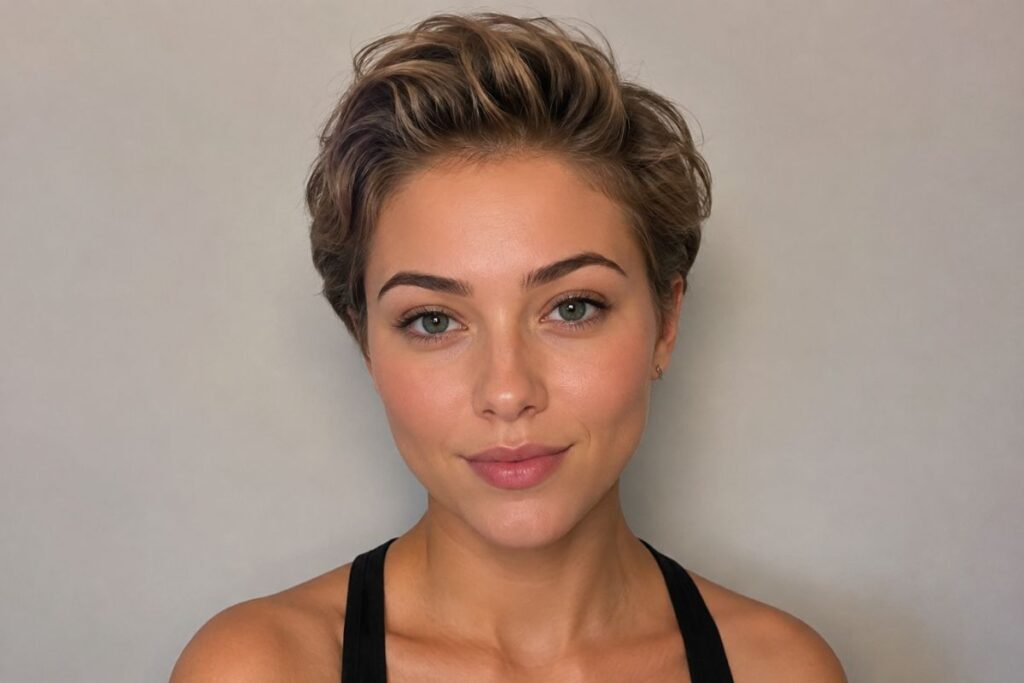
This pixie bob hybrid keeps length longer than a classic pixie. It still feels short and easy. The swept back front adds height near your forehead. This helps balance a narrow upper third.
Braided Bob
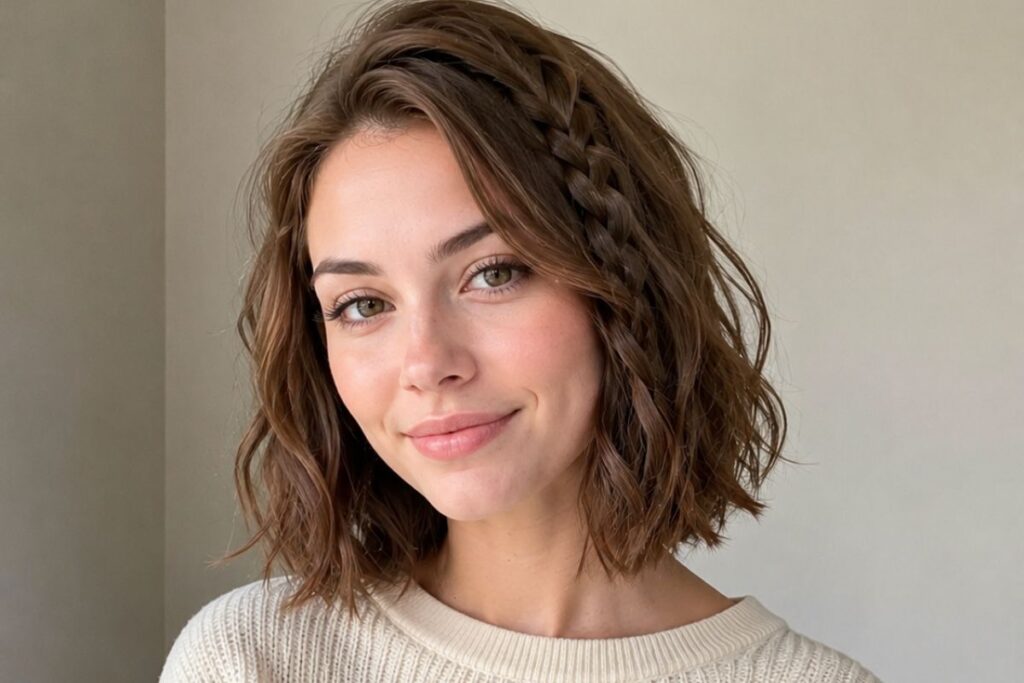
A bob styled with a loose braid adds real texture at jaw level. This texture softens angular cheekbones. It works better than a smooth, sleek bob would. It also holds up well throughout the day.
Choppy Lob
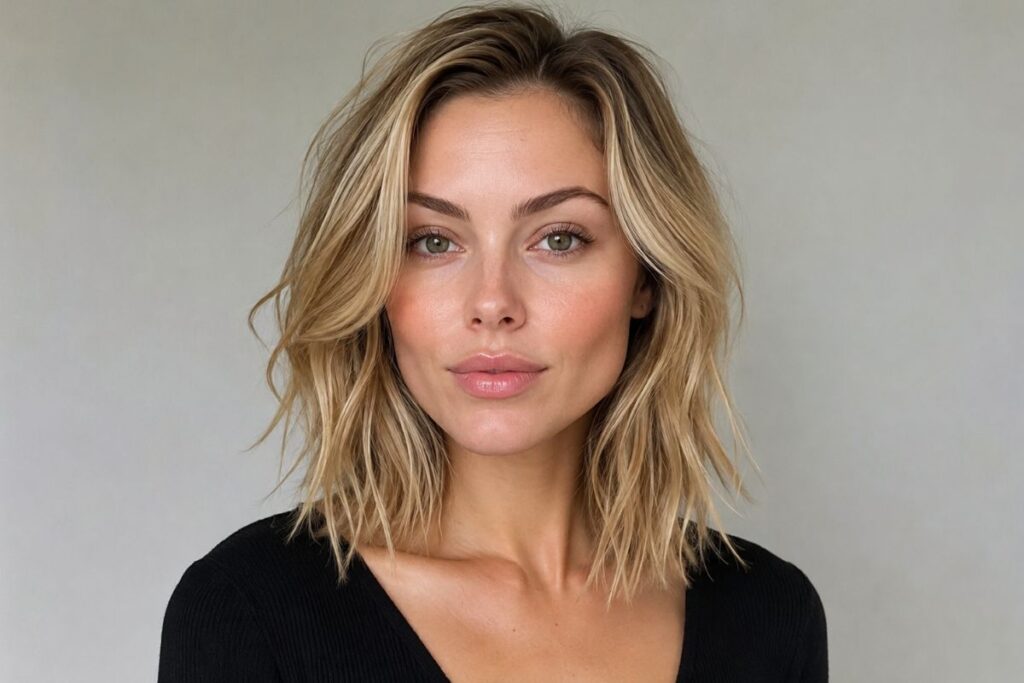
Uneven, razored ends sit at collarbone length. They break up a round or flat silhouette. The choppiness adds movement right where a diamond face benefits most, around the jaw.
Curly Lob With Bangs
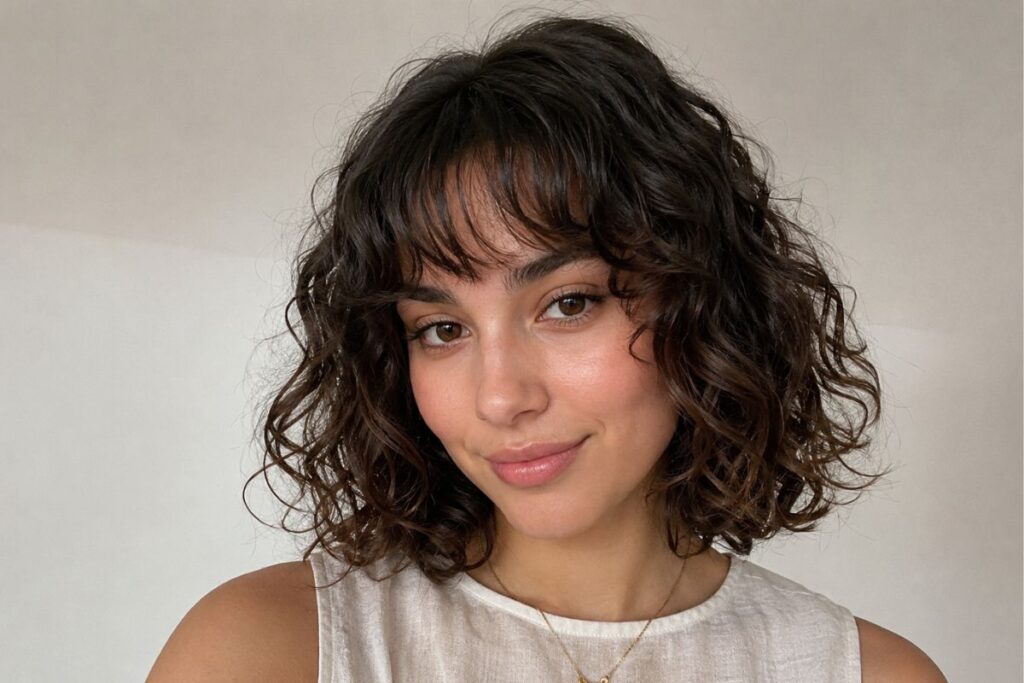
The natural curl pattern is paired with soft bangs here. This does double duty. The curls add width at the jaw. The bangs soften your forehead at the same time.
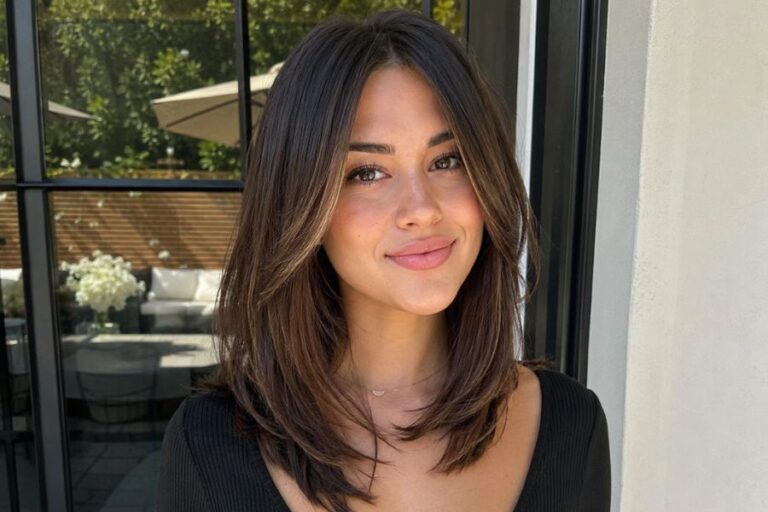
Sleek Lob With Fringe
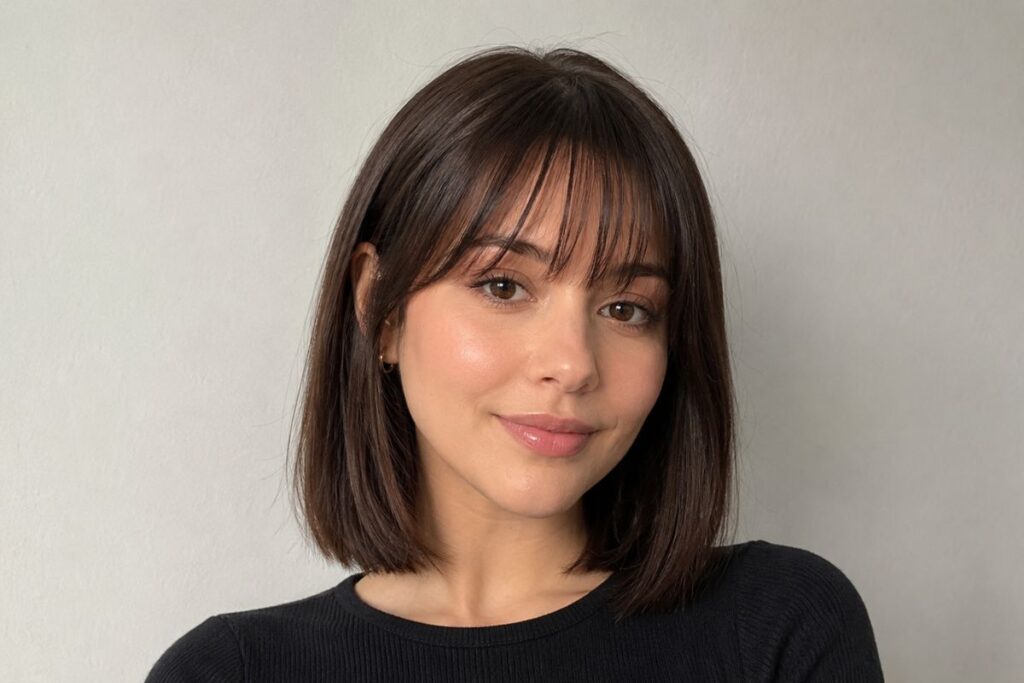
A polished, straight lob gets paired with a soft fringe. This balances sleekness with softness. The fringe keeps your forehead from looking exposed, even with an otherwise smooth style.
Side Parted Lob With Face Framing Bangs
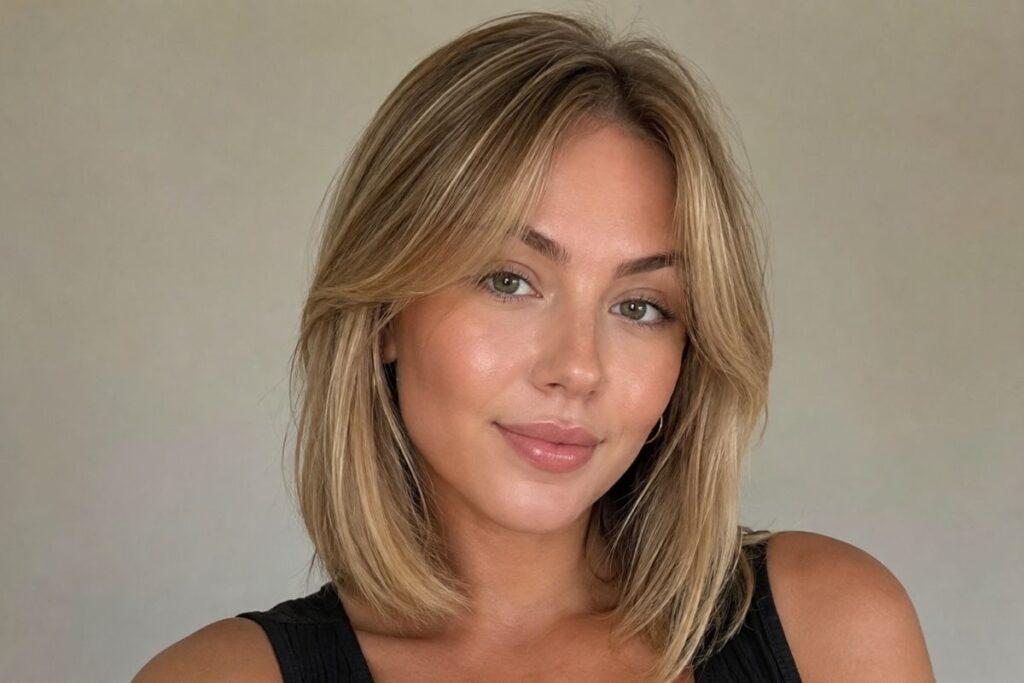
This combines two balancing tools at once. The side part adds asymmetry. The face-framing bangs add softness right at your temples.
Long Styles
Long Curls With Side Part
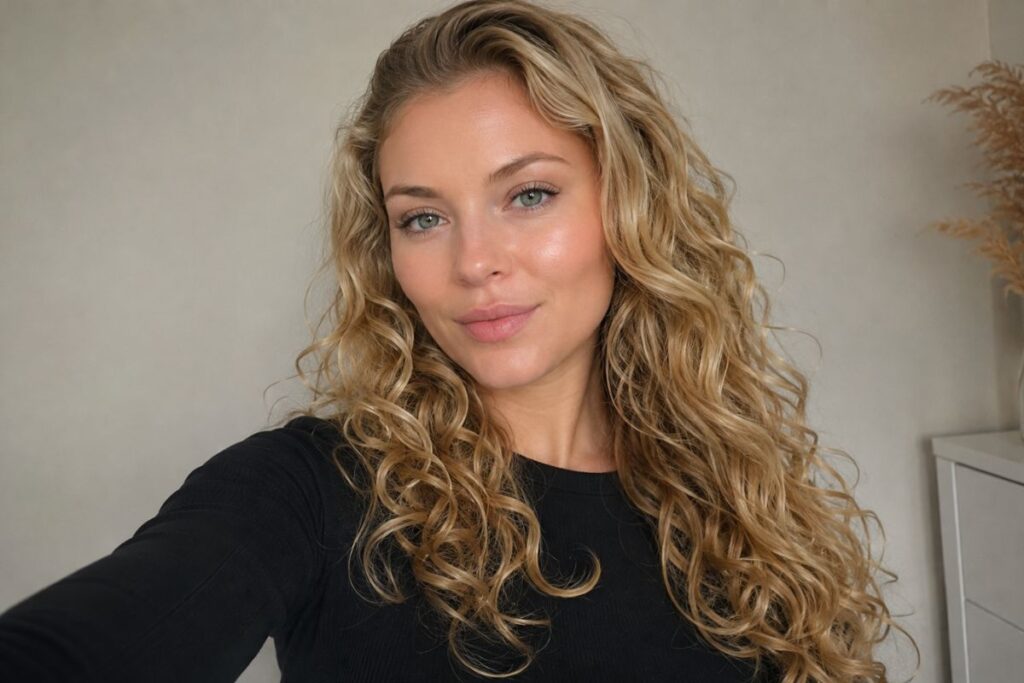
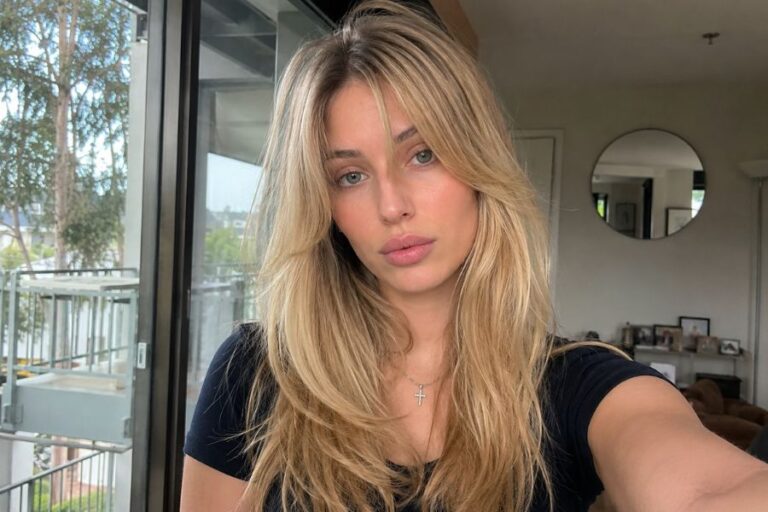
Loose, defined curls worn long add volume at jaw and cheek level. Pair this with a side part. Together, they soften angular features from two directions at once.
Defined Spirals
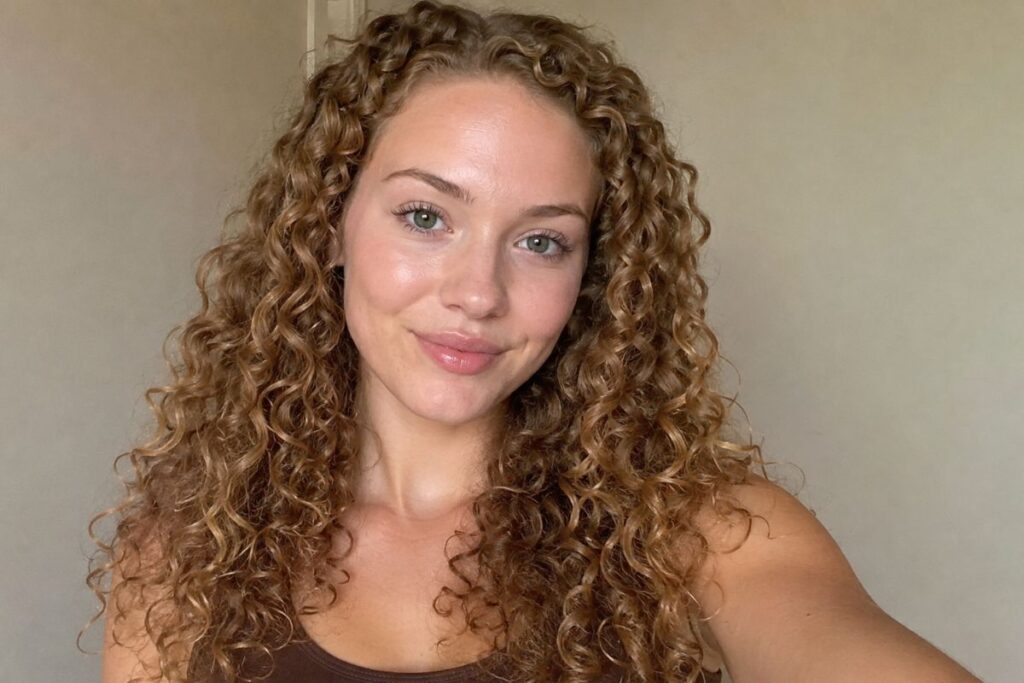
Tighter, well defined curls run throughout longer hair. This creates a consistent texture along the entire length. This texture interrupts sharp lines far more effectively than smooth strands would.
Teased Out Curls
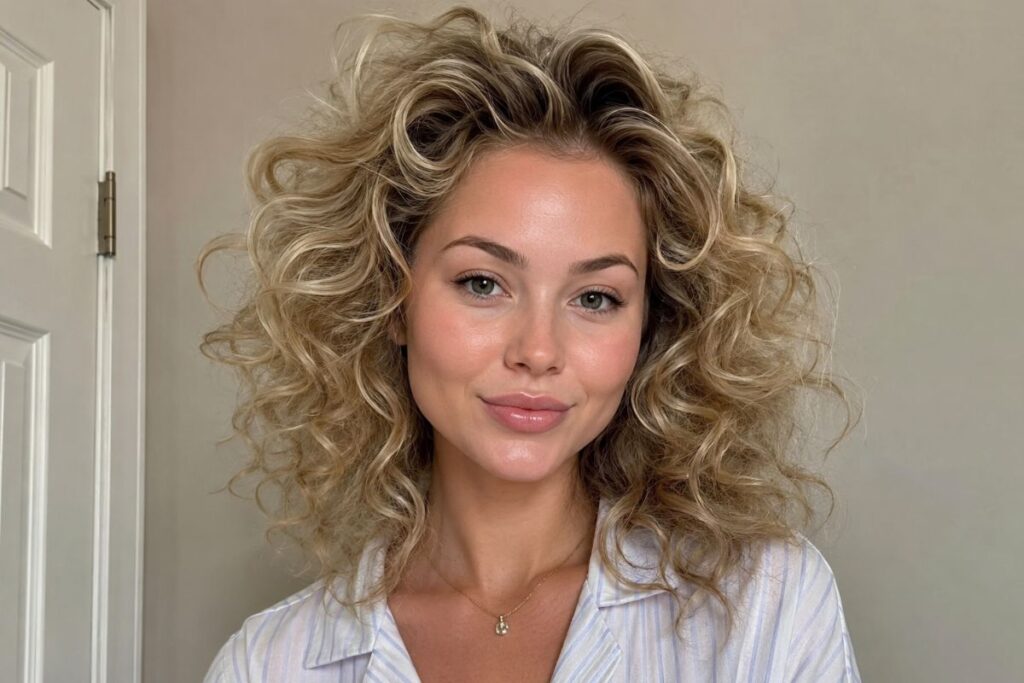
This voluminous, lifted curl style adds real fullness. It starts at the crown and moves outward. The extra volume works especially well for special occasions.
Long and Glossy
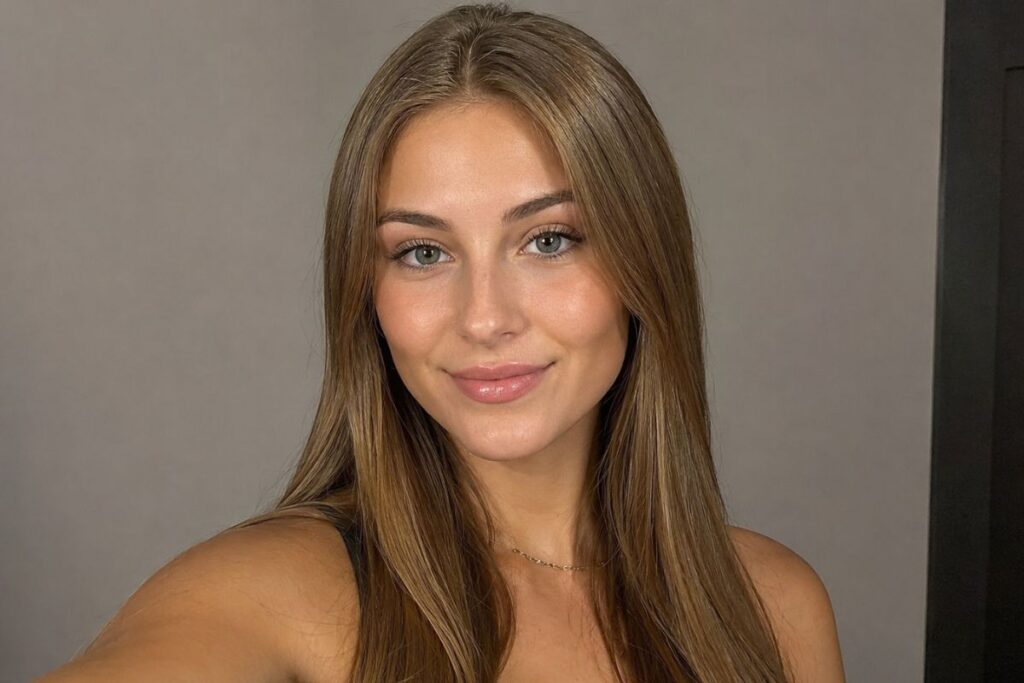
Simple, straight, healthy length gets paired with a glass like shine. This draws attention to hair quality itself. It shifts focus away from cheekbone width without needing dramatic layering.
Retro Waves
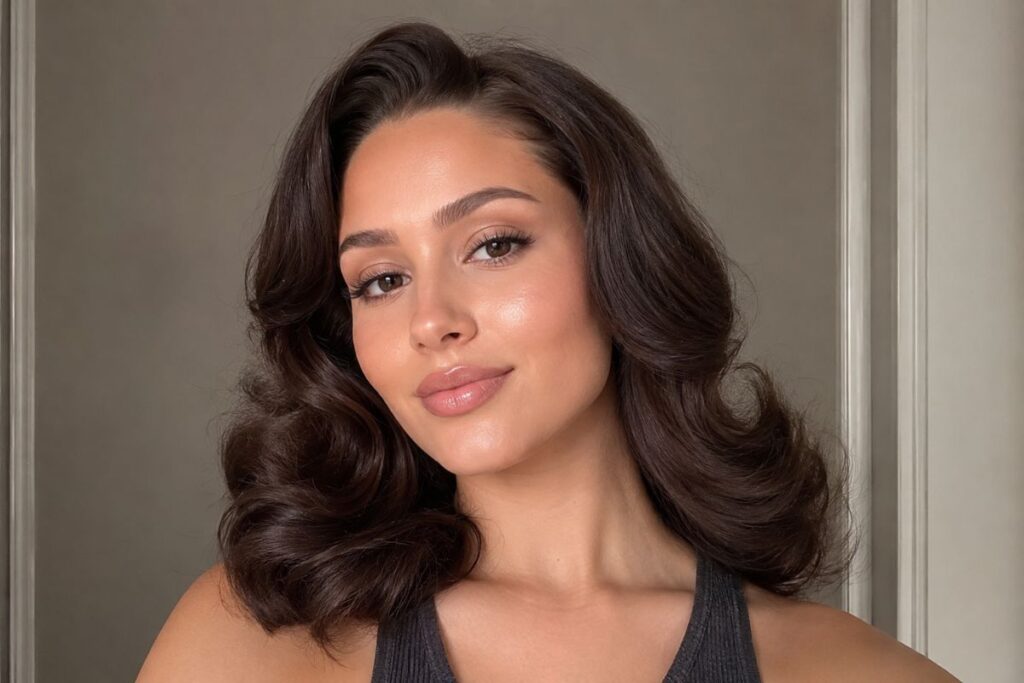
Classic, deep set waves bring old Hollywood glamour to mind. They add structured volume near the jaw. This vintage-inspired texture flatters a diamond face beautifully for a special event.
Sleek and Straight With Middle Part
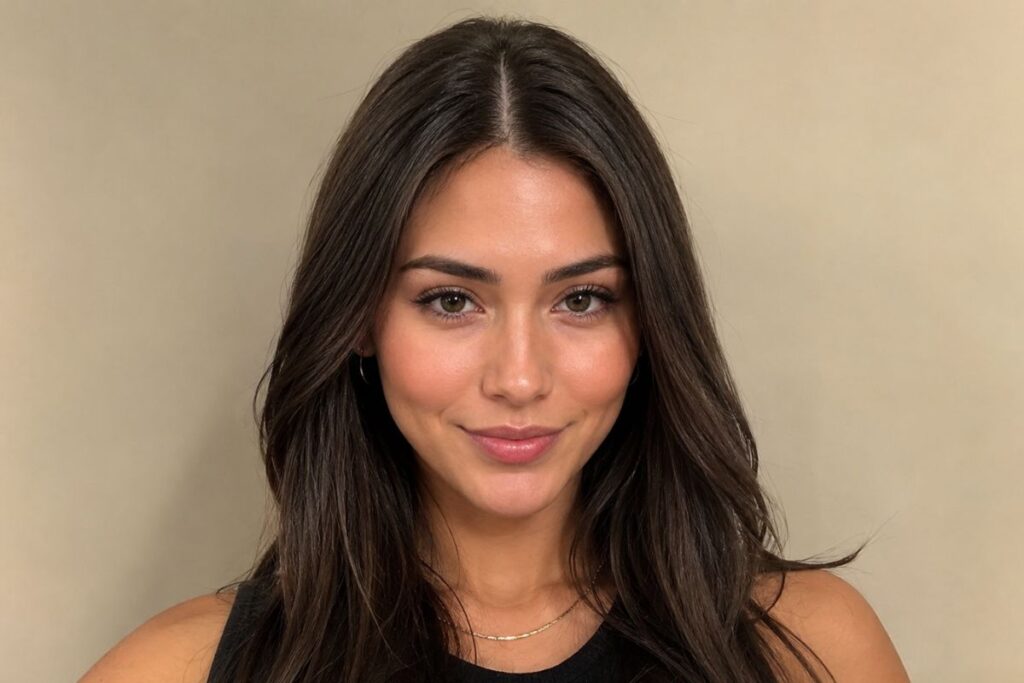
This one comes with a genuine caveat. Fully flat, straight hair with a center part can cause a problem. It can emphasize length rather than balance your features. Do you love this look anyway? Add subtle waves or soft layering to the ends. This keeps the sleekness while still softening the overall effect.
Updo and Ponytail Styles
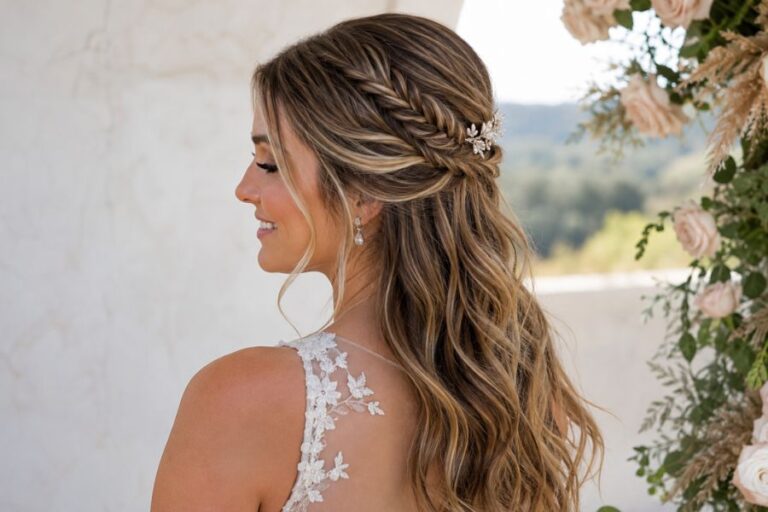
Textured Updo With Piecey Bangs
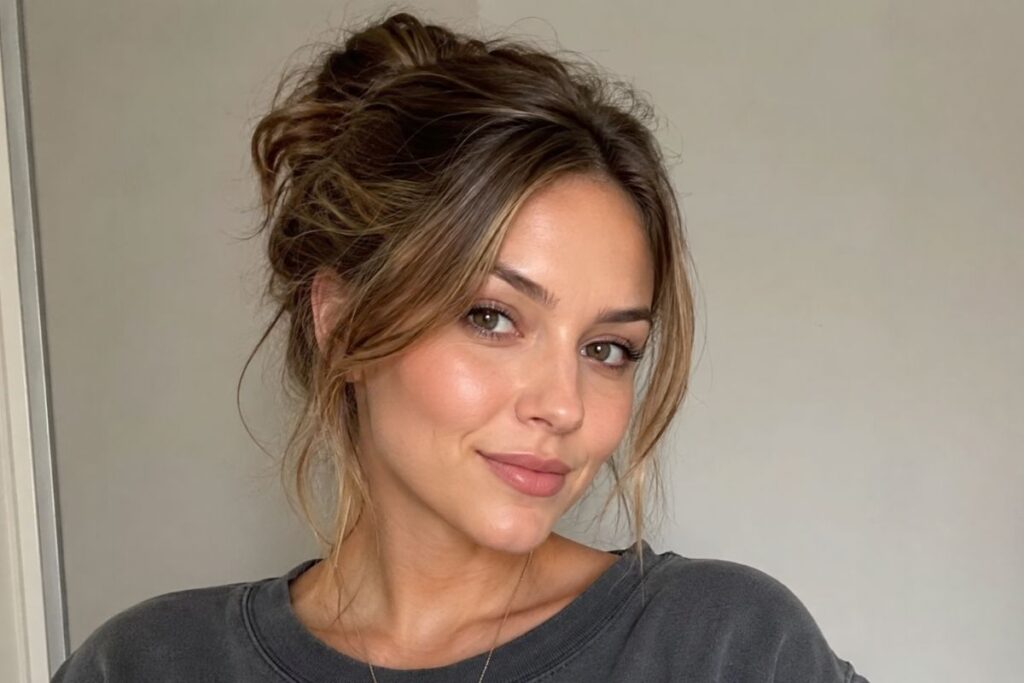
This style gathers hair loosely. A few separated, piecey bangs stay out. This keeps softness near your forehead even with hair pulled back. It works well for both everyday wear and special events.
Retro Ponytail
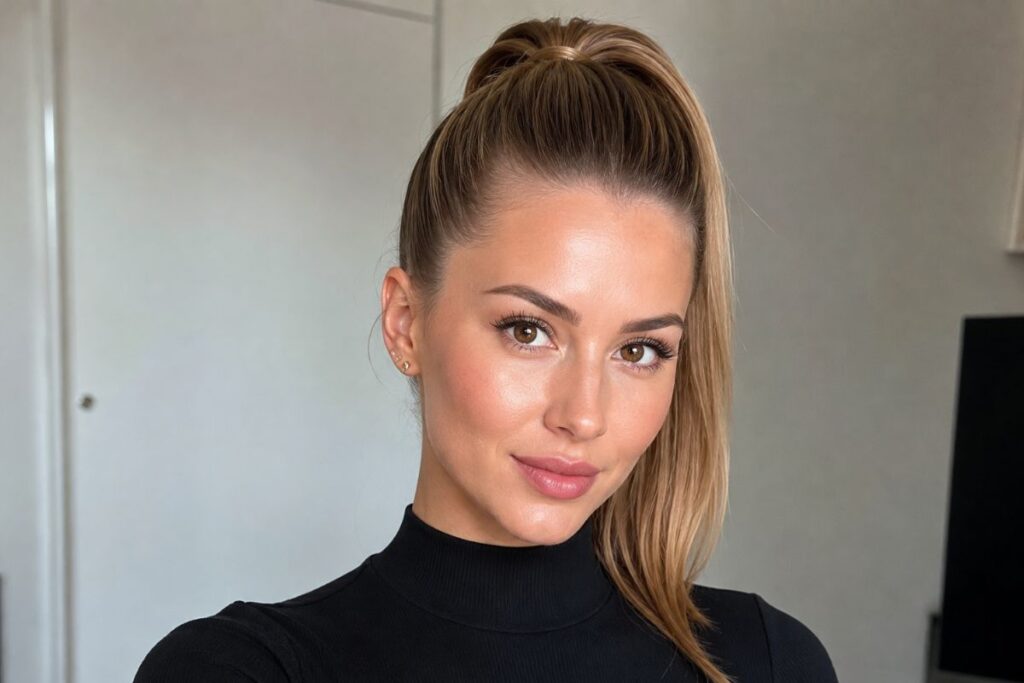
A high, smooth ponytail gets a slight quiff at the front. This channels a vintage feel. It also adds real height near the crown. That height helps balance a narrower forehead.
Bouncy Ponytail
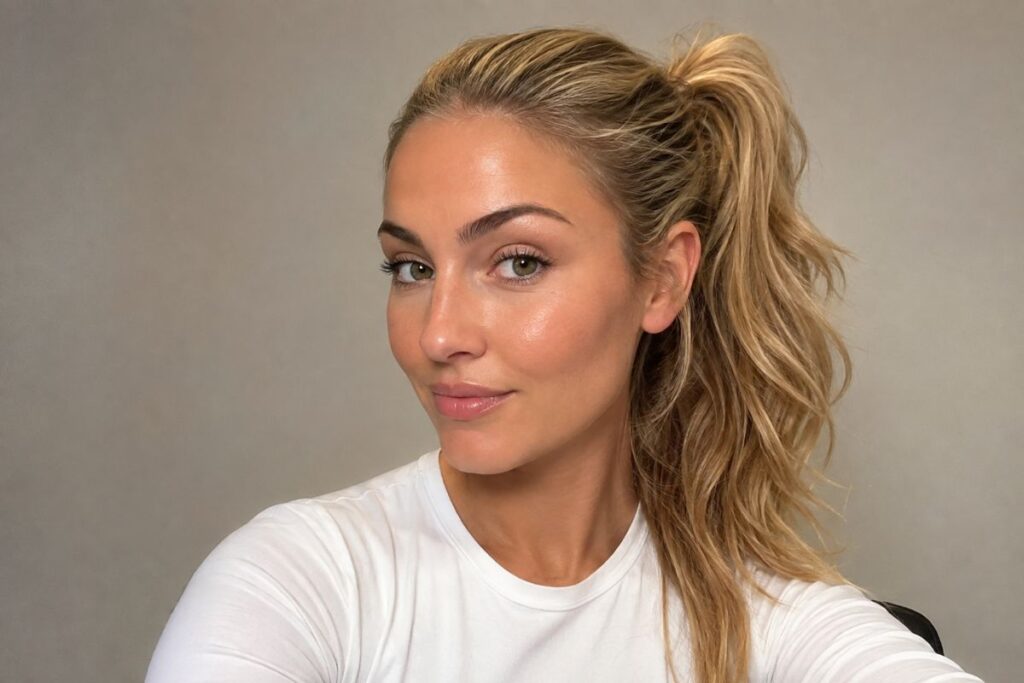
Add curls or waves to the length of a ponytail instead of leaving it flat. This brings texture and movement below the gather point. It softens the overall silhouette, even when the hair is mostly pulled back.
Diamond Face Shape Celebrities and How They Wear Their Hair
Face shapes of public figures are judged from photos rather than measured, so treat these as commonly cited examples, not confirmed diamonds. What makes them useful is how their hairstyles line up with the principles above. Kourtney Kardashian’s sleek, chin-length bob shows the simplest route, where the length alone does the work by placing the hemline at the jaw.
Textured, Face Framing Styles: Using Movement to Soften Angles
Sabrina Carpenter has often worn curtain bangs. She pairs them with long, face framing layers. This combination softens her forehead. Her cheekbones remain a natural focal point. Vanessa Hudgens frequently wears a textured, tousled lob. This softens angular features. It also adds volume near the crown.
Updos and Partial Updos: Using Volume Placement for Balance
Scarlett Johansson has worn soft, partial updos on multiple occasions, usually with a few pieces left loose around her face. The textured updo in the catalog uses the same idea: the hair is up, but the forehead and jaw still get some softness.
Using Hair Color and Highlights to Balance a Diamond Face
Strategic color placement can add visual width. It works the same way a haircut does. Lighter tones catch more light and draw the eye. This means where you place them genuinely matters.
Placing Lighter Tones at the Jaw and Chin
Highlights concentrated around your jaw and chin do real work. They pull visual attention toward your face’s narrowest points. This works in the same direction good haircut technique already works. Avoid concentrating brightness at the cheekbones themselves. This can emphasize width you already have plenty of. Face-framing highlights tend to look most natural two to three levels lighter than your base color; if you’re not sure where your base sits, our hair color level chart walks through levels 1 to 10.
Why All Over Color Does Less Work Than Strategic Placement
All-over color treats every section of hair the same. It offers no real proportion benefit either way. Face-framing highlights work differently. Placed specifically near the jawline, they do real visual work instead. This technique brightens exactly the area that benefits most from extra attention.
Bangs and the Deep Side Part: Two Tools Worth Understanding
Bangs and a deep side part are two of the most effective tools for a diamond face. Each one does a slightly different job.
Curtain Bangs Versus Blunt Bangs Versus Side Swept Bangs
Curtain bangs part in the center and sweep to both sides. This softens your forehead while still leaving it partially visible. Blunt, straight across bangs work too. They read as more dramatic, though. Side swept bangs add a diagonal line instead. This introduces gentle asymmetry along with softness.
Why a Deep Side Part Adds Asymmetry a Diamond Face Benefits From
A center part splits the face into two matching halves, and on a diamond face that mirror image lines up both cheekbones as twin focal points. A deep side part sweeps more hair across one side of the forehead and over one cheekbone. That softens one side and creates a diagonal line for the eye to follow instead. You can try this change without cutting anything.
Which Style Fits Your Hair Length, Texture, and Occasion
The right diamond face hairstyle depends on three things working together. Your current length matters. So does your natural texture. What you are styling for matters too.
Matching Your Current Length to the Fastest Fix
Is your hair already short? A swept back bixie or braided bob adds balance fast. You will not need to grow anything out. Does your hair sit at medium length? A curly lob or side parted lob with bangs works quickly. Is your hair long? Retro waves or a textured updo both use that length to your advantage. If you’re sitting right at shoulder length with natural wave, our guide on how to style shoulder-length wavy hair shows how to push that movement toward the jaw.
Everyday Versus Special Occasion: Adjusting the Same Principle
For everyday wear, a sleek lob with fringe keeps styling time to a minimum. A curly lob does too. Both still follow the core balancing principle. For a special occasion, reach for something bolder. Teased out curls work well. So does a textured updo with piecey bangs. Both bring more drama while doing the exact same visual work.
Frequently Asked Questions
What hairstyles suit a diamond face shape?
Styles that add softness at the forehead and width at the jaw suit a diamond face best. A curly lob, side parted lob with bangs, or braided bob all work well. The goal is to balance your cheekbones, not hide them.
Do curtain bangs work for a diamond face shape?
Yes, curtain bangs work especially well. They soften your forehead, one of the narrower areas of a diamond face. They do this without completely covering it. This makes them one of the most consistently recommended tools for this face shape.
Is a bob good for a diamond face shape?
Yes, a chin length or jaw length bob adds real width exactly where a diamond face needs it. A braided bob or choppy lob both add extra texture on top of that length based benefit.
What haircuts should diamond face shapes avoid?
Avoid extra short pixies with no crown volume. Avoid slicked back buns and tight ponytails too. A flat center part with no layering also tends to work against this face shape.
Is a diamond face shape the same as an oval face shape?
No, though the two are sometimes confused. An oval face has a fairly even width from the forehead to the jaw. A diamond face narrows sharply at both the forehead and chin. Only the cheekbones stay wide.
Can short hair suit a diamond face shape?
Yes, short hair can work well. A swept back bixie or braided bob both add the softness and texture a diamond face benefits from, even at a short length.
Conclusion
If you keep one idea from this guide, make it the hemline test. Wherever your hair is fullest or ends, the eye lands there, so steer that point toward the jaw or forehead and away from the cheekbones. Confirm your shape with the four measurements before committing to a cut.
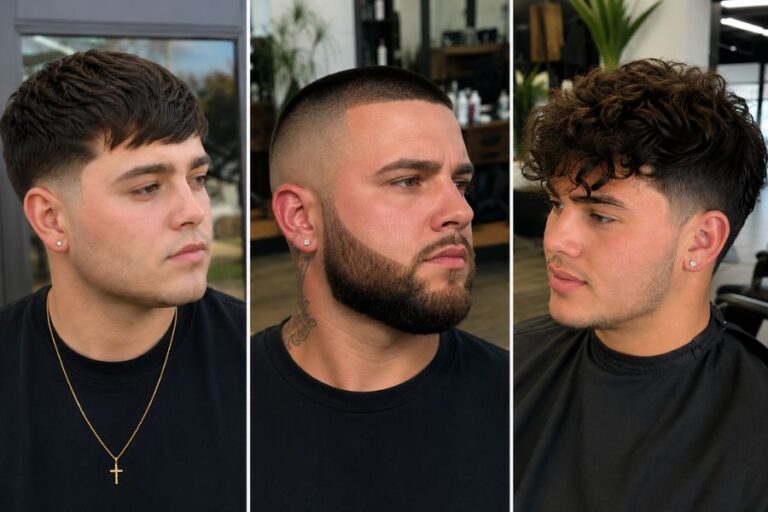
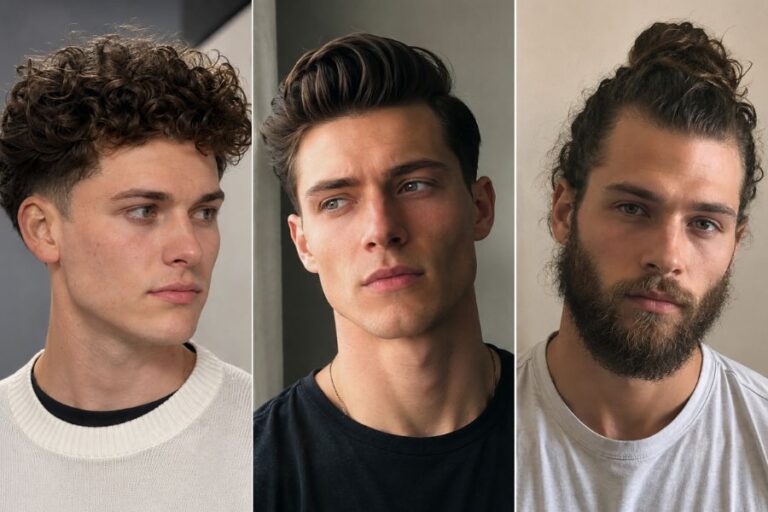
A middle part is still an option as long as there’s wave or curl around it. Let your current length and the occasion decide which style to try first, since a jaw-length bob or a set of curtain bangs can get you most of the way without a dramatic change. The same logic applies to shorter, more tapered cuts, which our guide to diamond face shape hairstyles for men covers in detail.
Explore more face shape and hairstyle guides on HairStyleFreek to build a look that works for your specific features.
Not Sure This Is Your Face Shape?
If your forehead measured close to your cheekbones, or your face came out noticeably longer than it is wide, one of these guides will likely fit you better.
2 Comments