
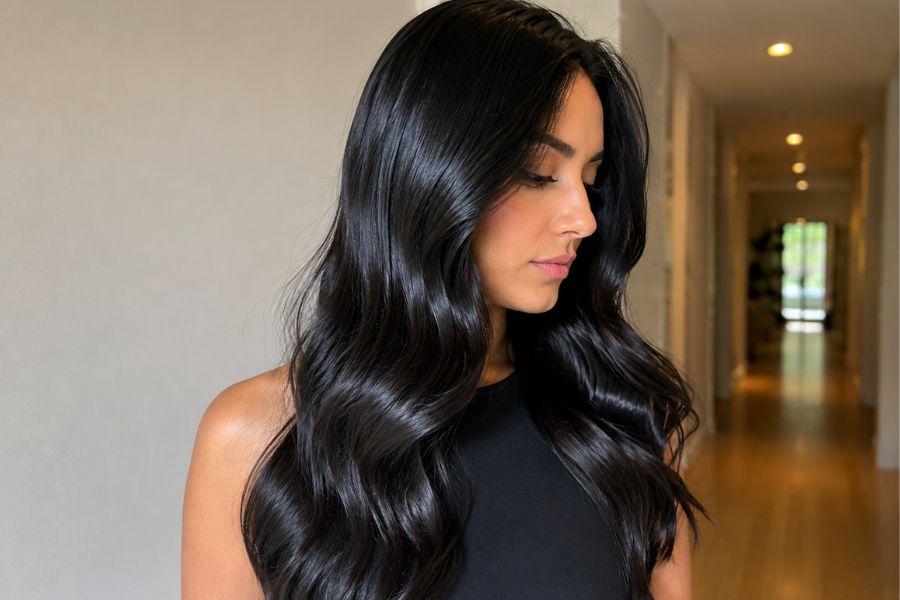
A hair gloss is a semi permanent treatment. It coats the hair shaft with a thin layer of shine. Tinted versions also add a sheer wash of color. It contains no ammonia. It has no heavy lift. As a result, it will not lighten your hair. Most gloss treatments last three to six weeks. They fade gradually with each wash.
This guide is for you if you keep hearing the word gloss at the salon. You want to know what it actually does. You will learn how a gloss works at the cuticle level. You will learn how it differs from toner. You will also learn which hair types benefit most, real US pricing, and how to fix a gloss that goes wrong.
✔ Key Takeaways
- A hair gloss coats the hair shaft with shine. Tinted versions add sheer color too.
- It contains no ammonia. It cannot lighten hair.
- Most gloss treatments last three to six weeks. This depends on the formula.
- A standalone salon gloss typically costs between $40 and $150 in the US.
- Gloss and toner solve different problems. Salons sometimes use the words loosely, though.
What Is a Hair Gloss?
A hair gloss is defined as a semi permanent treatment. It coats and slightly penetrates the hair shaft. This adds shine. Tinted formulas also add a temporary layer of color. It sits somewhere between a deep conditioner and a demi permanent dye. Most formulas use little to no developer. That is why a gloss never lifts or lightens your natural color.
Gloss treatments come in two main types. A clear gloss adds pure shine. It does not touch your color at all. This makes it a good fit for hair you have never dyed. A tinted gloss adds that same shine. It also adds a sheer color shift. This helps cool down brassy blonde. It can also deepen a dull brunette.
A hair gloss cannot lighten your hair. It cannot fully replace a permanent color service either, if you want a dramatic change. Gloss is also often confused with hair glaze. A glaze is a shorter lived surface treatment. It coats the hair without penetrating it at all. We cover that full comparison in a separate guide. The two terms get mixed up constantly in salon conversations.
How Does a Hair Gloss Work?
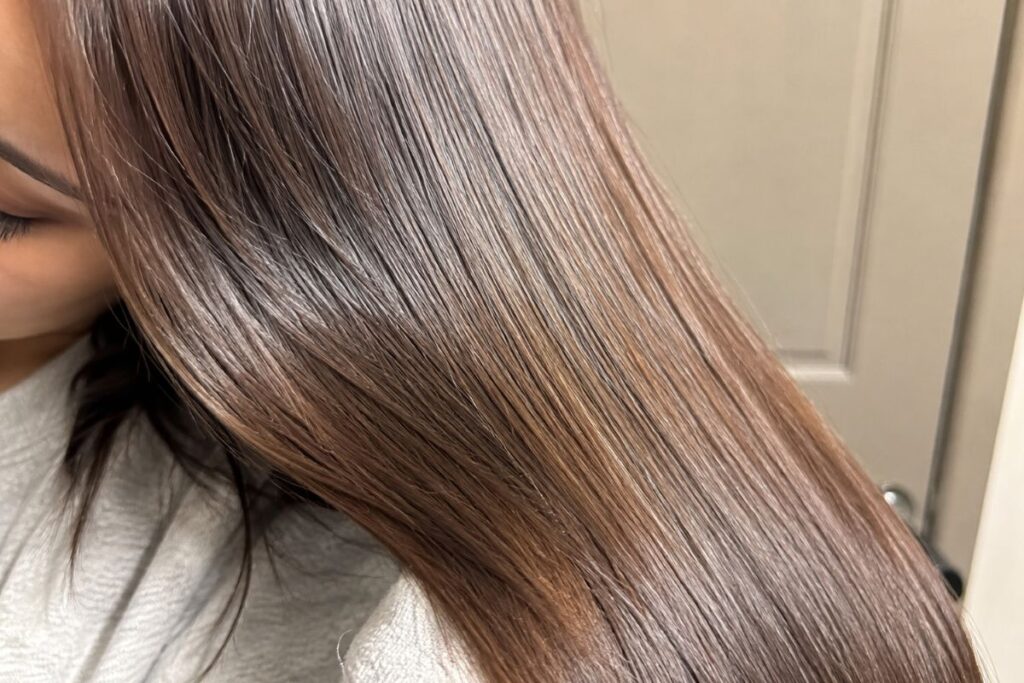
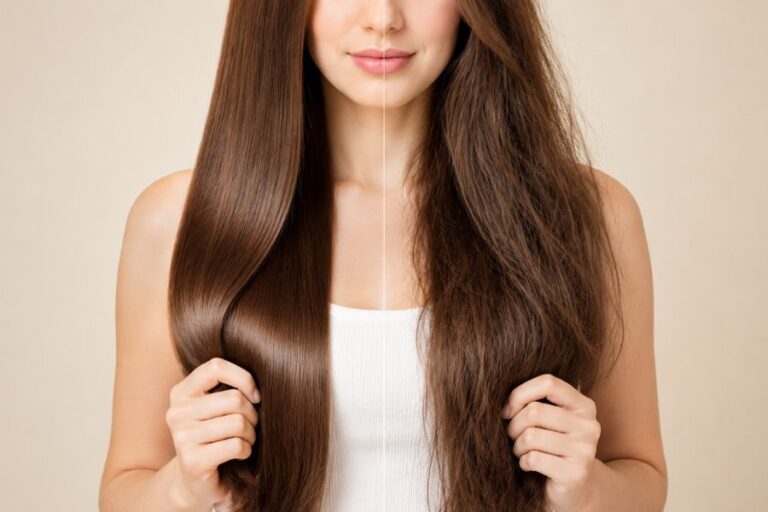
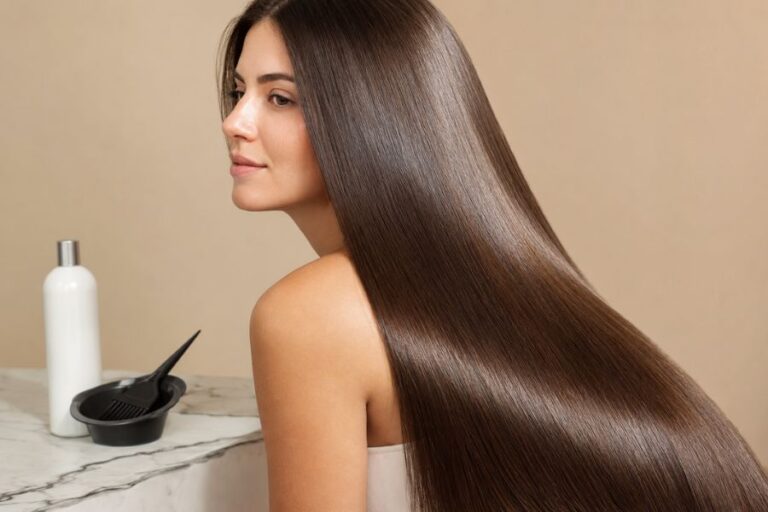
A hair gloss works by smoothing the hair’s outer cuticle layer. This lets it lie flat. A flat cuticle reflects light evenly. Rough or lifted cuticles scatter light in different directions. To the eye, that reads as dull hair. A gloss seals that surface. The result is the mirror like shine people notice right away.
Many gloss formulas also use a low volume developer. A plain glaze skips this step entirely. That developer gently opens the cuticle just enough. This lets pigment settle slightly beneath the surface. It does not just sit on top. A hair cosmetics review explains this process well.
Shallow cuticle penetration is what lets semi permanent and demi permanent formulas hold pigment longer. Surface only coatings fade faster by comparison, according to Dias, a hair cosmetics review published in the International Journal of Tricholog 2015. That one mechanical difference is the real reason gloss outlasts glaze. It is not just a marketing choice between two similar sounding words.
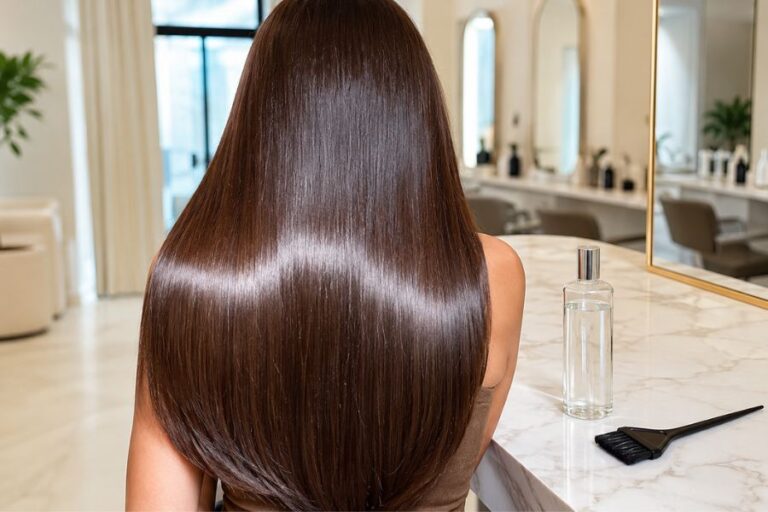
A typical gloss appointment takes 20 to 30 minutes. Your stylist applies the formula to clean, damp hair. They let it process. Then they rinse and style as usual. There is no separate lightening step at any point.
Hair Gloss vs Toner: What’s the Difference?
A hair gloss and a toner are not the same thing. Stylists sometimes use the words loosely in conversation, though. A toner is a targeted color correction tool. A gloss is a broader shine and conditioning treatment. It can also carry color.
How toner and gloss work differently on the strand.
Toner is almost always used right after lightening, bleaching, or highlighting. It neutralizes unwanted warmth. It lands hair on a precise, specific shade. Gloss is more general purpose. It can go on virgin hair, faded color, or freshly toned hair. Its main job is shine and conditioning. It is not built for precision color correction.
When your colorist uses one instead of the other.
Did you just get balayage or highlights? Does your hair look a little brassy or uneven right out of the foils? That calls for toner first. Does your color already look correct, but feel flat or lack shine? A gloss is the better tool there. Toner fixes a color problem. Gloss finishes and polishes a color that is already right.
Can they be used together?
Yes, and this is common. Many colorists tone the hair first. This corrects the base shade. They then follow with a gloss. This seals the cuticle and adds shine on top. Think of toner as fixing the paint. Gloss is the topcoat you add after.
| Feature | Hair Gloss | Toner | Hair Glaze |
| Main job | Shine plus optional sheer color | Precise color correction | Surface shine only |
| Developer used | Often low volume | Usually low volume | None |
| Best used | As a finishing or standalone treatment | Right after lightening | Between color services |
| Typical duration | 3 to 6 weeks | 4 to 6 weeks | 1 to 2 weeks |
| Typical US price | 40 to 150 dollars | 40 to 120 dollars | 30 to 100 dollars |
What Are the Benefits of a Hair Gloss?
A hair gloss offers three main benefits. None of them require any lightening or damage to your hair. These are the reasons stylists so often recommend it as a finishing step.
Shine and frizz control.
A smoother cuticle catches less on itself. This cuts down on frizz and flyaways. This is often the single biggest visible change people notice after a gloss appointment.
Refreshing faded or brassy color.
Color fades unevenly over time. It usually fades from the outside in. Warm undertones tend to surface first. A tinted gloss redeposits pigment on the hair’s surface. This brings faded color back to life. It does not touch the hair’s internal structure to do it.
Conditioning without damage.
Most professional gloss formulas contain conditioning agents. These hydrate the hair while they process. There is no high volume developer involved. Because of that, a gloss actually leaves hair in better condition than it was in when it started. That is unusual for any color related service.
Which Hair Types Benefit Most From a Hair Gloss?
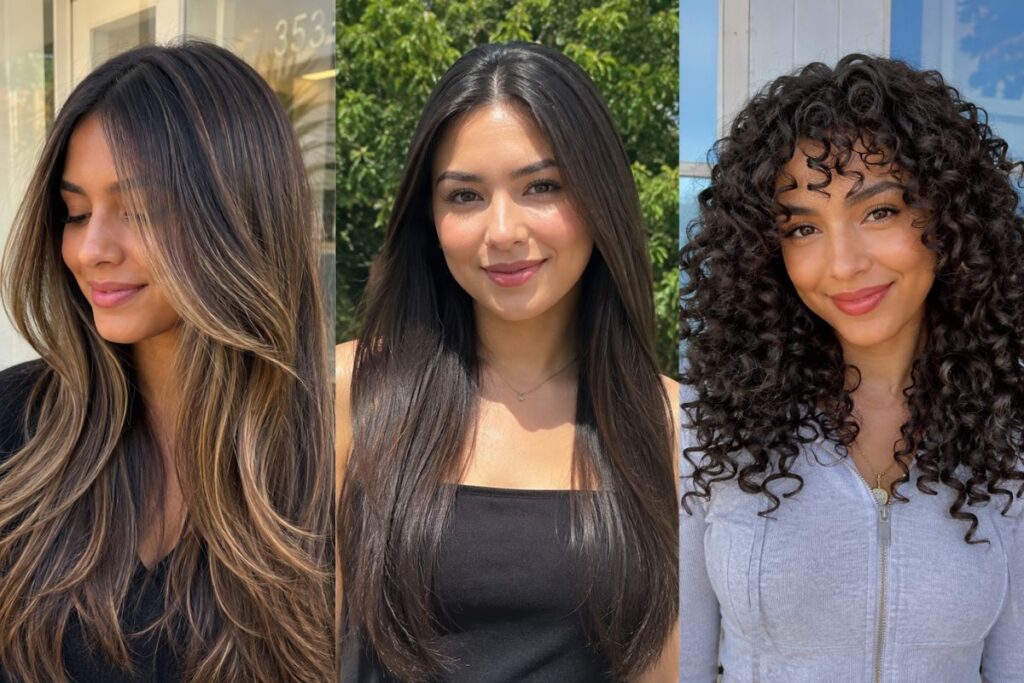
Almost every hair type gains something from a gloss treatment. The specific benefit shifts, though. It depends on your hair’s history and texture.
Color treated and highlighted hair. This is where gloss does its most obvious work. Balayage, highlights, and all over color all fade over time. They also lose shine over time. A gloss directly addresses both problems in one visit.
Virgin, natural hair. Hair that has never been colored can still look dull. Sun exposure, hard water, or heat styling are often the cause. A clear gloss adds shine and smoothness. It does this without introducing any color at all. This makes it a low risk entry point. It works well for readers who are gloss curious but color shy.
Fine, curly, and high porosity hair. Fine hair benefits from gloss for a simple reason. The treatment adds shine without the heaviness of a thick mask. High porosity hair is common after coloring, bleaching, or chemical services such as keratin treatments. It tends to lose moisture and shine fastest. Because of that, it often shows the most dramatic before and after results from a single gloss session.
How Long Does a Hair Gloss Last?
A hair gloss typically lasts three to six weeks. You will see slightly different numbers depending on the source, though. The specific formula used also matters. That range is not a contradiction. It reflects real differences in how gloss products are made.
Why sources give different numbers. Some gloss formulas use zero developer. These behave more like a glaze. They fade closer to the two to three week mark. Others use a genuine low volume developer. These settle pigment slightly under the cuticle. That stretches results out toward five or six weeks. The label says gloss either way. The chemistry underneath is not identical from brand to brand, though.
What shortens or extends the results. Frequent washing speeds up fading. Hot water, chlorine, and heavy heat styling do too. Each wash strips away a small layer of the coating. Using a sulfate free shampoo helps slow that down. Rinsing with cooler water can meaningfully stretch your results too.
How Much Does a Hair Gloss Cost in the US?
A standalone hair gloss at a US salon typically costs between $40 and $150 in 2026. Most guests land somewhere in the $ 60 to $ 90 range. The exact price depends on region and salon tier. Adding gloss onto an existing color service usually costs less than booking it alone. That often runs in the 20 to 50 dollar range as an add on.
Salon prices, standalone vs add on. A gloss booked as its own appointment tends to run higher. It includes a full consultation and application from scratch. A gloss added at the end of a color or highlight service is faster to apply. Your hair is already sectioned and prepped at that point. As a result, salons typically discount it.
At home product prices. At home gloss treatments are far cheaper. They usually land between $15 and $35 per box or bottle. These give a lighter version of the salon result. They work well as a maintenance step between professional visits. They are not meant to fully replace those visits, though.
Can You Do a Hair Gloss at Home?
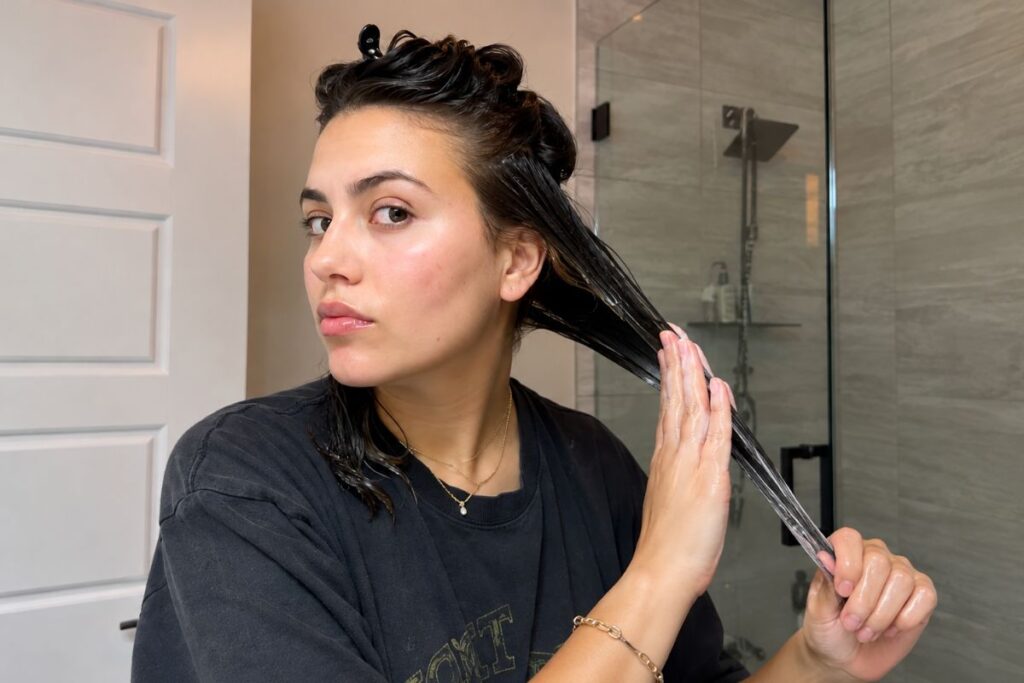
Yes, you can apply a hair gloss at home. Most treatments take under 30 minutes from start to finish. Clear gloss formulas are close to foolproof. Tinted formulas need a bit more care. Otherwise, they can come out uneven or unexpectedly dark.
Step 1: Wash your hair. Use a clarifying or regular shampoo to remove buildup. This lets the gloss bond evenly across every strand.
Step 2: Towel dry until damp. Most gloss formulas are designed to be applied to damp hair. Avoid soaking wet or fully dry hair.
Step 3: Apply evenly from roots to ends. Section your hair first. This helps you cover every part without leaving any patches, especially on the back.
Step 4: Let it process. Leave the gloss on for the time listed on the box. This is usually 10 to 20 minutes.
Step 5: Rinse without shampooing right away. Rinse with cool water only. This gives the gloss a chance to fully seal into the cuticle before you wash it out again.
Salon or home, how to decide. Want a precisely custom mixed shade? Does your hair have a complicated color history with multiple past treatments? Choose a salon visit in that case. An at home gloss works well for simple shine boosts. It also works for straightforward color refreshes, if your hair is not too far from your target shade already.
Does a Hair Gloss Cover Gray Hair?
No, a hair gloss does not fully cover gray hair. It deposits sheer color instead of fully saturating the strand. Permanent dye works differently and fully saturates the strand. A gloss can, however, soften the contrast between gray strands and your surrounding color. This is often called gray blending.
Gray blending vs full coverage.
A tinted gloss can tone down the brightness of gray hair. It helps gray look more like a natural highlight than a stark, isolated strand. Do you want complete, opaque gray coverage instead? That requires a permanent color service. Gloss simply does not deposit enough pigment to fully hide gray on its own.
Common Hair Gloss Mistakes and How to Fix Them
A hair gloss is a low risk treatment. A few common mistakes can still throw off the result, though. Knowing what went wrong helps you fix it quickly rather than panic.
Gloss came out too dark or too cool. This usually happens for one of two reasons. The gloss was left on longer than instructed, or a formula meant for a different starting shade got used. Washing with a clarifying shampoo a few times will speed up the fade. Gloss pigment sits close to the surface. It lifts out faster than permanent color does.
Faded faster than expected. Did your gloss disappear in a week instead of the promised month? The culprit is almost always washing habits. Hot water, sulfate shampoos, and daily washing all strip gloss pigment quickly. Try switching to a sulfate free shampoo. Wash every two to three days instead of daily. This usually solves the problem on your next application.
Frequently Asked Questions
What does a hair gloss do?
A hair gloss coats the hair shaft to add shine. Tinted versions also add a sheer layer of color. It smooths the cuticle so hair reflects light more evenly. That creates a glassy, polished look. It contains no ammonia, so it improves shine without damaging or lightening hair.
How long does hair gloss last?
Hair gloss typically lasts three to six weeks. The exact duration depends on the formula. Some use a low volume developer, which settles pigment slightly under the cuticle. Others work more like a surface only coating. Washing frequency and water temperature also affect how long results hold.
Is hair gloss the same as toner?
No, hair gloss and toner are not the same. Toner is a targeted tool used right after lightening. It corrects unwanted warmth and lands hair on a precise shade. Gloss is broader. It adds shine and conditioning to hair that is already the right color. It can be used on its own too.
Does hair gloss damage your hair?
No, hair gloss does not damage hair. Most formulas use little to no developer. They contain conditioning ingredients that hydrate hair as they process. There is no high volume developer or lifting involved. As a result, a gloss treatment often leaves hair in better condition than before.
I have virgin hair that I’ve never dyed, but everyone keeps talking about hair gloss for color treated hair. Would it actually do anything for me, or is it a waste of money if I don’t color my hair?
A clear hair gloss works well on virgin hair. It adds shine and smooths the cuticle without introducing any color. That is exactly what you want if you have never dyed your hair. It is not wasted money either. The shine and frizz control benefits apply regardless of your color history.
Final Thoughts on Hair Gloss
A hair gloss earns its popularity for a simple reason. It delivers real shine and color refreshment with zero damage. It works whether your hair is color treated or completely natural.
Three things are worth remembering. A hair gloss coats and slightly penetrates the hair shaft. That is what separates it from a shorter lived glaze. It also explains why gloss holds color longer. Gloss also works differently from toner. Toner corrects color right after lightening. Gloss finishes an already correct shade instead. And matching the treatment to your specific hair situation makes the biggest difference. That means choosing between salon and home, and between clear and tinted, based on what you actually need.
Curious how gloss compares to hair glaze in full detail? Explore more hair color guides on the blog to see which treatment actually fits what you are trying to achieve.

One Comment