
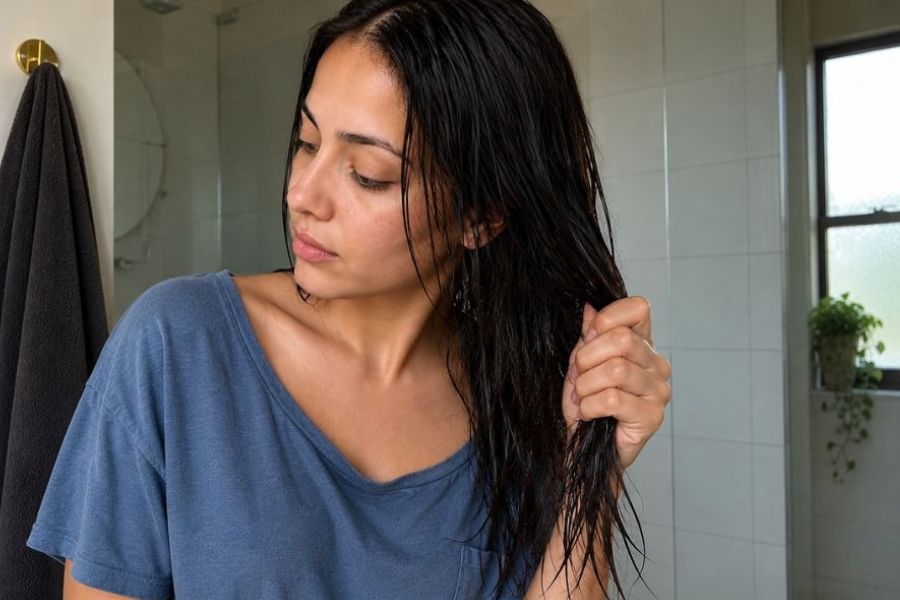
Damp hair meaning refers to the stage right after washing. Your hair no longer drips water. It still feels cool and slightly moist. This stage sits between wet hair and dry hair. It is the easiest point to style your hair. It is also the easiest point to avoid damage. Have you ever stood in the bathroom, unsure if your hair was ready for product? Then you already know this stage matters.
This guide breaks it all down in plain terms. You will learn how damp hair compares to wet and dry hair, the right way to dry it, which products work best on it, whether dry shampoo belongs on damp roots, and what happens if you sleep before it fully dries.
✔ Key Takeaways
- Damp hair is the stage after washing. Hair no longer drips. It still feels cool and slightly moist.
- This stage is the best time for products. The cuticle is still partly open.
- Wet hair is the most fragile. Damp hair is more stable. Dry hair is the strongest.
- Dry shampoo needs fully dry roots. Never use it on damp hair.
- Sleeping on damp hair raises the risk of frizz. It can also cause tangles and pillowcase fungus.
What Does Damp Hair Mean?
Damp hair is hair that no longer drips. It has been towel dried, or air dried a little. It still feels cool. It still feels slightly moist. It is not wet hair. It is not dry hair either. Think of it as a middle step. Your hair passes through it every time you wash.
You can test this yourself. Gently squeeze a section of hair. Does water run out? Then it is still wet. Does it feel cool but nothing drips? Then it is damp.
Hair reaches this stage fast. It often takes just a few minutes. Towel drying speeds it up. So does light air after a shower. Most people miss this stage. That is why so many apply products at the wrong time.
Damp Hair vs Wet Hair vs Dry Hair
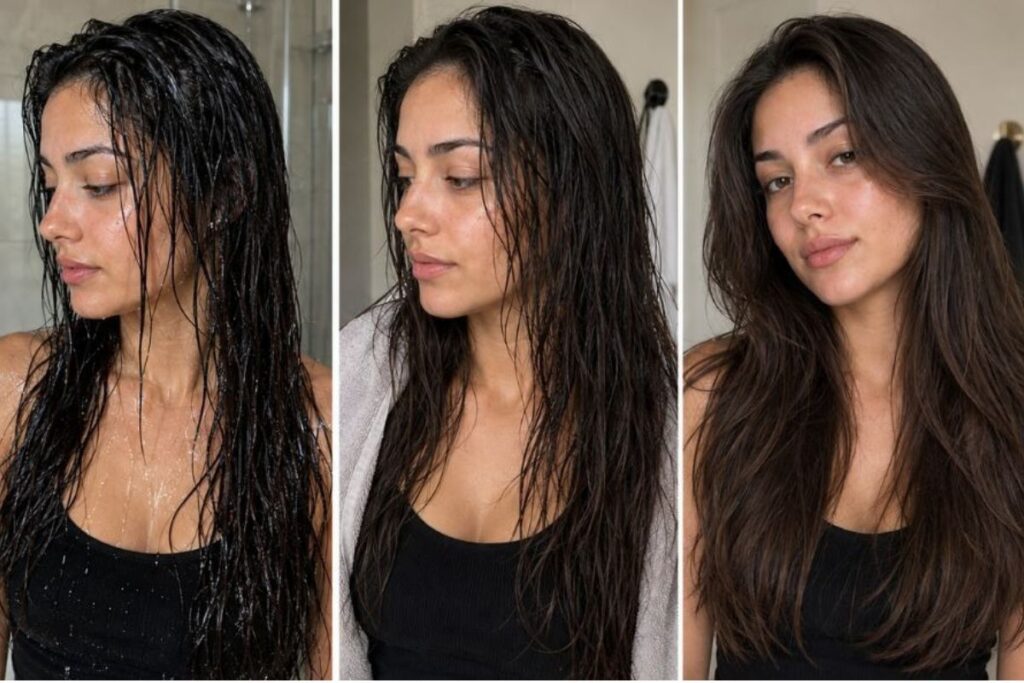
Wet hair, damp hair, and dry hair all behave differently. Knowing the difference protects your strands. Wet hair is fully soaked. It is the weakest stage. Damp hair holds some moisture. It does not drip. It sits in a safer middle ground. Dry hair has no extra moisture. It is the strongest stage of all.
Here is a simple comparison you can check at any time.
| Hair Stage | Moisture Level | How It Feels | Strand Strength | Best Use |
| Wet Hair | Fully saturated, drips when squeezed | Heavy, cold to the touch | Weakest, stretches easily | Gentle detangling only |
| Damp Hair | Holds moisture, does not drip | Cool, slightly heavy | Moderate, more stable | Product application, styling |
| Dry Hair | No extra moisture | Room temperature, light | Strongest state | Dry shampoo, tight styles, brushing |
According to the American Academy of Dermatology, most people should handle wet hair as little as possible, since it breaks more easily when combed or brushed. This is why gentle detangling works best on wet hair. Save the harder brushing for later.
Why Damp Hair Is the Best Stage for Styling
Damp hair is the best time to style. The cuticle is the reason why. It stays partly open at this stage. A peer reviewed microdiffraction study that directly measured the hair cuticle under water exposure found the inner cuticle layer swells by roughly 10 percent when it absorbs water, confirming that water exposure physically loosens the cuticle’s structure.
That is why fully soaked hair behaves so differently from drier hair. Hair reaches its maximum cuticle lift when it is fully saturated. That helps with washing. But it also raises the risk of pulling. Once hair reaches the damp stage, the cuticle settles a bit. Product can still soak in properly.
We tested this over several wash days. We applied leave in product at the damp stage. The style held longer. It looked less frizzy by midday. This beat product was applied to soaking wet hair. Stylists have said this for years. Damp hair takes product more evenly. There is less water to dilute it.
Heat styling works better here too. Your blow dryer needs less time. It has less water to evaporate. That means less heat hits your strands overall.
How to Dry Hair From Damp Without Damage
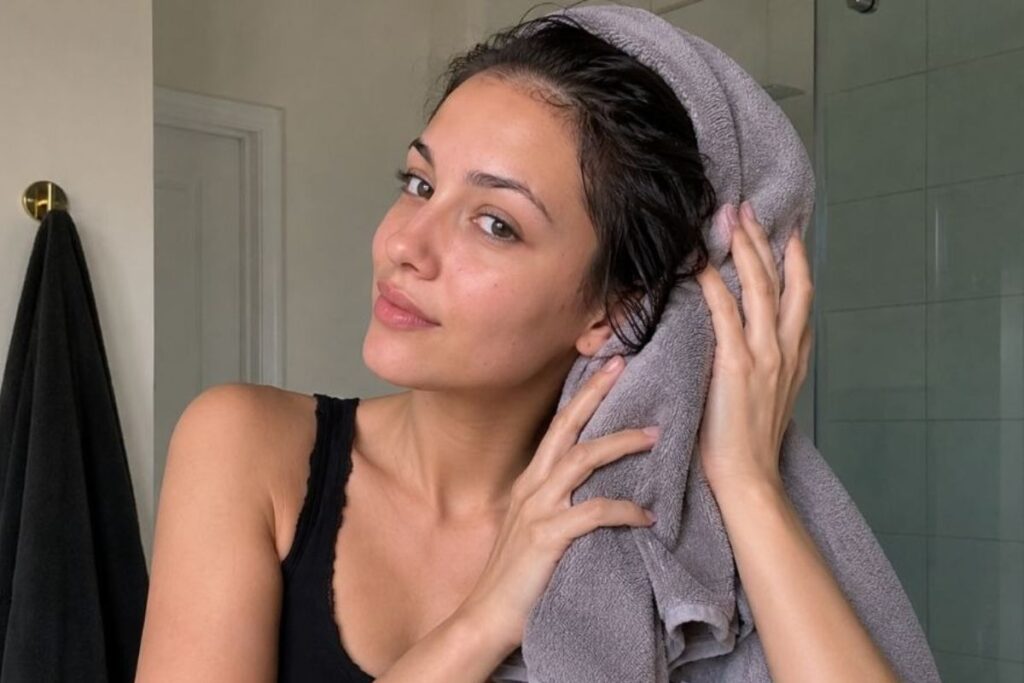
You can safely move from damp to dry. Just follow these steps.
Step 1: Squeeze out extra water with your hands. Do this right after rinsing. Work from roots to ends. Do not twist your hair.
Step 2: Wrap your hair in a microfiber towel. A soft cotton T-shirt works too. Skip the regular bath towel. Rough terry cloth causes friction. That friction damages the cuticle.
Step 3: Let your hair sit wrapped for five to ten minutes. This pulls it from wet into damp.
Step 4: Apply your products once hair feels damp. Do not wait for it to drip less first. Do not apply while still soaking either. Damp is the target.
Step 5: Finish drying with air or a blow dryer. Use medium heat. Hold the dryer six inches away. Keep it moving. Do not stay in one spot.
A microfiber towel absorbs water well. It does this without much friction. That matters more than most people think when it comes to frizz control.
Styling Damp Hair by Hair Type
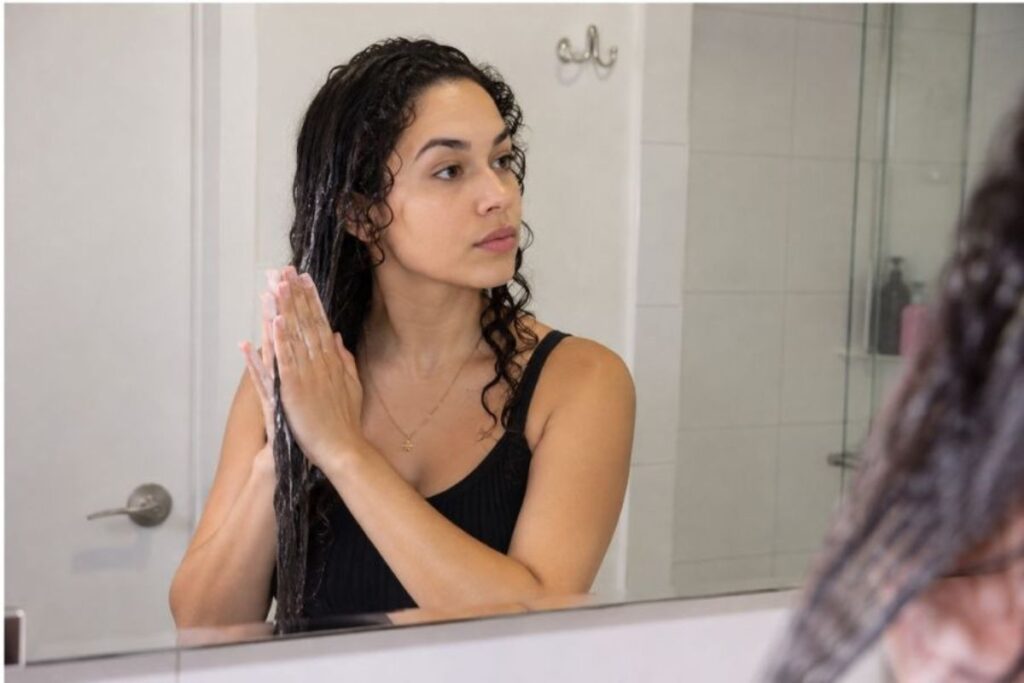
Straight hair holds a style well from the damp stage. It is easier to smooth or add volume early. Try a light smoothing serum. Or add a small amount of mousse at the roots.
Wavy hair likes a light cream. Sea salt spray works too. Scrunch it into damp hair. Let it air dry. This brings out natural texture. It also fights frizz.
Curly hair needs extra care here. Apply a leave in conditioner to your strands at this in between, damp stage. Add a curl cream too. Scrunch gently. This helps define curls before they dry. Curl experts call this locking in moisture.
Coily hair shrinks the most during drying. Work in small sections. Apply product to each section while it is still damp. This helps protect length and shape.
Best Products to Use on Damp Hair
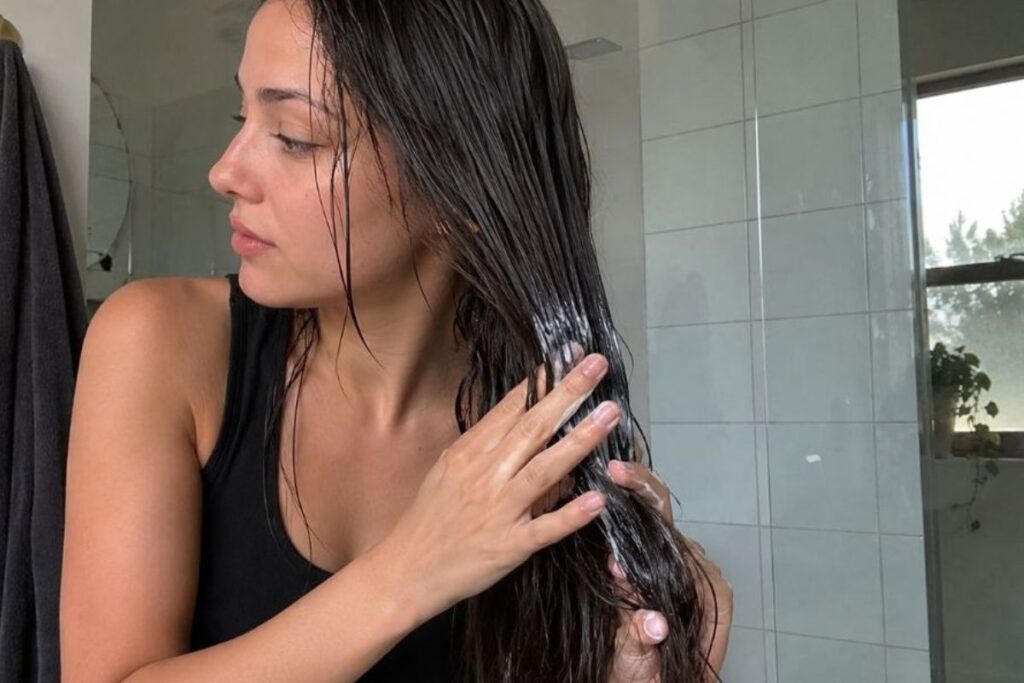
Damp hair absorbs product evenly. This makes it the best time for most leave in treatments. A leave in conditioner coats the strand fully at this stage. Extra water does not wash it away. This protects your ends before you add heat.
Heat protectant spray also belongs here. Apply it to the mid-lengths and ends. Do this before any blow drying or hot tools. Skipping this step can cause significant heat damage.
Curl creams work well on damp hair. So do gels and mousses. They need some moisture to spread evenly. Without it, they clump. One product to skip on damp hair is a hair mask. Most masks are made for dry or towel dried hair. They work less well when hair still holds too much water.
Damp Hair and Scalp Health
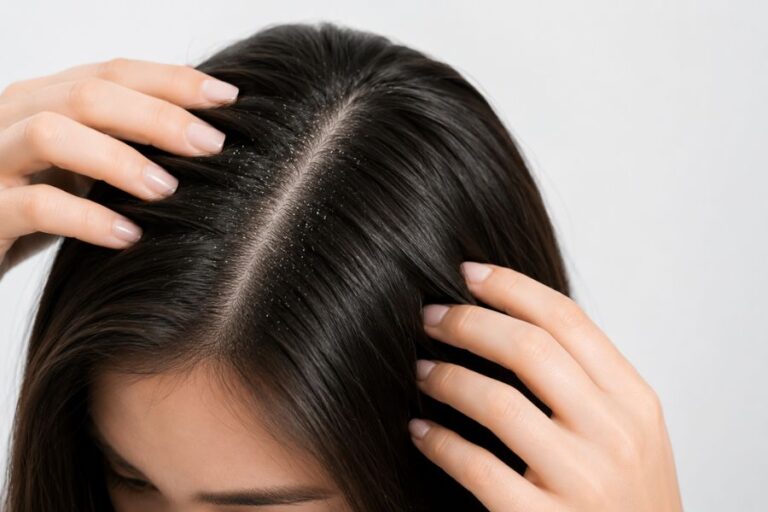
Damp hair does not just affect your strands, it affects your scalp too. Your scalp naturally hosts a yeast called Malassezia globosa. In small amounts it is harmless. In larger amounts it can trigger flaking, itching, and dandruff.
Research on the yeast Malassezia globosa identifies it as the most likely organism behind dandruff and seborrheic dermatitis, largely due to its high lipase activity, which breaks down scalp oils into irritating byproducts. A damp scalp creates a warmer, moisture rich environment. That environment can allow this yeast to grow more than it normally would.
If you already deal with dandruff or an itchy scalp, letting your hair sit damp for long stretches, especially under a tight hat or scarf, can make symptoms worse. Drying your roots fully, even if your ends stay slightly damp longer, helps keep this in check.
Can You Use Dry Shampoo on Damp Hair
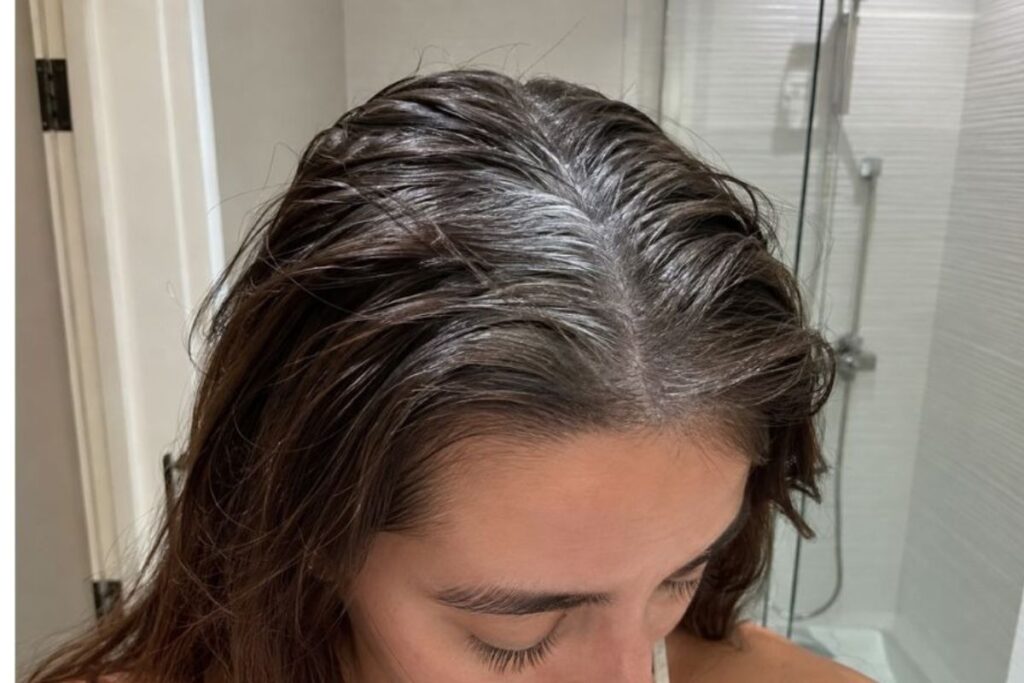
Dry shampoo does not work on damp hair. Wait until your roots are fully dry first. Dry shampoo uses powder to soak up oil. That only works on a dry scalp.
Spray it on damp roots and you get a problem. It turns chalky instead of fresh. Wait until roots feel completely dry. This matters even if your ends still feel a bit cool. Dry roots let the powder absorb oil properly.
Many people use a simple trick. Apply dry shampoo the night before. Do this once your hair is fully dry. Brush it through in the morning. This gives a fresh, natural look.
Can You Apply Bleach on Damp Hair
Yes, bleach can go on damp hair, but the result is different from applying it to fully dry hair. Bleach lightens hair using a developer, usually mixed with 10 to 30 percent hydrogen peroxide, and that developer is already water based.
When you apply bleach to damp hair, the extra water on your strands dilutes the mixture slightly. This means the lightening process takes a bit longer and the final result is usually a shade or two less dramatic than what you would get on dry hair.
If you want maximum lift for a much lighter shade, dry hair gives the strongest result. If you are aiming for a softer, more gradual lightening effect, damp hair can actually work in your favor. Either way, patch test first, and never leave bleach on damp hair longer than the timing your colorist or box instructions recommend, since damp strands are already more fragile and can overprocess faster than expected.
Things You Should Never Do to Damp Hair
A few habits quietly damage damp hair more than people realize. Avoiding these protects both your strands and your scalp.
Do not brush damp hair right away. Wait until it is at least partly dry, and use a wide tooth comb starting from the ends, not the roots.
Do not tie damp hair into a tight bun or ponytail. Damp hair stretches the most at this stage, and tension from an elastic can cause breakage right where it is tied.
Do not use a curling iron or flat iron on damp hair. Water trapped inside the strand turns to steam at high heat, and that steam can cause the hair to bubble and weaken from within.
Do not blow dry damp hair on the highest heat setting. Medium heat gets the job done with far less stress on the cuticle.
Do not apply a hair mask to damp hair expecting full results. Most masks are formulated to penetrate hair that has already been towel-dried, and excess surface water can block proper absorption.
Do not skip heat protectant before any hot tool use, even a quick touch up, since damp hair without protection is the most vulnerable combination for heat damage.
Is It Safe to Sleep on Damp Hair
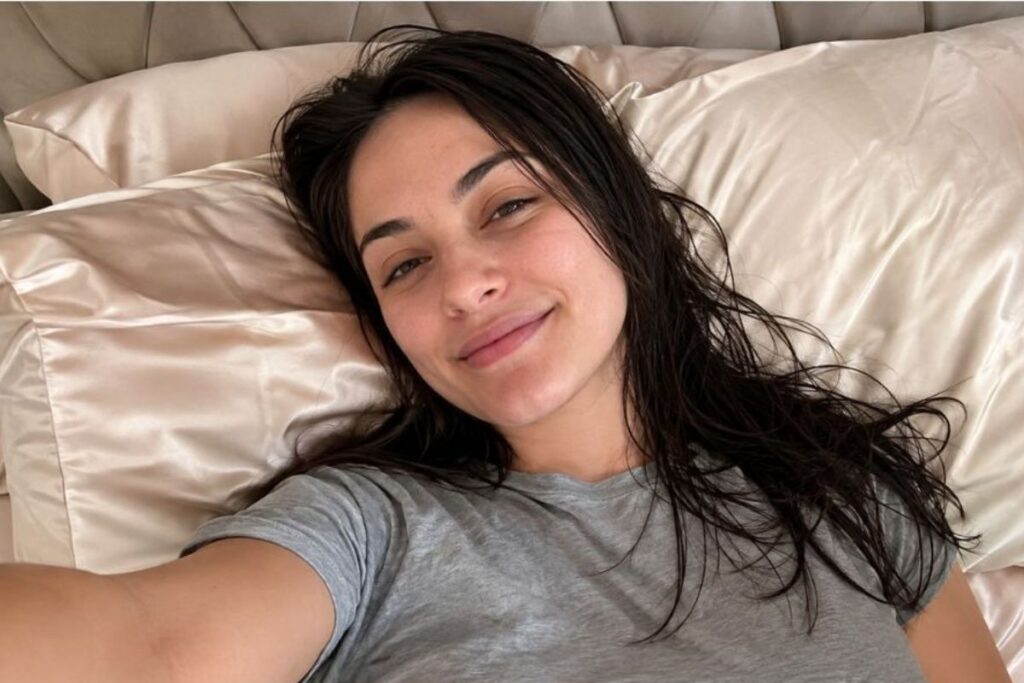
Sleeping on damp hair is not a good idea. It raises the risk of frizz. It raises the risk of tangles. Over time it can even grow fungus on your pillowcase. Damp hair rubs against the pillow for hours. That friction roughs up the cuticle while you sleep.
A peer reviewed study published in the journal Allergy examined pillows in regular household use and found substantial fungal loads, including Aspergillus fumigatus, across nearly all samples tested. While that study focused on pillow material rather than hair specifically, it supports the same basic principle. Ongoing moisture around bedding encourages fungal growth over time.
One common myth worth clearing up: sleeping with damp hair does not directly cause a common cold. Colds come from viruses, mainly rhinoviruses, spread through airborne droplets, not from cold or wet hair itself.
Do you have curly or coily hair? Sometimes damp hair at bedtime cannot be helped. Try a loose pineapple style. A loose braid works too. Both protect your curl pattern. They also reduce friction that causes breakage. A silk or satin pillowcase helps as well. It causes far less friction than plain cotton.
Frequently Asked Questions
Is damp hair fifty percent dry?
Damp hair usually sits between forty and seventy percent dry. The exact number depends on hair thickness and porosity. There is no single number for everyone. The squeeze test is still the simplest way to check.
Can you use dry shampoo on damp hair?
No, dry shampoo needs fully dry roots to absorb oil. Using it on damp hair often leaves a chalky, uneven look. Always wait until your roots feel completely dry first.
How long does it take hair to go from wet to damp?
Most hair reaches the damp stage in five to fifteen minutes. This happens through towel drying or light air exposure. Thick or curly hair often takes a bit longer. A microfiber towel can speed this up.
Why does my hair feel damp even after I blow dry it?
This usually means the roots or inner layers were not fully dried. It happens most with thick or long hair. Blow drying the surface alone can leave the deeper layers wet. Drying in sections helps every layer dry evenly.
I towel dried my hair but it still feels wet in some spots, is that damp or wet hair?
If a section still drips or feels heavy, that spot is still wet. Damp hair feels evenly cool and slightly moist all over. There should be no dripping anywhere. Thicker hair often needs a few extra minutes to catch up.
Is it bad to sleep with damp hair?
Yes, it raises the risk of frizz, tangles, and fungal growth on your pillowcase. Try to let your hair dry fully before bed. If that is not possible, use a loose braid. A silk pillowcase also helps reduce damage.
Conclusion
Damp hair meaning is simple once you know what to look for. It is the stage after wet hair. It comes before fully dry hair. Your strands are easiest to style here. They are also less fragile than soaking wet hair.
Remember three things. Damp hair is the best time for leave in conditioner, heat protectant, and curl products. Dry shampoo only works on fully dry roots, never on damp hair. And drying your hair fully before bed protects both your strands and your pillowcase.
One Comment