
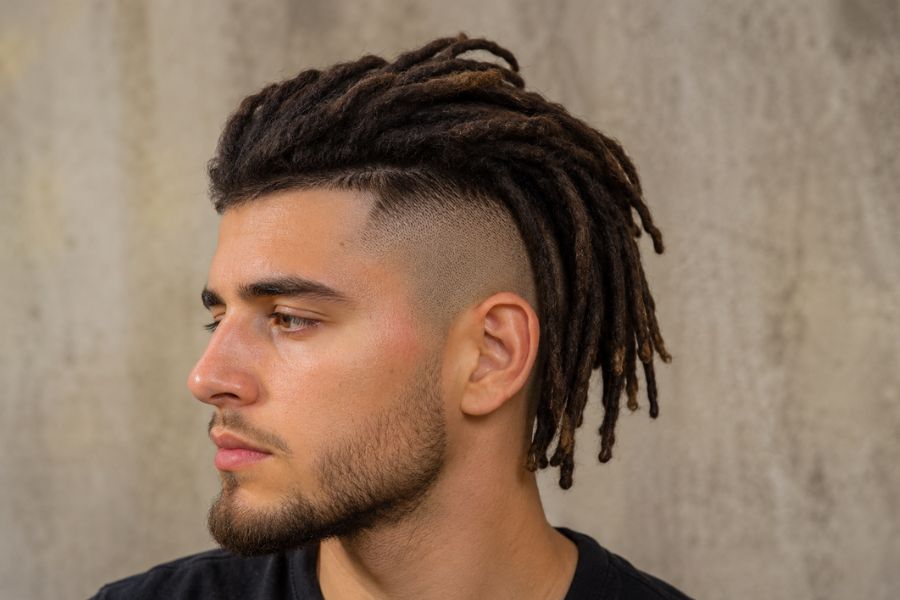
Sometime in the 1200s, a chronicle written at St Albans, and credited to a monk named John of Wallingford, complained about the Danes living in England. It said they combed their hair every day, bathed every Saturday and changed their clothes often. The writer meant it as an insult, and he was describing people who lived about two centuries before him. Even so, it is one of the few written glimpses of Viking-era grooming, and it describes the opposite of the locked hair seen in Viking dreads today.
Viking dreads are dreadlocks or twisted locks worn long on top with shaved or faded sides. The look comes far more from TV, film and video games than from that record. That is no reason to skip it. It just moves the real question from history to your own hair. Are you ready for the months real locks take to form, or would you rather test the style first with faux locs?
Key Takeaways
- Viking dreads combine dreadlocked or twisted hair with shaved or faded sides.
- No direct archaeological evidence confirms real Vikings wore true dreadlocks.
- Real dreadlocks take several months to fully lock and mature.
- Fine or thin hair needs a different technique. It is not a reason to skip this style.
- Faux locs offer a temporary way to try this look before committing.
Viking Dreads
Viking dreads are dreadlocked or twisted sections of hair worn long on top. They get paired with shaved or faded sides. This combination creates the bold, warrior inspired look most people picture when they hear the term.
Did Vikings Actually Have Dreadlocks?
No direct archaeological evidence confirms that real Vikings wore true dreadlocks. Written evidence points in a different direction entirely.
What Real Evidence Actually Shows
The chronicle mentioned above is the written source quoted most often on Viking hair. It is useful but limited. A monk in the 1200s was looking back at events long before his time, and he wrote about grooming as vanity, not as a neutral record. Our guide to Viking haircuts for men covers the wider range of Norse-inspired cuts.
Archaeology points the same way. Bone hair combs often turn up at Viking-age sites. Archaeologists at the University of York note that Vikings often carried combs on their belts next to their knives, and they were often buried with them too. Daily combing pulls apart the tangles that dreadlocks depend on. Neither the chronicle nor the combs proves what every Norse person wore, but both point toward groomed, detangled hair rather than locks.
Why This Remains a Modern Interpretation, Not a Documented Style
No known artifact, carving or written account from the Viking Age shows Norse people wearing locked hair. The dreadlocked Viking most people picture today comes mainly from TV, film and video games. There, matted hair is a quick way to show a rough, battle-worn character. Braids sit far more comfortably with the combing evidence, because braided hair can be combed out and redone. That is why most modern Viking looks, including female Viking hairstyles, lean on braids instead.
None of this makes Viking dreads any less valid to wear. You are wearing a modern, screen-inspired take on Norse style, and knowing that simply lets you describe it accurately.
How to Create Viking Dreads: Real Technique
Real dreadlocks need a locking method and a lot of patience. No technique skips the months it takes loose hair to knot, shrink and firm up into solid locks.
Backcombing, Twist and Rip, and Palm Rolling Explained
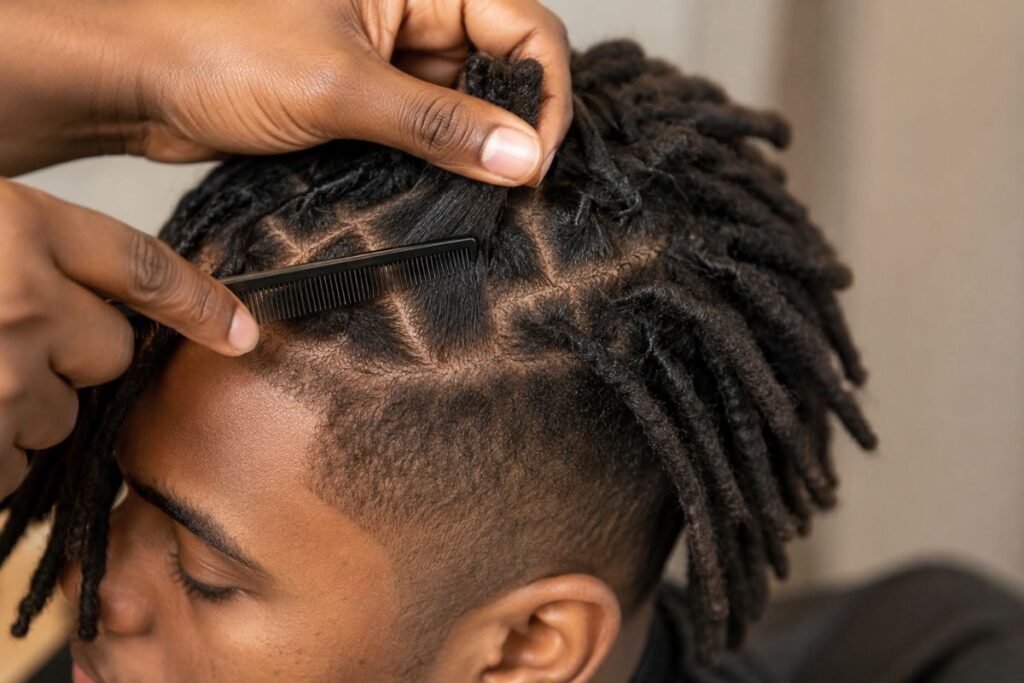
Backcombing is the most common starting method for straight or wavy hair. Take a small section and hold it away from the head. Put a fine-tooth comb in about an inch from the scalp and push it toward the roots. Repeat this a little further out along the strand each time, until the section becomes a dense, knotted rope. Small, loose rubber bands at the root and tip can hold each new lock in place while it settles. The knots keep tightening over the following months as the hair is washed and handled.
Twist and rip, also called twist and pull, uses your hands instead of a comb. Split a section into two halves and pull them apart firmly, then gather the section back together, split it again and pull. Work from the root toward the ends so the hair knots on itself along its full length.
Palm rolling means rolling a lock back and forth between flat palms. It shapes and tightens an existing lock better than it starts one from loose hair. For that reason it is used mostly in maintenance, where it keeps each lock round and helps stray hairs settle into it.
Sectioning and How Long the Process Takes
Step 1: Grow your hair to at least four to six inches before starting. Shorter hair makes early sectioning difficult.
Step 2: Deep cleanse your hair with a clarifying shampoo. This removes product buildup. That buildup can prevent proper locking.
Step 3: Section your hair into your desired pattern. A grid pattern gives you the most uniform result.
Step 4: Apply your chosen locking method to each section individually. Work through your whole head systematically.
Step 5: Wait. Real dreadlocks take several months to fully lock and mature. Some people wait a year or more for a fully mature result.
Why Hair Actually Locks: The Real Mechanism
Dreadlocks form when nearby hairs tangle and pack together into a single rope. Every locking method above is a way to start that tangle on purpose. Hair is a keratin fibre covered by a cuticle of overlapping scales. The working explanation is that backcombing, twisting and repeated rubbing roughen that surface, so strands catch on each other instead of sliding apart.
Dermatology case reports state that the exact mechanism of hair matting is still unknown. They compare it to the felting of wool, where rubbing and pressure pack fibres into a dense mass. They also link it to friction that splits and wears down the hair shaft. So the felting idea is the best explanation we have. It comes from clinical case reports, though, not from controlled studies of deliberately grown dreadlocks.
Viking Dreads for Fine or Thin Hair
Fine or thin hair benefits from a different approach. That doesn’t mean this style is out of reach, though.
Why Fine Hair Needs a Different Approach
Fine hair has a smaller strand diameter, and thin hair has fewer strands in each section, so every lock starts with less hair to tangle. Sections cut at a standard size can take longer to knot. They may also look narrow or sparse once they shrink and tighten.
The usual answer is to change the sectioning rather than give up on the style. Larger sections give each lock more hair to work with. The American Academy of Dermatology also recommends thicker, shorter locs to lower the risk of hair loss from pulling. Long, heavy locks pull harder on the roots. That advice matters even more when the hair on top is already thin.
Reusing Trimmed Hair to Add Volume Where It’s Thin
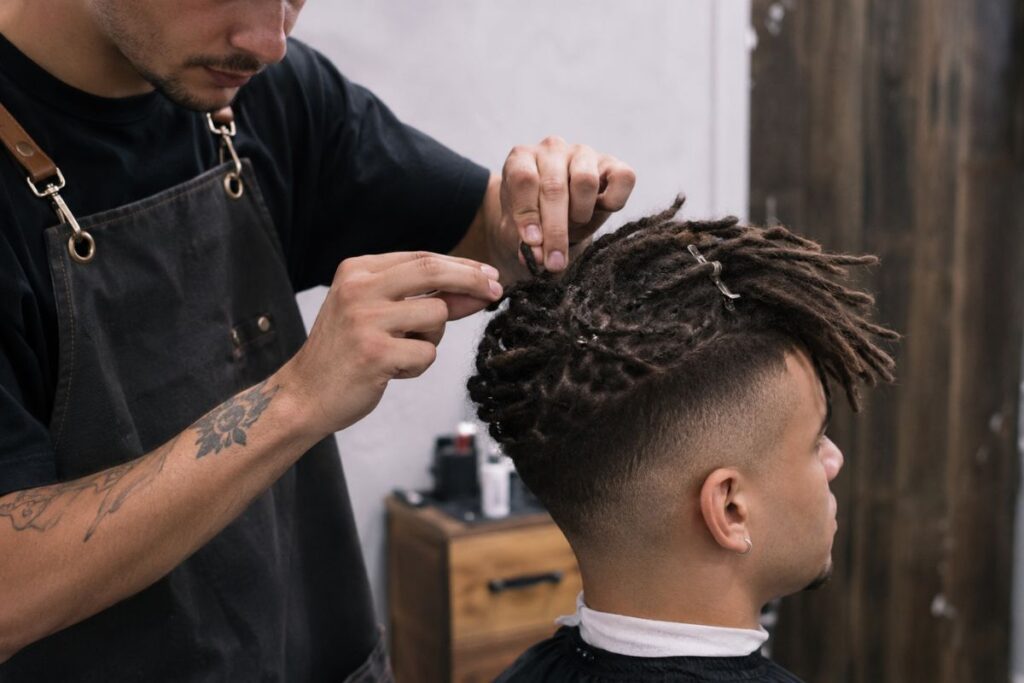
If the hair on the sides is thick but the top is fine, the hair cut away from the sides can be kept instead of thrown out. Loose hair, whether trimmed from your own head or saved from shedding, can be worked into a thin lock with a small crochet hook to bulk it out. Because it is your own hair, it usually matches the colour and texture of the top better than bought hair would. This helps the finished locks look more even in thickness across the head.
The method has limits. Added hair is not attached to a follicle, so it will not grow, and it adds weight that the roots have to carry. Heavy crocheting near the base of a lock can also stress hair that is already thin. It works best for evening out a few weak locks, not for building the whole top from borrowed hair.
Faux Locs: The Temporary Viking Dreads Alternative
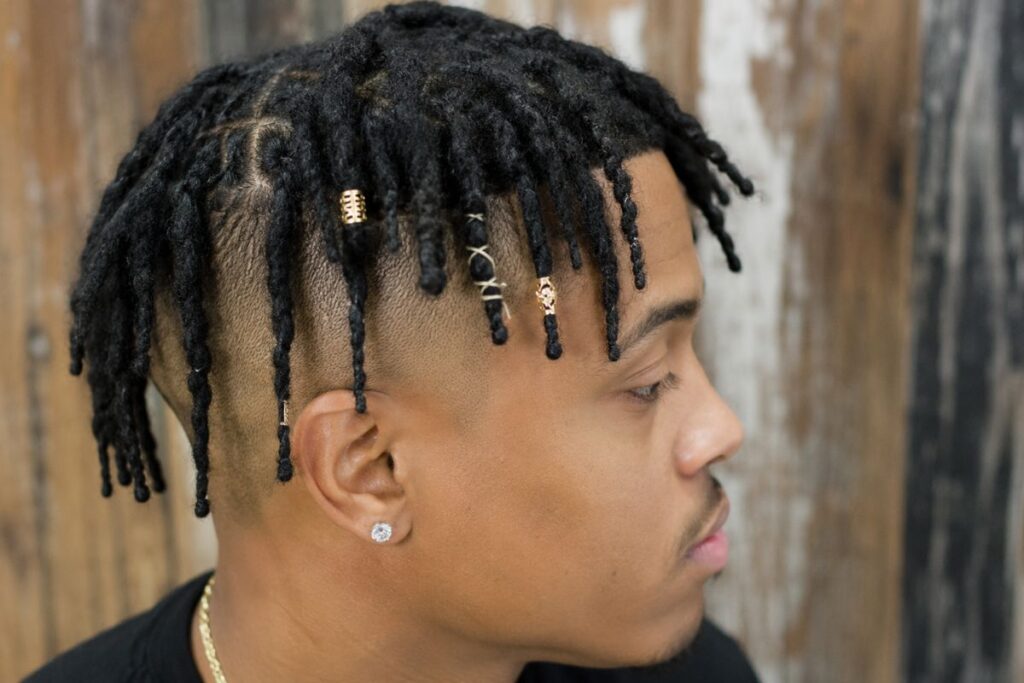
Faux locs let you try the Viking dreads look without growing real dreadlocks, and they come out once you are finished with the style.
How Faux Locs Work and How Long They Last
Faux locs are lock-shaped extensions added to your own hair rather than locks formed from it. They can be made from synthetic braiding fibre or from human hair. They are usually attached in one of three ways: wrapped around a small braid of your own hair, crocheted in, or, for double-ended locs, looped through a section and secured. Viking-themed sets are often decorated with beads or rune-style cuffs. The price depends mainly on length, the number of locks, and whether the fibre is synthetic or human hair.
Most installations are worn for a few weeks to a couple of months before they are taken out or redone. The American Academy of Dermatology says tight locs and hair extensions can cause traction alopecia, a type of hair loss from constant pulling. It advises wearing braided styles for no longer than six to eight weeks. Pain, stinging or tight, raised patches of scalp after installation mean the locs are pulling too hard.
When Temporary Makes More Sense Than Real Dreadlocks
Faux locs suit short-term plans: a costume event, a themed photo shoot, or a trial run to see how dreads look on you before you spend months growing real ones. They also make sense if your job or daily routine can’t handle the frizzy, uneven stage real locks go through while they form.
Real dreadlocks are the better choice when you want the style long term and are prepared for that slow settling period. Undoing them later is possible but slow, and many people end up cutting them out instead.
| Option | Time Commitment | Reversible | Best For |
| Real Dreadlocks | Several months to fully mature | Hard to undo; combing out is slow, so many people cut them | A long-term style commitment |
| Faux Locs (Temporary) | Installed in one session | Yes, removable anytime | Events, testing the look, short-term wear |
Maintaining Your Viking Dreads
Real dreadlocks need ongoing maintenance to stay healthy and hold their shape. This does not stop once the initial locking process finishes.
Washing and Root Maintenance
Wash your dreadlocks regularly using a residue free shampoo. Regular conditioner can prevent proper locking. For that reason, many people avoid it while their locks are still forming, when slippery, freshly conditioned hair struggles to hold a knot. As your hair grows, the roots need attention too. Palm rolling helps maintain new growth at the base of each lock. A crochet hook works for this too.
The Backward Braiding Trick for Extra Volume
Does your finished style look flatter than you want? Try gathering a few dreads at a time and braiding them back from the hairline toward the crown instead of letting them hang. Keep the braid loose near the scalp so it does not pull. This technique adds the illusion of extra volume. This helps especially if your hair started out on the finer side.
Pairing Dreads with an Undercut or Shaved Sides
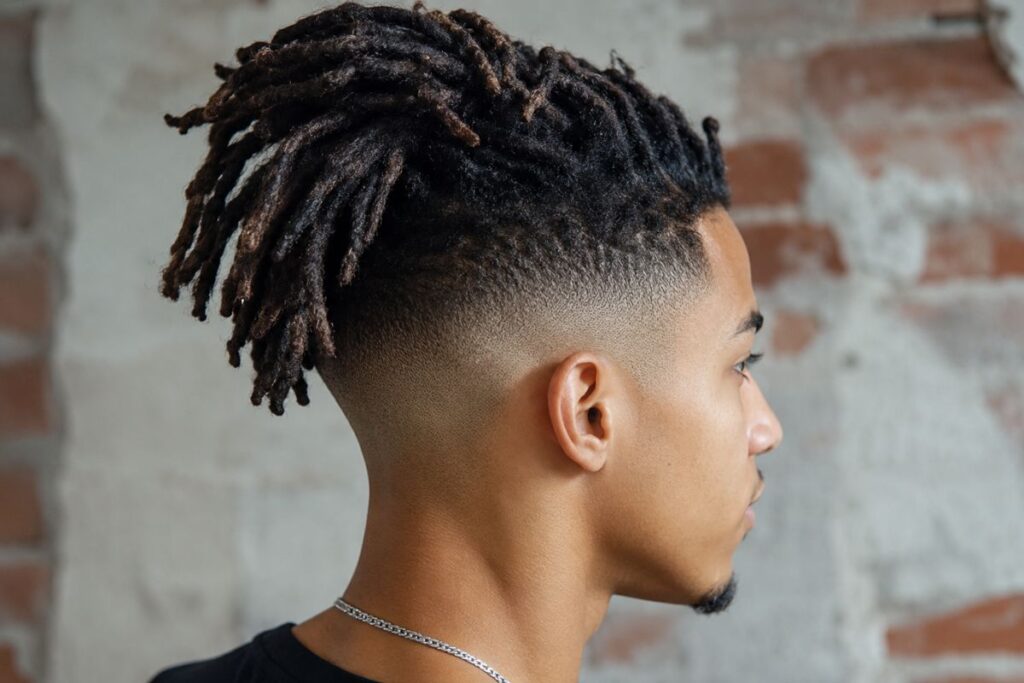
Dreads paired with shaved sides is the defining combination behind the modern Viking dreads look. The contrast between the two textures does most of the visual work.
Which Shaved Styles Work Best with Dreads on Top
An undercut is the simplest match: the sides and back are clipped to one short, even length, so the dreads on top stand out clearly against them. A skin fade pushes that contrast further by blending the sides down to bare skin, although it needs regular touch-ups to stay crisp. For a more dramatic shape, a Viking-style mohawk keeps a single strip of dreads down the centre of the head and shaves the rest close. Whichever cut you choose, keeping the sides tight and freshly cut is what makes the dreads look intentional rather than overgrown.
Frequently Asked Questions
Did real Vikings have dreadlocks?
No direct archaeological evidence confirms this. A medieval English chronicle describes Danes in England combing their hair every day, and combs are common finds at Viking-age sites. This would have prevented natural dreadlocks from forming.
How do you get Viking dreads?
Grow your hair to at least four to six inches. Then use a locking method like backcombing, twist and rip, or palm rolling. The process takes several months to fully mature.
What is the difference between Viking dreads and regular dreadlocks?
Viking dreads specifically pair dreadlocked hair with shaved or faded sides. Regular dreadlocks can be worn with any side length or style. No specific pairing is required.
How long does it take to grow Viking dreads?
You need at least four to six inches of hair to begin the locking process. Full maturity typically takes several months. Some people wait a year or more for a fully settled result.
Can you do Viking dreads without committing to real dreadlocks?
Yes, faux locs offer a temporary alternative. These are pre-made or hand-wrapped extensions. They attach to your hair and you can remove them whenever you want.
Is the Viking dreads look historically accurate?
Not directly. The evidence that does exist, from a medieval chronicle to the many combs found at Viking-age sites, points to regularly combed hair. No evidence confirms Vikings wore true dreadlocks, though. The look draws more from modern television and film than from actual history.
Can Viking dreads or faux locs cause hair loss?
They can if they pull too hard for too long. The American Academy of Dermatology says locs and hair extensions can lead to traction alopecia, a type of hair loss, when they are too tight. Thicker, shorter locks put less strain on the roots. Pain, stinging, or tight, raised patches of scalp are signs that the style should be loosened or taken out.
I’ve started growing my hair for a Viking dreads and undercut style, but the top of my hair is really fine and thin. What should I do differently?
Use larger sections on top, and consider working hair trimmed from the sides into the thinner locks with a crochet hook to add volume. The added hair will not grow, so this works best for evening out a few thin locks rather than rebuilding the whole top. It keeps the finished look uniform instead of sparse.
Choosing Your Route to Viking Dreads
How long you want the look decides most of what comes next. For a single event or a few weeks of wear, faux locs give you the full look with nothing to grow out. Just make sure they are not put in so tight that they pull at the roots. For a style you plan to keep through the next year or longer, real locks are worth the wait. That route starts with growing four to six inches of hair and choosing a section size that suits how thick your hair is. Then expect a messy few months before the locks settle.
Either way, the shaved or faded sides are what turn ordinary dreadlocks into the Viking version. The Norse label comes from the screen rather than from history, which is worth knowing but no reason to skip a cut you like.



One Comment