Flaxseed oil benefits for hair include reducing breakage, calming scalp inflammation, adding moisture and improving shine. It delivers omega-3 fatty acids, antioxidants, and vitamins to your hair and scalp. These nutrients feed your follicles and smooth the cuticle. They also fight the inflammation that causes thinning and shedding over time.
If you have dry, damaged, or frizzy hair, flaxseed oil is one of the most well researched natural options available right now. It has been popular in the US natural hair community for years. Women use it for curl definition, scalp health, and everyday moisture.
In this guide you will learn what makes flaxseed oil work, all nine benefits with real explanations, whether applying it or eating it works better, how to use it the right way, how it stacks up against castor oil, and how to make your own flaxseed gel at home.
✔ Key Takeaways
- Flaxseed oil is one of the most plentiful plant-based sources of omega-3 fatty acids for the health of the hair and scalp.
- When applied to hair, it provides instant moisture and frizz control.
- Eating it supports long term hair growth from inside the body.
- Curly and coily hair types benefit the most from regular use.
- Store it in a cool, dark place and use it within three to six months.
What Is Flaxseed Oil and Why Is It Good for Hair?
Flaxseed oil comes from the seeds of the flax plant. Its scientific name is Linum usitatissimum. It is one of the richest plant based sources of alpha linolenic acid, a type of omega-3 fatty acid your body cannot make on its own.
Alpha linolenic acid represents about 39-60% of all fatty acids in flaxseed oil. According to Nowak and Jeziorek in the European Journal of Medical Research, this makes flaxseed oil the richest known plant based source of this compound, surpassing fish oil, soybean oil and corn oil. That concentration is what makes it genuinely useful for hair and scalp health.
Five Compounds in Flaxseed Oil That Benefit Your Hair
Each compound in flaxseed oil does a specific job on your hair and scalp.
Alpha-linolenic acid (ALA) reduces inflammation in your scalp. Less inflammation means your follicles stay healthier for longer. It also stimulates blood flow in your scalp. As more blood flows, more nutrients are delivered to each follicle.
Lignans are antioxidants. Flaxseed is rich in lignans, found in very few plant foods. They protect your follicles from damage caused by UV exposure, pollution and heat styling.
Vitamin E helps to enhance blood circulation to your scalp. It fights free radical damage at the root level. This supports more consistent and stronger hair growth.
Vitamin B complex helps your body produce keratin. Keratin is the protein that each hair strand is made from. Higher B vitamin intake means stronger and more flexible hair.
Protein and selenium improve hair elasticity. Good elasticity means your hair bends without snapping. This reduces breakage during brushing and detangling.
Why Flaxseed Oil Has Been Around for Centuries
Flaxseed is not new. Historical records show Charlemagne passed a law in 700 AD. He required people across his empire to eat flaxseed because of its health properties. Hippocrates used it as a moisturizer around 400 BC. In the US, flaxseed oil became widely popular in the natural hair community around 2015. Women began sharing DIY gel recipes online. They saw real results from using it on their curls and scalp.
9 Flaxseed Oil Benefits for Hair in 2026
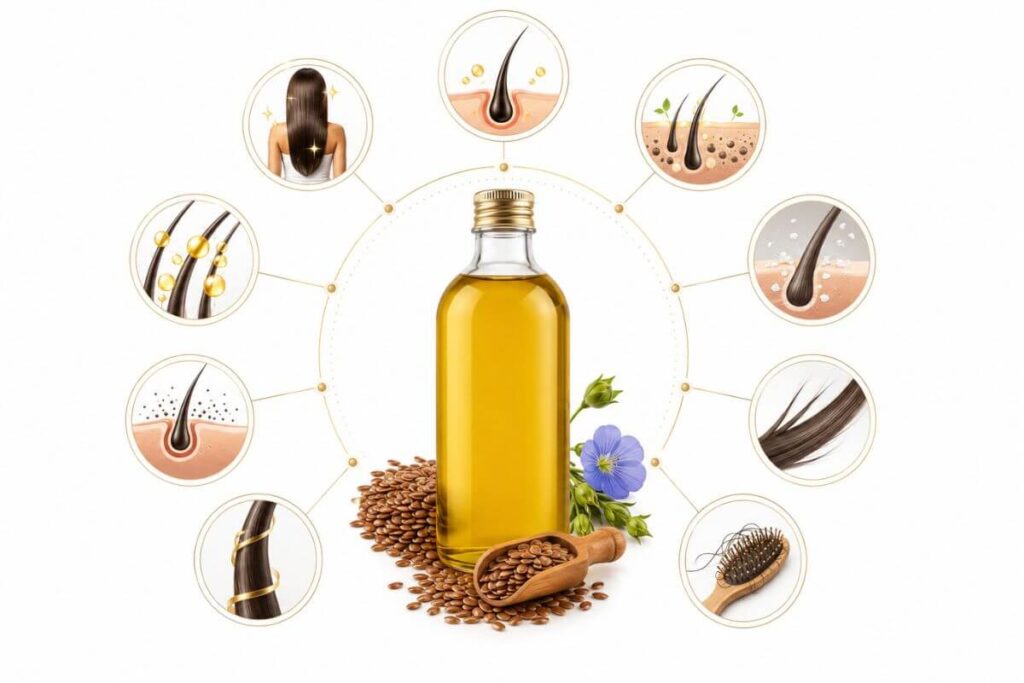
Flaxseed oil offers nine research backed benefits. These cover everything from your scalp to the ends of your hair.
1. It supports hair growth by calming follicle inflammation
ALA reduces the scalp inflammation that cuts blood flow to your follicles. Better blood flow helps follicles stay active longer. Active follicles produce stronger hair. A 2022 review on ALA and scalp health confirmed that omega-3 fatty acids play a meaningful role in the hair growth phase.
2. It prevents split ends
Flaxseed oil coats your hair cuticle with fatty acids. This layer holds moisture inside the hair shaft. Moisture makes hair flexible rather than dry and brittle. Dry and brittle hair breaks and splits.
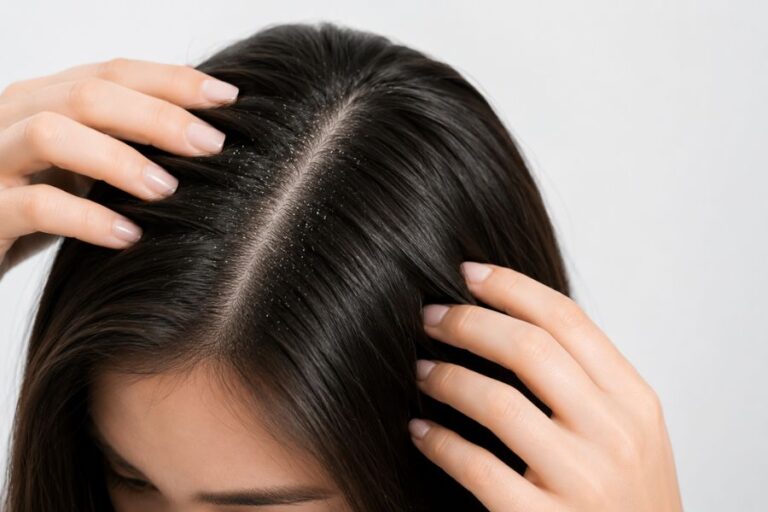
3. It reduces dandruff and scalp itch
The fatty acids in flaxseed oil soothe scalp irritation. Regular scalp massage with the oil calms dryness and reduces flaking over time. The American Academy of Dermatology recommends gentle scalp care routines that avoid irritating the scalp further, and anti-inflammatory oils fit naturally into that guidance.
4. It reduces hair shedding
Research in the International Journal of Research in Pharmacy and Chemistry found that compounds in flaxseed oil nourish hair follicles. When your follicle environment improves, fewer hairs enter the shedding phase early.
5. It may slow premature greying
Free radical damage on the scalp is linked to early greying. Flaxseed oil contains Vitamin E and lignans. These antioxidants protect the scalp cells that produce your hair colour. Regular use may slow the greying process down.
6. It reduces frizz and improves curl shape
Flaxseed oil smooths the cuticle surface. A smooth cuticle stops humidity from lifting the hair and creating frizz. For curly hair this means more defined and bouncier curls.
7. It improves hair elasticity
According to a review published in the journal Food Research International by Yang et al., topical application of flaxseed oil has been shown to increase hair width and improve elasticity, reducing breakage during mechanical stress such as brushing and detangling.
8. It adds shine without greasiness
Flaxseed oil is much lighter than castor oil or coconut oil. It adds shine by coating the shaft smoothly. Will not leave a heavy or greasy film. Even fine hair can handle it with a small amount.
9. It improves hair texture over time
Many women in the US natural hair community report softer and more manageable hair after four to six weeks of regular use. Consistent application protects the hair shaft surface by keeping it sealed and moisturised.
Topical vs Dietary Flaxseed Oil: Which Works Better for Your Hair?
This is the question most articles skip. The answer matters because topical and dietary flaxseed oil do different things entirely.

What Happens When You Apply It to Your Hair
Applying flaxseed oil to your hair works on the surface. It seals the cuticle and locks in moisture. It also blocks humidity from lifting the hair. The results are immediate. Your hair looks shinier and feels less frizzy from the first use.
The oil cannot reach your follicle from the outside. So topical use does not fix the root cause of hair loss or slow growth. Use it for moisture, shine, frizz control and curl definition.
What Happens When You Eat It
Eating flaxseed oil sends ALA into your bloodstream. Your body converts some of it into EPA and DHA. These are longer chain omega-3 fatty acids. They reduce inflammation throughout your body, including your scalp. This is what addresses hair loss at the actual source.
Results from eating flaxseed take time. Most people notice a difference after eight to twelve weeks of consistent use. Use the dietary route for long term growth and to reduce shedding from scalp inflammation.
Use Both Together for the Best Results
Topical flaxseed oil helps the hair you already have. Dietary flaxseed improves the quality of the hair still growing inside your follicle. The two approaches work together. One gives you results you can see straight away. The other builds over time.
How to Use Flaxseed Oil for Hair Growth and Moisture
How you use flaxseed oil depends on what result you want.
As a Hot Oil Treatment
Step 1: Measure the right amount. Apply a small drop of it to short hair. Use a dime-sized amount for medium hair. For long and thick hair, use a quarter size amount.
Step 2: Warm the oil. Place the bottle in a bowl of hot water for one to two minutes. Do not microwave it. Heat from a microwave destroys some of the active fatty acids.
Step 3: Divide your hair into four sections. Apply the warmed oil from the middle of each section down to the ends. If your scalp gets oily fast, stay away from the roots.
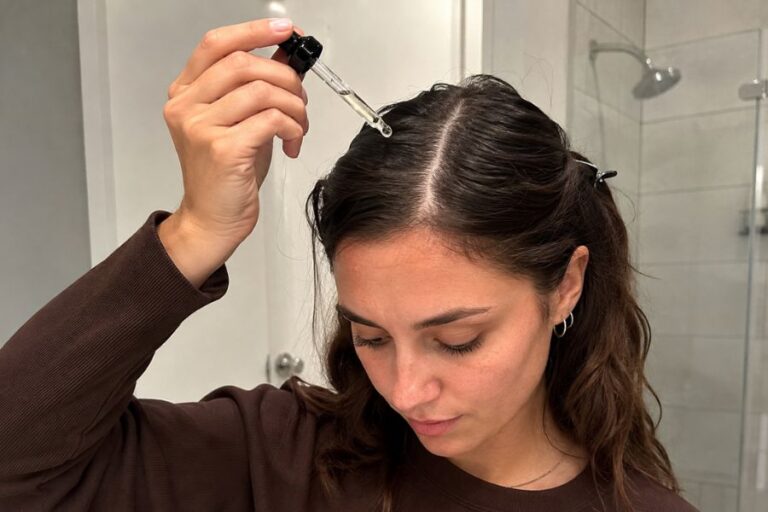
Step 4: Massage any remaining oil into your scalp. Use your fingertips and move them in slow circles. Keep doing this for three to five minutes.
Step 5: Put on a shower cap. Leave the oil on for fifteen to thirty minutes.
Step 6: Rinse well with warm water. Then shampoo and condition as usual.
As a Pre Shampoo Treatment
Apply flaxseed oil to dry hair thirty minutes before you wash it. It protects your hair during shampooing. Shampooing can strip moisture, especially from natural and coily hair. This pre-wash step keeps more moisture locked in during wash day.
As a Leave In Sealant
Use only a fingertip sized amount on damp hair after conditioning. Work it through the mid lengths and ends only. Keep it away from your roots. This seals moisture from your conditioner into the hair shaft. It also reduces frizz as your hair dries. Using too much causes buildup. A tiny amount is enough.
Flaxseed Oil for Natural, Curly, and Coily Hair
Flaxseed oil suits curly and coily hair especially well. These hair types struggle with dryness more than straight hair does.
Your scalp makes a natural oil called sebum. In straight hair, sebum travels down the shaft easily. In curly and coily hair, the bends and coils make that journey much harder. Sebum often cannot reach the ends at all. This leaves curly and coily hair naturally dry, especially at the tips.
Flaxseed oil fills that gap. It is a lightweight external source of fatty acid moisture. You apply it where your scalp cannot reach on its own. It is also much lighter than castor oil or coconut oil. It moisturises without weighing curls down or making them feel heavy and coated.
For type 3 hair loose to medium curls, flaxseed oil works best as a leave in. Apply a small amount to damp hair after washing. It reduces frizz and adds definition without pulling curls down.
For type 4 hair tight coils, use it as a scalp treatment or as the oil step in your LOC or LCO routine. LOC stands for liquid, oil, cream. Adding flaxseed oil as the oil layer seals in moisture from your liquid step. It makes the whole routine more effective.
Flaxseed Oil vs Castor Oil for Hair: Which Should You Choose?
Both oils are popular in the US natural hair community. But they work very differently. If you pick the wrong one for your hair type, you won’t get the results you’re hoping for.
| Feature | Flaxseed Oil | Castor Oil | Best Pick |
| Weight | Light, almost watery | Very thick and sticky | Flaxseed for fine hair |
| Main compound | ALA omega-3 (39 to 60 percent) | Ricinoleic acid (around 90 percent) | Both are unique |
| Best use | Daily moisture, frizz, curl definition | Deep scalp treatment | Depends on your goal |
| Hair growth support | Reduces scalp inflammation | Improves scalp circulation | Both help differently |
| Scalp health | Anti-inflammatory | Antibacterial and antifungal | Goal-dependent |
| Curl definition | Excellent, lightweight hold | Too heavy on its own | Flaxseed wins |
| Shelf life | 3 to 6 months | Up to 2 years | Castor is more stable |
| Best hair types | Fine, curly, coily, colour-treated | Thick, coarse, very dry hair | Hair type dependent |
For fine hair or colour treated hair, pick flaxseed oil. It will not weigh your hair down. For very thick or coarse hair needing intensive scalp treatment, castor oil is a better fit. For type 4 natural hair, use castor oil on your scalp and flaxseed oil on your lengths and ends. This covers both goals at once.
How to Make Flaxseed Hair Gel at Home
Homemade flaxseed gel is one of the most popular DIY hair recipes in the US natural hair community. It gives curls hold and definition without alcohol, flaking or synthetic ingredients.
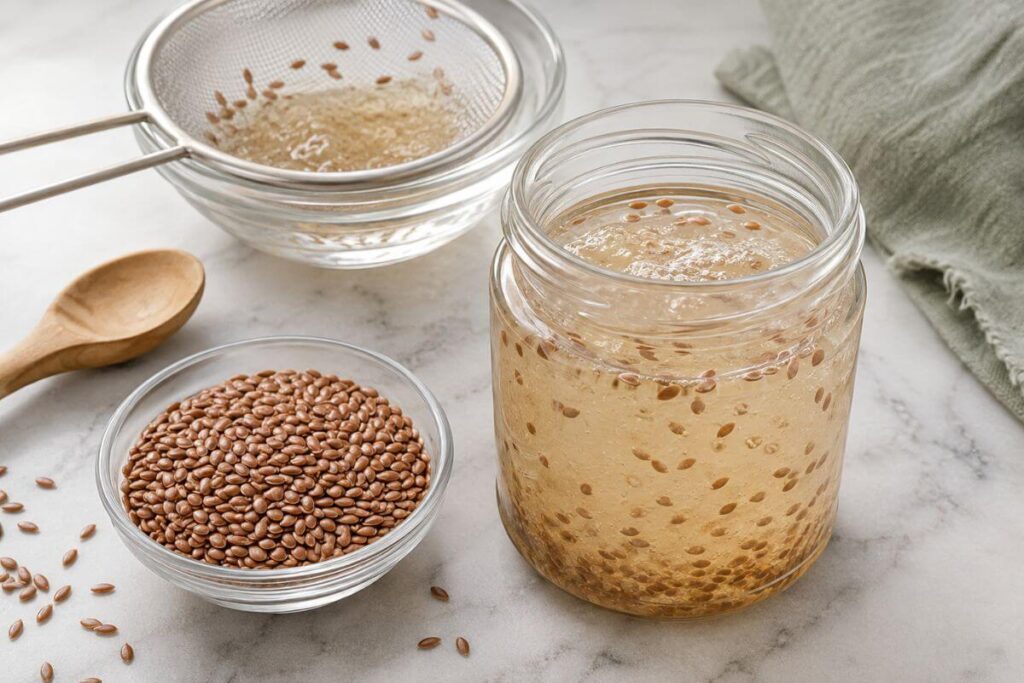
Basic Recipe
What you need: 2 tablespoons of whole flaxseeds, 2 cups of water, a fine mesh strainer and a small jar.
Step 1: Put the flaxseeds and water into a small saucepan. Bring them to a medium boil.
Step 2: Stir continuously while the mixture heats. You will see white foam forming. That is the seeds releasing their gel.
Step 3: Watch the liquid thicken. When it coats the back of a spoon, remove it from the heat straight away. This usually takes four to six minutes from the boil.
Step 4: Strain the gel through your mesh strainer into a jar immediately. Work quickly. The gel sets fast as it cools.
Step 5: Let it cool fully before putting the lid on. Store it in the refrigerator.
The gel keeps for one to two weeks in the fridge. If it smells off before then, throw it out. The high ALA content means it can go rancid faster than store-bought gels.
Add Ins for Different Hair Needs
For extra moisture: stir one teaspoon of aloe vera gel into the cooled gel before using.
For scalp growth support: add one drop of rosemary essential oil per two tablespoons of gel.
For stronger hold on coily hair: mix in half a teaspoon of vegetable glycerin before applying.
Flaxseed Oil Side Effects and Who Should Be Careful
Flaxseed oil is safe for most people. But it does have real side effects worth knowing before you start.
Topical Risks
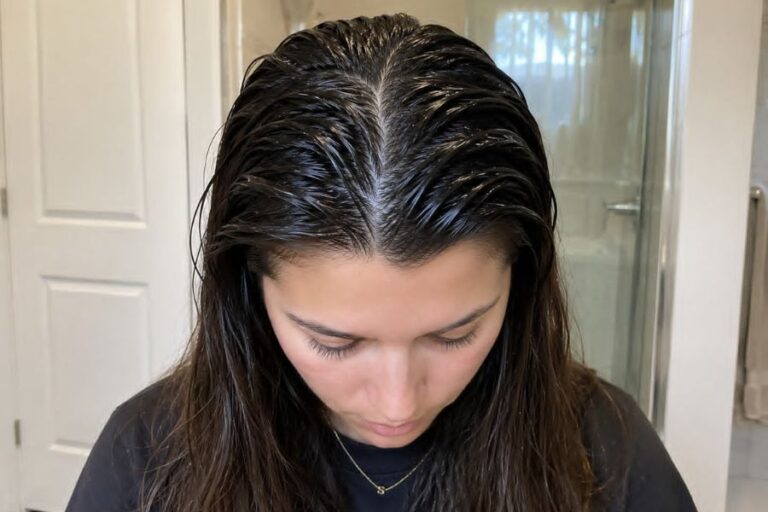
The most common issue is buildup. Using too much leaves a heavy coating that blocks moisture rather than sealing it in. Fine haired women should use the smallest amount possible. Clarify once a month with a chelating or clarifying shampoo. This removes the residue without stripping your natural oils.
Flaxseed oil goes rancid faster than most oils. Its high ALA content makes it oxidise quickly. Rancid oil smells sour or unpleasant instead of mild and fresh. Applying rancid oil to your scalp can cause irritation and itching. Always smell the oil before you use it. Throw out any bottle that has been open for more than six months.
If you’ve never used flaxseed oil before, test it on your skin first. Put a small amount on the inside of your wrist and wait to see how it reacts. Wait twenty four hours before putting it on your scalp. Some people react to seeds in the Linaceae plant family.
Internal Risks
Eating flaxseed oil can cause bloating, gas, or loose stools for some people. It interacts with blood thinners, cholesterol medication, and insulin. Talk to your doctor before adding it to your diet if you take any of these.
Pregnant women should not use flaxseed oil internally without speaking to a doctor first. Flaxseed contains plant compounds called phytoestrogens. These can affect estrogen levels.
Who Needs Extra Care
Women with acne prone or oily skin should avoid leaving flaxseed oil on their hair overnight. It can transfer to your face on the pillow and block pores. Anyone with a known nut or seed allergy should check with a doctor before using any flaxseed product.
Frequently Asked Questions
Can I eat flaxseed for hair growth?
Yes. Eating ground flaxseed or taking flaxseed oil capsules gives your body ALA omega-3 fats. These help lower scalp inflammation from the inside. Most people start to see changes after eight to twelve weeks. Ground flaxseed works better than whole seeds because whole seeds often pass through your body without being digested.
What does flaxseed oil do for natural hair?
For natural, curly, and coily hair, flaxseed oil provides lightweight moisture. It reduces frizz, improves curl definition, and soothes scalp dryness. It does all this without the heaviness of thicker oils like castor or coconut. It works especially well as the oil step in an LOC or LCO moisturising routine.
How long does it take to see results from flaxseed oil on hair?
Topical results like moisture and shine show from the first use. Curl definition improves within the first week. Growth and scalp health benefits from eating flaxseed typically take eight to twelve weeks of daily use to show noticeable changes.
I have fine, colour-treated hair that gets greasy easily. Can I use flaxseed oil without weighing my hair down?
Yes, but use very little. A pea sized amount on your mid lengths and ends is all you need. Keep it away from your roots entirely. Apply it to damp hair after conditioning rather than dry hair. Clarify once a month to stop buildup forming. Fine hair does best with flaxseed oil as a weekly treatment rather than a daily leave in.
My stylist said flaxseed oil can cause buildup on natural hair. Is that true and should I use a clarifying shampoo?
Yes, buildup is real if you use too much or apply it too often. A clarifying shampoo used once or twice a month removes fatty acid residue. It does this without stripping your natural oils completely. This step is recommended for anyone using oils regularly in a natural hair routine. It is especially important if you also use DIY flaxseed gel.
Conclusion
Flaxseed oil benefits for hair are real and backed by research. The key is using it correctly for your hair type and your goal.
Three things to remember. Topical flaxseed oil works on the surface of your hair for moisture and frizz control. Dietary flaxseed oil works inside your body for long term growth. Using both together gives you the most complete benefit. Store it properly, use less than you think you need, and clarify once a month to avoid buildup.
Flaxseed oil has earned its place in the US natural hair community because it works across hair types and does not need a big budget or complicated routine. Find more natural oil guides and hair care tips right here on HairStyleFreek.