
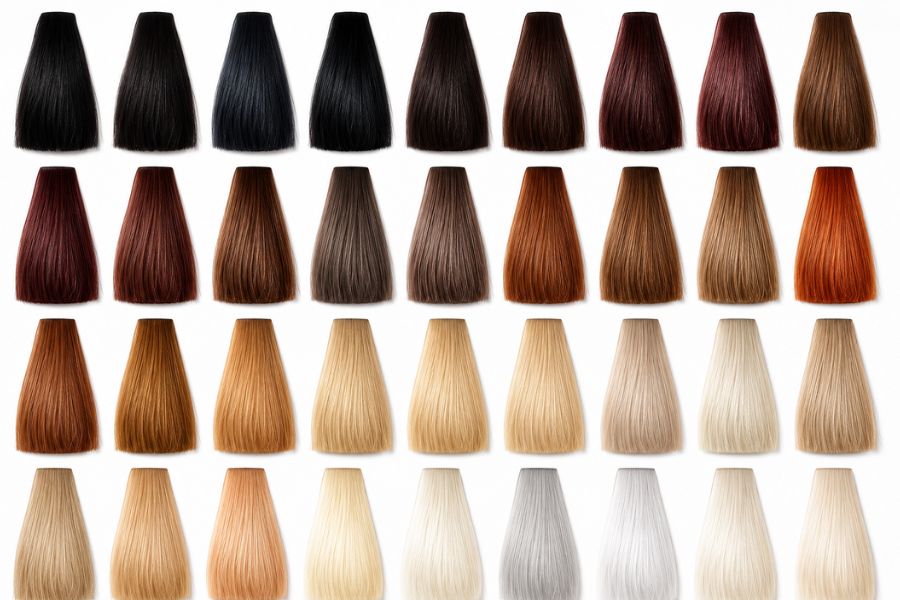
A hair color level chart is a numbered scale from 1 to 10 that measures how light or dark your hair is. Level 1 is the deepest black. Level 10 is the palest platinum blonde. Every professional colorist and every box dye brand in the US uses this same system.
After knowing the hair color level chart, you can decode any box of dye, talk to your stylist and eventually get the color you want rather than the one you are stuck with.
Most color disasters come from one mistake: choosing the wrong level. You picked a shade that looked gorgeous on the box. On your actual hair it turned orange, went flat, or barely showed up. That is a level problem.
This guide covers the full chart, explains tones, maps popular shade names to their levels, and gives you the tools to make a smart color decision every time.
What Is a Hair Color Level Chart and Why Does It Matter?
A hair color level chart is a universal system for measuring hair darkness on a scale of 1 to 10. Level 1 is pure black. Level 10 is the lightest blonde possible. Each number represents a measurable step in the amount of natural pigment your hair contains.
This system will eliminate the guesswork in color. The word “medium brown” can have different meanings to different people. The chart gives you and your colorist a shared language.
Walk into any US salon, say you are going from level 5 to level 8, and your colorist knows exactly which products you need. As of 2026, every major professional brand, including Wella, Redken, Matrix, and L’Oreal Professionnel uses this same 1 to 10 level system.
Hair Color Level Chart: Full Breakdown from Level 1 to 10
The hair color level chart runs from deepest black to lightest platinum. Each level has a distinct depth of pigment inside the hair shaft.
Here is the complete breakdown of every level, its name, the underlying pigment inside it, and the corrective toner needed after lifting.
| Level | Common Name | Underlying Pigment | Corrective Toner Needed |
| 1 | Black | Deep Red | Blue or Green Ash |
| 2 | Darkest Brown | Red | Blue Ash |
| 3 | Dark Brown | Red Orange | Ash or Blue Ash |
| 4 | Medium Brown | Red Orange | Ash |
| 5 | Light Brown | Orange | Ash or Blue Violet |
| 6 | Dark Blonde | Orange Gold | Violet or Ash |
| 7 | Medium Blonde | Gold | Violet |
| 8 | Light Blonde | Yellow Gold | Purple or Violet |
| 9 | Very Light Blonde | Pale Yellow | Purple |
| 10 | Lightest Blonde / Platinum | Pale Yellow | Purple or Blue Toner |
The underlying pigment column is the most important. It shows what color your hair will be if you lighten it without toning. Hair color is produced by two types of melanin: eumelanin, which creates brown and black tones, and pheomelanin, which creates yellow and red tones, according to research on human hair pigmentation published on PubMed. Skipping this knowledge is why so many at-home color jobs end up brassy.
Level 2 is the most common natural black hair color in the US. Levels 5 through 7 cover the widest range of natural shades. Levels 8 through 10 almost always require bleach when starting from any shade darker than level 7.
Popular Hair Color Names at Every Level
Every level on the chart has a popular named shade inside it. Knowing these names helps you ask for exactly what you want at the salon or find the right box at the store.
Level 1 and 2: Black Shades
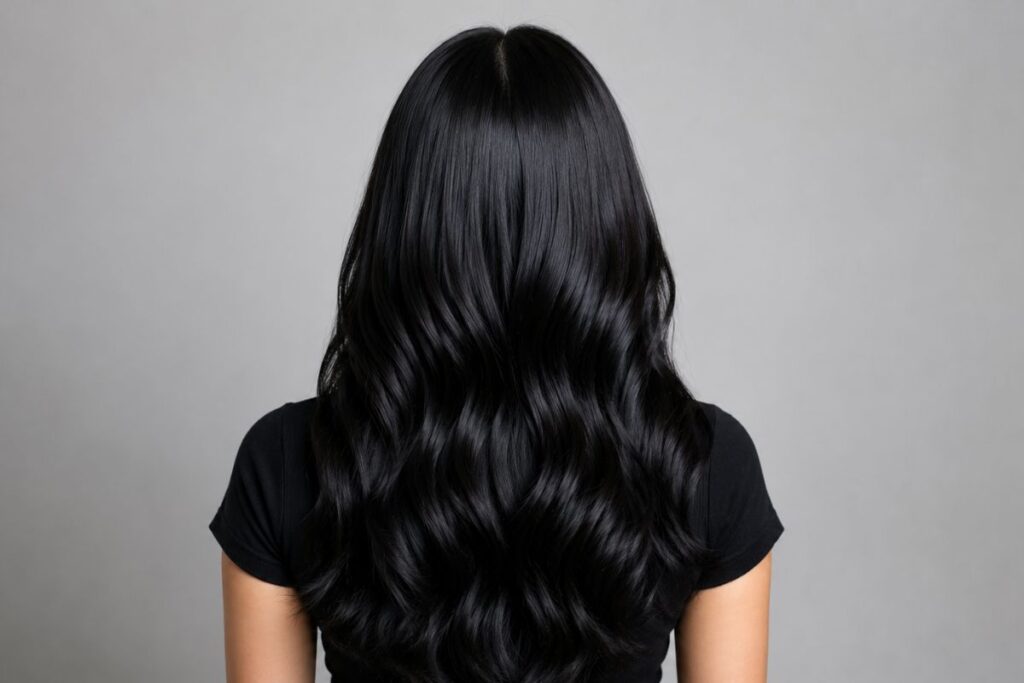
Jet Black is the deepest black with cool blue undertones and a high shine finish. It is perfect for people with cool skin and can create a dramatic Look.
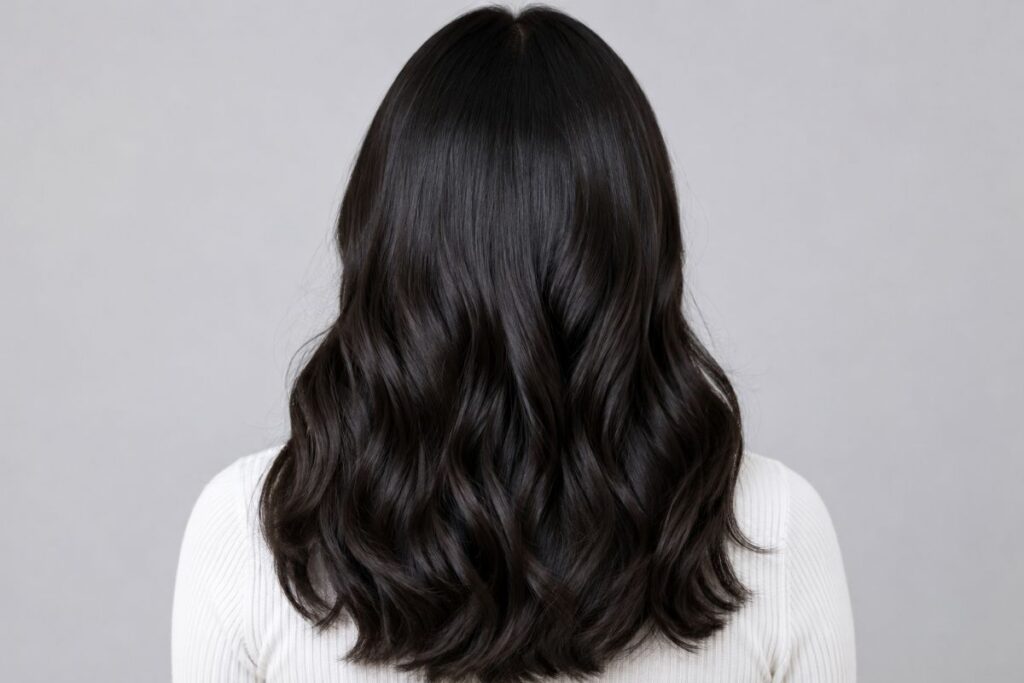
Soft Black is the same black color, but a bit warmer than jet black and works well with a broader spectrum of skin tones. It reads black in most lighting but shows subtle warmth in sunlight.
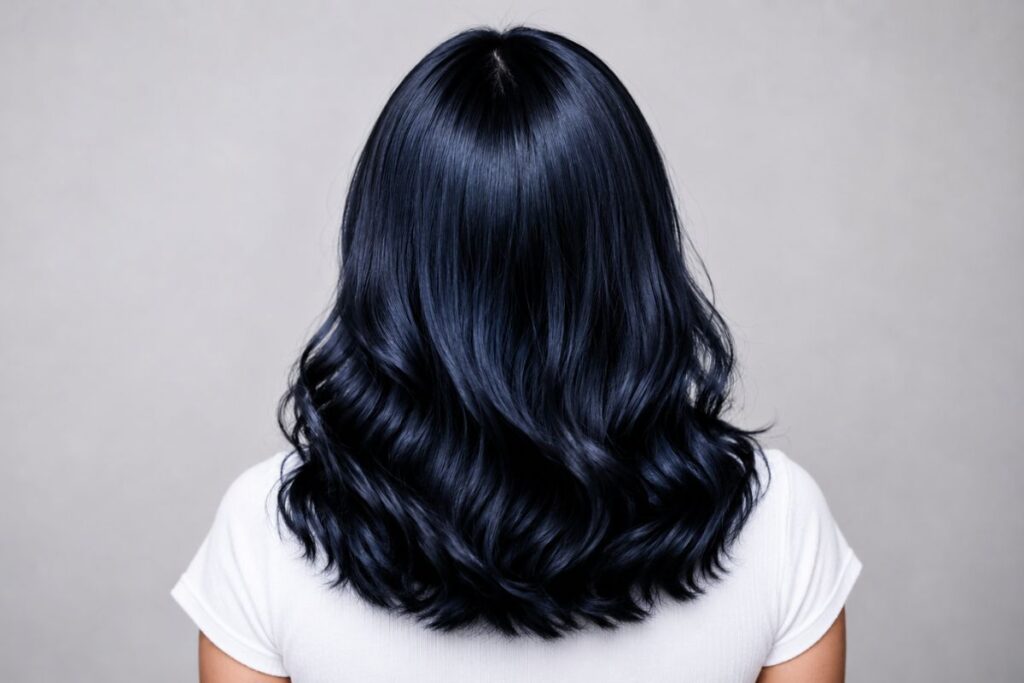
Blue Black has a visible blue sheen that captures light and is jet black. It suits cool skin tones and is particularly striking with natural dark hair.
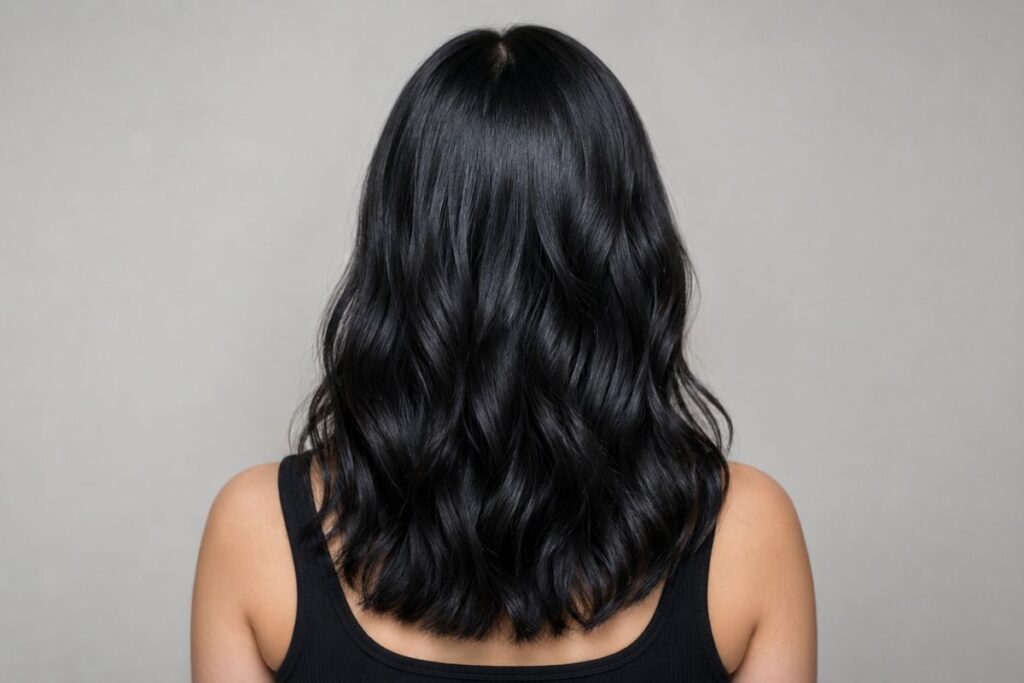
Raven Black is at level 2 and has a deep blue black color that reflects light in dramatic ways. It is slightly softer than jet black and will work with cool and neutral skin tones, providing a glossy, polished look.
Level 3 and 4: Dark Brown Shades
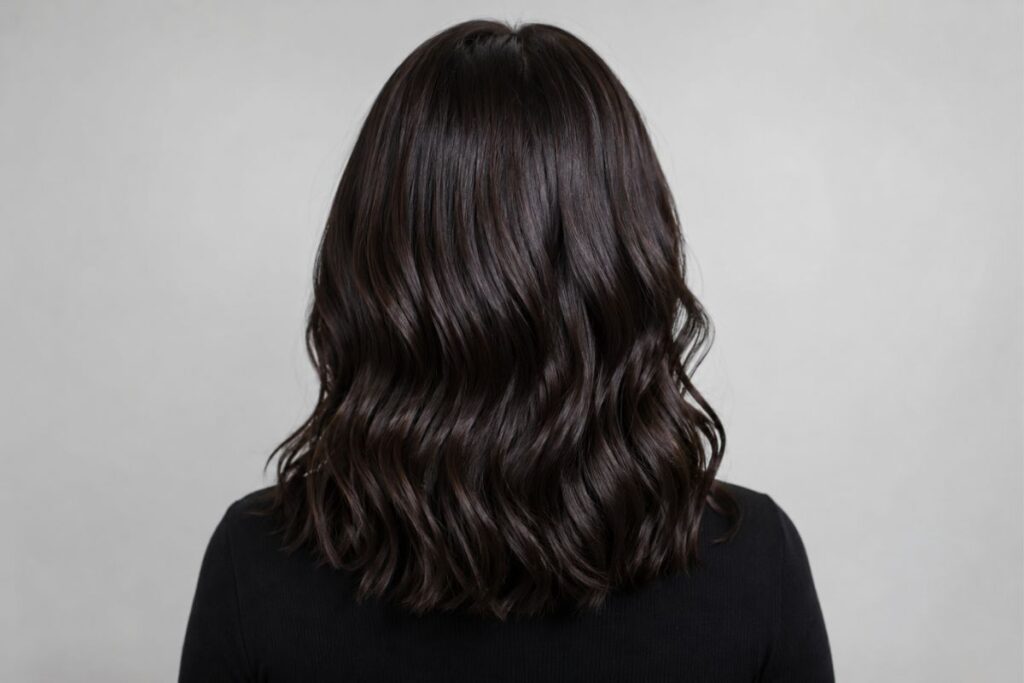
Espresso is the darkest brown before it reaches the true black. It provides rich, shiny locks on warm and neutral skin tones.
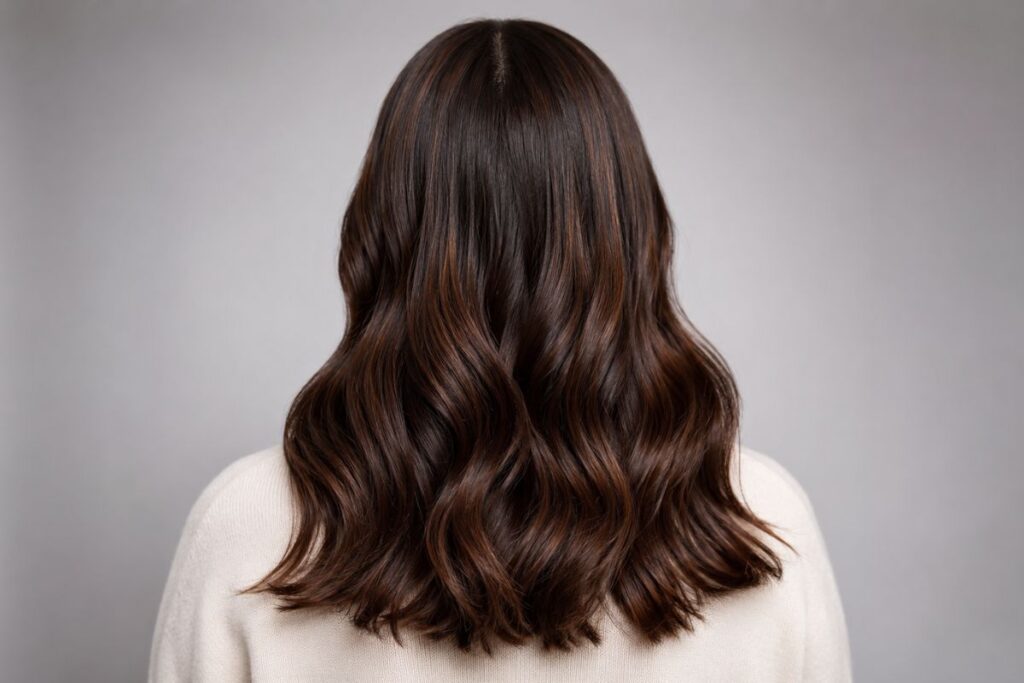
Dark Chocolate is a deep warm brown with reddish undertones. It is one of the most universally flattering shades on the chart and suits almost every skin tone.
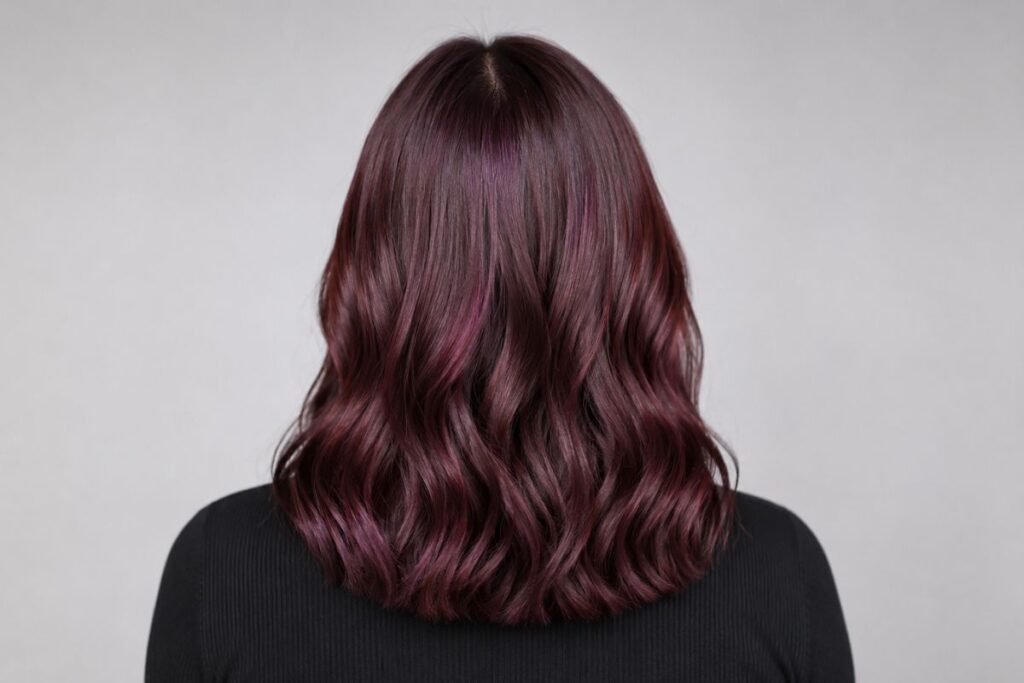
Mahogany is a dark brown tone with a red violet undertone. It works well for warm and olive colored skin tones and adds dimension to hair.
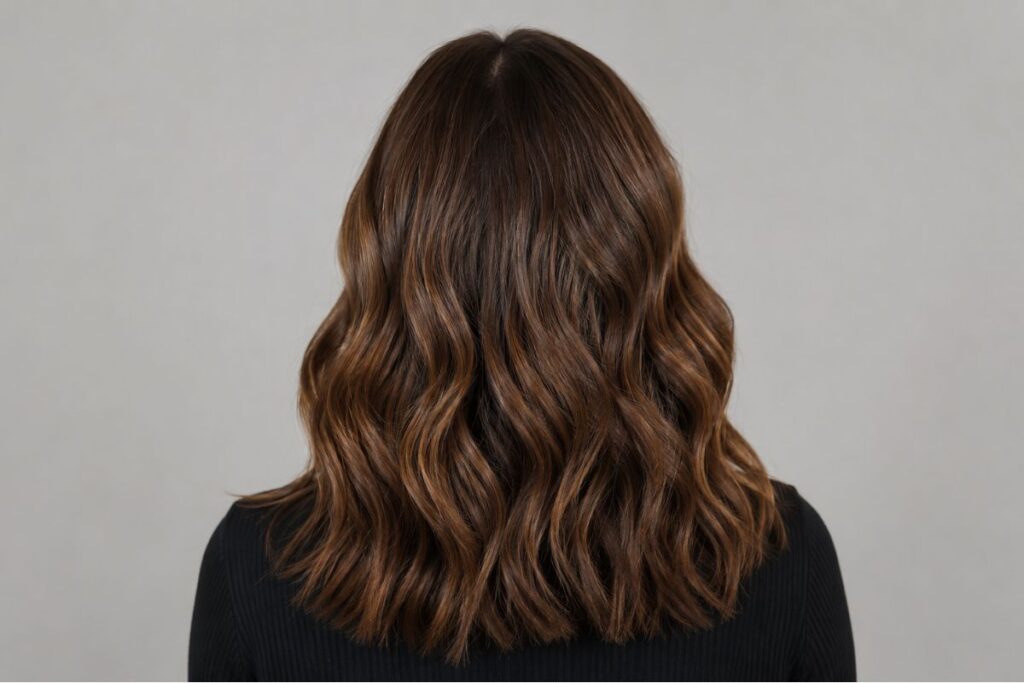
Warm Walnut is a level 4 brown with rich golden brown undertones, making it warmer than dark chocolate. It comes in naturally and is a great look for neutral and warm skin tones.
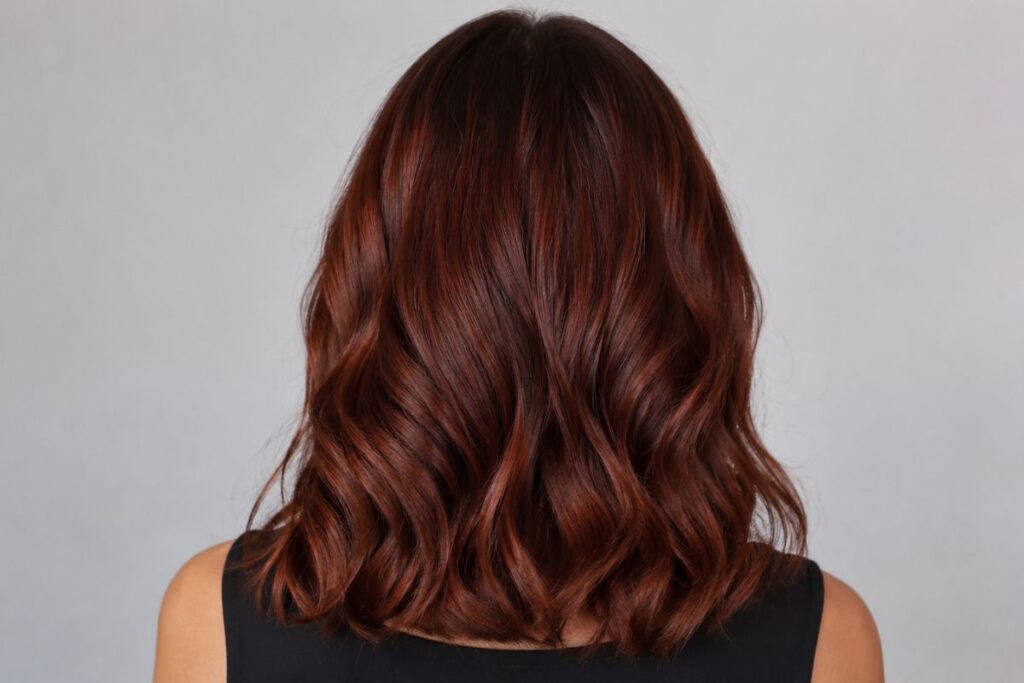
Dark Auburn sits at level 4 with deep red-brown tones that show their warmth most clearly in sunlight. It suits warm skin tones and adds dimension to naturally dark brown hair without requiring a full red commitment.
Level 5: Light Brown Shades
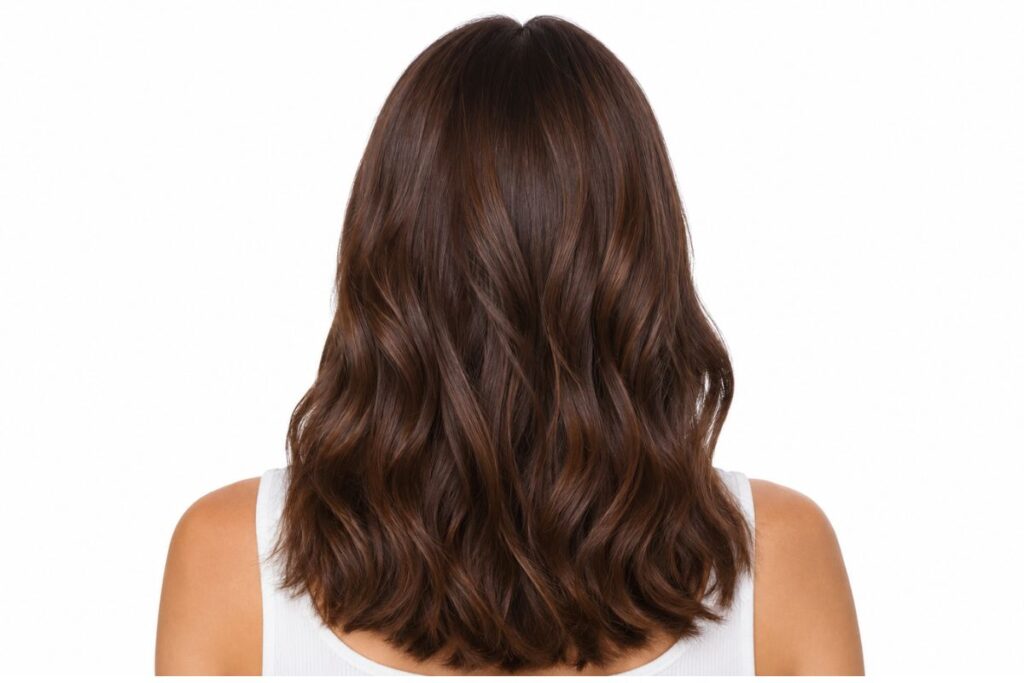
Chestnut is medium brown with warm red tones and one of the most popular natural hair colors in the United States. It grows out gracefully and requires little maintenance.
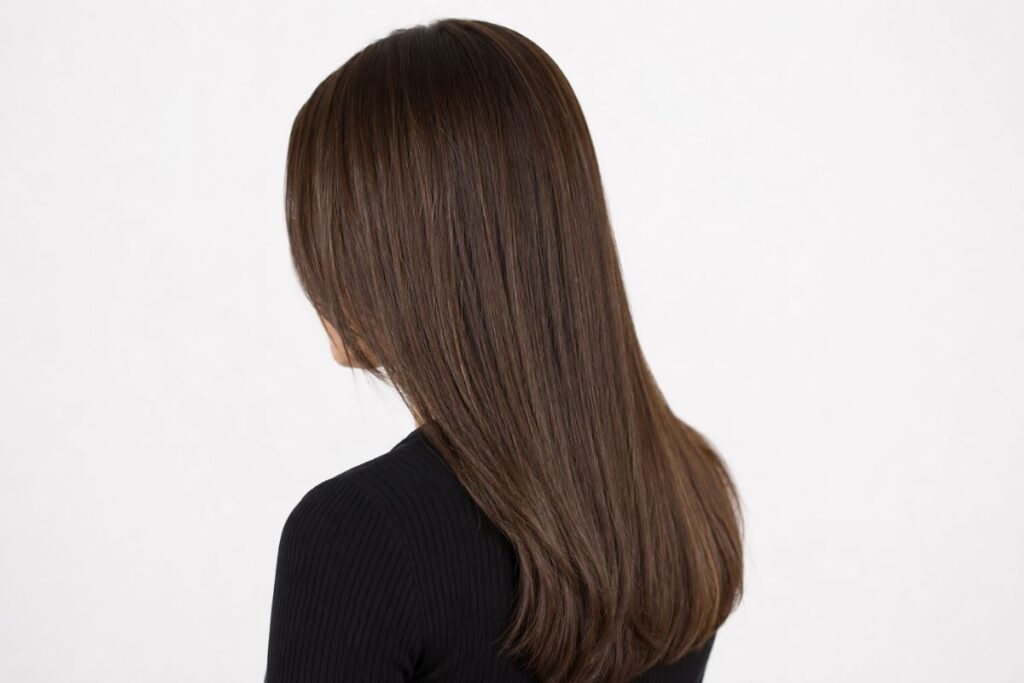
Warm Mocha falls deeper than caramel but lighter than espresso, carrying soft golden tones throughout. Most people choose it as an easy everyday shade because its warmth sits naturally on almost any base color without needing much upkeep.
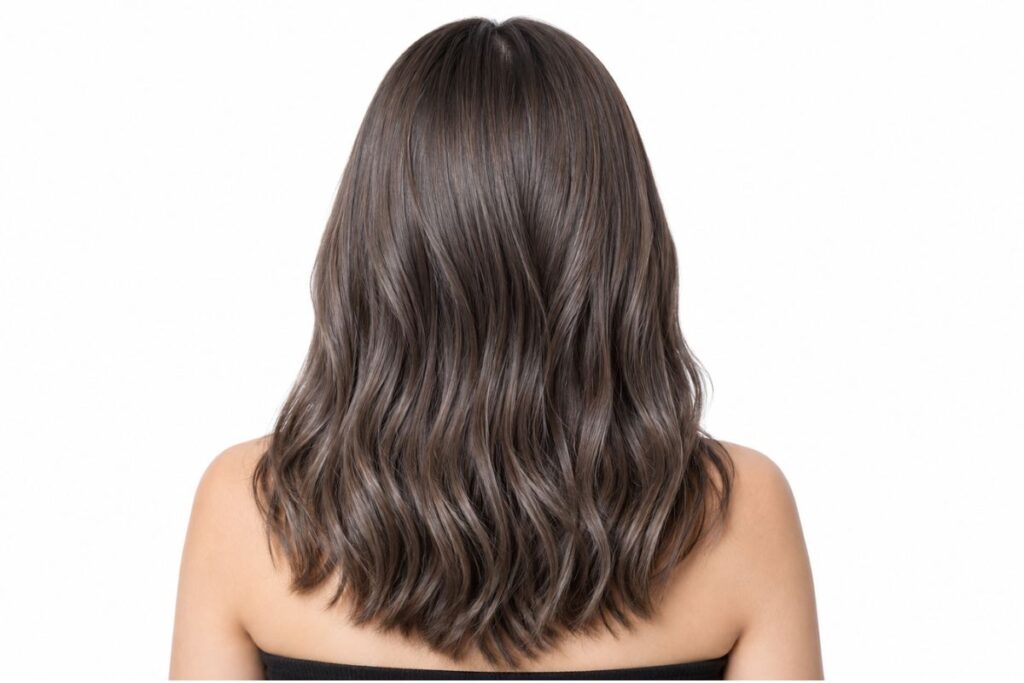
Ash Brown has cool grey or blue undertones, which help to neutralize brassy warmth. It’s a great color option for cool and neutral toned skin and a popular choice for those who prefer a cooler appearance without being blonde.
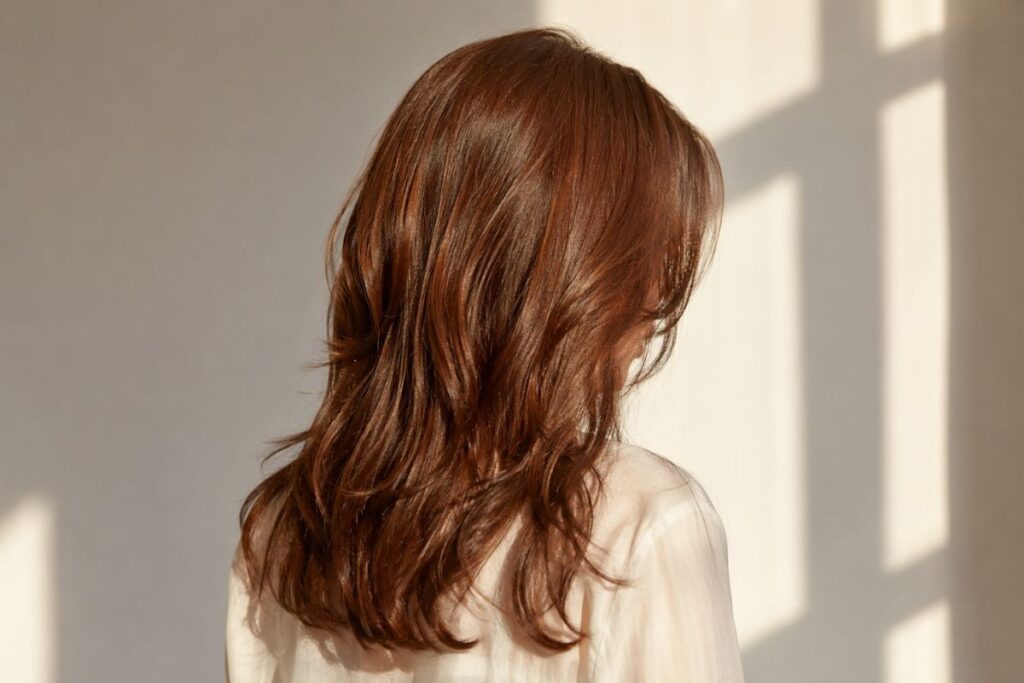
Cinnamon Brown has warm, spiced red brown undertones that add some warmth to the color. Ideal for warm and olive skin tones, it adds warmth without going too dark.
Level 6: Dark Blonde Shades
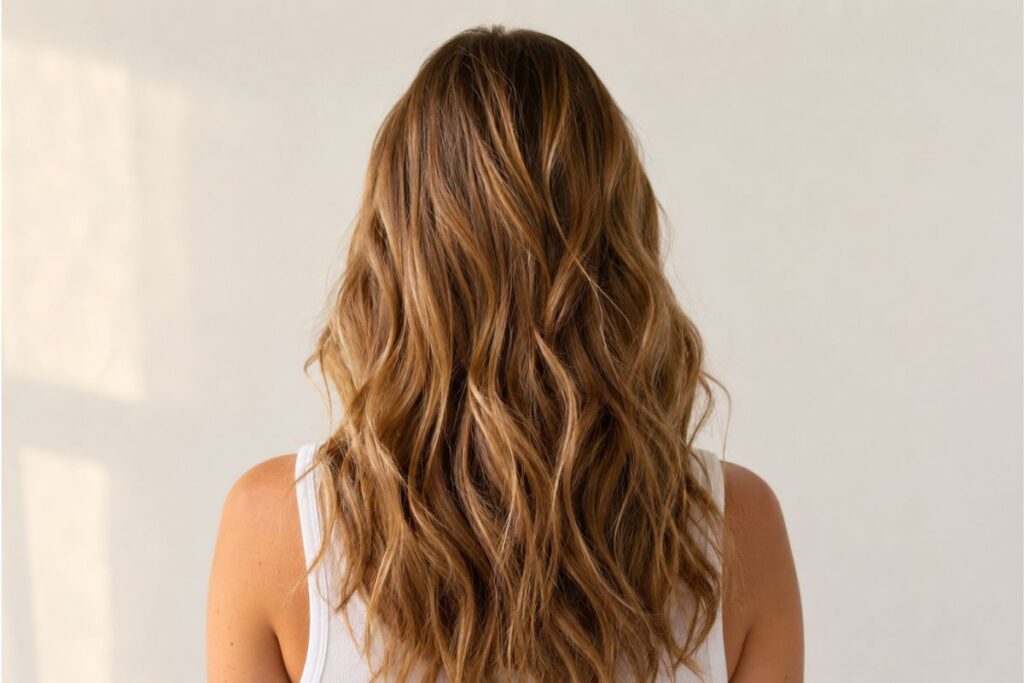
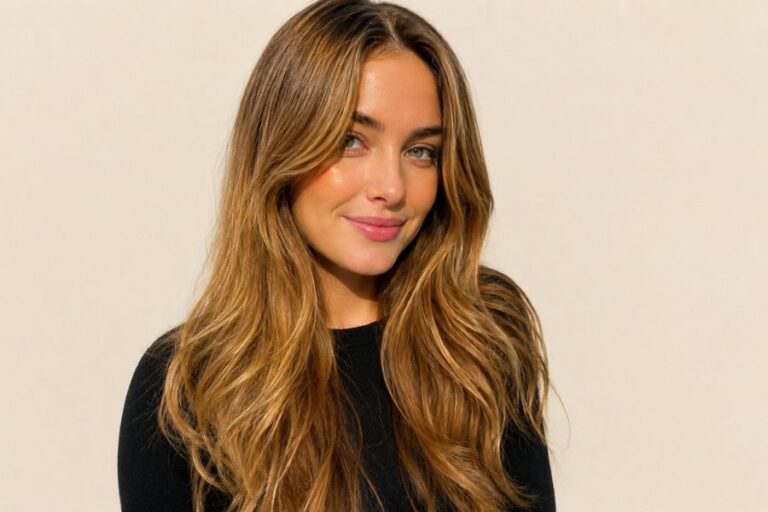
Caramel blonde is a dark blonde with rich golden-brown undertones and one of the most popular balayage shades in the US. It looks most dimensional alongside a darker brown base.
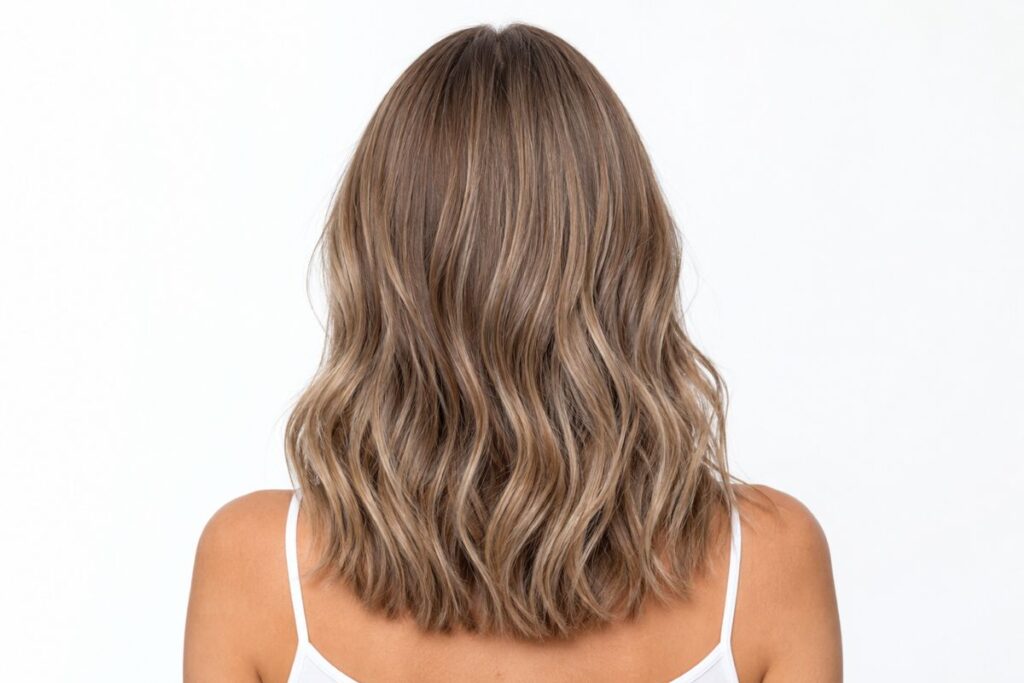
Dirty Blonde reads neither fully blonde nor fully brown. It suits neutral skin and grows out without a harsh line, making it one of the most low maintenance blonde options.
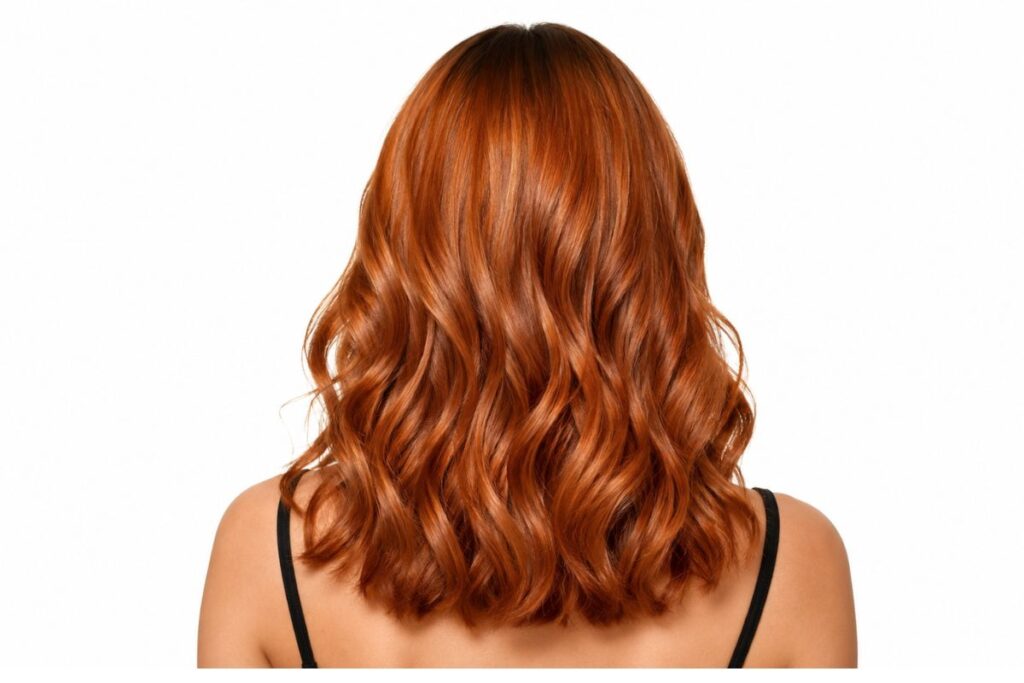
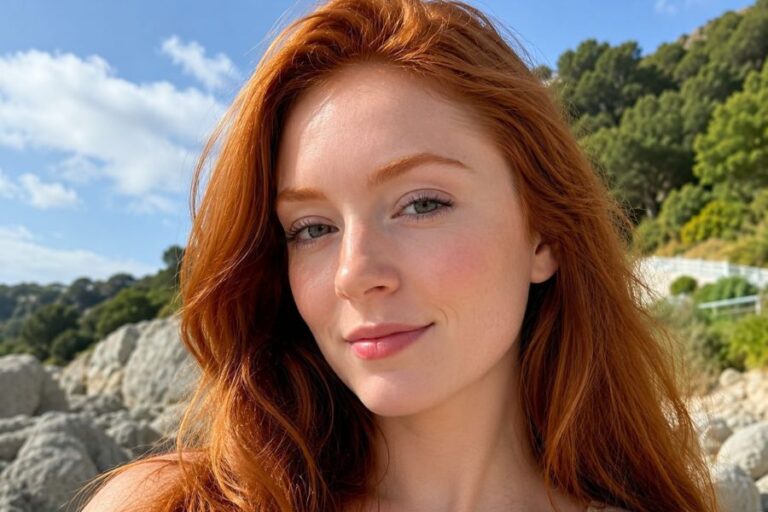
Copper is a bold, dark blonde with vivid red-orange undertones that glows with a fiery glow in sunlight. It suits warm skin tones with golden or peachy undertones.
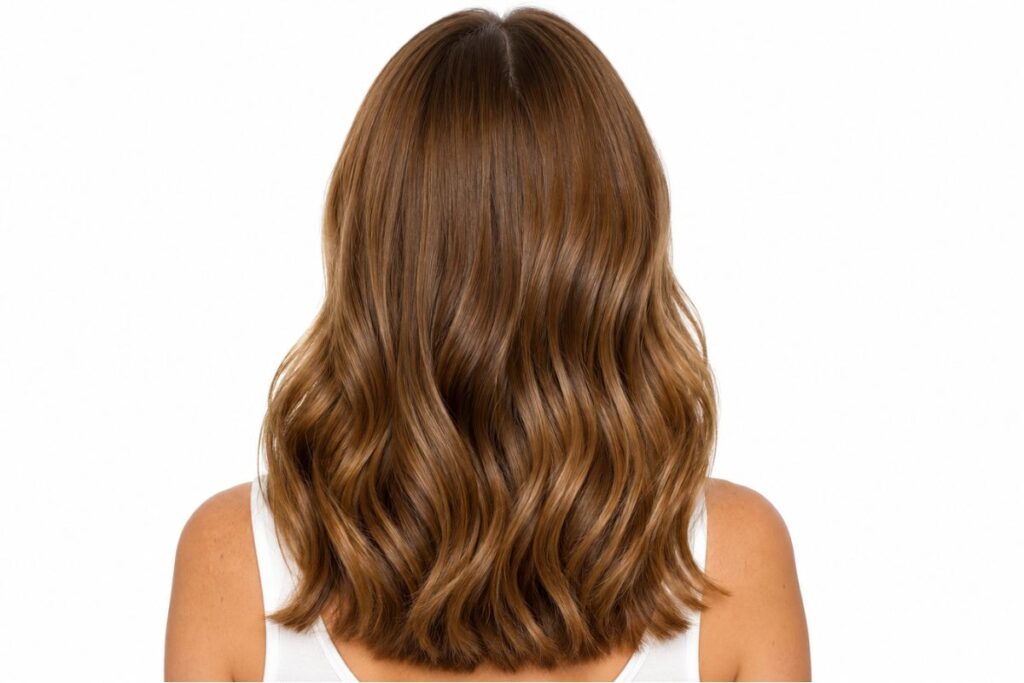
Bronze sits at level 6 with warm gold brown undertones that read as richer and darker than caramel. It suits warm and olive skin tones and works especially well as a balayage shade on naturally dark brown bases.
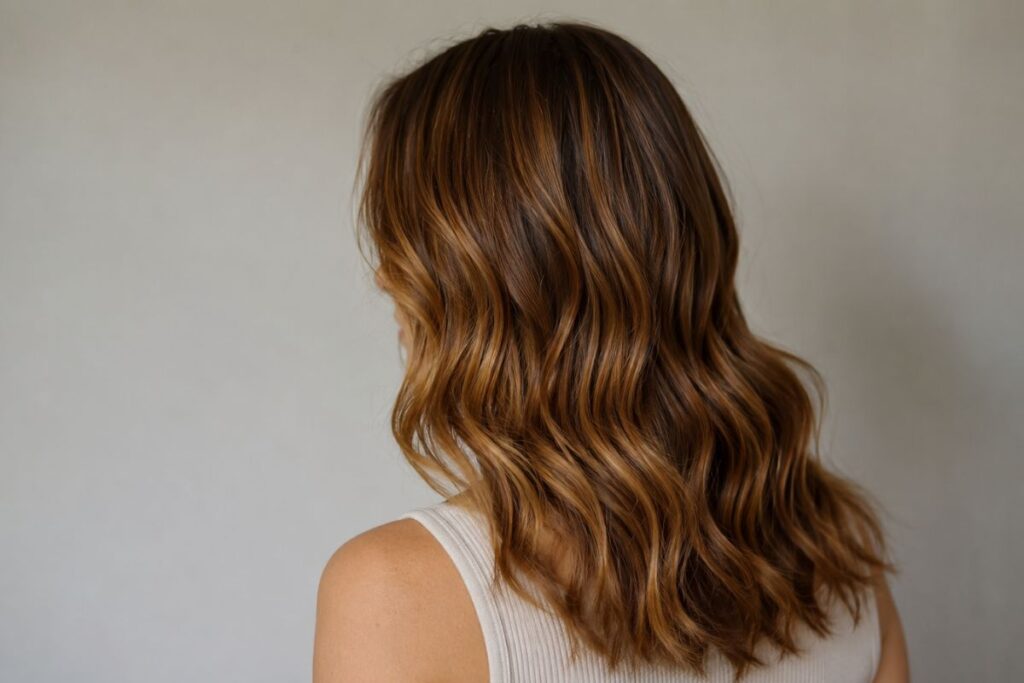
Toffee is a level 6 shade that sits between caramel and bronze with soft warm golden tones. It is one of the most low maintenance dark blonde options, since its warmth blends naturally with most bases as it grows out.
Level 7: Medium Blonde Shades
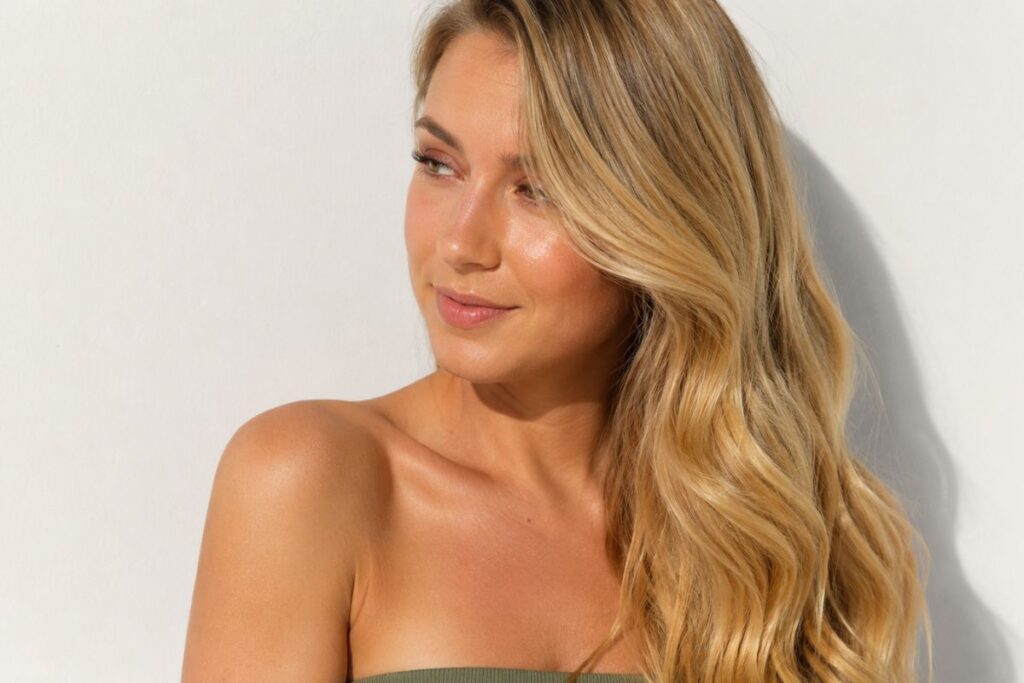
Golden Blonde is the classic sunny blonde with rich yellow gold undertones. It suits warm skin and looks most vibrant in summer.
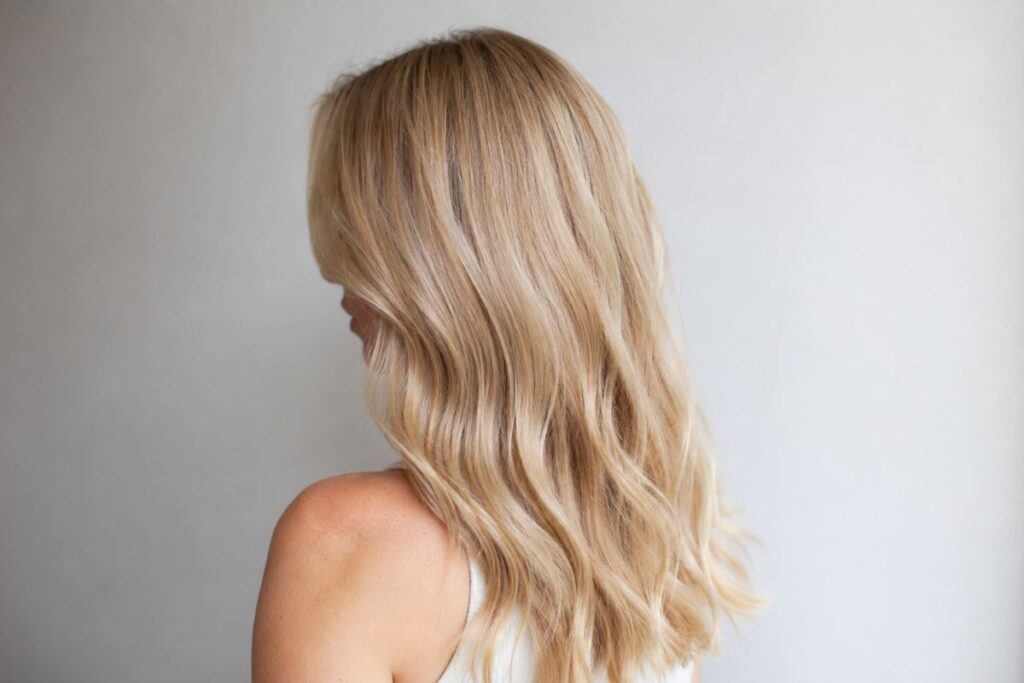
Butterscotch is a medium blonde with soft warm golden tones more muted than golden blonde. It suits those who want warmth without going too yellow.
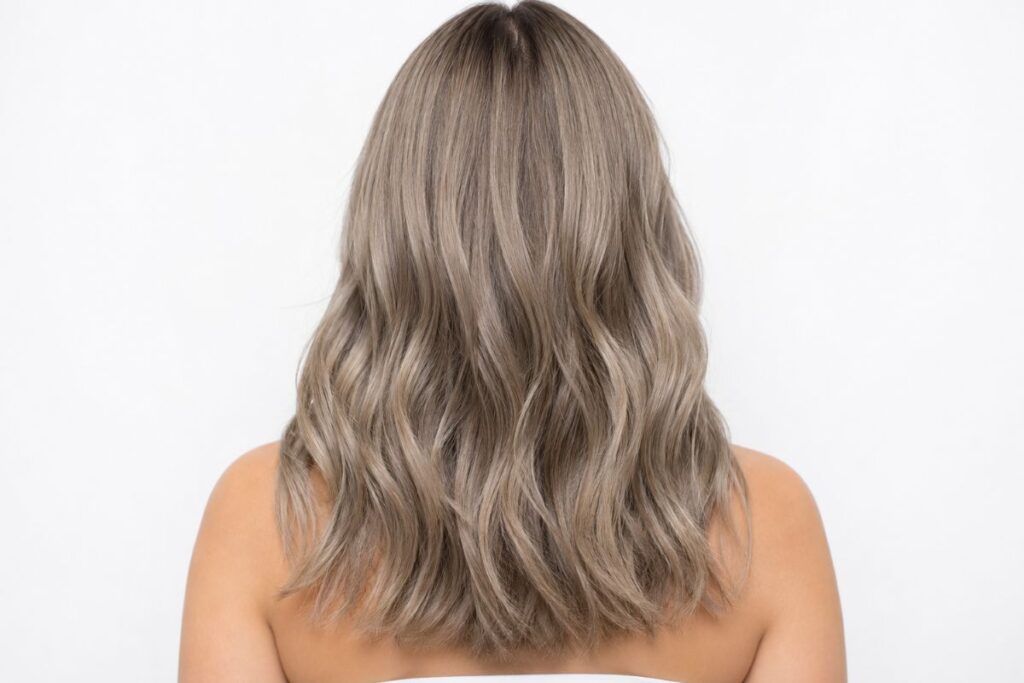
Ash Blonde at level 7 neutralizes the natural gold at this level. It is one of the most requested cool blonde shades in US salons and suits cool and neutral skin tones.
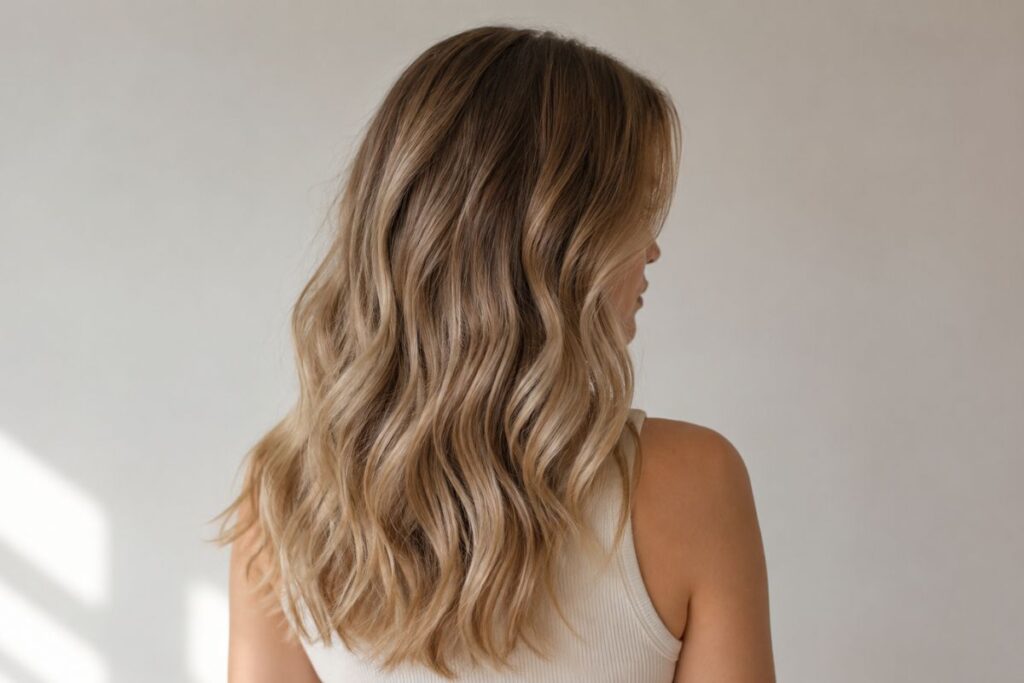
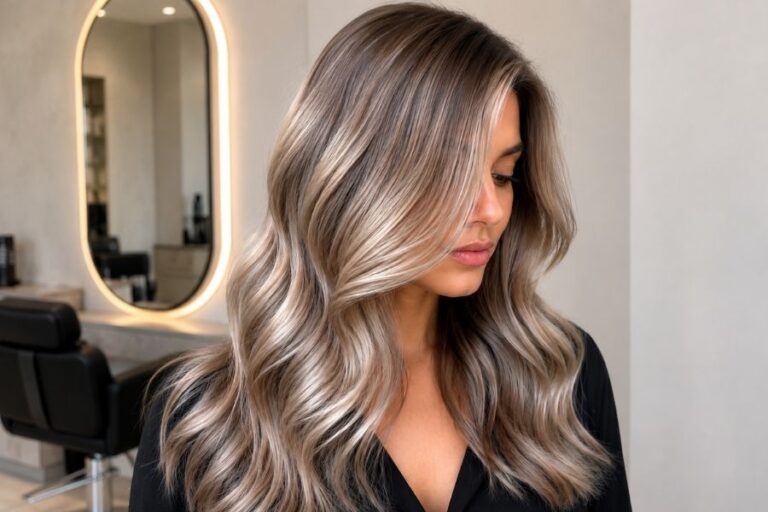
Bronde is a mix of brown and blonde, with a dimensional quality in natural light at level 7. For anyone seeking a natural transition from brown to blonde and not going through the full spectrum, it’s one of the most popular colors for 2026.
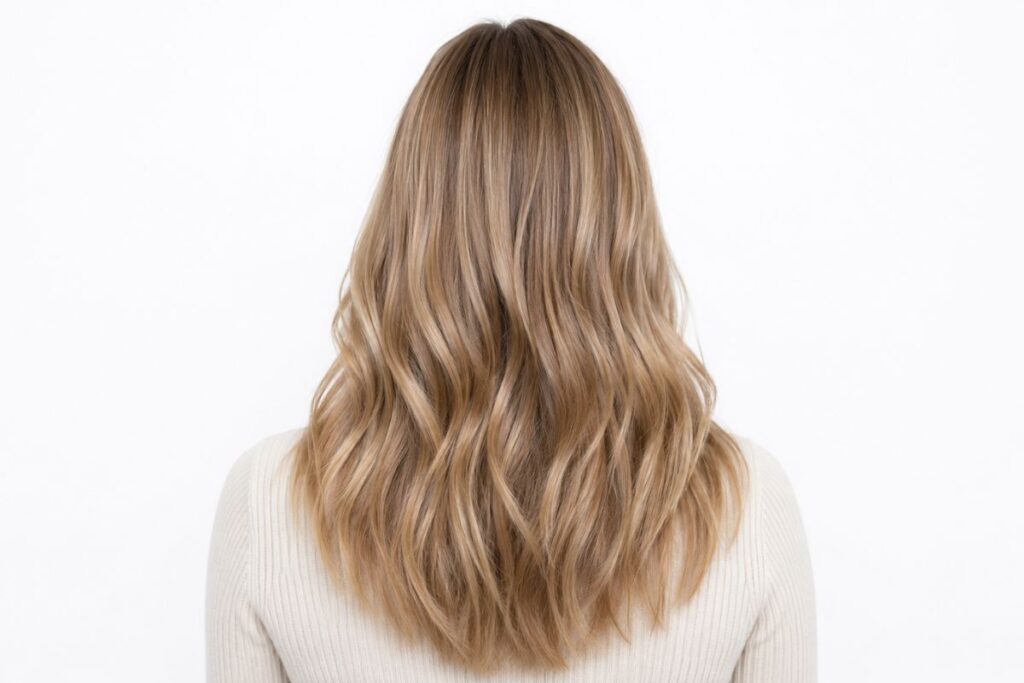
Sandy Blonde is a level 7 tone that is warm but not too warm, and is between golden and ash. It is perfect for neutral skin tones and blends well as it grows out. It is one of the most popular low maintenance options for first time blonde clients.
Level 8: Light Blonde Shades
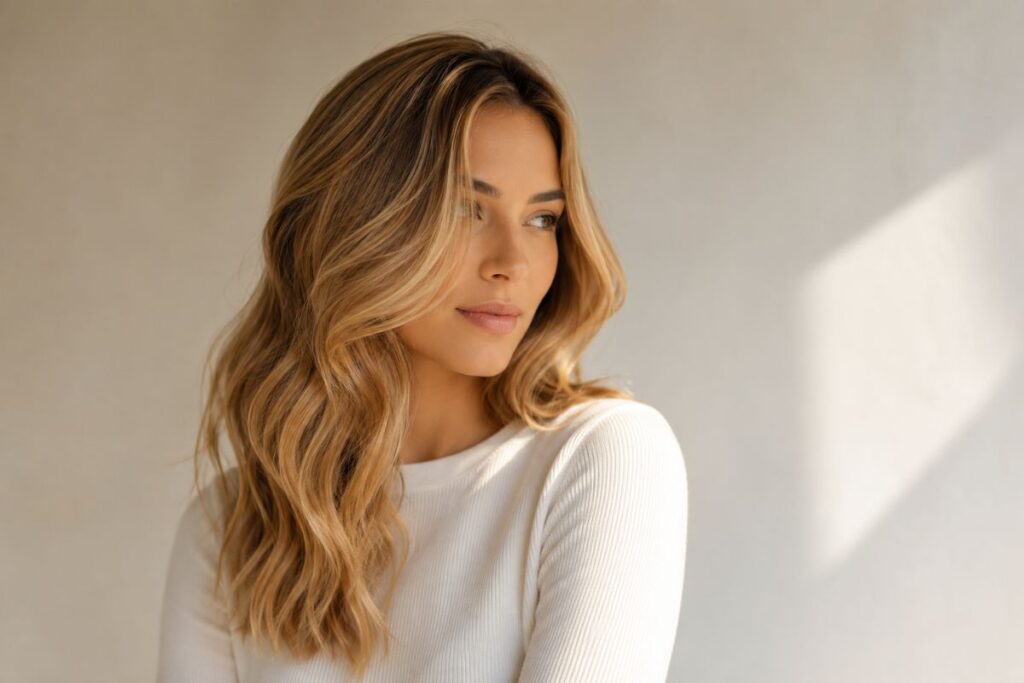
Honey Blonde has warm golden undertones with a hint of amber that mimics sun lightened hair. Light blonde most popular warm and neutral skin tone target shades for balayage in 2026.
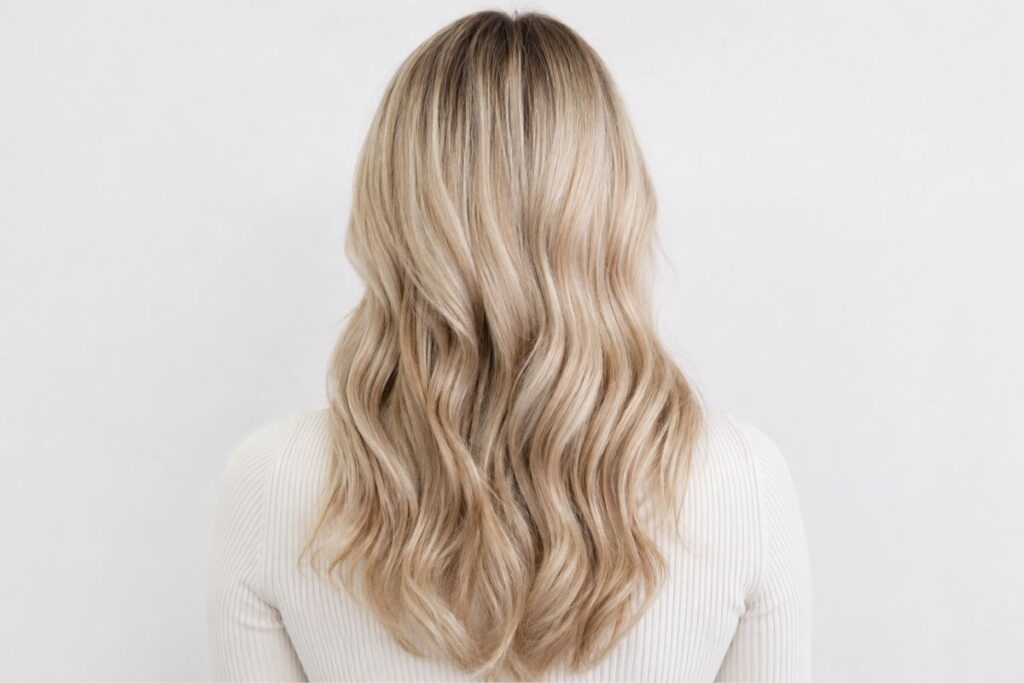
Champagne Blonde is soothingly pearl or beige in tone, warmer than honey but cooler than ash. It works well with neutral skin and requires little maintenance.
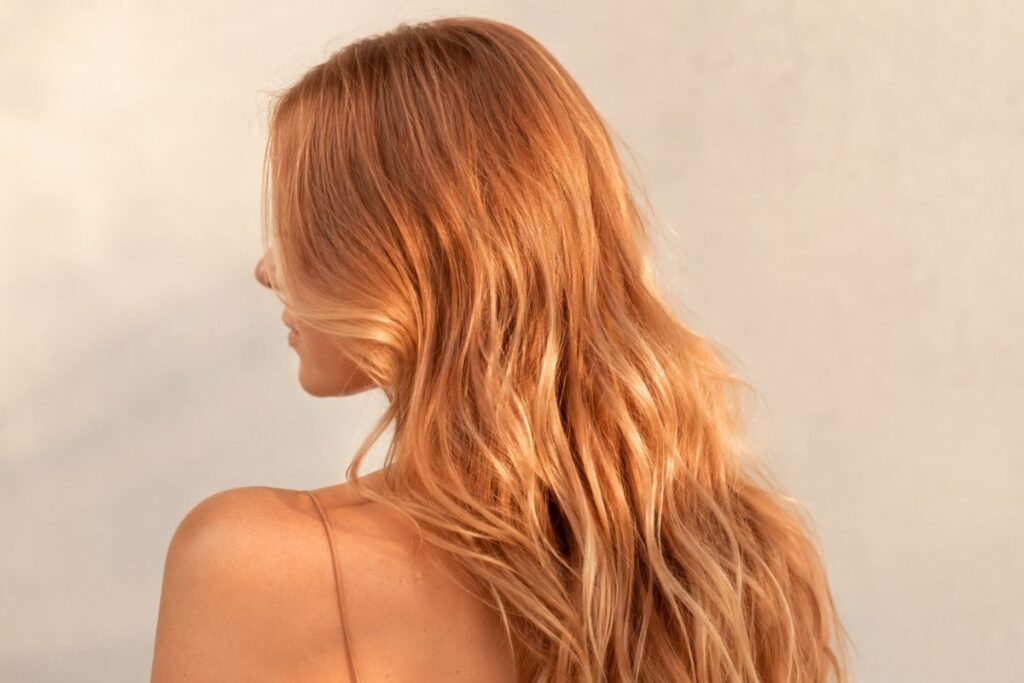
Strawberry Blonde sits at level 8 with warm peachy pink tones that blend red and blonde in equal measure. It is ideal for warm skin tones that have golden or peachy undertones, and it reflects light best in the sun natural light.
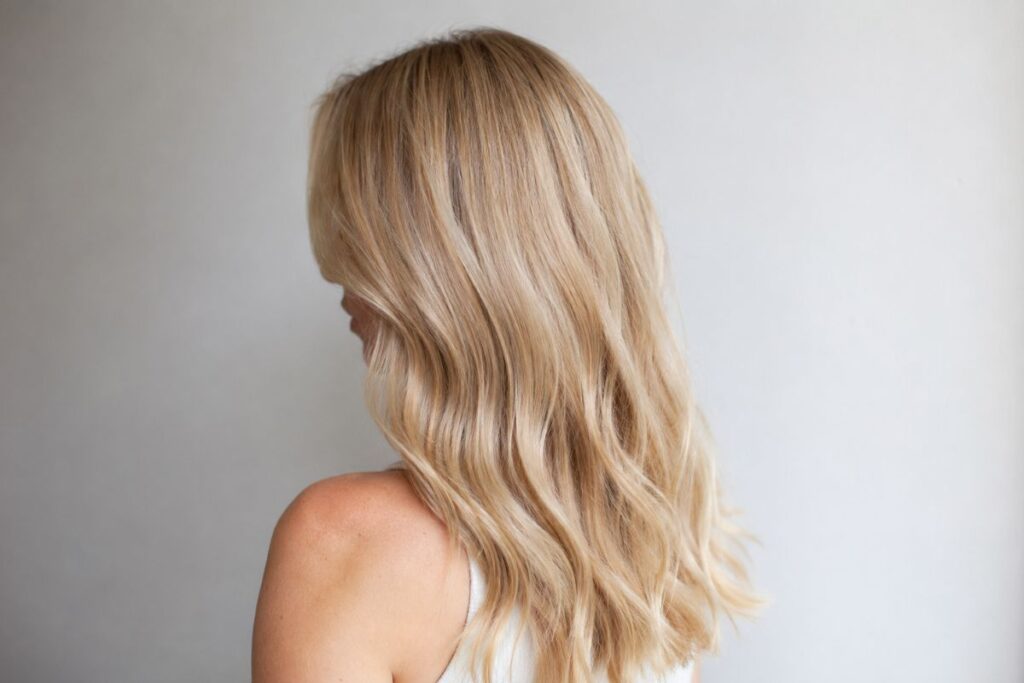
Butter Blonde is a level 8 shade with creamy warm tones that are softer than golden blonde and richer than champagne. It is one of the most requested salon shades in 2026 driven by the shift toward warm, expensive looking color finishes.
Level 9 and 10: Lightest Blonde Shades
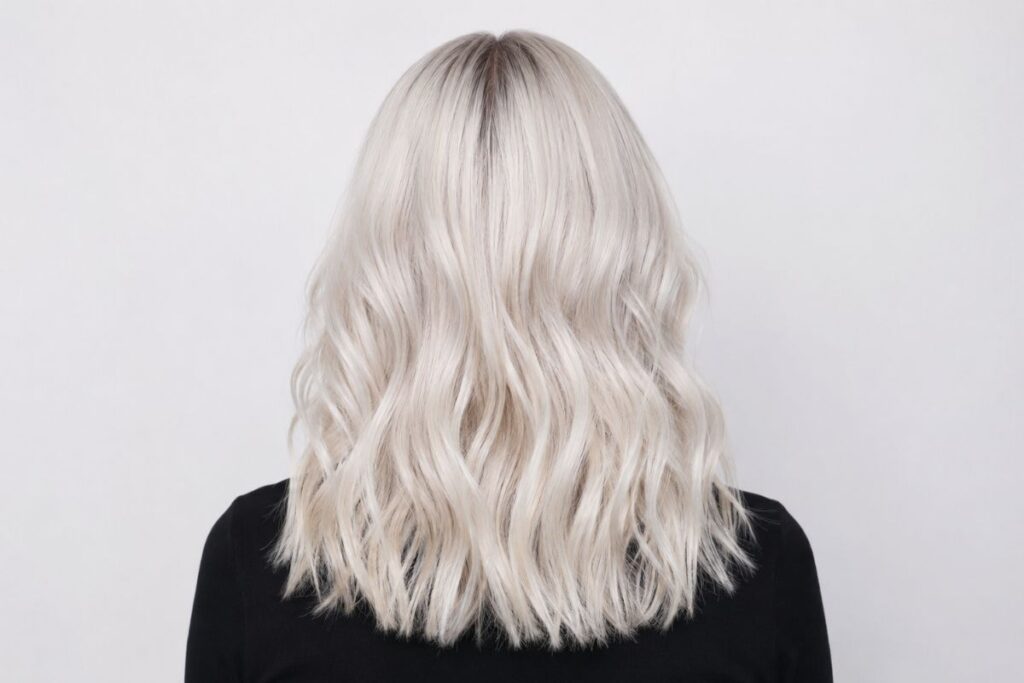
Platinum Blonde is the lightest colour in the chart that has cool almost white tones. It demands the most lighting and is almost always toned to keep it clean, usually blue or violet.
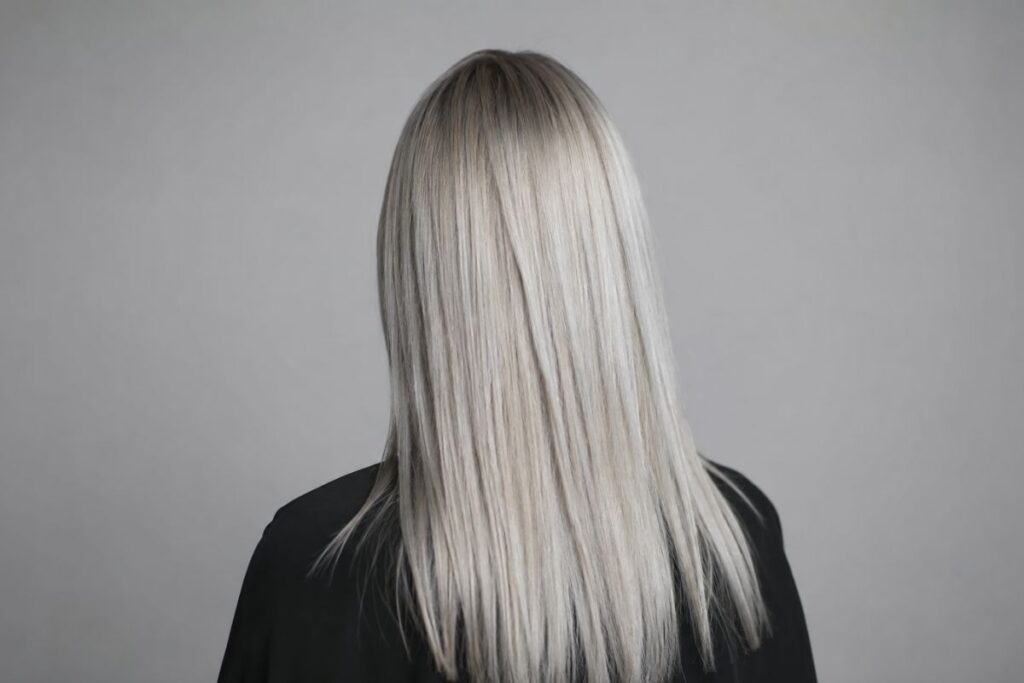
Silver Blonde is purposefully a grey or silver undertone that suits cool and neutral skin tones. Regular silver toning is required for its silver appearance.
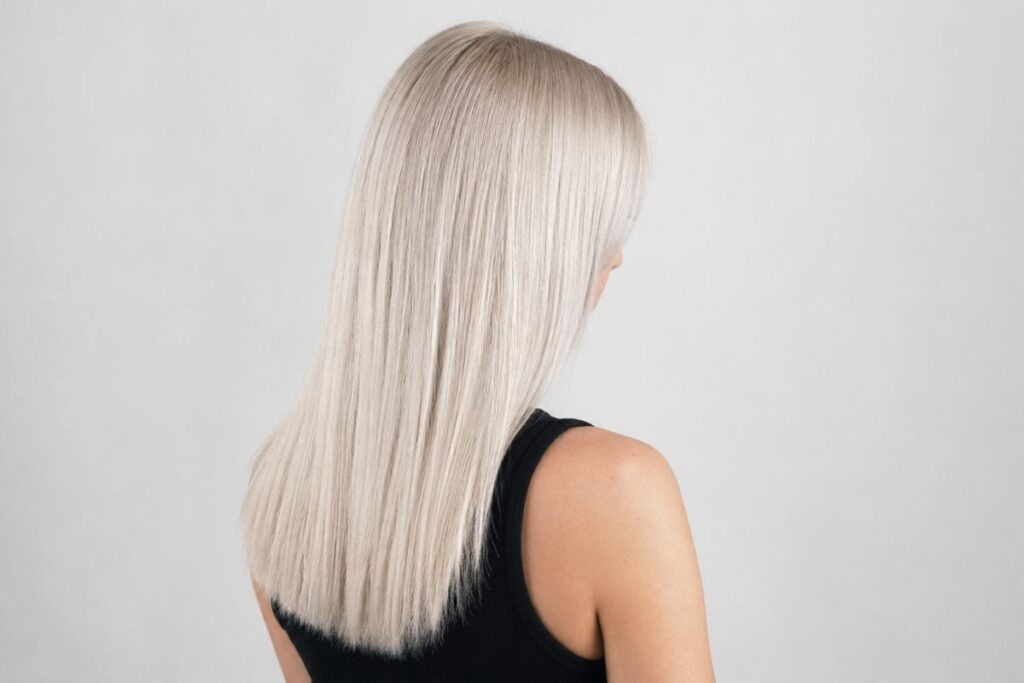
Ice Blonde is the closest shade to white without dyeing hair white. It requires reaching a level 10 pale yellow before toning, and it needs a purple or blue toner every few weeks to stay crisp.
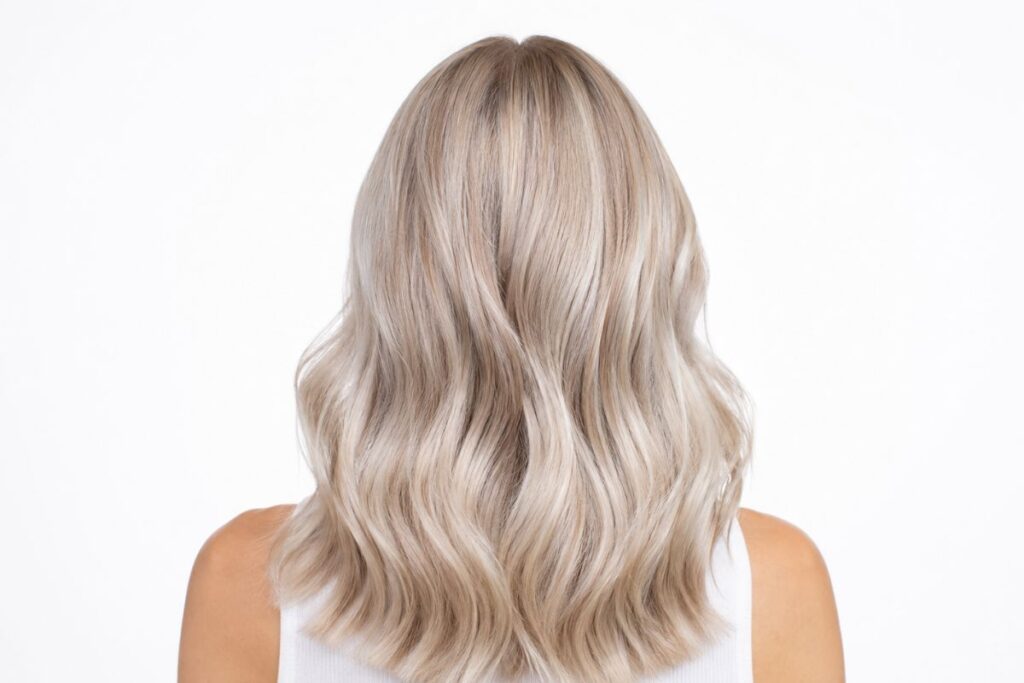
Pearl Blonde sits at level 9 with soft iridescent undertones that sit between silver and champagne. It suits cool and neutral skin tones and gives a polished high end finish without the starkness of full platinum.
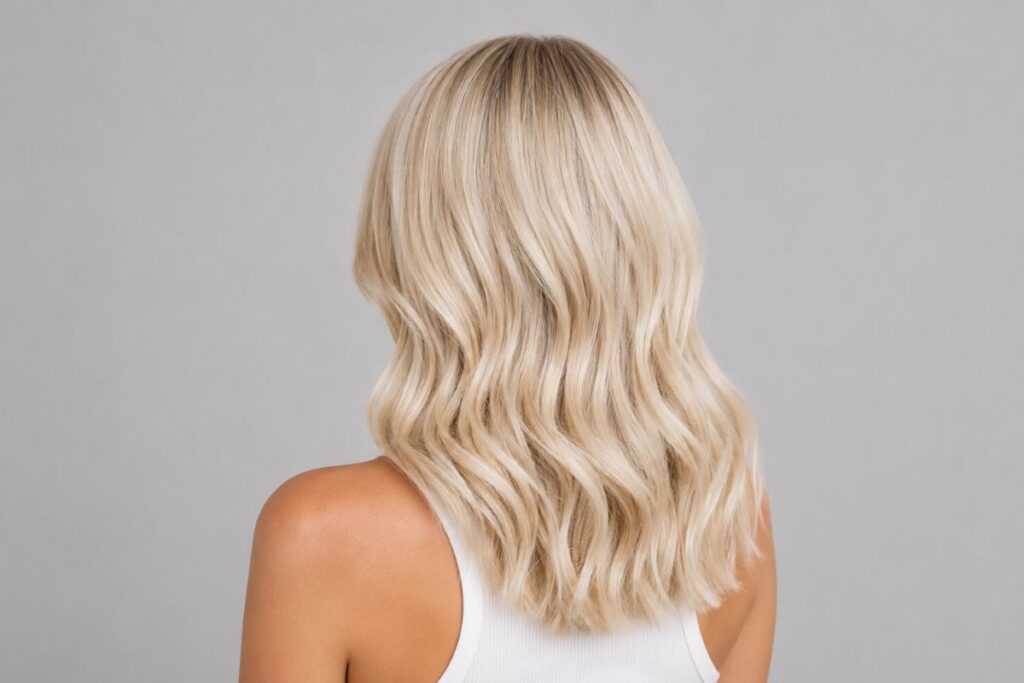
Vanilla Blonde is a level 9 to 10 shade with neutral cool undertones that read neither golden nor icy. It is one of the most versatile lightest blonde options in 2026 since it flatters a wide range of skin tones and fades gracefully between toning appointments.
What Level Is My Hair? How to Find Out at Home
Your starting level is the most important information before any color service. Here is exactly how to find it.
Step 1: Go to natural light. Walk to a window during the day. Indoor lighting adds warmth or coolness that throws off your reading. Daylight shows your real color accurately.
Step 2: Try the black and white photo trick. Take a photo and convert it to grayscale on your phone. This strips out distracting tones so you can see pure depth. Compare that gray value to the level chart above.
Step 3: Pull a section away from the rest. Hold it against a white background. Hair against more hair always looks darker than it is.
Step 4: Check your roots if your hair is previously colored. Your roots show your true natural level. Dyed ends can be several levels off from your actual base. Always identify your root level first.
Step 5: Compare to the chart. If you fall between two levels, round up. It is always safer to assume you are a little darker than you think.
Hair Color Levels vs. Tones: What Is the Difference?
Level tells you how light or dark your hair is. Tone tells you which color family it belongs to. These are two completely separate things.
Think of it this way. Level is the volume knob. Tone is the equalizer. Two people at a level 6 can look completely different if one has warm copper tones and the other has cool ash tones. Same depth, different result.
Your eumelanin (black and brown pigments) determines the level. Your pheomelanin (red and yellow pigments) determines tone, as detailed in a pigmentation study published in Pigment Cell and Melanoma Research. You need to get both right. A perfectly lifted level 8 still looks brassy if you choose a warm tone when you need a cool one.
What Happens to Your Hair at Each Level When You Bleach It?
When you lighten your hair, the warm pigment inside each level gets exposed. This is called the lightening curve, and understanding it prevents most bleaching disasters.
Hair does not lift in one clean step. Hydrogen peroxide in bleach oxidizes melanin granules progressively, which is why warm pigment is revealed in stages rather than all at once, according to a study on the mechanism of melanin bleaching by alkaline hydrogen peroxide. Start at level 4, lift three levels, and your hair travels through orange before reaching blonde. Skip toner and you stay there.
Levels 1 through 3 expose deep red first. Levels 4 and 5 move into orange, the most stubborn zone. Levels 6 and 7 shift into gold and yellow gold. Levels 8 through 10 reveal pale yellow, the stage you need before toning to platinum, silver, or icy blonde.
Most colorists recommend reaching at least level 9 pale yellow before applying platinum toner. Cool toner over yellow gold produces greenish results. You cannot skip levels.
Hair Color Tones Explained: Warm, Cool, and Neutral
Hair color tones fall into three main families: warm, cool, and neutral.
Warm colors are gold, copper, auburn, red and honey. They look rich and dimensional and work well on warm and olive skin. At the 8 and 9 levels, warm tones produce buttery or strawberry blonde tones.
Cool shades are ash, platinum, silver, beige blonde and violet. They counteract the warmth and provide a smoky, refined appearance to hair. Cool tones are still one of the most popular shade families requested for hair color in US salons in 2026, particularly for blonde clients going for icy or silver looks.
Neutrals are in the middle. Natural or neutral is represented by the letter N in a box. These shades work with almost all skin tones and are the best option for gray coverage since they don’t pull warm or cool. Golden, copper, mahogany and red are warm shades of subcategories. There are also cool shades such as ash, beige, blue and violet.
How to Read the Numbers and Letters on a Hair Color Box
Every hair color box has a code that tells you the level and tone. Once you know the code, you can shop with real confidence.
The American system uses a number followed by letters. The number is the level; the letters are the tone. The shade 7NCR means: 7 is medium blonde, N is natural, C is copper, R is red.
| Letter | Tone |
| N | Natural or Neutral |
| A | Ash |
| C | Copper |
| R | Red |
| M | Mahogany |
| G | Gold |
| V | Violet |
| B | Brown or Blue (varies by brand) |
The European system uses numbers on both sides of the decimal point. So 6.1 is level 6 with an ash tone. The shade 7.34 is level 7, with gold as the primary and copper as the secondary. This decimal format is the standard coding convention used across most European professional color ranges.
Double letters or numbers, such as 6NRR or 7.44, indicate an intensified tone. A 0 or 00 before the level signals an extra intense formula for resistant or coarse hair.
What Developer Volume Do You Need for Your Hair Level?
The developer opens the hair cuticle so that color can deposit or lift. Its active ingredient is hydrogen peroxide, and its concentration determines the extent of lift, as detailed in a 2018 study on hair bleaching and structural damage in the International Journal of Cosmetic Science. The wrong volume either damages your hair or produces no result at all.
| Developer Volume | What It Does | Best Used For |
| 10 Volume (3%) | Deposits color, no lift | Toning, refreshing color, going darker |
| 20 Volume (6%) | Lifts 1 to 2 levels | Standard color, gray coverage |
| 30 Volume (9%) | Lifts 2 to 3 levels | Going lighter, resistant gray |
| 40 Volume (12%) | Lifts 3 to 4 levels | High-lift blondes on lighter bases |
Most colorists recommend 20 volume for everyday color. It handles one or two level changes with far less damage than at 30 or 40 volume.
40 volume does not equal platinum. Use only on hair that is already at level 7 or lower. It damages dark level 3 or 4 hair but does not provide lift. If you want a dramatic color change, several bleach treatments over several weeks are recommended.
How to Choose the Right Hair Color Level for Your Skin Tone
Your skin tone does not limit which level you can have. It determines which levels and tones will look most flattering on you. Skin undertone falls into three categories: warm, cool, and neutral.
Cool skin tones have pink or bluish undertones. Check your wrist veins. Blue or purple means cool. Cool skin suits ash blonde at levels 8 through 10, cool brown at levels 4 through 6, and platinum at levels 9 and 10.
Warm skin tones have golden or olive undertones. Warm skin glows with honey blonde at levels 7 and 8, caramel and golden brown at levels 5 through 7, and auburn or copper at levels 4 through 6.
Neutral skin works with both warm and cool shades. Deep skin tones look stunning with rich color at levels 1 through 5. Espresso browns, warm chestnuts, and vibrant reds at levels 3 through 5 create incredible dimension.
Hair Color Levels Across Different Hair Types and Ethnicities
Hair color levels work the same for everyone on paper. The coloring experience differs significantly based on natural pigment density and hair structure.
East Asian and South Asian hair sits at levels 1 through 3 and contains dense eumelanin, which makes it more resistant to chemical processing. Going from level 2 to level 8 takes three or more sessions spread over several months. Rushing it causes severe breakage.
African American hair at levels 1 through 3 faces the same lifting challenges plus moisture considerations. Highly coiled hair structures have more points of potential cuticle damage during chemical processing than straighter hair types, as reported in a study on African hair structure and damage published in the Journal of the European Academy of Dermatology. Most colorists in 2026 recommend deep conditioning before any lightening service.
Natural red hair behaves differently at the same level as brown hair. Redheads have a higher ratio of pheomelanin to eumelanin, causing their hair to resist ash toning and lift unevenly. Ash tones often do not neutralize red hair as effectively as they do brown hair.
Gray hair contains no melanin and is structurally transparent, as confirmed by hair follicle pigmentation research published in the Journal of Investigative Dermatology. The result of gray coloring depends entirely on the shade applied and the strand’s porosity. Natural N base shades are almost always recommended for gray coverage.
The Most Common Hair Color Level Mistakes and How to Fix Them
Most hair color problems come from the same predictable errors.
Ignoring your underlying pigment. You choose ash blonde at level 8 but start at level 4. Applying ash over orange gives you green or muddy results. Fix: bleach to pale yellow level 8 before applying any cool tone.
Skipping toner after bleaching. Bleach reveals the underlying pigment and leaves you at whatever warm stage you stopped at. After bleaching, most colourists suggest using toning in the first 1-2 washes.
Going too many levels at once. Hair safely moves two to three levels with dye and three to four with bleach. Beyond that, damage becomes significant. Plan multiple sessions with deep conditioning in between.
Using the wrong developer. 40 volume on dark hair causes damage without meaningful lift. Match your developer to the level change you actually need.
Mixing opposite tones. Warm copper plus cool ash produces flat, muddy brown. Colorists call this browning out. Stay within the same tone family when blending shades.
Checking results under bad lighting. Bathroom lights make dark hair look lighter than it is. Always check your level and final result in natural daylight.
How to Maintain Your Hair Color Based on Your Level
Levels 1 through 5 are the most low maintenance. Dark pigment clings to the shaft longer. Use a sulfate-free shampoo and wash in cool water. A gloss every four to six weeks keeps color rich.
Levels 6 and 7 show brassiness as color fades. A blue or purple shampoo once or twice a week keeps gold and orange in check. A toning gloss every four weeks holds the tone.
Levels 8 through 10 need the most active care. Purple shampoo is non-negotiable. Use it two to three times per week, not every wash. Overuse turns blonde violet. Most colorists recommend a toner refresh every four to six weeks and a full color service every eight to twelve weeks at platinum levels.
Sulfate free shampoo extends color life because sulfates disrupt the hair cuticle and accelerate pigment loss. Using a bond building treatment during and after any bleaching service helps reduce breakage in chemically processed hair.
Conclusion
The hair color level chart is the most helpful tool for choosing a color. Your starting level indicates what you can achieve. Your underlying pigment shows you what you will see along the way. Your selected tone will take you in the direction you want to go. If all three are correct, your color will be in the right spot.
There are three rules to keep in mind: first, know your level before picking a color; second, consider your underlying pigment before lifting; and third, match your tone to your skin tone undertone. Following these three rules will help you avoid most at-home color mistakes.
One Comment